
Bitcoin Revolution and celebrity ads: why BaFin warns about these trading apps
In 2021, BaFin ordered Bitcoin Revolution to stop its unauthorised portfolio management, and Germany's consumer advice centre says the celebrity advertising is fake. This is how the scheme with a €250 entry works and how to check a platform before you transfer money.


Which topics should we dive deeper into?
Select what genuinely interests you. Your picks feed directly into our editorial planning.
Crypto news that's actually worth your time.
Weekly. 60 seconds. Carefully curated by our editors: no hype, no promo flood, no spam.
Bitcoin Revolution is an online trading platform that has been promoted for years with supposed endorsements from celebrities. In a decision dated December 16, 2021, Germany's financial regulator BaFin ordered the operator of the German-language site to stop immediately the financial portfolio management it was providing without authorisation. According to BaFin, the platform holds no licence from the regulator.
Behind the advertising lies a pattern that consumer advocates have described for years: fake videos featuring well-known faces, a minimum deposit of €250, calls from supposed account managers, and account balances showing profits that cannot be withdrawn. What is advertised is almost always trading in Bitcoin and other cryptocurrencies, often with the promise of software that generates profits automatically.
This guide sets out what the authorities have published about Bitcoin Revolution and similar platforms, how to recognise the scheme and how to check a provider before making a first deposit. How investigators from seven countries seized more than 100 servers of a suspected supplier of such platforms in early November is covered in our article on the raid on fake trading platforms.
What is Bitcoin Revolution? A trading platform for contracts for difference
According to BaFin, German customers could open trading accounts on the platform through which deals in contracts for difference on crypto and fiat currencies were executed. A contract for difference, or CFD, is a bet on the price change of an underlying asset: you do not own a single coin, only a contract with the provider over the difference between the entry and exit price.
BaFin lists a company with addresses in the United Kingdom as the site's operator. According to the regulator, staff make investment decisions for customers on their own responsibility, in part, by the operator's own account, on the basis of an algorithm. That is exactly what sets it apart from an ordinary broker: anyone who decides on other people's money on their behalf is carrying out financial portfolio management and needs a licence for it in Germany.
The Bitcoin Revolution name does not appear at only one address. In its notice, BaFin refers to the domain bitcoinrevolution.org/de/ and points to an earlier notice from 2019 on business activities under the same name. Regulators in other countries have also warned about offers under this name.
BaFin order of December 16, 2021: portfolio management without a licence
The BaFin notice of January 2022 is brief and unambiguous. The regulator classifies the activity as commercial financial portfolio management under Section 1(1a) sentence 2 no. 3 of the German Banking Act. Neither the trading platform nor its operator holds the required licence, so the operator is acting without authorisation. The cease order is an administrative act, not a criminal conviction.
For you as an investor, the practical side matters more than the legal provisions. A provider without a licence is not subject to German supervision. Nobody checks whether your money is held separately from the operator's assets, whether the prices displayed are correct or whether a withdrawal is possible at all. No deposit guarantee or compensation scheme applies.
BaFin publishes such cases in its database of consumer warnings. A missing entry there is not a seal of quality, however. The regulator itself points out for every series of platforms that operators carry on their sites under new names and addresses.
Fake celebrity ads: forged talk-show appearances as bait
The entry point is almost always the same. On social networks or as an advert on news sites, a post appears that looks like an article from a well-known outlet. In it, a presenter, an athlete or a politician supposedly revealed on a television programme how they got rich with trading software. It links to a sign-up page.
Germany's consumer advice centre, the Verbraucherzentrale, makes clear that these videos are all fake: the celebrities never spoke positively about the platform being promoted, and no such appearance ever took place on the programmes. With software for faking images and voices, so-called deepfakes, such clips can now be produced in minutes. A deepfake is a video created or altered with artificial intelligence in which a real person says things they never said.
Those affected include the celebrities themselves as well as readers. Several well-known people have stated publicly in recent years that they have nothing to do with the adverts. One rule of thumb follows naturally: no celebrity reveals on television a piece of software that makes you rich without risk. The promise itself is the giveaway.
A €250 minimum deposit and pressure on the phone
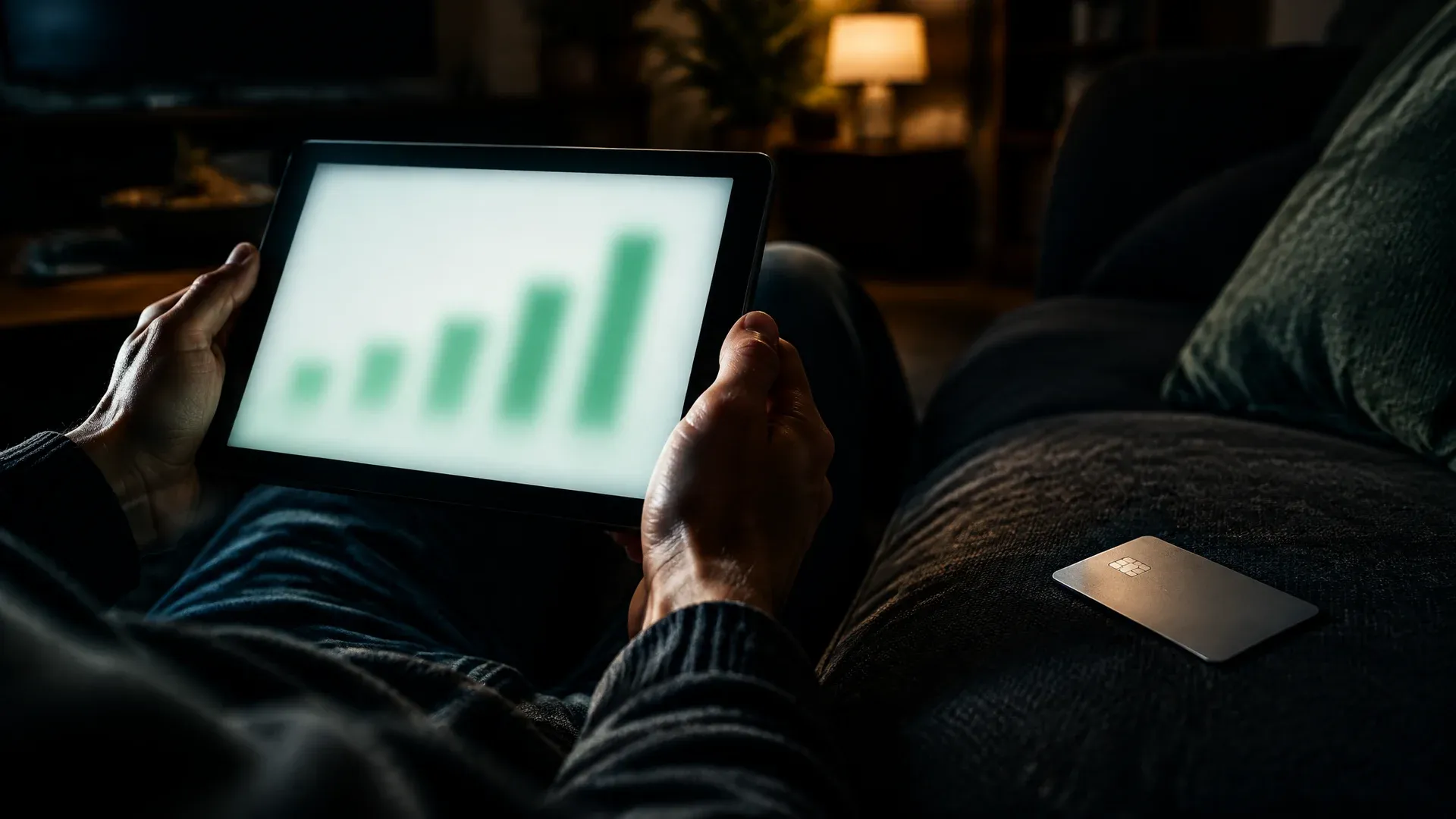
After sign-up, the platforms usually first ask for a small starting capital of €250, according to the Verbraucherzentrale. Shortly afterwards a personal account manager calls. He presents himself as an experienced financial broker, helps with the set-up, installs software on your home computer and then pushes hard for larger deposits.
The software installed is often a remote access program. With it, the caller can see and control your screen. Anyone who opens their online banking during such a session gives access to accounts and approvals. No reputable broker and no regulated exchange asks you to give a staff member remote access to your computer.
 Find a crypto exchange with MiCA authorisation
Fake profits in the customer account: why withdrawals fail
The customer account shows rising balances, charts and individual profitable trades. According to the Verbraucherzentrale, this looks genuinely professional to laypeople, but no trading takes place at all. The money does not flow into trading activity; it disappears through concealed payment channels.
At the latest when you try to withdraw money, the situation turns. Supposed fees, taxes or checks then appear that have to be paid in advance. Each further payment triggers the next demand until contact breaks off. According to the Verbraucherzentrale, several hundred consumers complained to the consumer advice centres about this scheme within twelve months, and investigating authorities speak of tens of thousands of victims a year.
One principle helps with any platform: an exchange or a broker deducts fees from your balance. Anyone who demands that you first transfer new money in order to withdraw is not showing you a real withdrawal.
Platform series with changing names: Bitcoin Prime, Bitcoin Profit and AI trading
Bitcoin Revolution is not an isolated case. BaFin has published notices on a whole family of similar-sounding names: on Bitcoin Profit it stated in 2020 that it had granted no licence under Section 32 of the German Banking Act, and in 2022 it investigated the operator of a site offering Bitcoin Prime. The names vary; the scheme stays the same.
Since 2025 the regulator has increasingly warned about entire series of platforms. On May 13, 2026, a warning concerned sites with the slogan that they were revolutionising trading, using invented names built from fragments such as GPT, AI or Crypton. According to BaFin's findings, such sites pass on the data from their contact forms to operators of unauthorised trading platforms. They have no legally valid imprint.
Bitcoin has thus become AI. The new names no longer promise a crypto robot but an artificial intelligence that predicts prices. For checking a provider, that changes nothing: what matters is who is behind the site and whether that provider holds a licence.
MiCA licence and BaFin authorisation: how to recognise licensed providers
Since the MiCA regulation, anyone offering crypto-asset services in the EU needs authorisation as a crypto-asset service provider. MiCA stands for Markets in Crypto-Assets and is the EU's single rulebook for crypto assets. The European Securities and Markets Authority, ESMA, collects the authorisations in a public register.
How small this circle is shows in our analysis of August 6, 2026: of 329 authorisations in the register, only 21 related to trading platforms; the details are in our article on the MiCA register. Anyone offering CFDs also needs a licence under securities law and must observe the regulators' leverage limits for retail clients, at most 2 to 1 for cryptocurrencies.
How to check a platform before your first deposit:
- Find the imprint and note the company name, not the brand name used in the advertising.
- Search for the company name in BaFin's company database and in ESMA's MiCA register.
- Check whether the platform's web address matches the registered company.
- Enter the name together with the word warning into a search engine.
If any of these is missing, do not deposit anything. A list of licensed providers is in our comparison of regulated crypto exchanges.

 Compare licensed crypto brokers
Recovery scams after the loss: the second wave of the scheme
Anyone who has once lost money to such a platform often ends up on a second list. Supposed lawyers, authorities or consumer advocates then get in touch and offer to recover the money in return for an upfront fee. This is the so-called recovery scam: the perpetrators profit a second time from the same victims.
The Verbraucherzentrale points out that its staff never call unsolicited and never ask for money for their help. How the scheme works in detail and which sites have already been taken down is shown in our guide to the recovery scam.
Money lost: bank, police and consumer advice centre as first points of contact
If you have already paid in, time matters. The Verbraucherzentrale rates the chances of getting deposited money back as very low, because the operators act from abroad. For payments by credit card or PayPal, a chargeback can still succeed if you act quickly. Inform your bank immediately, change passwords and uninstall any remote access software the caller set up.
Also file a report with the police, which in Germany can be done online via your federal state's internet police station. Keep emails, chat histories, bank statements and screenshots of the customer account. Which documents you need and in which order to proceed is set out in our guide crypto stolen or scammed.
Incidentally, an amount lost to fraud is not, for German tax purposes, a loss from a private disposal transaction, because you did not sell anything. Whether you can claim it in some other way is something a tax adviser has to clarify case by case.
Trading apps with celebrity ads: no licence, no deposit
- Licence before advertising. Buy cryptocurrencies through providers authorised under MiCA. Our comparison of regulated crypto exchanges offers a selection with licensing details.
- Leveraged products only with supervised brokers. If you want to bet on price moves with CFDs, do so with a licensed broker that applies leverage limits for retail clients. Which brokers offer this is shown in our crypto broker comparison.
- Keep your own coins in self-custody. Long-term holdings belong in your own wallet, which no caller can access by remote control. Suitable devices are in the hardware wallet comparison.
(As of November 8, 2026. This article is not investment advice. Prices and fee structures change; check the terms with the provider before you buy.)
Frequently asked questions about Bitcoin Revolution
Transparency note: This article was produced with the assistance of artificial intelligence and reviewed by our editorial team before publication. All figures and claims were checked against the primary sources linked in the text. The feature image was generated with AI.
More on Bitcoin: All Bitcoin news at a glance
Related articles
- Eurojust raid on fake trading platforms: more than 100 servers seized, seven arrests
- Russia Opens Crypto to Retail Investors on November 17: What Bitcoin, Ethereum and USDT Access Really Means
- Bitcoin mining app: even a fast phone would need 20 million years to find one block
- Bitstack review: what €100 a month really costs
- Leverage trading in crypto: how margin and the liquidation price work
Which topics should we dive deeper into?
Select what genuinely interests you. Your picks feed directly into our editorial planning.
Crypto news that's actually worth your time.
Weekly. 60 seconds. Carefully curated by our editors: no hype, no promo flood, no spam.

October 19, 2026 7:34 AM
Germany's savings banks start crypto trading: “When a savings bank starts is for it to decide”
The first German savings banks have switched on crypto trading in the App Sparkasse, with Bitcoin, Ethereum, XRP, Solana and Polygon tradable. There is no nationwide launch date, and the private keys stay in trust at DekaBank.

October 19, 2026 7:22 AM

Bitcoin price at $82,769 after two days on a third of the turnover: the level that decides
Bitcoin opens the week at $82,769, 1.6 percent above Friday's close. The gain was built over two days running on a good third of the usual turnover, and that is exactly why the level at $81,501 now decides.
October 16, 2026 4:15 AM
241 scam sites taken offline, the recovery scam lives on: what to check now
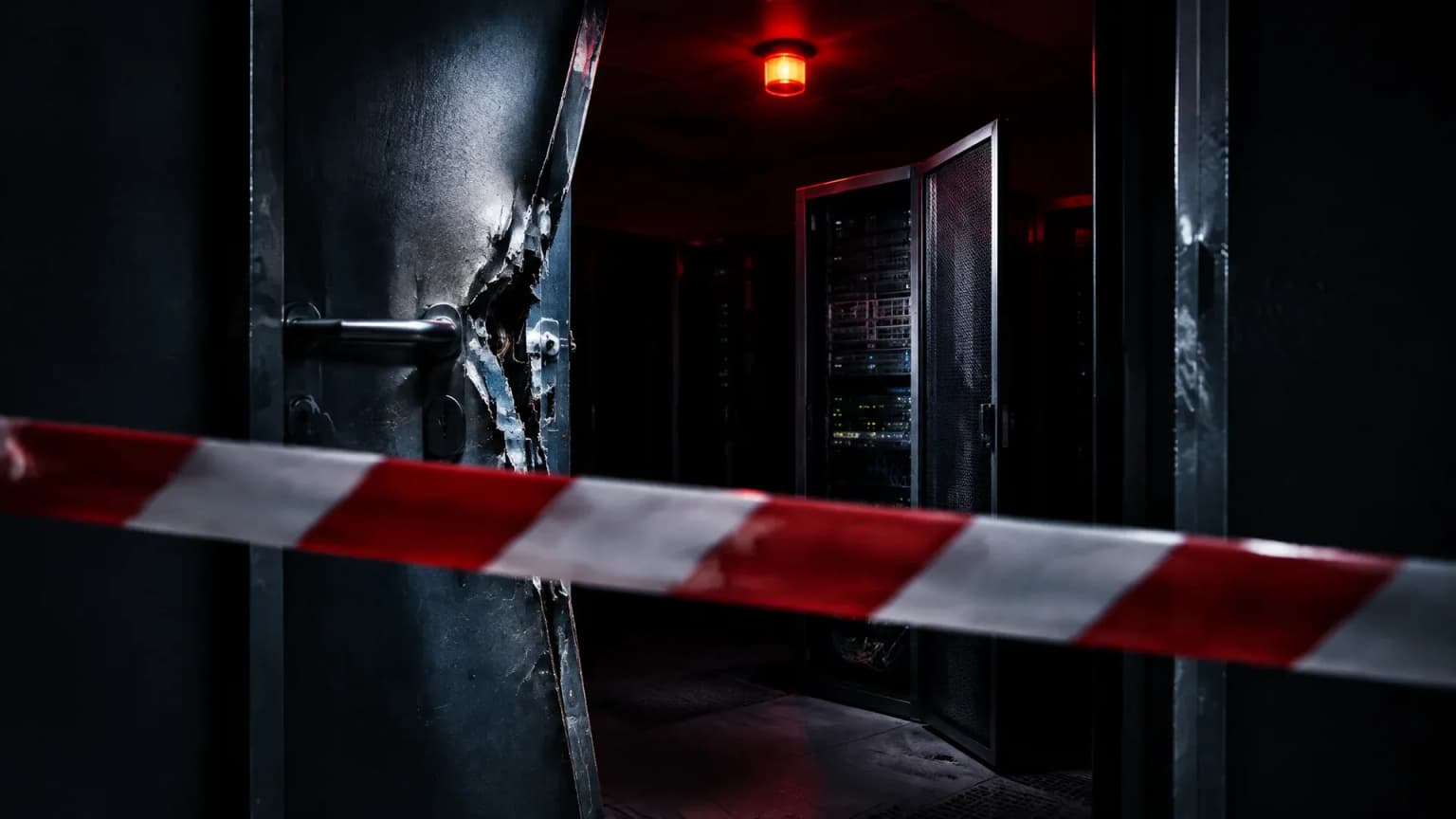
The Brooklyn District Attorney and the FBI shut down a fraud network of 241 websites and 112 servers on 14 October 2026; the second stage of the scheme was a purported recovery service. Five days earlier, German regulator BaFin had warned about exactly this pattern at a purported bank.

October 10, 2026 3:39 PM
Will AI Break Bitcoin? Vitalik Says Prepare for "Bunker Mode", Hoskinson Calls It Numerology
Vitalik Buterin says AI could crack crypto's encryption within 2 years. Charles Hoskinson says that is nonsense. Who is right, and what should you do?
September 29, 2026 10:40 AM
“We have created the essential conditions …”: bitcoin.de has stood still for three months, the MiCAR licence is missing
Bitcoin Group SE published its half-year report on September 29, 2026: trading on bitcoin.de has been idle since the end of June because the MiCAR authorisation is missing. The new platform is finished, but no launch date is set.
September 29, 2026 1:15 AM

BaFin warns over nova-c-solutions.com: What is behind a genuine registration number
The BaFin has warned about a website offering crypto-asset services without authorisation and speaks of a presumed identity theft at the expense of a real US company. The case shows why the advice to look a provider up in the register does not carry on its own.
September 26, 2026 4:21 AM
Operation Herakles disconnects 13,888 phone numbers: what to check on crypto investment calls
Six authorities have disconnected 13,888 phone numbers used by investment fraudsters to call their victims in Operation Herakles, 9,304 of them in the past three months alone. What the Federal Network Agency now requires of telecoms providers and which three checks protect you from the scheme.
September 25, 2026 10:31 AM
BaFin Warning: What Happens When You Enter Your Data on an AI Crypto Platform
On September 23, 2026 BaFin warned about 39 near-identical websites presenting themselves as AI-powered crypto trading platforms. On its findings these pages take no money but pass the data left in their contact form on to unauthorized trading platforms.
September 22, 2026 1:27 AM
Bitcoin ATM in Germany: Fees, BaFin Authorisation and Tax
Bitcoin ATMs stand in kiosks and shopping arcades, and buying there costs a multiple of the online route. What BaFin demands of the operator, at what amount your ID becomes due, and how you evidence the purchase for tax.
September 14, 2026 1:27 PM
Bitcoin Lost to a Scam: What Counts as a Tax Loss in Austria
Lost bitcoin to a scam? Why Austria generally does not recognise the damage as a tax loss for privately held assets, and when compensation payments start to matter.
September 12, 2026 7:13 AM

BaFin Warnings in September: How to Check in Three Minutes Whether a Crypto Provider Holds Authorisation
Twelve consumer notices in ten days, five of them on crypto-asset services and two with the entry point in WhatsApp or Telegram. We evaluated all twelve notices ourselves and show the check that takes you three minutes.
September 12, 2026 1:11 AM

Bitcoin ETP Trading Hours Before the Fed Decision: When Your Venue Is Really Open
Forty-five percent of Bitcoin's price movement falls into hours when German securities trading is closed. Our own survey across 720 hours shows where the gaps open up and which three settings to check in your brokerage account.
September 6, 2026 10:20 PM
Bison App: a 1.25 Percent Spread, 27 Percent of the Staking Rewards and Trading Without an Order Book
The crypto app of Boerse Stuttgart advertises freedom from fees. You pay through the spread instead. What the licences actually cover, why there is no order book, and why the tax report loses its value once you transfer coins out.
September 3, 2026 11:37 AM

Standard Chartered Just Opened Institutional Bitcoin Trading in the UAE
Standard Chartered launches institutional Bitcoin and Ether spot trading in the UAE. Here is what it means for BTC and ETH prices right now.
September 1, 2026 10:13 AM
BaFin Crypto Knowledge Survey: Four Assumptions Owners Believe Are True
BaFin has measured what crypto owners know about their products: 57 percent of the answers were correct, 31 percent wrong. Four false assumptions come up especially often, and each of them changes your own investment decision.
August 26, 2026 7:15 AM
BaFin Warning Over Identity Misuse: When a Crypto Platform Borrows a Real German Company's Name
BaFin has been warning since August 24, 2026 about a crypto website that, according to the regulator's findings, misuses the identity of a real German company. Why the commercial register and the imprint are worthless as proof, and how to check a provider yourself in a few minutes.
August 24, 2026 4:13 AM
Volksbank Crypto: Which Banks Already Offer Bitcoin in the VR App
Three of 14 cooperative banks we checked ran a public page on crypto trading with meinKrypto on August 23, 2026, and a fourth points to a different route. What the service can do, what it costs and which question to ask before your first purchase.
August 22, 2026 10:13 AM
BaFin Warns Against NC Wallet and ncwallet.net: What Users of the Wallet App Must Check Now
On August 19, 2026, BaFin issued a warning about the NC Wallet app and two websites: on the regulator's findings, the unknown operators offer financial services there without authorisation. Because the wallet is custodial, it is the provider and not you who holds the key to your balance.
August 20, 2026 1:28 PM

Crypto Trading Bots: How They Work, What They Cost and When They Pay Off
A crypto trading bot trades around the clock to fixed rules, and every one of those rules costs a fee. This guide works the costs through over twelve months, sets out the German tax position under Section 23 EStG and shows when a provider needs a BaFin licence.
August 18, 2026 10:19 AM

BaFin Warnings 2026: 24 Crypto Platform Series With 639 Domains, and How to Check Your Provider
In 2026 BaFin is increasingly warning about entire series of near-identical crypto websites rather than about single providers. Our own count of the complete stock of warnings shows how large the phenomenon has become and which two register checks reliably vet a provider.

June 16, 2026 4:38 PM
Top 3 Crypto Aggregators To Pick in 2026
To maximize yield and simplify the trading experience, Crypto aggregrators are an unparalleled choice in DeFi. Here are the top 3 choices.
June 7, 2026 11:00 AM
How to Buy Bitcoin with No KYC in 2026: 3 Ways to Do It
Protect your data and maintain privacy. Here are the three most secure ways to buy Bitcoin without identity verification (KYC) in 2026.
April 17, 2026 10:57 PM

Bitpanda Fusion Trading Competition in April 2026: The Competition Has Ended
Recap as of September 27, 2026: the Bitpanda Fusion Trading Competition with a €50,000 prize pool ran from April 16 to 30, 2026 and has ended.
April 15, 2026 12:00 PM
Bitcoin Price Corrects After $76,000 High: Is This a Consolidation or a Crash?
Bitcoin price faces a healthy correction after hitting $76,000. Learn how to trade consolidation phases and use support and resistance levels effectively.

More from CryptoTicker