
Top 3 Crypto Aggregators To Pick in 2026
To maximize yield and simplify the trading experience, Crypto aggregrators are an unparalleled choice in DeFi. Here are the top 3 choices.


Which topics should we dive deeper into?
Select what genuinely interests you. Your picks feed directly into our editorial planning.
Crypto news that's actually worth your time.
Weekly. 60 seconds. Carefully curated by our editors: no hype, no promo flood, no spam.
Update (November 1, 2026): We checked the three aggregators against current data on November 1, 2026. Jupiter is still the largest aggregator on Solana, with about 51 percent of the aggregator volume there over the 30 days to November 1 rather than roughly 80 percent, while DFlow grew to about 30 percent, according to DefiLlama. In October 2026 Jupiter routed about $13.6 billion, 1inch about $3.5 billion and CoW Swap about $3.3 billion; outside Solana, 0x and KyberSwap moved more volume than 1inch over the last 30 days. 1inch now reports more than $815 billion in lifetime swap volume across more than 18 chains, and the Solana DEX Lifinity, one of Jupiter's former liquidity sources, voted to shut down in December 2025. Our picks by chain and trade size stay the same.
DeFi emerged in 2020 with a vision to build solutions on top of the existing bottlenecks in the centralized financial system. In its first two years, by riding on some of the unparalleled use-cases like flash loans, liquidity mining, staking, yield farming, and compounding interest rates, the ecosystem exploded to $87 billion. DEXs emerged as the hotspots for witnessing maximum DeFi activities. Some of the users within the ecosystem who had earlier registered on Cex or Centralized exchanges moved their assets to Dex or decentralized exchanges for interacting with the DeFi protocols via wallets.
However, one thing which was like an elephant in the room was inconvenience causing trouble for the users. For example, users had to buy cryptocurrencies on one exchange and transfer the same to another DEX for operation. In this way, the process not only killed a lot of time, wasted their resources and caused inconvenience to users; but also deprived them of a good earning opportunity. Hence, to quicken decision-making, maximize ROIs and fix the fragmented operational process, crypto aggregators are an amenable choice moving forward in 2026.
What are Crypto Aggregators?
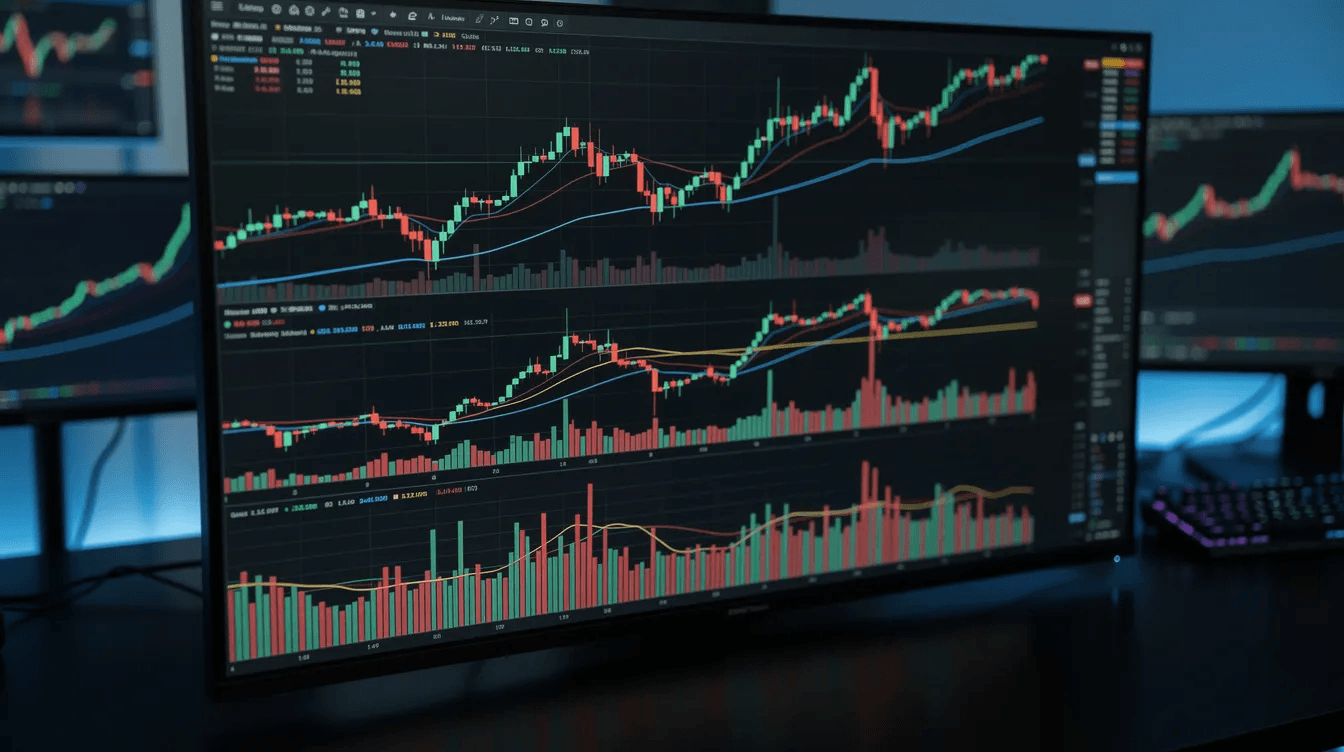
Crypto aggregators establish a system through the use of Dapps, smart-contract, oracles, and APIs, where data from different DEX and CEX are clubbed together on a single platform with price feeds integrated. In this way, the traders need not have to shuffle between exchanges to find out the best prices for an asset. On the contrary, they can simply log in to the crypto aggregator and trade from those platforms. In some rare instances, some of the crypto aggregators allow trading in cryptocurrencies pairs which are not supported even on some of the renowned exchanges operational across the world.
How Do Crypto Aggregators Work?
Crypto aggregators use price oracles that connect to multiple exchanges to provide the latest price feeds. You can take this as an example. Suppose, if you are visiting a holiday destination, there may be multiple hotels available for accommodation. If you have to go and check every hotel to find the best prices, it would take a lot of time and money. However, to ease the process, there’s a website that directly connects with all the hotels present in that holiday destination and tracks all their offers and prices to facilitate quick booking on the go. Using that website, the user can track even the smallest fluctuations in the prices that the hotels provide and grab the opportunity to book their services.
A crypto aggregator works much like the same where it tracks all crypto exchanges through price oracles and APIs to give the latest price for the crypto. Once the user/trader picks up a trade, the protocol runs the trade across all exchanges and swap protocols. Upon finding the best platform for the trade, the protocols execute the trade and the trader ends up making the maximum profit which would have been otherwise impossible without the crypto aggregator’s help.
Top 3 Crypto Aggregators of 2026
🥇 1inch: The EVM Default
1inch is one of the most-used aggregators on EVM chains and the project that popularized split routing back in 2019. It remains the benchmark for anyone trading on Ethereum, BNB Chain, Arbitrum, Base, and the wider EVM ecosystem.
What makes it stand out:
- Pathfinder routing engine. 1inch's algorithm scans hundreds of liquidity sources across multiple chains, slicing a single trade across the optimal combination of pools to minimize slippage.
- Fusion mode. Its intent-based system delivers MEV protection and gasless swaps, where resolvers compete to fill your order: you sign once and they handle execution.
- Cross-chain reach via Fusion+. Seamless multi-chain swaps make it a versatile choice for altcoin and cross-chain traders.
- Proven scale. 1inch reports lifetime swap volume above $815 billion and swaps across more than 18 chains, and is expanding into AI-agent infrastructure and tokenized-stock trading.
Best for: Most EVM same-chain swaps, multi-hop altcoin trades, and traders who want a single battle-tested router across all the major chains.
Watch for: On Ethereum, gas can be significant, and 1inch sometimes captures value through positive slippage. For large EVM trades, default to Fusion (intent) mode rather than classic routing.


🥈 Jupiter: The Solana King
If your assets live on Solana, the choice is effectively made for you. Jupiter is the clear default, routing roughly half of all aggregator volume on the network (about 51% over the 30 days to November 1, 2026); its next three competitors combined still don't match its weekly throughput.
What makes it stand out:
- Dominant liquidity. Jupiter routes across every major Solana DEX (Orca, Raydium, Meteora, Phoenix, and more) to find the deepest, cheapest route.
- Near-zero network fees. Solana's low-cost infrastructure means transaction fees are often less than a cent, a structural advantage no EVM aggregator can match. Jupiter's own commission depends on the mode, as of November 1, 2026: 0% on manual market swaps and 0 to 0.5% depending on the pair in the default Ultra mode.
- Massive cumulative volume. Jupiter has processed well over $1 trillion in cumulative swaps, about $1.3 trillion according to DefiLlama, and routed about $13.6 billion in October 2026 alone.
- Rich feature set. Beyond spot swaps, it offers limit orders, DCA (dollar-cost averaging), and one of the most polished trading interfaces in DeFi.
Best for: Any swap on Solana, from memecoin trades to stablecoin routing to portfolio rebalancing.
Watch for: Solana has no public mempool in the EVM sense, but it has its own forms of priority gaming; Jupiter's transaction simulation helps, but be mindful on volatile, low-liquidity pairs.
🥉 CoW Swap: The MEV Protection Specialist
For traders who care more about protection than speed, especially on large orders, CoW Swap is purpose-built. It takes a fundamentally different approach to execution that makes sandwich attacks structurally difficult.
What makes it stand out:
- Batch auctions. CoW Swap settles all orders in a batch at a single uniform clearing price, meaning no transaction within the batch can be sandwiched by another.
- Coincidence of wants. When two traders want opposite sides of a trade, CoW matches them directly, sometimes producing near-zero slippage without even touching a liquidity pool.
- Solver competition. Professional solvers compete to give you the best execution, with their reputation on the line.
- Strong large-trade performance. Processing about $3.3 billion in October 2026 according to DefiLlama, CoW Swap is consistently rated the strongest choice for trades above $100,000 where minimizing market impact matters most.
Best for: Large EVM trades, stablecoin swaps at size, and anyone who prioritizes MEV-resistant execution over instant settlement.
Watch for: Batch settlement adds a little latency. If you need immediate execution, a classic router may suit you better, but never publish a five-figure swap to the public mempool without protection.
How to Choose the Right One
The simplest way to think about it in 2026:
- Trading on Ethereum or another EVM chain? Start with 1inch for everyday swaps.
- Trading on Solana? Jupiter, every time.
- Moving a large size or worried about MEV? CoW Swap for trades above $100,000.
A few universal tips: going direct to the aggregator's own site usually nets the same or better price than the wallet integration, and unlocks advanced modes (Fusion, batch auctions) that wallets don't always surface. For maximum safety, pair any aggregator with a hardware wallet so you keep full custody of your funds throughout.
Best Crypto Aggregator in 2026
The aggregator category is in the middle of an architectural shift toward intent-based trading — you express what you want, and solvers compete to deliver it. By the end of 2026, most retail EVM volume is expected to flow through intent systems like 1inch Fusion and CoW Swap rather than direct router calls, while Jupiter keeps its iron grip on Solana.
For most traders, you don't need to overthink it: pick the leader for your chain, default to intent mode on large trades, and let the aggregator do the work of finding your best price across a fragmented market.
Partner links: some links on this page are partner links. If you become a customer through one of them, we may earn a commission at no extra cost to you. Selection, ratings and ranking are decided independently by our editorial team. Ethics and Independence · Ownership and Funding
For later? Save this article and find it again in your profile.
Related articles
Which topics should we dive deeper into?
Select what genuinely interests you. Your picks feed directly into our editorial planning.
Crypto news that's actually worth your time.
Weekly. 60 seconds. Carefully curated by our editors: no hype, no promo flood, no spam.

March 19, 2024 7:50 AM

Can a $500 Investment in These Top 3 Meme Coins Make You a Millionaire After Bitcoin Halving?
This article is all about the top 3 meme coins that has a potential to make you a millionaire. Let's take a look at this in more detail.

March 13, 2024 1:46 PM

Top 5 Cryptocurrencies Under $1 for 3000% Growth in 2024
Explore the top 5 cryptocurrencies under $1 for 2024, poised for significant growth. Uncover their unique features and market potential.
March 7, 2024 8:09 AM

BIG FET Price Prediction: Fetch.ai Price Eyeing $5 Before Bitcoin Halving? Here’s Why..
Could Fetch.ai possibly hit $5 before the Bitcoin halving? Let's delve into this FET price prediction piece and explore it further.

February 28, 2024 1:24 PM

The Upcoming Crypto Super Thursday 2024: A Day of Launches, Rewards, and Excitement
As the crypto world gears up for what enthusiasts are dubbing "Crypto Super Thursday," anticipation is at an all-time high

February 26, 2024 4:26 PM

Can $100 in Theta Network (THETA) turn into $1000 by Bitcoin Halving?
With Bitcoin taking a breather, it's giving altcoins like a chance to strut their stuff. This article is all about THETA price prediction
February 18, 2024 11:00 PM
Grapes (GRAPE)Token: Live Trading on Bitget Now!
Grapes is poised to extend its influence beyond gaming, venturing. The new big thing: GRAPE Goes Live on Bitget
February 9, 2024 4:30 PM

3 Cryptocurrencies Under $1 to Watch This Weekend
Today, we're taking another look at the crypto world, focusing on the top 3 cryptocurrencies that are still hanging out under $1
February 9, 2024 7:27 AM

Ethereum ERC-404 Token PANDORA Grew by Massive 1000% – What is “ERC-404”? Everything You Need To Know
There's a hot new thing in the crypto world called the ERC-404 token standard. Let's take a look at What is ERC-404 standard in more detail.
January 27, 2024 5:44 PM

Terra Classic is Burning: Will LUNC Price Explode?
It's like a big team effort to make things better in the crypto world! Will LUNC Price explode? Let's take a look at it.
January 21, 2024 8:58 AM

Top LSDFi Projects To Watch Out For in 2024
A really interesting part of DeFi is Liquid Staking Derivatives (LSDfi). Let's take a look at the top LSDfi projects in the 2024 article
January 8, 2024 7:46 AM

Polkadot (DOT) Price Prediction 2024: Is DOT Worth A Big Investment in 2024?
Will the DOT price explode in 2024? Let’s take a look at this Polkadot price prediction 2024 article in more detail.
December 29, 2023 5:34 PM

Top 5 Cryptos to Buy under 1$ before 2024
The year 2023 has been a rollercoaster for the cryptocurrency market. Here are our picks for the top 5 cryptos to buy under 1$ before 2024.
October 25, 2023 5:35 AM
A Detailed Guide on How to Grow Your Crypto Savings in the Next 12 Months!
Many investors are looking for ways to grow their crypto savings in the next 12 months. In this detailed guide, we will explore strategies.
October 23, 2023 3:07 AM

The Reddit MOON Token Controversy: Inside Trading Allegations Surface
"Reddit MOON Token Controversy" unraveled: Inside trading claims shake the crypto world after Reddit's community points program halt.
September 11, 2023 1:50 AM

Exploring the Leading DeFi Tokens: A Comprehensive Guide
A comprehensive dive into the top five DeFi tokens. From Dai's stability to Uniswap's transformative approach, explore the giants shaping the decentralized finance realm.
September 1, 2023 7:09 PM

Is There a Future for Cryptos? Will we ALL Use Cryptocurrencies One Day?
25 out of the world's 45 largest economies have either partially or completely banned crypto. Is there a future for cryptos?
August 5, 2023 2:10 PM
Will X have Crypto? Elon Musk Clarifies…
Will X have crypto: Following the storm of conjectures sparked by Elon Musk, the Tesla CEO has now come forward to clear the air.
July 9, 2023 9:23 AM

Top 3 Generative AI Cryptos by Market Cap in July 2023
The adoption of artificial intelligence across various industries is on the rise. Here is the list of the top 3 Generative AI cryptos by market cap.
July 2, 2023 11:00 PM

Blockchance Review: A Successful Conference Despite the Bear Market?
Blockchance 23 occurred in the scenic city of Hamburg from the 28th to 30th June 2023. Let's dive deeper into this Blockchance review article.
June 18, 2023 7:41 AM

Predicting Cryptocurrency Trends: Which Bag Will Make You the Most Money in the Next 3 Years?
Cryptocurrency has rapidly gained momentum. Let's take a look at this Cryptocurrency trends article in more detail.
May 21, 2023 2:03 PM

Best Staking Tokens in 2023: Diversify Your Crypto Holdings
Explore the best staking tokens in 2023 besides Ethereum and diversify your crypto holdings. Discover top projects offering competitive yields and innovative features.
April 24, 2023 6:54 AM

3 Types of Scammers in the Crypto World
The recent rise of cryptocurrencies brought about a new threat – scammers. Here are 3 types of scammers in the Wild, Wild West of cryptos.


More from CryptoTicker