
What is VeChain (VET)? The supply-chain blockchain where only staking earns VTHO
VeChain is a blockchain for tracing goods and runs on two tokens, VET and VTHO. Since the Hayabusa upgrade, new VTHO is only generated for staked VET.



Which topics should we dive deeper into?
Select what genuinely interests you. Your picks feed directly into our editorial planning.
Crypto news that's actually worth your time.
Weekly. 60 seconds. Carefully curated by our editors: no hype, no promo flood, no spam.
VeChain is a public blockchain used by companies mainly to trace goods through supply chains. The network is called VeChainThor and runs on two tokens: VeChain (VET) is the store of value that you trade and stake. VeThor (VTHO) pays the fees for transactions and smart contracts. Since the Hayabusa upgrade in December 2025, new VTHO is only created for VET that is staked. If you simply hold VET in a wallet, you no longer receive anything extra.
On November 3, 2026, one VET cost around €0.0049. Total market capitalisation stood at roughly €425 million, which means VeChain is no longer among the hundred largest cryptocurrencies. VET is available on many large trading venues; our comparison of the best crypto exchanges gives an overview of fees and licences. This profile explains how VeChain works technically, what the two-token model is meant to achieve and what changed with the upgrades of 2025 and 2026.
VeChain at a glance: VET, VTHO and the key figures in November 2026
- The supply of VET is fixed at 86,712,634,466 units. No new VET is ever created.
- VTHO has no cap. It is created with every new block, and part of every fee is burned.
- A block is produced on average every ten seconds.
- Since Hayabusa in December 2025, VeChainThor runs on delegated proof of stake. Only validators and delegators who stake VET still receive VTHO.
- The Interstellar upgrade on September 16, 2026 adopted eleven features from the Ethereum upgrades Cancun, Prague and Osaka.
- At the start of November the VET price was around 61 percent below its level a year earlier; in the past 30 days alone it fell by more than a third.
VeChainThor explained: what the supply-chain blockchain was built for
VeChain was founded in China in 2015. Founder Sunny Lu came from IT management at a luxury goods group and wanted to document the origin of goods in a tamper-proof way. The idea: a product receives a chip, an NFC sticker or a QR code. Every station on the way from manufacturer to customer writes an entry to the blockchain. At the end, the buyer can check where the goods came from and who handled them along the way. Typical uses are food, wine, luxury goods and spare parts.
VeChain's own network, VeChainThor, launched in the summer of 2018. Until then VeChain had been a token on Ethereum. The project is backed by the VeChain Foundation, based in Singapore. Unlike Bitcoin or Ethereum, block production long rested with a fixed group of known operators, the Authority Masternodes. This method is called proof of authority: it is not computing power or stake that decides who builds blocks, but a verified identity. For companies this was a selling point, because the network ran predictably and fast. Critics saw it as too centralised.
Besides the supply chain, a second pillar has emerged: applications around sustainability. Users receive rewards there when they can prove environmentally friendly behaviour, such as using reusable packaging or cycling. Since then the network has marketed itself as a blockchain for business and for sustainable behaviour at the same time.
Two-token model: why VeChain uses VET and VTHO
The two-token model separates the value of a network from the cost of using it. On Ethereum you pay fees in ether. If the ether price rises, every transaction becomes more expensive in euros, even though the work done for the network has not changed. For companies that record millions of products, this is hard to budget for. According to the official VTHO documentation, VeChain solves this with a dedicated fee token: VET carries the value, VTHO pays for the computing work.
The thinking behind it: if the VET price fluctuates, fees in VTHO remain largely unaffected. A company can acquire VTHO in advance or generate it through its own staking and so keep its costs predictable. For you as an investor this means that a bet on VeChain usually means buying VET. VTHO is more an operating resource than an investment; on November 3 its price was less than a tenth of a cent.
 Compare crypto exchanges and buy VeChain
VTHO and gas fees: how VeChain burns part of every fee
Since the Galactica upgrade, every fee on VeChainThor consists of two parts. The base fee is set by the protocol itself; it rises when the network is busy and falls when it is quiet. This part is burned, meaning permanently removed from circulation. The priority fee is a voluntary tip that goes to the validator building the block. The mechanism is modelled on the fee market that Ethereum introduced in 2021 with EIP-1559.
This gives VTHO its supply logic: new VTHO is created with every block, and part of it is destroyed with every transaction. Whether supply grows or shrinks therefore depends on how heavily the network is used. There is no fixed cap. The opposite applies to VET: its supply has been fixed since launch and does not change through fees.

Hayabusa and StarGate: VeChain switches to delegated proof of stake
With Hayabusa, VeChain changed its consensus mechanism in December 2025. Delegated proof of stake means that VET holders can stake their coins and entrust them to a validator, who then builds blocks. The more VET stands behind a validator, the more often it gets its turn. The validator set is therefore no longer fixed but shifts with the capital staked. According to the VeChain Foundation's announcement on Hayabusa, VTHO generation has since been tied to staked VET and is distributed to validators and delegators through block rewards.
For holders this is the most important change since the blockchain launched. Before Hayabusa, every VET in every wallet generated VTHO automatically, without any action. Today you only receive VTHO if you stake your VET through the StarGate platform and delegate it to a validator. StarGate is VeChain's official staking interface. How other staking offers compare in terms of returns is shown in our overview of staking platforms with yields.
The Foundation justifies the step on security grounds: if all holders receive VTHO regardless of whether they contribute to the network, the incentive for validators is too weak. At the same time, less new VTHO is meant to be created, making the fee token scarcer. Whether that works depends on usage, because supply only shrinks through burned base fees.
Interstellar upgrade: VeChainThor adopts Ethereum features
On September 16, 2026 the Interstellar upgrade followed, technically the improvement proposal VIP-255. It brings eleven features from the Ethereum upgrades Cancun, Prague and Osaka into VeChainThor's virtual machine. This makes it easier for developers to port applications from Ethereum to VeChain. Interstellar changed nothing about the VET supply, VTHO generation or the staking rules. How the switchover went and why exchanges briefly paused deposits and withdrawals is described in our September article on the activation of VeChain Interstellar.
 Compare staking platforms and their yields
VET price in 2026: down 61 percent in twelve months
So far the upgrades have not supported the price. At around $0.0055, VET was about 61 percent below its level of a year earlier on November 3. In the preceding 30 days the coin lost a good 36 percent. Its market capitalisation of about €425 million currently ranks 119th among the largest cryptocurrencies.
Two questions are decisive for the valuation. First, whether companies actually use the blockchain on a large scale and thereby generate fees. Second, whether the new staking model locks up enough VET to reduce selling pressure. Both can be tracked in public data: in the number of transactions and in the share of VET staked. How analysts assess the further outlook and which scenarios they model is collected in our VeChain price prediction.

Buying VeChain in Germany: exchange, wallet and tax on VTHO income
The simplest way to buy VET in Germany is through a crypto exchange licensed under the European MiCA regulation. You can check whether a provider holds such a licence in the register of the European securities regulator ESMA. Make sure the exchange supports withdrawals via the VeChainThor network if you want to hold your coins yourself or stake them through StarGate. For staking you need a wallet that supports VeChain.
For tax purposes, the usual rules for crypto assets apply in Germany. If you sell VET at a profit within a year of buying it, the gain is taxable as a private disposal; after one year it is tax-free. VTHO from staking counts as income at the moment it is credited, valued at its market value in euros. Such miscellaneous income remains tax-free up to an exemption limit of €256 a year; above that, the entire amount is taxable. Staking does not extend the holding period of your VET. Details are explained in our guide to staking taxes in Germany.
VeChain (VET): since Hayabusa, new VTHO is only paid for staking
- Choose how to buy: compare providers' fees and MiCA licences before you buy VET. Our exchange comparison shows where VeChain can be traded.
- Consider staking: if you want to receive VTHO, you have to stake and delegate your VET. Weigh returns and lock-up periods against other staking offers compared.
- Hold your own keys: larger holdings belong in a wallet whose keys only you know. Which devices support VeChain is shown in our hardware wallet comparison.
(As of November 3, 2026. This article is not investment advice. Prices and fee structures change; check the terms with the provider before you buy.)
Frequently asked questions about VeChain
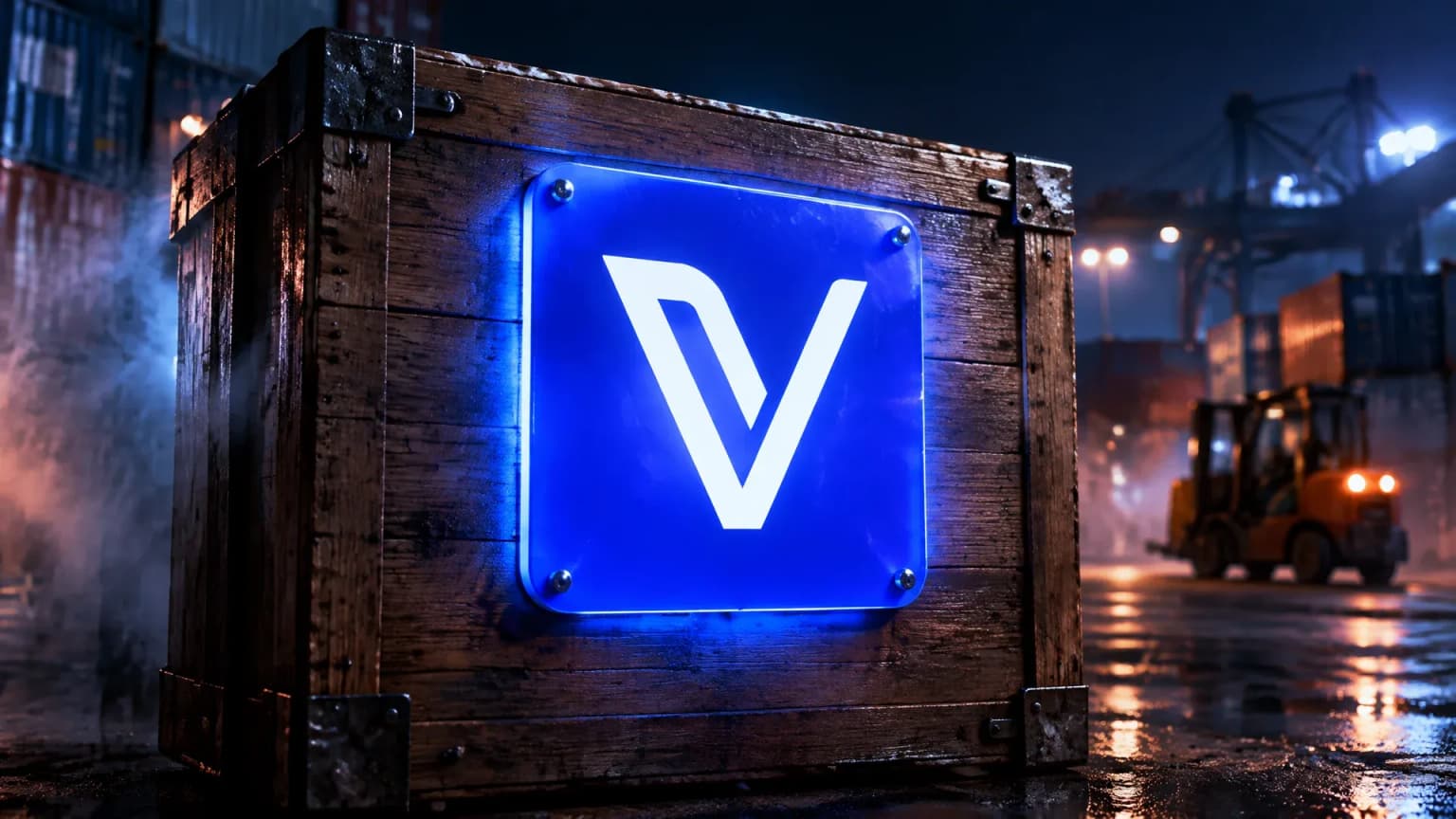
Transparency note: This article was produced with the assistance of artificial intelligence and reviewed by our editorial team before publication. All figures and claims were checked against the primary sources linked in the text. The feature image was generated with AI.
Related articles
- VeChain Interstellar on September 16: What VET Holders Should Know About the Hardfork
- What are AI Agents? Why the Machine Economy Needs Crypto in 2026
- Breaking Insights from Token2049: Monad’s Vision for the Future of Blockchain Scalability
- Bitget Wallet Token (BWB) makes debut on the Bitget Launchpad
- What is MOVE Token and How It Rose to the Top 100 Cryptos
Which topics should we dive deeper into?
Select what genuinely interests you. Your picks feed directly into our editorial planning.
Crypto news that's actually worth your time.
Weekly. 60 seconds. Carefully curated by our editors: no hype, no promo flood, no spam.

October 29, 2026 9:49 PM
Is This the End? How Low Bitcoin Could Fall After the Binance Hack
About $2.8 billion left a Binance hot wallet and Bitcoin slid below $79,000. Whether this turns into a real crash depends on one question. Three scenarios, the key price levels for Bitcoin, Ethereum and Solana and what to do now.

March 26, 2026 6:00 PM
Is Your Bitcoin Really Bitcoin? The Truth About Wrapped and Staked BTC
Wrapped and staked Bitcoin are growing fast in DeFi—but are they real BTC? Discover the risks, differences, and what investors must know.
September 9, 2025 3:09 PM

MYX Price Skyrockets: From $2.09 to $16 in Just Weeks
MYX Finance ($MYX) stunned the crypto world with a rally from $2.09 to over $16, pushing its market cap near $3B. What’s fueling this parabolic run—and can it last?
August 28, 2024 10:33 PM
How to Migrate from MATIC to POL: Full Guide
How to update and migrate Polygon Tokens from MATIC to POL, when and why? Here is all you need to know...
November 3, 2026 1:33 AM

Polkadot (DOT): the network behind 2.1 billion tokens and its parachains
Polkadot links independent blockchains under a shared security umbrella, and since 2026 the DOT supply has been capped at 2.1 billion tokens. This profile explains the relay chain, Asset Hub, coretime and the 28-day lock-up for staking.
November 2, 2026 5:52 PM

What is Hedera (HBAR)? Hashgraph, the corporate council and what HBAR is used for
Hedera orders transactions with a hashgraph method instead of blocks, and the network is governed by a council of 33 companies. This profile explains the technology, HBAR supply, fees and the tax rules that apply in Germany.
October 30, 2026 9:39 AM
NEAR Protocol explained: how sharding and 2.5 percent staking work
NEAR Protocol is a layer-1 blockchain that spreads its work across sections running in parallel and is secured by stakes. What the NEAR token does, how staking and custody work and what to check before you buy.
October 26, 2026 3:16 AM
What is Chainlink? Oracles, the LINK token and why banks use the network
Chainlink gives smart contracts the data a blockchain cannot see on its own. What the oracle network does, what the LINK token is paid for and what applies when you buy in Germany.
October 23, 2026 1:35 PM
What is Tether (USDT)? The stablecoin explained: 182 billion tokens without EU authorisation
With 182.8 billion tokens in circulation, Tether is the largest stablecoin in the world and settles two out of every three crypto dollars traded. In the EU it lacks authorisation as an e-money token, and from January 8, 2027 authorised providers may no longer offer services around it.
October 23, 2026 4:21 AM
What is Solana? The blockchain behind SOL: no supply cap, 589 million tokens in circulation
Solana settles payments in milliseconds and swapped out its voting mechanism on October 21, 2026. What the network is, what SOL is needed for, and what applies in Germany for buying, custody and tax.
October 22, 2026 1:45 PM
Cryptocurrency explained: how digital money works without a bank
A cryptocurrency is an entry in a public ledger that neither a bank nor a central bank controls on its own. This piece explains how that ledger works, what separates Bitcoin from the euro, and which rules apply in Germany to buying, custody and tax.
October 22, 2026 1:36 PM

What is an issuer? Meaning, examples and issuer risk
Context: who the issuer is in the case of a share, an ETF, an ETN, a certificate, a stablecoin and a stock token, what MiCA and prospectus law understand by it, and what an issuer insolvency leaves of 10,000 euros. With tables and a worked example.
October 22, 2026 7:41 AM

CLARITY Act: what the US crypto law would do and where it stands in the Senate
In context: what the CLARITY Act would do, how the House and the Senate voted, and what the SEC and CFTC are pushing ahead without a law. With a timeline, the vote arithmetic and a comparison with the EU regulation MiCA.
October 11, 2026 10:20 PM

QNT token: a £100 Overledger licence a year, 14.88 million supply cap
The QNT token pays the annual licence for Overledger and is to carry the fee for gas and execution in the Fusion Rollup. What it does, where the cap sits and why circulating supply differs by 2.47 million tokens depending on the source.
October 5, 2026 7:38 PM

What is Quant (QNT)? How Overledger and Fusion connect 74 networks for banks
Quant builds no blockchain of its own but an intermediate layer that banks dock their applications onto just once. What Overledger and the Fusion Rollup deliver, what the US clearing house mandate means and where the role of the QNT token remains undocumented.

October 1, 2025 8:05 PM

Universal Exchange (UEX): Bitget’s new model for the future of trading
Bitget launches Universal Exchange (UEX), merging CEX, DEX & TradFi into one seamless platform to redefine the future of global finance.
December 5, 2024 11:00 PM
BGB Price Prediction: Bitget Token Price UP by more than 25%
Bitget is a top crypto exchange, with its native token BGB surging over 24% in the last 24 hours. Learn why Bitget stands out, what BGB offers, and how you can get started.
September 1, 2024 10:00 PM
Ripple Unlocks 1 Billion XRP Tokens: What's Next For XRP Price?
As Ripple unlocks 1 Billion XRP Tokens, eyes are now on the XRP price, will it surge or crash next?
August 1, 2024 10:15 AM

SCAM News: "BitClout" DeFi Project Founder Arrested For Wire Fraud
In major scam news today, the "Bitclout" Founder was arrested for allegedly defrauding investors and misusing funds estimated at $257M.
May 4, 2024 11:58 AM

Is Dogwifhat Good to BUY in 2024?
Dogwifhat recently made huge gains compared to other altcoins. Is Dogwifhat a good buy in 2024? Let's analyze WIF prices.

August 16, 2023 6:18 AM

VeChain News: Is VeChain Price About to Make Unprecedented Gains? – Find Out Now!
Think a $0.50 VET price is just wishful thinking? Let's unpack the reasons that could catapult VeChain price into the stratosphere.
July 28, 2026 11:53 AM
Why Is Crypto Down Today? The Reasons Behind Every Crypto Sell-Off
Why crypto is falling today, updated with every major move: the current trigger, the six forces behind almost every crypto sell-off, a five-minute checklist and a timeline of the 2026 drops.
November 3, 2026 8:28 AM
Why Is Crypto Down Today? The 5 Reasons Behind the November 3 Sell-Off
Why is crypto down today? Bitcoin sits near $76,000 after the Binance hack, a hawkish Fed and a Nasdaq slide. The five drivers, explained.
July 27, 2024 2:34 PM

Why Is The Crypto Market Up TODAY?
With the Bitcoin 2024 Conference taking place now in Nashville, the crypto market is showing bullish signals, intriguing traders around the future of Bitcoin and Altcoins.
May 18, 2026 8:15 AM
Bitget Review 2026: Fees, Safety After the $388M Hack and Who Can Use It
Bitget review for October 2026: fees, the $388 million hack, withdrawals, Proof of Reserves and the countries where Bitget cannot be used.
More from CryptoTicker