
PREDICT airdrop: 35 percent now or 100 percent after a year, the deadline is November 26
With the PREDICT airdrop from Binance Wallet you choose between 35 percent now and 100 percent after a year of staking. Anyone who does not submit a form by November 26, 2026 is automatically assigned the second variant.





Which topics should we dive deeper into?
Select what genuinely interests you. Your picks feed directly into our editorial planning.
Crypto news that's actually worth your time.
Weekly. 60 seconds. Carefully curated by our editors: no hype, no promo flood, no spam.
With the PREDICT airdrop from Binance Wallet you choose between two payout routes, and the choice is a one-off: Option A pays out 35 percent of your allocation promptly, which writes off the remaining 65 percent for good. Option B pays the full 100 percent, but only after the project has completed a year of staking. Anyone who has not submitted a form by November 26, 2026, 09:00 UTC, is automatically assigned Option B.
That is the core of it, and it is often reported wrongly: doing nothing does not cost you the 65 percent. Doing nothing ties you to a year of staking. Only those who actively pick Option A lose the 65 percent. This distinction decides whether you have to act at all.
Option A pays 35 percent, Option B the full 100 percent
The Binance Wallet announcement describes two variants of the allocation. Under Option A you receive 35 percent of the tokens due to you, paid out promptly. For the remaining 65 percent, the announcement states explicitly that this share expires with the choice and cannot be reclaimed by the token project. Under Option B you receive the full 100 percent as soon as the project has completed a staking period of one year.
Allocation here means the amount of tokens due to you on the basis of the Predict Points you have collected. That amount is not yet a credit. You can dispose of it only once the variant you chose is paid out.
What is final about the choice
Two stipulations make the decision harder than a normal claim window. The form can be submitted only once per account, and no changes are possible after submission. Anyone who picks Option A and looks at the price two weeks later cannot go back. That one-way street is the reason a close look pays off before you submit anything.
Anyone who does not submit the form lands in Option B automatically
The default is clearly set out in the announcement: if no form is submitted before the deadline expires, Option B applies. For you that means doing nothing amounts to a decision on the substance rather than a postponement. You are opting for the full 100 percent and against quick availability.
For most participants that default is the economically obvious one, because it writes off no share. The price for it is time: for one year you have no access to the tokens, and you carry the full price risk throughout.
The submission deadline ends on November 26 at 09:00 UTC
The hard cut-off for the form is November 26, 2026 at 09:00 UTC. In German time that is 10:00 CET. After that moment no submission is possible, and the default takes hold for good.
The deadline on listing day, October 29 at 09:00 UTC, has already passed. Anyone who submitted nothing back then has lost nothing: weekly batches exist for later submissions.
The times quoted in other sources
Depending on the source you will read 17:00 Beijing time, 4 a.m. East Coast time or 09:00 UTC. That is the same moment in three time zones. Rely on the figure in the Binance announcement itself, because conversions in third-party sources repeatedly differ by an hour.

The weekly batches pay out on November 6, 13, 20 and 27
Anyone submitting Option A after October 29 is not served straight away but in a weekly batch. The payout dates are November 6, 13, 20 and 27. What counts in each case is the cut-off at 09:00 UTC on the preceding day.
That produces a marker considerably closer than the submission deadline: the next cut-off is November 5 at 09:00 UTC. Anyone who wants to make the batch of November 6 has to submit before then. And the last batch on November 27 falls after the submission deadline of November 26, so anyone who still wants to catch it has to submit by November 26 all the same.
For Option B these dates play no role. There the clock starts only when the project completes the one-year staking period.
 Compare staking platforms and yields
The PREDICT listing is postponed indefinitely
Binance has postponed the start of trading in PREDICT. October 30 at 10:00 UTC had been scheduled, with the pairs PREDICT/USDT, PREDICT/USDC and PREDICT/TRY. Via its own channel the exchange said the listing is being postponed indefinitely. Alpha trading in Binance Wallet will also start later; the exchange will announce a date separately.
The background is a security incident at Binance in late October. The exchange temporarily suspended withdrawals, is working on securing its withdrawal service and has announced proof of its reserves. The project predict.fun has adjusted its token generation event and the first-season claim to the postponement.
Without an exchange price there is no yardstick for giving up 65 percent
The postponement changes the calculation, and precisely at the point where Option A would be attractive at all. Normally you weigh things up: 35 percent at a known price today against 100 percent at an unknown price in a year. That trade-off needs a price for the present.
That price does not exist at the moment. As long as PREDICT is not tradable, you do not know the value of the 35 percent you are committing to, and you certainly do not know the value of what you are giving up. Anyone submitting Option A now commits to a share whose present value they cannot put a figure on.
Why an early price says little anyway
Once trading gets going, the first few hours are rarely a reliable yardstick. At a token launch a small circulating supply meets high attention, and the spread between bids and offers is wide. A price from that phase is hardly a basis for a decision that binds for a year.
Predict Points: where the points balance sits in Binance Wallet
Your allocation depends on the Predict Points you have collected by using the prediction platform. You will find the balance two ways: via Binance under "Assets" in the Prediction Account, or in Binance Wallet via "Discover", then the Predict dApp and "Assets" there.
Which route you take has a practical consequence that is easily overlooked. If you query the points via the Binance assets page, the credit runs to the Alpha account. If you query them via Binance Wallet, the tokens land in the associated wallet. Anyone searching later and finding nothing is often looking in the wrong place.
The records you should secure now
Keep your points balance, the date of submission and the option you chose on file, ideally as a screenshot with a visible date. For your tax return you will later need the inflow with its date and value, and if the tax office queries it, your own record is considerably more robust than your memory. Which data tends to pay off with airdrops is something we have set out in an overview of the records to keep for airdrops.

A year of staking means price risk and smart contract risk
Staking means that tokens are locked in a contract for a set period, usually to secure a network or run an application. For you as a holder, the lock-up mainly means you cannot sell during that time.
With Option B, two risks come together that you weigh against the 65 percent. The first is the price: if PREDICT falls by more than 65 percent during the year of the lock-up, the immediate partial payout would have been the better route in hindsight. The second is technical. Locked tokens sit in a smart contract, and an error or a gap in that contract can make balances unreachable. How providers and lock-up periods differ in staking is shown by our comparison of staking platforms.
On top of that, the staking period has to be completed by the project. The timing of the full payout therefore hangs on a process you do not steer. Anyone who needs access to the money within months should factor that into the decision.
A perspective that goes beyond this one airdrop can be found in our collection on crypto airdrops. How claim deadlines have played out in other cases is shown in our piece on when an airdrop entitlement expires.
 Compare crypto tax software
Airdrops and tax: inflow and sale are assessed separately
In Germany, the taxation of an airdrop depends on whether you provided something in return for the tokens. You collect Predict Points by using the platform, so through an activity. On the common reading, that argues for treating the inflow as other income under Section 22 No. 3 of the German Income Tax Act, valued at the euro amount at the moment of the credit.
If you later sell the tokens at a profit, Section 23 of the German Income Tax Act applies to private disposals, with the holding period of one year. In its circular of March 6, 2025, the German Federal Ministry of Finance confirmed that staking does not extend the holding period of the underlying coins. Income from the staking itself counts as other income again.
One point is disputed in the specialist literature and should make you cautious: with airdrops it is contested whether your own inflow or the distributor's acquisition counts as the start of the holding period for a later sale. Anyone expecting larger amounts is better off clarifying that with a tax adviser in advance than with the tax office after the fact.
The 256-euro threshold and the 1,000-euro threshold apply separately
Two thresholds are regularly mixed up, and the confusion costs money. For other income an exemption threshold of 256 euros a year applies. For private disposals a threshold of 1,000 euros has applied since 2024, raised by the Growth Opportunities Act from 600 euros before.
Both are exemption thresholds and not allowances. If a threshold is exceeded, the entire amount is taxable and not just the part above it. So you check the inflow from your airdrop and your staking income against the 256 euros, and a later sale profit against the 1,000 euros. How to keep clean records of both across the year is shown by our comparison of tax tools and portfolio trackers. Our piece on tax on crypto airdrops goes deeper into the taxation of free tokens.
What Option B adds for tax
If you lock the tokens for a year, staking income may arise that has to be recorded as other income, even though you have sold nothing. That a tax liability can arise without a sale surprises many holders; we have described this in more detail using the example of unsold airdrops.
What the postponement means for trading on Binance
As long as PREDICT is not listed, there is no order book trading in the token on Binance. For you that means you could not currently exchange a partial payout from Option A for euros or stablecoins on the exchange. The token sits either in the Alpha account or in the wallet until trading begins.
In this phase a partial payout therefore remains a position you have to hold, whether you want to or not. That is a further argument for leaving the decision open until trading starts and letting the default take effect, as long as your own needs allow it.
PREDICT airdrop: without a form, one year of staking applies from November 26
The decision comes down to a single question: do you need part of the tokens soon, or can you wait a year? Anyone who can wait has to do nothing and receives the full 100 percent. Anyone who cannot wait pays for it with 65 percent of the allocation.
- Clarify your points balance and the route. Check whether your Predict Points run via the Binance assets page or via Binance Wallet, because that determines where the tokens arrive later. If you notice in the process that you are running several trading venues in parallel, the exchange comparison helps you tidy up.
- Weigh the lock-up against your needs. A year without the option to sell is the price for the full 100 percent. How long other providers lock up and what they pay for it is set out in the comparison of staking platforms.
- Record the inflow for tax. Note the date and euro value of the credit and check your other income against the threshold of 256 euros. A tool from our tax tool comparison takes care of the running overview.
The postponement of the listing has eased the situation rather than tightened it. Without a price, the argument for the quick partial payout is missing, and the default leads to the full allocation without any action from you. Binance has said it will announce the start of trading separately.
(As of November 1, 2026. This article is not investment advice. Prices and fee structures change; check the terms with the provider before you buy.)
Frequently asked questions about the PREDICT airdrop
Transparency note: This article was produced with the assistance of artificial intelligence and reviewed by our editorial team before publication. All figures and claims were checked against the primary sources linked in the text. The feature image was generated with AI.
Related articles
- 17 Days to Expiry: Pharos Closes the Claim Portal for the PROS Airdrop on October 25
- Sonic Airdrop, 32.69 Million S and October 15: What Happens to Your Claim Now?
- Bitcoin Lending in Austria: When Tax Falls Due
- Solana price 108.46 euros: a 2.4 percent gain in euros, a 2.5 percent loss in dollars: what to check now
- XRP Jumps to $1.56: What Holders Should Check on Buying Route, Holding Period and Leverage
Which topics should we dive deeper into?
Select what genuinely interests you. Your picks feed directly into our editorial planning.
Crypto news that's actually worth your time.
Weekly. 60 seconds. Carefully curated by our editors: no hype, no promo flood, no spam.

September 24, 2026 1:34 PM

Cardano Slides Below $0.24: What ADA Holders Should Check on Leverage, Liquidation and Holding Period
Cardano has given back its move above $0.25 and trades around seven percent below the high of the past 24 hours. What that means for leveraged positions, the holding period of your tranches and the buying route under MiCA.

August 22, 2026 10:29 AM
Bitcoin Fork: What Happens to Your Coins When the Chain Splits
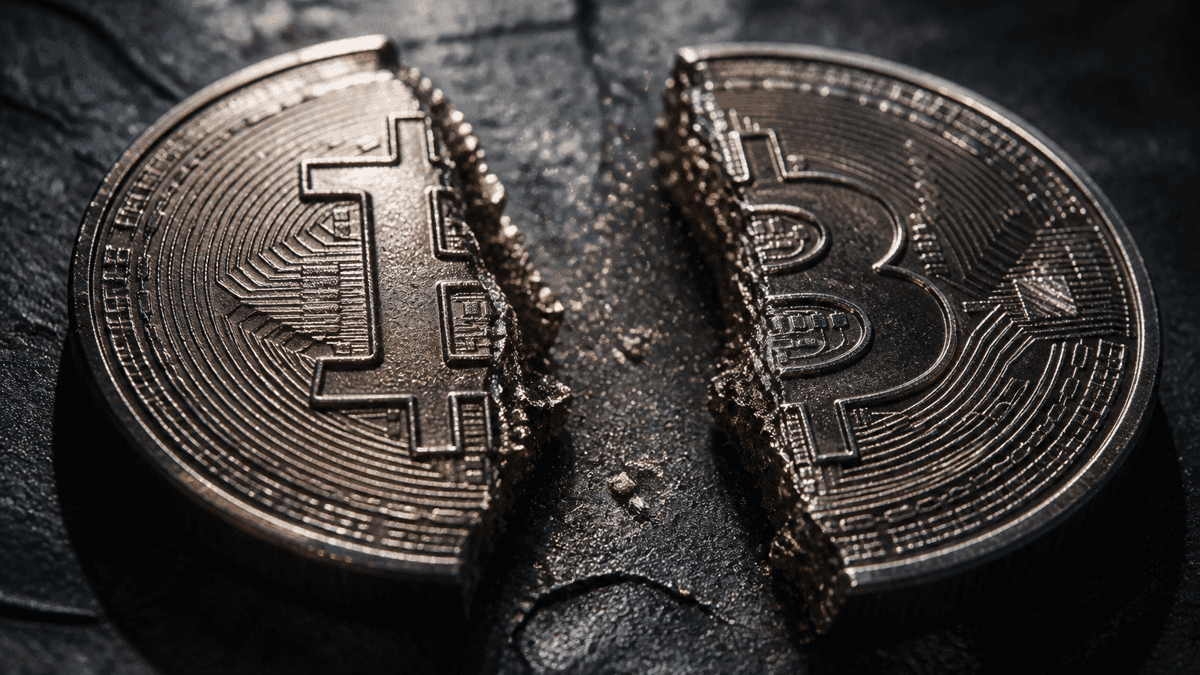
On October 31, 2026 a new chain called ECX splits off from Bitcoin, and every holder is credited automatically. Who actually receives the coins depends on the private keys, on voluntary replay protection and on a tax rule many overlook.
August 20, 2026 1:36 AM

VANRY Migration to Base: Why the Swap Window Closes Five Weeks Before the Binance Withdrawal Deadline
The swap of VANRY to Base runs through a portal operated by the project and ends on September 10, 2026 at 13:00 UTC. Binance delisted the token today but is not handling the swap, and still allows withdrawals until October 17.
August 20, 2026 4:24 PM

Bitcoin Across Multiple Wallets: How Austria Works Out the Acquisition Cost
Bitcoin spread across several wallets? How Austria works out the acquisition cost and the rolling average price for tax purposes.
September 19, 2026 10:28 AM
Claiming the LAPTOP Airdrop at Bitvavo: Who Is Eligible and What to Do by October 10
Bitvavo is letting customers with TRUMP losses above 1,000 euros request around 200 $LAPTOP until October 10, 2026. This guide shows who meets the conditions, how the exchange calculates the loss and what to expect on tax.
September 10, 2026 1:13 AM
Staking Taxes in Germany: The Inflow, the 256-Euro Threshold and the Holding Period
Staking is taxed twice: once when the reward arrives and once when you sell it later. This article explains both moments, the threshold of 256 euros, the separate twelve-month period and what applies to liquid staking, restaking and staking ETPs.

December 26, 2025 1:50 PM

Breaking: Trust Wallet Chrome Extension Hack Drains $7M, Full Reimbursements Promised
A supply-chain attack hit Trust Wallet’s Chrome extension, draining $7M from users. Binance’s CZ says all victims will be reimbursed.
October 29, 2026 10:40 PM
Binance Withdrawals After the Hack: Solana and XRP Paused, Bitcoin and Ethereum Open
Binance has confirmed the hack: co-founder Yi He says the exchange will cover all losses, and deposits and withdrawals are temporarily suspended. What it means for users, which networks were already paused and what to watch out for now.
September 28, 2026 7:34 AM
The Most Profitable Crypto Airdrops of the Week: Week 40 and the October 15 Sonic Deadline
Sonic burns 32.69 million unclaimed S tokens on October 15, and 11 days remain. At Kraken, the liquidation of the Beldex and Humanity remnants ended on October 2. Grass pays stage 2 in USDC rather than in GRASS. All the week 40 dates, checked at the source.

September 23, 2026 7:22 PM
Solana Price Holds $114: What Holders Check Five Days Before Alpenglow
SOL stands at $114.55 on September 23, after a 17.7 percent gain in seven days and a 2.2 percent loss on the day. Two deadlines matter more than the daily move: Alpenglow opens on September 28, and every purchase made this week starts a holding period of its own.
September 23, 2026 10:25 AM

Airdrop tax: when free coins are taxable in Germany
Whether you have to pay tax on an airdrop is decided by a single question: did you do something for the coins? This guide takes you through both cases, the valuation at the market price, and the records the tax office has demanded since the 2025 assessment period.
October 29, 2026 9:38 PM

Binance Hack: Around $2.8 Billion Drained From a Hot Wallet
On Thursday evening, roughly $2.8 billion left the Binance wallet “Binance 14” within minutes. The attacker had tied the wallet to their own contract via EIP-7702. Tether and Circle have frozen about $2.4 billion, and Binance says it is investigating.
September 14, 2026 1:27 PM

Bitcoin Lost to a Scam: What Counts as a Tax Loss in Austria
Lost bitcoin to a scam? Why Austria generally does not recognise the damage as a tax loss for privately held assets, and when compensation payments start to matter.
September 11, 2026 10:18 AM

Bitcoin Tax Audit: What Proof Austria Requires
Which bitcoin records can the Austrian tax office examine? Purchase dates, wallet transfers, acquisition costs and sale proceeds are what count.
September 3, 2026 10:21 AM

Bitcoin Lost in a Wallet Hack: What Tax Applies in Austria?
Bitcoin lost to hackers? In Austria, the theft of privately held coins generally does not create a capital loss you can use for tax. Only a later payout can change that.
August 27, 2026 10:16 AM

Bitcoin Tax Return in Austria: When You Must File
Even with a crypto exchange, a tax return can still be necessary in Austria. Foreign platforms, missing capital gains tax withholding and cross-provider losses are the typical triggers.
August 14, 2026 6:18 PM

Bitcoin From a Foreign Exchange to Austria: Which Tax Data You Need
Transferring Bitcoin from a foreign exchange to an Austrian platform: which tax data can be missing for the withholding tax. And what investors need to watch out for.
August 31, 2026 6:26 AM
The Most Profitable Crypto Airdrops of the Week: Week 36
At Plume the Season 2 claim has been open since late May with no published end date, and at GRVT every tranche starts its own 30-day clock: five airdrop dates for week 36, each checked at the project source.
August 24, 2026 6:25 AM
The Most Profitable Crypto Airdrops of the Week: Week 35
At GRVT the first tranche expires 30 days after the token launch and Propr's announced TGE date has passed unconfirmed: six airdrop dates for week 35, each one documented at the project source.
October 16, 2026 10:45 PM

Airdrop claim: at Meteora every entitlement below 10 MET lapses on October 21
Meteora's claim window for LP Stimulus Season 2 closes on October 21, 2026, and whatever is left behind passes to the remaining eligible participants. Which two thresholds decide the entitlement, which pools came away empty, and what applies for tax on receipt.
October 11, 2026 4:22 AM

28 Days Locked for 2.77 Percent a Year: What Polkadot Staking Means for Your DOT
Polkadot pays 2.77 percent a year for staking, and the exit takes 28 days. We weigh the two against each other: what is left after the validator's commission, how many DOT you need to start, and what the lock-up costs at this price.
October 5, 2026 7:54 AM
The Most Profitable Crypto Airdrops of the Week: Week 41 and the October 15 Sonic Burn
On October 15, Sonic burns 32.69 million unclaimed S tokens – after that the claim is closed for good. Pharos closes its claim portal on October 25, and Grass pays the Stage 2 rewards in USDC until January 2027.
October 5, 2026 4:36 AM

Ethereum pays 2.66 percent, just over 2.2 arrives: what investors need to know about staking
The Ethereum network pays out around 2.66 percent a year, and just over 2.2 percent arrives through Lido and Rocket Pool. Where the gap comes from, how long the exit takes and what applies for tax in Germany.
October 1, 2026 7:36 PM

Crypto tax and withholding at source from 2028: what to check now
The German Federal Ministry of Finance’s draft bill goes to cabinet on October 14, 2026. The underexposed part of it is the deduction of tax from 2028: which providers are to withhold the tax on investment income, why self-custody and foreign platforms stay exempt from it, and what you should document by December 31.
September 23, 2026 4:12 AM
How to Set Up a Crypto Wallet: Securing Your Coins in Seven Steps
Your own crypto wallet is set up in twenty minutes, yet a single step decides everything that follows. This guide takes you through wallet type, recovery words and the test amount, and sets out what BaFin and the tax office expect.
September 9, 2026 7:11 PM
German Crypto Tax Return: Where to Enter Gains, Losses and Staking in Anlage SO
In Germany, crypto gains belong in Anlage SO, and staking and lending go in a separate section of the same form. Which lines of the 2025 form apply, when you do not have to enter anything, how to keep your losses and which deadlines are running now.

More from CryptoTicker