
Optimism Re-Designates 546.9 Million OP from the Airdrop Allocation: What It Means for Your Tokens
The Optimism Foundation is turning the unspent airdrop pot into a fund for partnerships and institutional clients, decided by 0.67 percent of the total supply. What that means for your OP holdings and why a sixth airdrop is off the table for now.





Which topics should we dive deeper into?
Select what genuinely interests you. Your picks feed directly into our editorial planning.
Crypto news that's actually worth your time.
Weekly. 60 seconds. Carefully curated by our editors: no hype, no promo flood, no spam.
Anyone who made transactions on Optimism because a sixth airdrop was supposed to arrive at some point has had an answer since August 19, 2026: it is not coming for now. The Optimism Foundation has re-designated 546.9 million OP from the airdrop allocation into a new pot, the Strategic Ecosystem Fund. The money stays in the ecosystem, but it no longer goes to users; it goes to partnerships and institutional clients. The decision came out of a vote in which less than one percent of the total supply took part.
This piece explains what exactly was re-designated, how the vote came about, what happens to your own OP tokens (namely nothing) and which question behind it really counts for you as a German investor: what a prospective allocation is worth at all as long as it is not sitting at your address.
What Optimism did with the 546.9 million OP from the airdrop allocation
The proposal is titled "Re-designating the User Airdrop Allocation as the Strategic Ecosystem Fund" and was posted in the Optimism governance forum on August 6, 2026 at 13:10 UTC. Its core consists of a single act: the unspent remainder of the airdrop allocation, 546.9 million OP, is declared a new allocation category, the Strategic Ecosystem Fund. The fund is managed by the Optimism Foundation.
What it is meant to finance is spelled out in the proposal: partnerships that bring chains, protocols, institutions and infrastructure onto the OP Stack; incentives that deepen activity and liquidity on OP Mainnet; and deals that widen the reach of the OP Stack among institutions and large brands. Tokens already handed out through airdrops one to five are not affected.
At the price of August 21, 2026 (CoinGecko: $0.098398 or €0.084131 per OP), 546.9 million OP correspond to roughly $53.8 million or about €46.0 million. For context: the market capitalisation of the circulating OP supply stood at around $225 million at the same time. The fund therefore covers a value in the order of a quarter of what is in circulation today, while these 546.9 million tokens are precisely not in circulation; they sit at the Foundation's disposal.
What an airdrop is, and why an allocation is not yet a claim
Airdrop: An airdrop is the free distribution of tokens to addresses that have met conditions set out in advance, such as a minimum number of transactions on a particular blockchain. The recipient pays nothing; they are rewarded after the fact for behaviour they have usually already shown.
The decisive difference, which many readers only notice in a case like this one, lies between an allocation and a claim. An allocation is an accounting category in a project's token distribution plan: this many tokens are earmarked for users. A claim only arises from it once a specific round is called, an address list is drawn up and the distribution is executed. Until then the decision rests with the project.
The figures in this case make that vivid. Across five rounds the Optimism Collective actually distributed 269.1 million OP to users. What remained were the 546.9 million now at issue. Add the two together and a good two thirds of the amount originally earmarked for users had never been paid out. It had been assigned, not allocated. It is precisely this remainder that is now changing purpose.
Why the Optimism Foundation is planning no further airdrops
The reasoning in the proposal is remarkably sober and rests on the Foundation's own analyses. It writes of a fit problem: airdrops were built for an earlier growth phase that was about winning users broadly. That movement no longer matches the strategy of institutional adoption around which OP Mainnet and OP Enterprise are built today.
This is backed by two academic studies that Optimism itself commissioned and made public. Andrew Hall and Eliza Oak examined whether the second airdrop increased participation in governance, and a further paper uses a regression discontinuity approach to test whether the fifth airdrop improved user retention. The Foundation concludes from this that airdrops are not the right tool for its current growth priorities. It expressly does not frame this as a final verdict on the mechanism and reserves the right to review the assessment when new designs appear.
For you as a holder one sentence remains, and it stands like this in the proposal: no further airdrops are currently planned. Anyone who orients their activity on a chain around what a project once hinted at should read this case as an object lesson.

How the governance vote turned out: quorum, votes and participation
Governance vote: In a decentralised organisation, token holders decide on proposals by voting with their voting weight, usually through delegates to whom they have transferred their voting rights rather than voting themselves. Quorum here means the minimum volume of votes that has to be cast in total for the result to be valid at all.
The vote ran from August 13, 2026, 20:07:23 UTC, to August 19, 2026, 20:07:23 UTC. The figures shown by the governor contract, which I queried directly on August 21:
- Eligible to vote, meaning delegated: 55,134,630 OP
- Quorum: 16,540,389 OP
- For: 17,973,914.67 OP
- Against: 10,930,696.39 OP
- Abstentions: 88,865.86 OP
Together that is 28,993,476.92 votes cast. The quorum is thus clearly exceeded, and the proposal comes to 62.2 percent approval if abstentions are taken out, or 62.0 percent if they are counted in. Under the rules of the procedure the decision was therefore properly reached. Anyone reading the approval figure on its own takes it for a clear mandate.
The number that puts the process in perspective: 12.7 percent of supply, 0.67 percent participation
It becomes interesting when the votes are held against the total supply. OP has a total supply of 4,294,967,296 tokens. Three ratios follow from that, none of which appears in either of the two German-language reports on this process:
- The 546.9 million re-designated OP correspond to 12.7 percent of total supply.
- The 55,134,630 OP eligible to vote correspond to 1.28 percent of total supply.
- The 28,993,476.92 votes actually cast correspond to 0.67 percent of total supply.
That is a division, not a judgement. A share of 12.7 percent of supply was decided by a vote in which 0.67 percent took part. Both are within the rules: whoever does not delegate their voting rights simply does not vote, and low turnout is the norm in almost every token governance. But the order of magnitude belongs to the picture, precisely because reports usually carry only the 62 percent approval.
That governance decisions can move considerable sums without an attack or a technical fault being involved is no isolated case. How the same pattern looked in another DAO we wrote up in July in the case of BONK DAO and the loss of 20 million dollars from the treasury, there with a different outcome but the same underlying question: who actually decides, and with what weight?
Passed but not yet executed: what the queue in the governor contract means
One point that the English-language reports present in abbreviated form, and which you should know if you want to follow the process yourself: at the time of writing, the tokens have not yet been moved.
Queue: In governance systems of this design, an accepted proposal is first placed in a queue and only executed after a waiting period. Only with execution does the state on the blockchain change.
The proposal was placed in the queue on August 19, 2026 at 20:17:51 UTC, ten minutes after the vote closed. The fields for execution time and execution block were both still at zero when I queried them on August 21, 2026 at around 06:40 UTC. The correct wording is therefore: accepted and queued, not executed. Anyone wanting to check this will find the fields in the HTML served on the voting page; no access key is needed for it.
In practice that changes little for you, because the decision itself is hardly in doubt any more. For accuracy it changes a good deal: as long as execution is outstanding, the phrase "Optimism has moved the tokens" is premature.
What the Strategic Ecosystem Fund is meant to finance, and who is named as a reference
The proposal justifies the new fund with successes it names explicitly. It cites Bitpanda's "Vision Chain", the upgrade of Ink to the fully managed variant, a letter of intent with Dunamu for the GIWA Chain, and Ether.fi, which brings payment-oriented DeFi to OP Mainnet and is listed with $220 million in committed capital and more than 70,000 active cards. For the OP Stack itself the proposal cites a share of over 40 percent of transactions on layer-2 networks.
Layer 2 and OP Stack: A layer-2 network settles transactions outside the Ethereum main chain and writes only condensed results back to it, which lowers fees. The OP Stack is the open-source kit with which such networks can be set up.
For German-speaking readers, the mention of Bitpanda is the point at which the process suddenly comes close to home. The precise reading matters here: the proposal cites the Vision Chain as evidence that the enterprise strategy is having an effect. What it does not say is that Bitpanda receives money from this fund. If you trade with a European provider and want to know how the houses differ on fees, regulation and product range, our comparison of the best crypto exchanges will help you more than the question of which chain runs in the background there.

What critics argue in the delegate debate
The discussion in the governance forum is public, and it was not unanimous. Just under 38 percent of the votes cast were against. Two objections can be read there, and they are attributed here rather than adopted.
The delegate MconnectDAO expressly supports the strategic reasoning but demands considerably more accountability than for ordinary disbursements: public reports on how much OP flows into which category, disclosure at recipient level including lock-up periods and any clawback clauses, measurable results instead of short-term activity, and a regular review by the Collective. The reason he gives: holders and delegates need enough insight to judge dilution risk and capital efficiency.
The delegate Luckyhooman.eth, who voted against the proposal, argues considerably more sharply. His core argument is a counter-calculation: some 686 million OP have already flowed into the growth pot made up of partner, seed and unassigned funds, more than two and a half times the 269.1 million that users received. The reason the airdrop allocation is unspent, he says, is that the Foundation did not distribute it.
Cointelegraph summarises the delegates' criticism in similar terms and adds a point that has remained open: nowhere so far does it say what the new fund's return is to be measured against. For reporting, the proposal refers to the Foundation's annual budget report.

What this means in practice for your OP holdings and your airdrop expectation
First the reassurance, because it concerns the most common worry: for OP tokens that belong to you, this decision changes nothing. The tokens stay at your address, they are not confiscated, there is no swap and no deadline you could miss. The tokens from the five airdrops already completed are expressly untouched as well.
What changes is an expectation. Anyone who made transactions on OP Mainnet with a possible sixth round in mind should drop that expectation until the opposite is decided. You may know this situation from other chains, and it is the norm: an airdrop is a marketing instrument that a project deploys for as long as it serves it.
On the price, restraint is in order. OP stood at $0.098398 on August 21, 2026, 10.1 percent higher than the day before. In the same window bitcoin gained 8.5 percent and ether 5.0 percent. The rise therefore cannot be read as a reaction to this decision; it largely tracks the wider market. The obvious thesis that the 546.9 million tokens now create supply pressure also finds little support in the process: the tokens were already held by the Foundation, and what changed is the purpose, not the holder.
Airdrop hopes and tax: why an allocation that never arrives triggers nothing
The question comes up with every cancelled airdrop, so briefly and clearly: an allocation you never received triggers no taxable event in Germany. There is no inflow, and therefore no loss you could claim. Expenses for transactions you made in the hope of an airdrop are not deductible income-related expenses; they were part of your private trading activity.
It looks different as soon as tokens actually land at your address. Then the question of the time of inflow and of valuation arises, and that matters even without a sale. How this works in detail we have taken apart in our piece on unsold airdrops and the tax liability that applies without a sale. Anyone playing several chains and wanting to keep track of acquisition dates will hardly get by without a tool; which programmes map the German specifics such as the one-year holding period cleanly is shown in our comparison of crypto tax tools and portfolio trackers.
The practical advice from this case is unspectacular: document inflows at the moment they happen, with date, amount and price. Anyone reconstructing them in spring for the previous year pays for the time twice.
Optimism airdrop re-designation: what to take away
- Check whether your trading strategy hangs on a promise nobody has to honour. Activity on a chain purely in the hope of a future allocation is a bet on a decision that others make. If you are trading on an exchange anyway, at least compare the cost of that activity: the exchange comparison shows where fees and regulation actually diverge.
- Record your inflows cleanly while they are fresh. Airdrops, staking income and forced conversions need a date, an amount and a price at the time of inflow. A suitable tool for it can be found in the comparison of tax tools and portfolio trackers.
- Separate custody from expectation. Tokens you hold for the long term do not belong at an address you use only for airdrop activity. Which devices are suitable and how they differ is set out in the hardware wallet comparison.
The primary source to read is the proposal in the Optimism governance forum; the assessment of the delegates' criticism can be found at Cointelegraph.
(As of August 21, 2026. This article is not investment advice. Prices and fee structures change; check the terms with the provider before you buy.)
Transparency note: This article was produced with the assistance of artificial intelligence and reviewed by our editorial team before publication. All figures and claims were checked against the primary sources linked in the text. The feature image was generated with AI.
Related articles
- Optimism Airdrop Confirmed – Here’s how to Claim OP Tokens for free
- 17 Days to Expiry: Pharos Closes the Claim Portal for the PROS Airdrop on October 25
- Sonic Airdrop, 32.69 Million S and October 15: What Happens to Your Claim Now?
- Events Recap: Token2049 and Solana Breakpoint
- Massive Starknet Airdrop: 700M STRK Tokens to 1.3m Users! How to be eligible for STRK Airdrop?
Which topics should we dive deeper into?
Select what genuinely interests you. Your picks feed directly into our editorial planning.
Crypto news that's actually worth your time.
Weekly. 60 seconds. Carefully curated by our editors: no hype, no promo flood, no spam.

September 2, 2026 10:17 AM
Converting MKR to SKY: Why the Upgrade Penalty Jumps to Five Percent in the Coming Days
The conversion contract currently withholds four percent: one MKR becomes 23,040 SKY instead of 24,000. We read the full history of the penalty off the blockchain ourselves and show why the next step is due within days.

September 28, 2026 7:17 PM
Polygon 2026: Polymarket Takes 84 Percent of the Fees With It to Its Own Chain
Polygon holds $765 million, and 83.6 percent of its fees come from a single protocol that has announced a move to its own chain. What is left of the ecosystem afterwards, what POL is still worth and what holders in Germany should watch.

August 9, 2024 11:13 AM
Franklin Templeton Launches Blockchain Fund on Arbitrum
Franklin Templeton has just launched a new blockchain fund on the Arbitrum network. Find out what this means for Arbitrum and the future of investing.
March 7, 2024 6:00 AM

The Potential Wormhole Airdrop Guide: How to Check for the $W Token Airdrop?
The W token is designed to serve as a governance asset. Let's take a look at this Wormhole airdrop guide in more detail.

December 21, 2024 12:23 PM
What is MOVE Token and How It Rose to the Top 100 Cryptos
MOVE token is dominating the charts as one of the best-performing cryptocurrencies this month. Learn how it rose to the top 100 cryptos list despite the market's latest corrections.
September 23, 2026 10:25 AM

Airdrop tax: when free coins are taxable in Germany
Whether you have to pay tax on an airdrop is decided by a single question: did you do something for the coins? This guide takes you through both cases, the valuation at the market price, and the records the tax office has demanded since the 2025 assessment period.

April 22, 2026 8:42 AM
Justin Sun Sues World Liberty Financial Over Frozen $WLFI Tokens
Tron founder Justin Sun filed a lawsuit against World Liberty Financial, alleging his $WLFI tokens were wrongfully frozen.
September 28, 2026 7:34 AM
The Most Profitable Crypto Airdrops of the Week: Week 40 and the October 15 Sonic Deadline
Sonic burns 32.69 million unclaimed S tokens on October 15, and 11 days remain. At Kraken, the liquidation of the Beldex and Humanity remnants ended on October 2. Grass pays stage 2 in USDC rather than in GRASS. All the week 40 dates, checked at the source.
October 12, 2026 10:40 PM
Shiba Inu and the Fake Airdrop of October 12: “no such airdrop. this is a drainer”
An account on X advertised a supposed SHIB airdrop on October 12. An adviser to the project calls the page a wallet drainer. What is behind it and how to check and revoke your token approvals.
October 16, 2026 10:45 PM
Airdrop claim: at Meteora every entitlement below 10 MET lapses on October 21
Meteora's claim window for LP Stimulus Season 2 closes on October 21, 2026, and whatever is left behind passes to the remaining eligible participants. Which two thresholds decide the entitlement, which pools came away empty, and what applies for tax on receipt.
August 18, 2026 4:27 AM
The most profitable crypto airdrops of the week – week 33
Grass, Plume, Midnight, dappOS and Propr: five airdrops with a confirmed date. Which claim windows are open in week 33 and when they close.
September 26, 2026 7:40 AM
The RAIN Token After the Enlivex Termination: What to Check on Access, Forced Sale and Holding Period
Enlivex terminated a share placement of 66,666,667 shares payable in RAIN tokens on September 22, 2026. The token sits 46.4 percent below its all-time high, and at Kraken the withdrawal deadline expired long ago.
July 24, 2025 6:00 AM

From Resistance to Adoption: Banks Enter a New Crypto Era
The world’s biggest banks are no longer resisting crypto — they’re embracing it. From JPMorgan to BNY Mellon, a new banking era is unfolding with full-scale crypto adoption and tokenized finance.
May 2, 2025 4:00 AM

Top 5 Altcoins to Watch in May 2025 After April's Explosive Gains
April 2025 saw major altcoins like SUI, HYPE, and SOL post double-digit gains. With institutional moves and rising on-chain activity driving momentum, here's what to expect from the top-performing altcoins in May 2025.
August 28, 2024 10:33 PM
How to Migrate from MATIC to POL: Full Guide
How to update and migrate Polygon Tokens from MATIC to POL, when and why? Here is all you need to know...
October 12, 2026 10:21 PM
Uniswap Moves Unichain to OP Enterprise on October 13: What It Means for Your Coins on the Chain
Unichain is changing its technical foundation: the testnet switches on October 13 and the mainnet on October 29. Balances and contracts stay, but operation of the chain passes to Optimism.
September 23, 2026 1:12 PM

Bitwise Lighter Staking ETP Lists on Xetra: What to Check on BLIT Before You Buy
Bitwise is bringing the first exchange-traded product on the LIT token of the derivatives platform Lighter to the Deutsche Börse today. It trades through an ordinary securities account, costs 0.85 percent a year, and the staking yield it is named after is not being paid yet.
August 28, 2026 1:33 AM
Sending Crypto: Why the Wrong Network Costs You the Balance on 51 of the 100 Largest Crypto Assets
When you withdraw from a crypto exchange, the network you pick decides whether your balance arrives or is lost for good. Our own analysis of August 26, 2026 shows that 51 of the 100 largest crypto assets exist on several chains at once.
June 26, 2025 12:42 AM
Cardano Midnight Airdrop: 24 Billion NIGHT Tokens to Be Distributed, Here's How to Claim
Cardano’s privacy-focused sidechain Midnight is launching a massive airdrop. Here’s everything you need to know about eligibility, claiming deadlines, and what the NIGHT token is used for.
September 26, 2024 11:14 AM

SHI Stablecoin Launch Is Soon, What Will Happen To SHIB?
The SHIB team reveals the upcoming launch of SHI stablecoin. Will SHI boost or compete with SHIB in the Shiba Inu ecosystem?
February 18, 2024 5:22 PM
BIG AIRDROP: PIXEL Tokens Airdrop To RON Stakers
The snapshot for eligibility was taken on February 8th at 10:00 am. Let's take a look at this PIXEL airdrop
December 31, 2023 8:11 AM

Ultimate Guide To Rainbow Wallet Airdrop
Rainbow has unveiled its Rainbow Points rewards initiative. This article is all about the simple guide on Rainbow wallet airdrop
November 12, 2023 10:36 PM
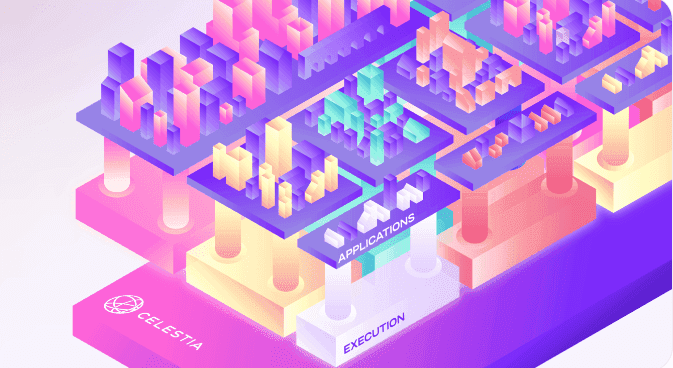
What is Celestia Crypto (TIA)? A New Era in Blockchain Technology Ahead…
Celestia introduces a modular approach to blockchain. What is Celestia crypto and what is TIA token? Let's answer all those questions.
November 19, 2021 10:27 AM
Top 5 Upcoming Airdrops – November 2021
Like every month, crypto enthusiasts wait for airdrops of different crypto projects. Here are the Top 5 Upcoming Airdrops November 2021.
September 21, 2026 10:12 AM

ZETA Moves to Solana: What Holders in Germany Must Check Now
ZETA holders have voted with 99.4 percent to move the token 1:1 to Solana as an SPL token and to shut down their own blockchain afterwards. There is no date yet, but your exchange decides for itself whether it takes part in the swap.

More from CryptoTicker