
Global Markets Crash: Why Millions Are Fleeing Stocks, Crypto, and Gold for This One Safe Haven
A massive multi-asset selloff is hitting stocks, crypto, and gold. Discover why investors are dumping everything to hoard cash as economic uncertainty peaks.





Which topics should we dive deeper into?
Select what genuinely interests you. Your picks feed directly into our editorial planning.
Crypto news that's actually worth your time.
Weekly. 60 seconds. Carefully curated by our editors: no hype, no promo flood, no spam.
The financial world is flashing a giant red warning sign. In a rare and violent synchronization, almost every major asset class is bleeding. Equities are tumbling, the digital asset ecosystem is experiencing mass liquidations, and even traditional safe havens like gold and silver are succumbing to intense selling pressure.
For retail investors, the synchronized drop is baffling. Aren't cryptocurrencies and precious metals supposed to hedge against stock market weakness? In a standard economic correction, yes. But we are not in a standard correction. We are witnessing a massive liquidity squeeze. Investors are aggressively unwinding positions across the board, fleeing from risk, and cycling their capital into one ultimate destination: the United States dollar.

Global Market Crash: Equities, Precious Metals, and Crypto
The selloff has spared no one. On Wall Street, the tech-heavy Nasdaq Composite recently plunged over 4%, recording its sharpest single-day decline in over a year. A toxic cocktail of disappointing guidance from semiconductor giants like Broadcom and an unexpectedly hot US non-farm payrolls report has forced investors to face reality. The narrative of imminent Federal Reserve interest rate cuts has evaporated. Instead, the market is pricing in a "higher-for-longer" rate environment, with CME FedWatch tool data showing a sudden uptick in expectations for an outright rate hike later this year.
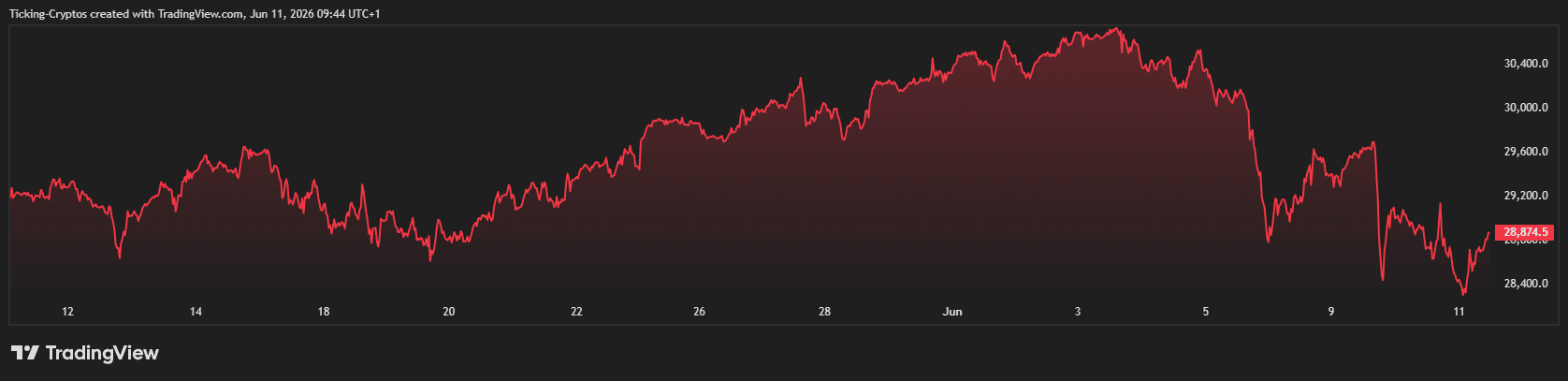
This macroeconomic shift has sent shockwaves through the cryptocurrency market. Bitcoin recently shattered its psychologically critical support level, crashing well below $60,000 to reach its lowest point since late 2024. Widespread deleveraging has wiped out billions in leveraged long positions, amplified by massive outflows from spot Bitcoin ETFs.
Even commodities have failed to act as a refuge. Spot gold prices, which analysts at major institutions like J.P. Morgan expected to climb steadily, have retreated dramatically from their highs. Silver has suffered an even steeper percentage decline, proving that when a liquidity panic hits, even the oldest hard assets on Earth get sold to cover margin calls and preserve capital.

*Investments carry risks. Trade responsibly.
The Mighty Dollar Reclaims the Throne
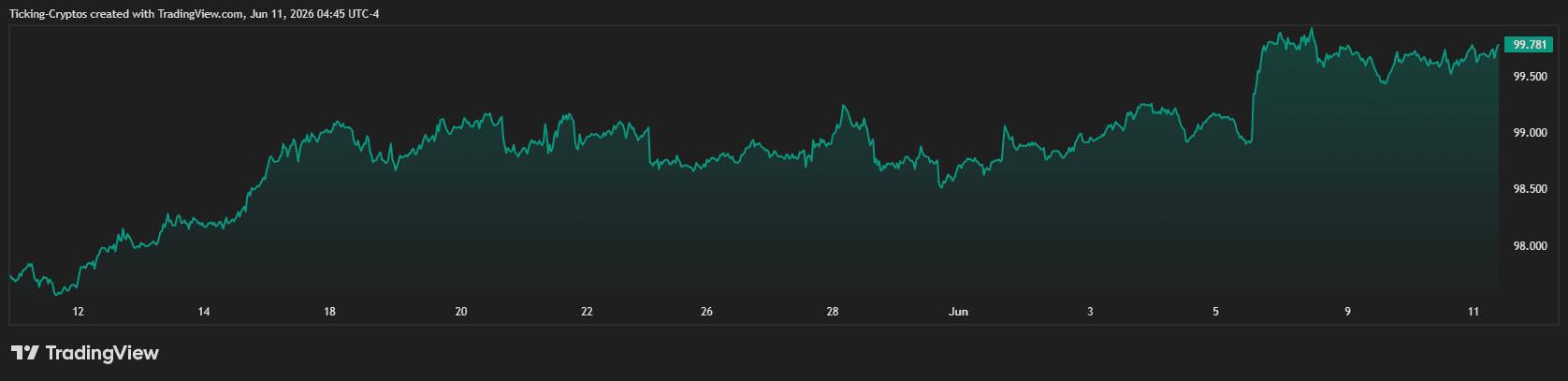
So, where is the money actually going? The answer is clearly visible in the performance of the US Dollar Index (DXY). The DXY recently surged past the crucial 100 handle, hitting its highest level in months.
When institutional investors panic, they do not look for upside—they look for liquidity. In times of severe systemic stress, cash becomes the king of all assets. The aggressive spike in the dollar index indicates a sweeping global reallocation toward cash and short-term US Treasury bills, which have seen their yields surge to multi-month highs.
Why Are Markets Crashing?
This aggressive turn toward the greenback is driven by two main catalysts:
- Interest Rate Reality Check: The booming US labor market makes it nearly impossible for the Fed to lower borrowing costs without risking a secondary inflation wave. Higher rates make holding cash yield-bearing and highly attractive compared to risky assets.
- Geopolitical Escalation: Escalating global tensions—particularly ongoing friction points and fears surrounding Middle Eastern stability—have intensified market anxiety.
When macro risk factors align this tightly, institutional risk models trigger automatic liquidations. Funds must reduce their "Value at Risk" (VaR), which translates into selling equities, dumping volatile crypto tokens, and liquidating precious metals to hoard USD. The current market structure is not showing a healthy rotation from tech to value or from paper assets to hard assets. It is a textbook flight to cash. Until geopolitical tensions ease or the Federal Reserve signals a clear pause in its hawkish tone, the global markets are likely to remain highly volatile, with the dollar retaining its iron grip on global capital.
Related articles
- Safe Havens Are Failing — Why Gold, Silver, and Crypto Are All Falling Together
- Bitcoin Price Drops Below $80,000 as $700 Billion Wiped from US Stocks
- $1 Trillion Wiped: Risk-Off Storm Engulfs Stocks & Crypto
- War in the Middle East: Stock Market Bleeds $2.4 Trillion While Crypto Gains Ground
- Gold Hits New All-Time Highs as Crypto Struggles — Is Capital Bracing for a Global Shock?
Which topics should we dive deeper into?
Select what genuinely interests you. Your picks feed directly into our editorial planning.
Crypto news that's actually worth your time.
Weekly. 60 seconds. Carefully curated by our editors: no hype, no promo flood, no spam.

January 29, 2026 5:51 PM

Markets Crash as Fed Uncertainty and U.S. Political Risk Trigger Cross-Asset Liquidation
Markets plunged as Fed leadership uncertainty and U.S. political risk triggered a liquidation wave across gold, equities, and crypto.

March 3, 2026 5:40 PM

US Stock Market Volatility: Will Crypto Prices Crash Next?
US markets face uncertainty as geopolitical tensions rise. Discover if a stock market correction will trigger the next major crypto price crash.
March 4, 2026 4:57 PM
Bitcoin Breaks $73K as Global Markets Shake: Is Crypto Becoming the World’s Crisis Hedge?
Bitcoin breaks $73K while global markets drop amid geopolitical tensions. Is crypto emerging as the world's crisis hedge during global instability?
March 30, 2026 6:35 PM

Tech Giants Lose $5 Trillion: Why Crypto Is Holding Steady (For Now)
The Magnificent 7 tech giants have wiped out $5 trillion in market value. While crypto prices remain stable today, historical trends suggest a potential shift.
January 30, 2026 7:20 PM

Copper Price Slides as Gold and Silver Crash — What It Signals for Crypto and Markets
Copper prices are sliding as gold and silver suffer a historic selloff. What copper’s weakness reveals about growth, rates, and crypto.
March 27, 2026 9:55 PM

Why Are Gold and Silver Crashing While Bitcoin Is Rising? Markets Send a Strange Signal
Gold and silver drop sharply while Bitcoin climbs back above $73K. Why are traditional safe havens falling while crypto rises?
January 29, 2026 6:48 PM

Gold Crash Today: Why Did Gold Price Plunge and Crypto Followed
Gold prices suffered a massive flash crash today after hitting $5,600. Here's why XAU/USD dropped 5% and how Bitcoin and altcoins are reacting to the volatility.
March 29, 2026 7:02 PM

Is This the First Real Global Liquidity Crisis of the Crypto Era?
War, oil shocks, and tightening liquidity are hitting crypto markets. Is this the first real global liquidity crisis of the crypto era?
March 28, 2026 11:30 AM

Why is the Market Dumping? Bitcoin Below $66k as Geopolitical Risks Explode
Bitcoin has plunged below $66,000 and altcoins are bleeding. We analyze the Iran conflict, bond market volatility, and a hawkish Fed driving this crash.
June 10, 2026 5:18 PM

Trump Warns Iran Will "Pay the Price" After Helicopter Downing: Crypto and Global Markets React
Donald Trump warns Iran will pay the price after a US helicopter downing, triggering military strikes and volatility across crypto and global markets.
March 15, 2026 4:39 PM

Why Bitcoin Is Ignoring the Iran War?
Bitcoin holds near $70K despite rising tensions between Iran, the US, and Israel. Why is crypto showing resilience during geopolitical instability?
March 2, 2026 5:36 PM

Bitcoin Price Reclaims $70,000 as Gold Hits Record Highs Amid Global Tensions
Bitcoin hits $70k again while gold prices skyrocket to record highs. Explore the weekly crypto market performance and the impact of global geopolitical shifts.
July 8, 2024 7:51 AM

Crypto Market Crash News As BTC Price Crash Back To 56K
With the crypto market crash, and Bitcoin price drop to below 56k with recent dormant BTC whales activity, what comes next: a correction or further crash soon?
March 27, 2026 9:48 PM

$900 Billion Surge — But Markets May Be Pricing a Peace That Doesn’t Exist
$900B added to US stocks as Bitcoin surges and oil crashes after Trump’s Iran statement—but is the market pricing a false peace?
February 25, 2025 12:38 AM
Why Are Cryptos Crashing? Reasons You Might NOT Know
The crypto market is crashing hard! Bitcoin nears a critical level, and altcoins are plummeting. Here are the hidden reasons behind the crash.
April 3, 2026 3:00 PM

Q1 2026 Crypto Analysis: Why Most Cryptos Crashed YTD
Bitcoin and altcoins faced a brutal Q1 2026 with double-digit losses. Analyze why the market crashed while Tron and UNUS SED LEO remained in the green.
January 23, 2026 6:32 PM
Silver Leads, Gold Nears $5K, Crypto Reacts: The Cross-Asset Signal Markets Are Missing
Silver Leads, Gold Nears $5K, Crypto Reacts: The Cross-Asset Signal Markets Are Missing

August 24, 2026 7:20 AM

Dollar Hits Two-and-a-Half-Month Low, Gold Above $4,400, Bitcoin +8%: One Decision Moves All Three
The dollar fell to its lowest reading since late May, gold rose to its highest since early June, and bitcoin jumped in double digits toward the summer high. Behind all three moves is one decision by the U.S. Treasury.
April 18, 2026 1:36 PM
Top 5 Crypto Losers in 2026: Why These Altcoins Are Crashing
5 cryptocurrencies are currently heavy in the red for 2026. We analyze the YTD losses of Midnight, Sei, Aptos, and more in this market update.
February 3, 2026 11:47 AM

Vitalik Sells ETH as Gold and Silver Surge — What the Capital Rotation Is Really Signaling
Vitalik sold $1.9M in ETH as gold and silver surged sharply YTD. Is this bearish for Ethereum, or a broader capital rotation signal?
March 27, 2026 9:47 PM

Gold vs Bitcoin Analysis 2026: Why Both Are Dropping Despite Geopolitical Risks
Gold and Bitcoin prices are facing a sharp 2026 correction. Why is the correlation between XAU and BTC shifting amid Fed hawkishness and Middle East risks?
October 8, 2026 5:06 PM

Crypto Crash Reason: Why Bitcoin Fell Below $81,000 and Altcoins Bled Even Harder
Bitcoin slid under $81,000 and Ethereum lost 9% in a week. Here is every crypto crash reason behind the October 2026 selloff explained.
June 4, 2026 9:52 AM
Why is Crypto Down Today? Market Liquidation Erases Billions
The cryptocurrency market is facing severe downward pressure today. Bitcoin fell over 5% while altcoins like Solana and Ethereum incurred heavier losses.
May 15, 2026 9:47 AM

Top 10 Altcoins to Buy in May 2026 as Bitcoin Recovers
Here are the top 10 altcoins to buy in May 2026 as Bitcoin rebounds near $80K and market momentum shifts.
July 17, 2026 3:24 PM

$1 Trillion Wiped From US Stocks at Open as Iran Strikes US Bases — Is Crypto Next?
US equities shed ~$1T at the open as Iran hits US bases across the Gulf. Oil is surging, Bitcoin already slipped — here's what it means for crypto.

August 5, 2024 11:00 PM

Crypto Market Bounces Back: Major Coins Show Positive Recovery After Recent Flash Crash
The crypto market recovered over 3% in the past 24 hours, led by notable performances from Bitcoin, Ethereum, and Solana. Bitget CEO Gracy Chen provides insights into the crypto market.

More from CryptoTicker