
$1.54 billion in crypto liquidations: the next step for leveraged traders
Within 24 hours the crypto market lost leveraged positions worth more than $1.54 billion, spread across 237,314 accounts. What triggered the drop and which rules in Germany cap the loss.


Which topics should we dive deeper into?
Select what genuinely interests you. Your picks feed directly into our editorial planning.
Crypto news that's actually worth your time.
Weekly. 60 seconds. Carefully curated by our editors: no hype, no promo flood, no spam.
The crypto market has lost leveraged positions worth $1.54 billion in the space of 24 hours. The losses hit 237,314 trading accounts, and $1.29 billion of them sat on the buy side. Trading with leverage therefore requires two numbers: your own liquidation price and the collateral the account can still carry.
A liquidation is not a price move that can be made back. The process ends the position and uses up the collateral posted against it. That is what separates leveraged trading from a holding in your own wallet, which simply sits through a drop. This article places the day's numbers and shows which rules in Germany are on your side and which are not.
Liquidations in 24 hours: $1.54 billion across 237,314 accounts
The analysis by the data service CoinGlass, as reported on October 30 by the industry outlet Coinpedia, puts forced closures over a 24-hour window at $1.54 billion. Spread across 237,314 accounts, the average works out at roughly $6,500 per account. That figure says little about any individual case, because a few large positions pull the average up, but it does show the breadth: this was not an event affecting a handful of large investors but one that caught hundreds of thousands of accounts.
Alongside it, the valuation of the overall market fell to $2.71 trillion. Around $64 billion in market capitalisation disappeared in a single day. The connection is no coincidence: every forced closure of a buy position creates a sale in the market, which pushes the price down further and drives the next position into closure.
What separates a liquidation from a sale
Liquidation is the forced closing of a leveraged position by the trading platform once the collateral posted no longer covers the losses. The timing is not at the trader's discretion, and buying back in at a better price is no longer possible at that point, because the position has already been closed.
Long-side weighting: $1.29 billion hit the buy side
Of the $1.54 billion, $1.29 billion fell on long positions, that is, on bets on rising prices. That is 83.8 percent. Other analyses from the same day put the long share at around 80 percent; the range is explained by the snapshots being taken at different times of day. The direction is the same in both cases.
A weighting like that builds up when the market has mostly been positioned for a recovery ahead of the drop. The positions then stack within a narrow price band, and a single trigger clears them in series. That is precisely the sequence the market saw this Thursday.
The trigger: a $6.3 billion security incident at Binance
The starting point was a security incident at Binance affecting assets with an estimated value of $6.3 billion, according to the exchange. Binance has pledged to cover the losses and has temporarily suspended withdrawals. How the attack unfolded, who might be behind it and what the exchange says about reimbursement we have recorded in our ongoing coverage.
For leveraged trading the incident matters for a different reason than for a holder. A suspended withdrawal does not stop a position being liquidated. Posting more collateral to a platform whose transfers are paused may be impossible if the funds are held elsewhere. The liquidation runs anyway.

Liquidation price: the one number that counts before the next pullback
The liquidation price is the price at which the collateral behind a position is used up and the platform closes it. It is shown in every open position and changes as soon as collateral flows in or out. At leverage of 10 it sits roughly 10 percent from entry, at leverage of 25 at around 4 percent, in each case before fees and funding costs.
That explains why a day with Bitcoin down around 3.5 percent clears so many accounts. For a holder it is a weak day. For a position with 25 times leverage it is the distance to closure.
 Compare perp DEXs and their leverage limits
Isolated or cross margin: how far the loss reaches
Under isolated margin, only the collateral assigned to a single position is at risk. If it runs out, that position is closed and the remaining account balance is untouched. Under cross margin, the entire free balance of the account serves as collateral for all open positions. A single position can then drag the whole account down.
In a cascade like the one on October 30 that is the difference between a limited and a complete loss. The setting can be chosen per position on most platforms, but only while the position is not yet open or still has room. In the middle of a drop it is no longer an option.
Partial closure instead of total loss
Some platforms close a position in stages once the collateral ratio falls below a threshold. That reduces the loss but costs fees and changes the liquidation price of the remaining position. How a platform goes about it is set out in its trading terms and differs considerably. Trading perpetual contracts means the rules of the common venues are worth knowing, and they are in our comparison of perp DEXs, together with the fees and the leverage tiers.
Funding rate: the running cost of a perpetual position
A perpetual contract has no expiry date. To keep its price from drifting away from the spot price, holders of the more heavily demanded side pay a fee to the other side at fixed intervals, the funding rate. When the market is mostly on the buy side, the buyers pay.
That payment comes out of the collateral posted. The liquidation price therefore edges closer to the current price hour by hour, even when nothing moves in the market. In quiet weeks that barely registers. In a phase of one-sided positioning it adds up to an amount that can ultimately decide the closure.
A second point comes in with thin order books. When a large position is sold by force, the sale meets less bid than usual. The price achieved then sits below the liquidation price, and the difference is borne either by a platform compensation fund or by the trader. Which of the two applies is set out in the terms and is the decisive difference for German retail clients.

Leverage of 2:1 on crypto CFDs: the ESMA limit for retail clients
The European Securities and Markets Authority has set leverage limits for contracts for difference offered to retail clients, graded by the volatility of the underlying. The limits run from 30:1 on major currency pairs down to 2:1 on cryptocurrencies. Added to that are a close-out rule per account once collateral falls below a threshold, protection against a negative account balance, a ban on incentives from the provider and a standardised risk warning.
That figure explains why an account at an EU-regulated provider looks different on a day like this from an account at a platform without EU authorisation. At 2:1 the liquidation price sits roughly 50 percent from entry. Bitcoin down 3.5 percent does not come close to a closure there.
Margin calls: what the German regulator has taken off retail clients
A margin call obligation requires a trader to pay in money after a loss, beyond the amount deposited. That is exactly what the Federal Financial Supervisory Authority has prohibited for retail clients. Its general administrative act of May 8, 2017 states that the marketing, distribution and sale of contracts for difference to retail clients is prohibited where these can give rise to an additional funding obligation for the retail client. Implementation was due by August 10, 2017; the act was later replaced by the general administrative act of July 23, 2019, which takes over the European requirements permanently.
In practice that means the loss on a leveraged position at a provider subject to that act is capped at the balance of the trading account. A claim beyond that balance cannot arise. For October 30 that is the difference between an empty account and an open bill.
Where the protection ends: platforms without EU authorisation
The ESMA requirements and the German regulator's general administrative act bind providers that offer contracts for difference to retail clients in the EU and in Germany respectively. Perpetual contracts on an exchange without EU authorisation do not fall under them. There, what applies is what the platform's trading terms say, and leverage tiers of 50 or 100 are common.
There is also a distinction that often gets lost: the EU's MiCA regulation governs crypto assets and the services built on them. Derivatives on crypto assets are not included; they fall under the regime for financial instruments. A platform's MiCA authorisation therefore says nothing about the leverage limits of its derivatives trading. If negative balance protection and capped leverage matter to you, check the provider's authorisation and the product type separately.
Tax in Germany: forward transaction rather than holding period
Gains from perpetual contracts, futures and contracts for difference count as investment income under section 20 paragraph 2 of the German Income Tax Act. The one-year holding period that applies to directly held coins as a private disposal under section 23 of that Act does not bite here. A gain on a leveraged trade is therefore taxable regardless of how long the position was open.
Offsetting losses from forward transactions follows its own rules, which have been changed several times in recent years. Anyone who took a liquidation on a day like October 30 should keep the platform's statement and settle the treatment for the current year with a tax adviser. The documentation is the part you hold in your own hands.
What belongs in the documentation
For every closed position, what counts is the opening and closing time, the entry and closing price, the leverage, the fees paid and the funding payments. For a forced closure, add the platform's note that it was a liquidation. Many venues make this data available for retrieval only for a limited period.
Bitcoin at $77,333, Ether at $2,231
Bitcoin trades at $77,333, 3.45 percent below the level of a day earlier; over the week the loss stands at 5.28 percent. Ethereum stands at $2,231, 3.98 percent lower than the previous day and 7.02 percent lower than a week ago. The figures come from CoinGecko and refer to October 30.
For placing the liquidation numbers the ratio matters more than the individual value. A daily loss of under four percent in the two largest assets has cost leveraged positions more than $1.54 billion. That is the price of one-sided positioning, and it falls due before the market has found a direction.
Crypto liquidations: without a liquidation price, the exchange decides
The day's numbers come down to one sentence: the market moved by less than four percent and cleared leveraged positions worth more than $1.54 billion, because the distance to the liquidation price was smaller than those four percent on many accounts. Three steps follow from that.
- Secure the statement. Download the statement for every position closed in recent days, with times, prices, fees and funding payments. A tool that keeps forward transactions separate from spot trades is in our comparison of crypto tax software.
- Note the liquidation price and the margin mode. Write down the liquidation price for every open position and check whether it runs on isolated or cross margin. Which platform offers which leverage tiers and which close-out rules is in our perp DEX comparison.
- Check the provider's authorisation. Establish whether your provider is subject to the German regulator's act, that is, whether negative balance protection and the retail leverage limit apply. Which houses sit under EU supervision is shown by our overview of crypto brokers.
(As of October 30, 2026. This article is not investment advice. Prices and fee structures change; check the terms with the provider before you buy.)
Frequently asked questions about liquidations and leverage
Partner links: some links on this page are partner links. If you become a customer through one of them, we may earn a commission at no extra cost to you. Selection, ratings and ranking are decided independently by our editorial team. Ethics and Independence · Ownership and Funding
Transparency note: This article was produced with the assistance of artificial intelligence. Figures and claims are based on the primary sources linked in the text. The feature image was generated with AI.
For later? Save this article and find it again in your profile.
Related articles
- Crypto liquidations: $2 billion in 24 hours, mostly longs on bitcoin and ether
- Weekend crypto crash: leverage and crypto loans with bitcoin below $66,000
- What Is Open Interest? Crypto Open Interest Explained
- Solana drops below $72 and is back at its late-June level
- Bitget Futures Trading: Your First Trade, Leverage and Risk
Which topics should we dive deeper into?
Select what genuinely interests you. Your picks feed directly into our editorial planning.
Crypto news that's actually worth your time.
Weekly. 60 seconds. Carefully curated by our editors: no hype, no promo flood, no spam.

November 13, 2026 5:48 PM
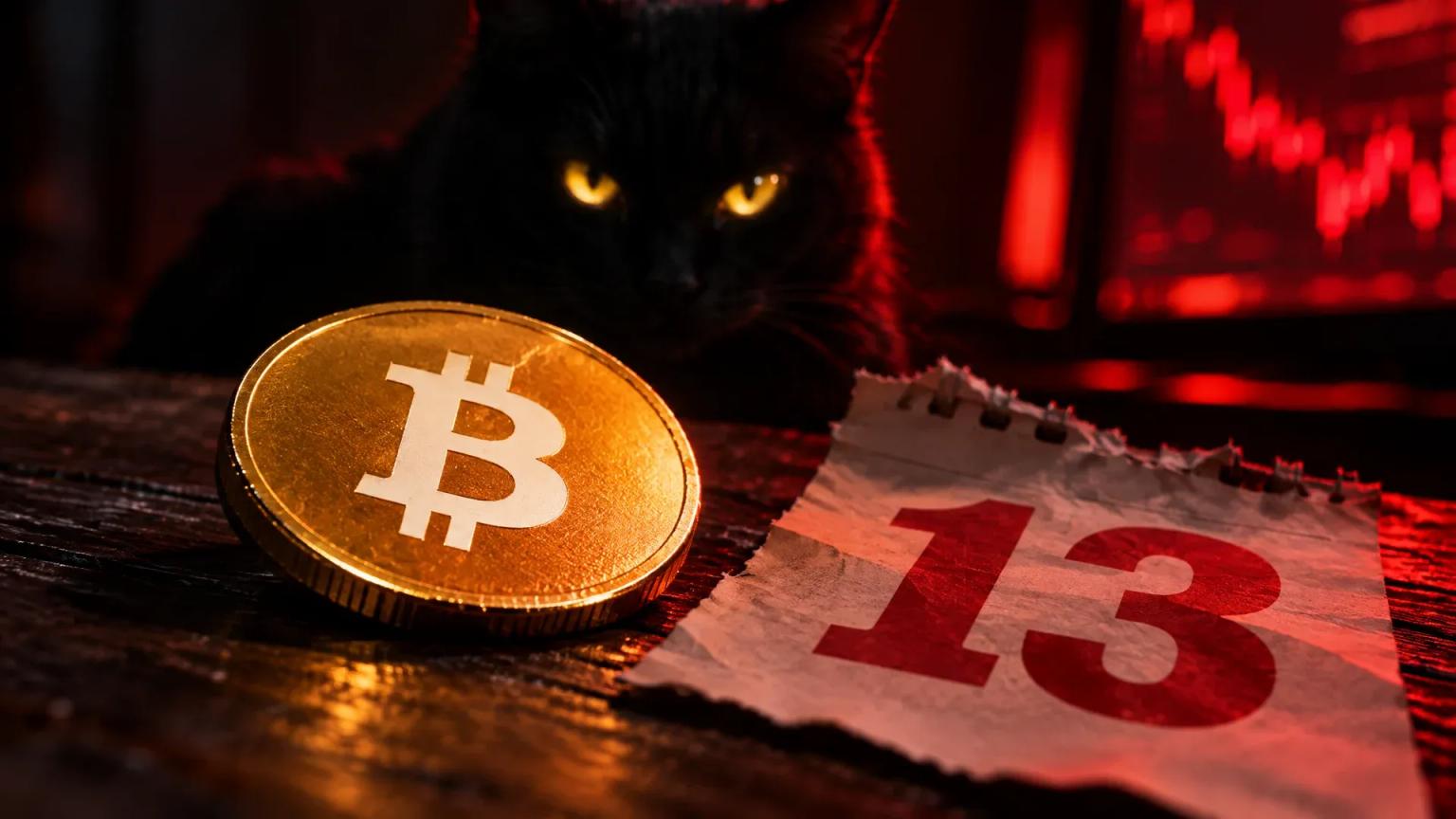
Bitcoin on Friday the 13th: weekend panic builds as traders eye $60,000
Bitcoin fell to its lowest level since August on Friday the 13th as $1.31 billion in leveraged bets were wiped out. Since 2014, it closed lower on only 3 of 22 such Fridays. What the weekend can bring, the levels down to $60,000 and what long and short positions returned today.
November 13, 2026 8:06 AM

Why Is Crypto Crashing? The 3 Reasons Behind This Brutal Sell-Off
Crypto is bleeding red and billions in leveraged bets just got wiped out. Here are the 3 forces behind the crash and where prices stand right now.
November 10, 2026 11:36 PM

Crypto crash live: Solana and Aave lead the sell-off as markets price a December Fed hike
Hot US inflation data turned a slow slide into a flush: Bitcoin touched its lowest level since August, Solana has lost a quarter of its value in 30 days and Aave fell almost three times as hard as Bitcoin. The live timeline, the reasons and the levels that matter now.

November 8, 2026 7:23 AM

Margin trading explained: how trading with borrowed money works
Margin trading means trading a larger position with borrowed money. We work through profit and loss at 2x, 3x and 5x leverage, explain margin level, margin call and liquidation, and show where you can trade with a licence in the EU.
November 7, 2026 9:46 AM

Crypto Crash: Why Bitcoin, Ethereum, XRP and Solana Fell This Week and What Comes Next
Bitcoin lost its post-election gains, ETH hit a 10-week low and XRP led the losses. The four drivers behind this week's crypto crash and the levels to watch.
November 4, 2026 10:12 AM

CFTC Approves Stock Perpetual Futures: What It Means for Hyperliquid and US Traders
The CFTC just cleared perpetual futures on single stocks for US exchanges. Here is how equity perps work and why Hyperliquid is at the center of it.
November 4, 2026 7:20 AM

Crypto futures in the EU: six licensed exchanges compared, all capped at 10x
As a retail trader in Germany, you can trade crypto futures legally on six exchanges with an EU licence, all capped at 10x leverage for retail clients. The comparison covers contract design, fees, collateral and what ESMA's February statement changes for you.
November 3, 2026 9:21 AM

Leverage trading in crypto: how margin and the liquidation price work
With leverage you move a larger crypto position than your stake would allow. We work through margin and liquidation price, show the leverage limits in the EU and which licensed providers offer leverage trading.
November 3, 2026 7:58 AM

Crypto futures trading: perpetual futures explained simply
Crypto futures and perpetual futures explained: how futures trading works, what the funding rate really costs and which exchanges are licensed for it in the EU.
October 27, 2026 12:30 PM

Dogecoin funding rate at 7.4 percent a year: the next step
Analysis: long positions in Dogecoin have been paying funding costs again on OKX since Monday afternoon, annualised at 7.4 percent as of Tuesday morning. At the same time, almost five long accounts come for every short account while open interest shrinks.
October 25, 2026 1:37 AM

NEAR opens cross margin for 50 Hyperliquid perp markets at up to 40 times leverage
NEAR released a cross-margin mode for its Hyperliquid perps on October 22, 2026: more than 50 markets, leverage up to 40 times, collateral at account level instead of per position. The price falls 9.9 percent the same day, and in the backstop procedure cross margin puts the whole account on the line.
October 21, 2026 4:14 AM

Pump.fun launches perpetual futures with 40x leverage: what to watch now
Pump.fun has traded perpetual futures on Bitcoin and Ethereum since October 16, 2026, with leverage of up to 40 times and Hyperliquid as the technical operator. At that leverage a 2.5 percent price move is enough for liquidation, and a MiCA licence for the EU market is missing.

October 15, 2026 7:40 PM

$257.4 million in SHIB futures against $77.5 million spot: EU leverage stops at 2:1
SHIB futures turned over $257.4 million in 24 hours against $77.5 million on the spot market. That is a factor of 3.3, and for leverage Germany applies a hard ceiling.

October 15, 2026 1:34 PM

$489 million in liquidations in one hour: where your leverage breaks first
Forced closures wiped out around $489 million within one hour on 15 October 2026, more than half the daily total of $942 million. Our analysis of OKX futures market data shows why Ether was hit harder than Bitcoin.
October 15, 2026 7:29 AM

17 of 20 top coins down, Ethereum at $2,380: where the sell-off is measured
Ether loses 5.41 percent over 24 hours and falls to a daily low of $2,332.43. Our own count of the 25 largest cryptocurrencies shows how broadly the sell-off really carries.
October 9, 2026 10:25 PM

Dogecoin: 94 Percent of Liquidations Hit Long Positions, and How the Leverage Compares With Bitcoin
On the Dogecoin futures market $7.82 million was force closed within 24 hours, almost all of it on the long side. Our count of 106 contracts shows how much leverage really sits in the market and how much of it is open to retail investors in Europe.
October 3, 2026 4:23 AM

ESMA Places Perpetual Futures Inside the CFD Perimeter: 2:1 Leverage for Retail Clients in the EU
ESMA stated on February 24, 2026 that perpetual futures are likely to fall under the CFD measures, and with them under a leverage cap of 2:1 for retail clients. The Hyperliquid Policy Center wants that settled differently, and filed its case as the MiCA review closed on September 30.
September 30, 2026 10:13 PM

Robinhood Announces Perp Futures With 10x Leverage for US Customers: “Markets don’t work without traders”
Robinhood plans to offer eligible US customers perpetual futures on eight cryptocurrencies, with up to 10x leverage on Bitcoin and Ethereum. Nothing is tradable yet, and a different leverage cap applies in Europe.
September 30, 2026 4:36 PM

Dogecoin Price Prediction: 28 Billion DOGE Make $0.098 the Level That Decides
Dogecoin trades at around $0.0973 on Wednesday midday and keeps failing at the zone at $0.098, where roughly 28 billion DOGE changed hands. At the same time $1.50 billion sits in open leveraged positions, and the tax authority's one-year period runs separately for every purchase.
September 30, 2026 4:14 AM

Bitcoin Price Before the Core PCE at 14:30 CEST: Will the $82,735 Level Hold?
At 14:30 CEST today the Bureau of Economic Analysis publishes the core PCE deflator for August, the inflation gauge the Fed anchors its 28 October rate decision to. Bitcoin stands at $83,329, less than $600 above its daily low, and anyone holding on leverage decides this morning.
September 28, 2026 10:12 PM

Dogecoin Futures Hold $1.5 Billion in Open Leverage: What Investors Need to Know
The Dogecoin price fell 4.2 percent on Monday to $0.0932. What matters more is where it is set: $1.5 billion in leveraged positions sit open on the derivatives market, a good tenth of market capitalisation. What that means for leverage, liquidation distance and German tax.
September 24, 2026 1:34 PM

Cardano Slides Below $0.24: What ADA Holders Should Check on Leverage, Liquidation and Holding Period
Cardano has given back its move above $0.25 and trades around seven percent below the high of the past 24 hours. What that means for leveraged positions, the holding period of your tranches and the buying route under MiCA.
September 24, 2026 4:16 AM

Trump-Xi Summit at the White House: The Crypto Positions to Check Before the Meeting
Xi Jinping is on a state visit to Donald Trump today, and the crypto market comes into the meeting carrying the gains of an exceptionally strong week. What to check on leverage, holding period and custody before the first headline runs.
September 22, 2026 4:12 AM

Open Interest Climbs After the Short Squeeze: Why the Longs Are Paying Now
The short squeeze of September 21 wiped out $648 million in bearish bets, yet open interest rose instead of falling. A survey of our own across four exchanges shows the funding rate is positive on 24 of the 25 largest bitcoin perpetuals.
September 19, 2026 7:19 PM

Binance Launches FX Perpetuals With 100x Leverage: What Is Allowed in Germany
Binance launches a perpetual future on the US dollar and the Brazilian real with up to 100x leverage on September 21. For German retail investors, what counts is less the announcement than the question of which leverage is permitted here and which tax rule applies to futures transactions.
September 11, 2026 4:13 PM

How to Calculate Your Liquidation Price: When the Exchange Closes Your Leveraged Position
The liquidation price is the level at which your exchange force-closes a leveraged position. Here are the formula for long and short, a worked example, and the cost items that squeeze the buffer tighter in practice than the arithmetic suggests.
September 8, 2026 10:12 PM

Bitcoin at $78,741: How to Calculate When Your Crypto Loan Gets Liquidated
Anyone who borrowed against their Bitcoin instead of selling it faces the same question with every drop: at what price does the lender seize the collateral? We retrieved the published liquidation thresholds of eleven providers and show how to work out your own limit in two lines.
More from CryptoTicker