
Cardano treasury vote: only 3.5 percent back the Foundation's 25 million ADA request
Only 3.51 percent of the relevant DRep voting stake currently supports the Cardano Foundation's request for 24,995,775 ADA, while 67 percent is required by December 20. At the same time, five node implementations are now producing blocks on mainnet.

Which topics should we dive deeper into?
Select what genuinely interests you. Your picks feed directly into our editorial planning.
Crypto news that's actually worth your time.
Weekly. 60 seconds. Carefully curated by our editors: no hype, no promo flood, no spam.
Key points
- By Tuesday evening, 18 DReps with around 141 million ADA in voting stake had backed the Cardano Foundation's request for 24,995,775 ADA, while 35 DReps voted against it.
- That puts approval at 3.51 percent; 67 percent of DRep voting stake is needed by December 20.
- At a price of $0.1455, the requested amount is now worth $3.64 million, while the Foundation's budget assumes $5 million.
The Cardano Foundation has so far found little community support for its 2027 conference programme. According to cryptoticker.io's own analysis of Koios voting data on Tuesday evening, the "Cardano Global Events 2027" proposal stands at 3.51 percent of the relevant DRep voting stake. The constitution of Cardano requires two thirds for any treasury withdrawal. cryptoticker.io compiled this analysis itself on November 24, 2026.
For ADA holders, this is more than a footnote from the governance process. Anyone who has delegated their coins to a DRep has voted through that representative, whether they know it or not. ADA traded at $0.1455 at 18:42 CET on Tuesday evening, 3.05 percent below the previous day (CoinGecko).
Cardano treasury vote: 18 DReps in favour, 35 against
A DRep is a delegated representative in Cardano's governance. ADA holders assign their voting stake to a DRep without giving up their coins, and the DRep votes on treasury requests, parameter changes and constitutional questions. The treasury is the network's shared pot, funded by transaction fees and the protocol's reserves. In epoch 669 it held 1.43 billion ADA. The Foundation's request amounts to around 1.75 percent of that.
By Tuesday evening, 62 DReps had cast a vote on the proposal. Eighteen voted yes, together bringing around 141 million ADA in voting stake. Thirty-five voted no, and nine abstained with a combined stake of around 787 million ADA. The active no vote totals around 1.19 billion ADA, roughly eight times the yes side.
Why approval sits at 3.51 percent rather than just over 10 percent comes down to how ratification is counted. For treasury withdrawals, DRep voting stake that has not voted on a proposal at all counts as a no. Only abstentions and delegations to the "Always Abstain" option, which pools around 10.4 billion ADA, are excluded. A DRep who stays silent until the deadline therefore slows a proposal just as much as an explicit no. The Constitutional Committee must also approve, and it has not cast any vote yet.
The Foundation submitted its proposal on November 16 in epoch 668. It expires after epoch 675, which corresponds to December 20, 2026. In its proposal on the DRepTalk discussion platform, the Foundation says it will not earn anything from the money: it does not charge for the working time of its own staff and makes no profit from the request (source).
The same passage states that the Foundation takes responsibility for the delivery, spending and reporting of every single event. Unspent funds are to flow back into the treasury.

Cardano Global Events 2027: what the Foundation wants 24,995,775 ADA for
The Foundation wants to use the money to appear at twelve international conferences next year. The budget covers stands and equipment, sponsorships, its own side events with hackathons, and team travel. According to CoinDesk, sponsorships are the largest item at around $2 million. The Foundation says its last programme of this kind reached more than 1,110 developers and showcased 79 projects.
The Foundation drew up its budget in dollars and converted it into coins at a fixed rate of $0.20 per ADA. That produces just under $5 million. At Tuesday evening's price, the 24,995,775 ADA are worth only $3.64 million. The gap to its own budget has therefore widened to around $1.36 million. The Foundation has said it will cancel or scale down events if the money falls short.
The request has a history. The Foundation cancelled the Cardano Summit 2026 after the funding request for it failed to win a sufficient majority in June. The new proposal therefore bundles a whole year of appearances instead of putting each conference to a separate vote.
 Compare staking platforms for your ADA
Since November 17: a proposal turns into a clear no
When cryptoticker.io reported on the Foundation's request for 25 million ADA on November 17, ADA cost $0.1541 at midday. The requested amount was then worth $3.85 million, and the gap to the budget was around $1.15 million. A week later the price stands at $0.1455, 5.6 percent lower, and the gap has grown by a good $200,000.
What has grown most is the opposition. CoinDesk counted 741.7 million ADA against and 140.8 million ADA in favour of the proposal on Monday. Intersect's weekly report of November 22 showed approval of 3.03 percent. By Tuesday evening the yes side had barely moved, while the active no vote had risen to around 1.19 billion ADA.
According to CoinDesk, the largest block on the opposing side is the DRep YUTA with around 482.5 million ADA, which on Monday was about 65 percent of the no vote. The other representatives give reasons that point in different directions. The DRep SASA_nagamaru writes on DRepTalk that he needs verifiable evidence linking past spending to reach and real usage. According to CoinDesk, InputEndorsers wants the Foundation to cover at least the roughly $2 million in sponsorships itself. BKIND rejects funding a whole year in advance, while DeepStatecraft could imagine a smaller, staged request with targets for new users.
PFMS and Mesh SDK: other treasury requests also fail the 67 percent threshold
The Foundation is not alone with this problem. The PFMS proposal for 9.6 million ADA, which cryptoticker.io covered on November 19 at an interim level of 33.8 percent, expired on November 20. According to Intersect's weekly report of November 22, it ended with 41.59 percent DRep approval, making it the strongest of the recently expired proposals. The "Cardano Strategic Copper Reserve" proposal for 22 million ADA expired on November 15, and "AURORA" on November 20.
Besides the Foundation's request, the 2026 maintenance of the Mesh SDK developer toolkit is still open; according to the same report it stood at 14.39 percent. It also expires on December 20. The pattern is clear: since the treasury has been managed directly by DReps, a proposal without broad prior consultation in the community does not clear the threshold. Intersect therefore plans to present DReps with a revised budget framework first, followed by an info vote on the spending limit for 2027.

Cardano node diversity: five implementations produce mainnet blocks
While the treasury votes stall, the technical side reports progress. According to Intersect's November 22 report, five different node implementations have now produced blocks on mainnet: the original cardano-node, Amaru, Dingo, cardano-bean and TSUNAGI. Dingo passed the mark of 100 mainnet blocks last week.
A node implementation is the software a stake pool uses to take part in the network, validate transactions and produce blocks. When several independently written programs run side by side, a bug in one of them does not bring down the whole network. Ethereum has followed this approach with multiple clients for years. Until recently, Cardano ran almost entirely on a single piece of software.
The schedule for the next hard fork is unchanged. Version 11.1.3 remains the recommended release for mainnet, and work continues on a released 11.2.x version. Protocol version 12 is being tested on the Musashi and Dijkstra testnets with the pre-release 11.2.1, and the target version for switching the public testnets is 11.3. cryptoticker.io summarised what the roadmap to the Dijkstra hard fork means for holders on November 22.
 Find the exchange with the lowest fees for ADA
Cardano price at $0.1455: a governance dispute in a weak market
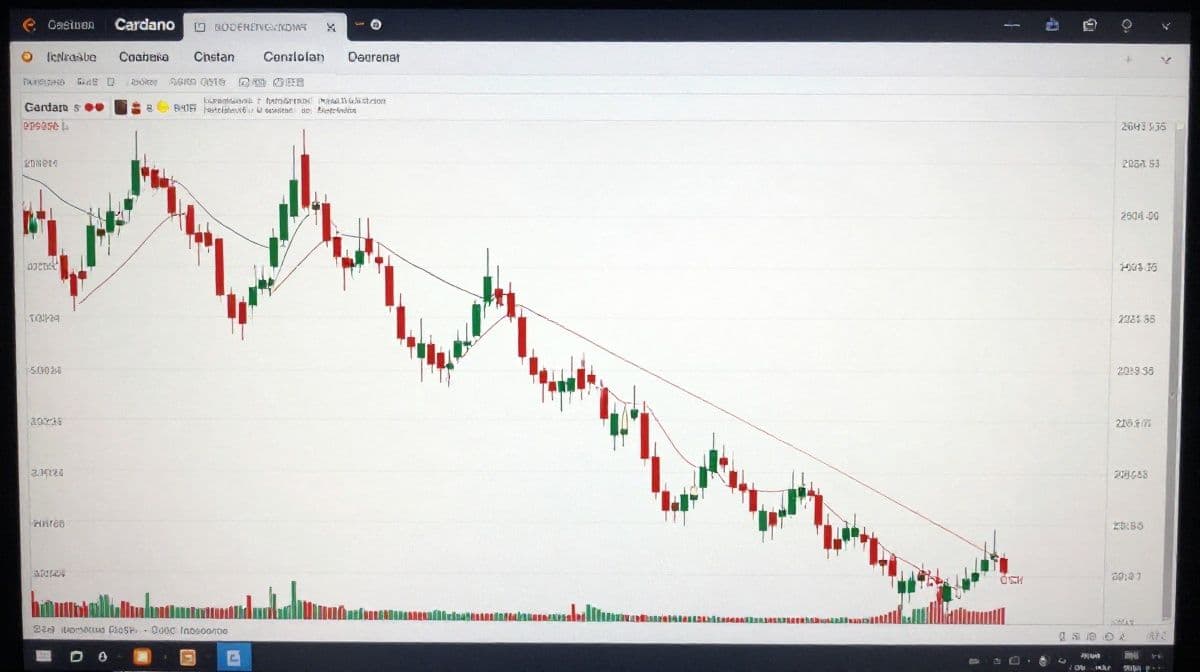
The vote comes during a weak phase for ADA. At 18:42 CET on Tuesday evening, Cardano traded at $0.1455. Over the past 24 hours the price moved between $0.1425 and $0.1512. Over seven days it is down 5.5 percent, over 30 days 30.2 percent. Bitcoin stood at $60,020 at the same time, 2.3 percent below the previous day, all figures according to CoinGecko.
The data does not show a direct link between the vote result and the price. Tuesday's decline moved in step with the broader market. For the Foundation, however, the price counts twice: every cent less per ADA widens the gap in its budget by around $250,000, as long as the request is denominated in coins rather than dollars. If you want to compare ADA fees across providers side by side, you will find them in our crypto exchange comparison.
DRep delegation: how ADA holders have a say over the treasury
On Cardano, you do not have to be a DRep yourself to vote. Any holder with ADA in their own wallet such as Lace, Eternl or Yoroi can assign their voting stake to a DRep of their choice, or pick the "Always Abstain" and "Always No Confidence" options. The coins stay in the wallet and remain freely available, and the delegation can be changed at any time. Since the Plomin hard fork in January 2025, such a delegation has also been required to withdraw staking rewards.
Public governance trackers such as CardanoCube or gov.tools show how your own representative voted on the Foundation's proposal, listed under the proposal's identifier. If your ADA sit on an exchange, however, the exchange decides on the delegation, not the customer. If you want to stake your ADA through a platform and compare the terms, our comparison of staking platforms gives an overview.
Cardano treasury: 63.5 percentage points short by December 20
The Foundation's proposal is 63.5 percentage points short of a payout before it expires on December 20. Even if every abstention turned into a yes vote, it would remain far below the threshold. Based on the course so far, a new, smaller request of the kind several DReps explicitly demand looks more realistic. Whether the Foundation takes that route or cuts its 2027 programme, it has not yet said. On the technical side, the next milestone is version 11.3 for the Dijkstra hard fork.
(As of November 24, 2026. This article is not investment advice. Prices and fee structures change; check the terms with the provider before you buy.)
Frequently asked questions about the Cardano treasury vote
Partner links: some links on this page are partner links. If you become a customer through one of them, we may earn a commission at no extra cost to you. Selection, ratings and ranking are decided independently by our editorial team. Ethics and Independence · Ownership and Funding
Researched and compiled with AI. Before an article goes live, automated systems check the source links and hold back quotes and attributions without a verified source. Responsible editor: Dennis Weidner. The feature image was generated with AI. How we use AI
For later? Save this article and find it again in your profile.
More on Cardano: All Cardano news at a glance
Related articles
- Cardano news: COTI will shut down the DJED stablecoin on December 31, with 0.9 million tokens left
- Cardano treasury: Foundation seeks 25 million ADA for 2027 events and budgets at $0.20 per coin
- Cardano price crashes below $0.15, just above its low for the year
- Cardano falls below $0.16 as Hoskinson says “my job is done”
- What is Cardano? Ouroboros, ADA and a treasury holding 1.4 billion coins
Which topics should we dive deeper into?
Select what genuinely interests you. Your picks feed directly into our editorial planning.
Crypto news that's actually worth your time.
Weekly. 60 seconds. Carefully curated by our editors: no hype, no promo flood, no spam.

November 13, 2026 7:24 AM

Cardano ahead of the Dijkstra hard fork: Leios node 11.3 now expected in December
Analysis: the Dijkstra upgrade with Leios is slipping into December for Cardano, and there is still no date for mainnet. Meanwhile, ADA is hovering around $0.170.

November 11, 2026 9:25 AM

Cardano open interest climbs to $395 million while ADA falls
Analysis: open interest in the Cardano futures market grows to $395 million while ADA slips below $0.175. What the funding rate, order books and the August low show, and where liquidation looms for leveraged positions.
November 9, 2026 9:13 AM

Cardano DeFi falls to a one-year low of $48.9 million, yet barely any ADA has left
Analysis: Deposits in Cardano DeFi have fallen to $48.9 million, the lowest level in a year. Measured in ADA, however, little has changed since October; the decline comes from the price.
November 6, 2026 3:19 AM
Cardano Price Under Pressure, Yet 58 Percent of All ADA Stays Staked
Cardano fell 6.3 percent in 24 hours to $0.185, its lowest level since mid-August. On-chain data shows that 58.5 percent of all circulating ADA is still delegated to stake pools, only slightly less than a year ago.

November 5, 2026 1:09 PM
Cardano Price Prediction: Down 26.5 Percent in 30 Days, the Levels ADA Must Hold Now
Cardano lost 26.5 percent in 30 days, four times as much as Bitcoin. Now the 20-day and 200-day averages sit almost at the same price right above the market. Why this zone decides and which scenarios follow for ADA.
November 2, 2026 3:56 PM
Cardano stake pools hit by critical Linux flaw, delegated ADA stay safe
Intersect has asked Cardano stake pool operators to close a critical Linux vulnerability, CVE-2026-98432, rated 9.8 out of 10. It does not touch the balance of delegated ADA, but it can affect the rewards of the current epoch.
October 31, 2026 9:14 PM
Cardano: 9.6 million ADA up for a vote, what to check before November 20
The context: more than 9.6 million ADA from the Cardano treasury are up for a vote until November 20, and holders of 89.25 percent of the voting rights have not cast a vote. The proposal, the deadline and the tally are documented; what our editorial team concludes from it about turnout follows further down.
October 27, 2026 9:46 PM

Cardano treasury: 115,172 ADA flow back, what changes for delegators
For the first time a budget managed by Intersect has returned money to the Cardano treasury, 115,172 ADA from 2025. The amount is tiny, the event is not: it shows for the first time that the contract's clawback really works.
October 25, 2026 1:29 AM

22 million ADA for a copper reserve: Cardano's treasury vote runs to November 15
Toto Finance wants to swap 22 million ADA from Cardano's treasury for physical copper and represent every pound through a token called CuTT. The vote closes around November 15, and it concerns everyone who has delegated their ADA to a representative.
October 20, 2026 7:19 AM
Cardano has $62 million in DeFi against an $8.15 billion market value: what matters now
Cardano's applications hold $62 million while the token is valued at $8.15 billion. That is 0.76 percent, the lowest share among the eleven blockchains we compared.
October 17, 2026 1:33 PM

Cardano: 91.5 percent of the spending cap is committed, 42.6 million ADA remain
Of the 500 million ADA Cardano may spend in the current budget period, 457.4 million are committed through approved payouts. A single proposal for 22 million ADA is still up for a vote, and it lapses in mid-November.
October 13, 2026 1:39 AM
Cardano Breaks Its 2021 Transaction Record: 1.78 Million in Five Days, Vote Lapsed
Cardano processed 1,780,896 transactions between 6 and 11 October, more than in any epoch before it. The vote on the 75 ADA minimum fee has meanwhile lapsed, and the ADA price is giving up around 5.3 percent.

October 10, 2026 10:44 AM

Top 3 Coins to Watch Next Week: These Altcoins Could Explode
Twelve of the top 17 coins closed the week in the red. These three didn't. Here are the altcoins to watch next week and the catalysts behind them.
October 10, 2026 7:35 AM
Cardano Vote on the 75 ADA Minimum Fee Stands at 34 Percent: What ADA Delegators Need to Know Before October 11
The cut in the stake pool minimum fee from 170 to 75 ADA stands at 34.45 percent approval, against the 67 percent required. The deadline runs out on October 11 at 21:44 UTC, and for small pools the entire distribution hangs on it.
October 8, 2026 7:59 PM

Cardano CIP-0113 live: issuers can now freeze and seize regulated tokens, ADA falls 10.3 percent
The Cardano Foundation activated the CIP-0113 standard on the mainnet on October 7, 2026: issuers can write freezing, seizure and KYC rules directly into a token, enforced by the network. ADA itself stays freely transferable and trades at $0.2294, 10.32 percent below the previous day.
October 7, 2026 1:50 PM

Cardano gives back the Leios rally: ADA falls twice as hard as the altcoin index
Cardano loses 7.97 percent within 24 hours to $0.2546, giving back the rally of October 5 and 6. The trigger came from outside: positions worth more than $547 million were closed by force market-wide.
October 5, 2026 4:33 PM

Cardano at a three-month high, the golden cross fell on October 1: the last one ended 42.4 percent lower
ADA stands at $0.27, its highest in three months, and the trade press traces the jump to a golden cross. Our own analysis of 721 daily candles shows two things the reports miss: the signal is four days old, and the last one ended 42.4 percent lower.
October 5, 2026 4:15 AM

Cardano DEX volume halves since October 1, ADA up 6 percent: why the rally is not on-chain
ADA gains 6.29 percent to $0.2597 and is the strongest asset in the top 25. Trading volume on the Cardano venues, however, has fallen from $11.74 million to $5.72 million since October 1.
October 3, 2026 4:41 AM

Cardano Price Prediction: ADA Stays Below $0.26 Despite Petrobras and the Japan Deal
Petrobras is testing Cardano for tracking aviation fuel, and the Cardano Foundation is bringing in a partner in Japan. The price barely reacts: ADA is clinging to its 200-day moving average. Which levels count now and why the news is not yet carrying the price.
September 26, 2026 12:20 PM
Cardano Price Prediction: ADA Breaks Key Resistance, Is $0.30 the Next Stop?
Cardano is up 16% in a week and back above its 200-day EMA. Our Cardano price prediction looks at whether ADA can push to $0.30.
September 24, 2026 1:34 PM

Cardano Slides Below $0.24: What ADA Holders Should Check on Leverage, Liquidation and Holding Period
Cardano has given back its move above $0.25 and trades around seven percent below the high of the past 24 hours. What that means for leveraged positions, the holding period of your tranches and the buying route under MiCA.
September 23, 2026 7:36 AM

Cardano Price Prediction: ADA Rockets 30% as Bulls Eye the Next Big Target
Cardano price jumped over 30% in a week, reclaiming the 200 EMA. Here's what's driving ADA and the price targets traders are watching next.
September 19, 2026 4:27 AM

Cardano Jumps 11 Percent: What ADA Holders Should Check Before the Treasury Vote on October 11
ADA rose 10.8 percent on September 18, and several market reports name an ongoing vote on the Cardano treasury as the reason. Our own on-chain analysis shows that this proposal stands at 2.14 percent approval, and explains what holders can check before the deadline on October 11.
August 28, 2026 1:21 AM

Cardano Constitutional Committee: What ADA Holders Should Know Now the September 6 Deadline Has Passed
Recap as of September 27, 2026: four of the seven seats on Cardano's constitutional committee were expiring, and their renewal hung on a vote that had not yet cleared on chain at the end of August. This article describes what ran out by September 6, the state of play before the deadline and what ADA holders could do with their voting power.
July 29, 2026 11:07 AM
Cardano Price Analysis: Can ADA Break $0.18 After This Bounce?
ADA rebounded from $0.1535 to $0.1638 as RSI flipped back above its signal line. But $0.1751 has to fall before $0.18 is on the table.
More from CryptoTicker