
Sparkasse Crypto Fees: 99 Cents per Order, but Your Own Hardware Wallet Is Blocked as a Destination
DekaBank has published the contractual documents for “Krypto – powered by Deka”. That puts a 0.99 euro transaction fee, a 250,000 euro order ceiling and five minimum delivery amounts on the record at source for the first time. Your own hardware wallet remains excluded as a recipient address.


Which topics should we dive deeper into?
Select what genuinely interests you. Your picks feed directly into our editorial planning.
Crypto news that's actually worth your time.
Weekly. 60 seconds. Carefully curated by our editors: no hype, no promo flood, no spam.
Buying crypto through Sparkasse costs DekaBank 0.99 euros in transaction fees per purchase and per sale, plus a spread that no document quantifies. Custody, delivery to an external wallet address and customer support are free of charge. The most important restriction appears only in the glossary of the product page, not in the price list: deliveries go exclusively to addresses of certain approved crypto-asset service providers, and your own hardware wallet is blocked as a destination.
These figures and conditions can now be sourced directly. DekaBank has published the contractual documents for "Krypto – powered by Deka", among them a document dated October 2026. Until then, pricing, selection and timetable came from the trade publication Platow, and our own assessment of the planned October launch had to flag exactly that. The number now sits in the original.
Transaction fee of 0.99 euros: what a purchase at Sparkasse costs under the price list
The "price information for crypto assets" issued by DekaBank Deutsche Girozentrale, dated September 2026, covers the crypto-asset business in three lines. The transaction fee for buying and selling is 0.99 euros. There is no minimum order size per transaction. The maximum order size per transaction is 250,000 euros.
A transaction fee is the charge a bank levies for executing a single order. It appears on the statement as a separate item, and at DekaBank it is a flat fee: the same amount on a 20 euro order as on a 20,000 euro one.
The effect of that flat fee varies enormously with order size. Measured against the order volume, it comes to 3.96 percent on 25 euros, 1.98 percent on 50 euros, 0.99 percent on 100 euros and 0.099 percent on 1,000 euros. For a saver putting a small amount to work each month, a flat fee is a percentage fee in disguise, and a steep one.
The same document lists what costs nothing: registration and identity verification, crypto custody including position keeping, the portfolio display in the Sparkasse app, delivery of crypto assets to an external wallet address, provision of documents in the electronic mailbox, order and transaction statements, and quarterly and annual reports on crypto holdings. Customer support by email and telephone is also free; the hotline is open Monday to Thursday from 8am to 6pm and Friday from 8am to 5pm.
No minimum order, but a 250,000 euro ceiling per transaction
The absence of a minimum order size is the more practically relevant of the two limits for newcomers. A ten euro purchase is formally permitted, even though the flat fee makes it expensive. Investors who want to put small amounts to work regularly are better served by longer intervals and larger individual amounts than by weekly micro-purchases.
The 250,000 euro ceiling per transaction affects few retail clients directly, but it says something about how the product is built: it is designed for volume business inside a banking app, not for block orders. Larger amounts would have to be split across several transactions, each carrying its own fee and its own ratio.

The request-for-quote model: DekaBank’s own spread appears in no price list
Trading runs on a request-for-quote basis, or RfQ, rather than through an open order book. RfQ means the client asks for a price, the bank names a quote binding for a limited period, and an order can be placed on that basis while the quote is valid. The product page describes this as a binding price guaranteed by DekaBank for a limited window.
What that price consists of is set out in the price information itself: the quote "is based on a market reference price (including real-time price data) plus a DekaBank-specific spread". It adds that with larger volumes or increased volatility the pricing may be adjusted, for instance through spread adjustments, shorter quote validity or a restriction on tradability.
The spread is the gap between the price at which an asset can be bought and the price at which it could be sold at the same moment. It never shows up on a statement as a fee, because it is not a charge but is built into the price. It is paid all the same. None of the published documents names a level, a range or a cap, and the wording on adjustments leaves open how far it may widen in a turbulent market. For cost comparison, that means the 99 cents are known and the larger part of the price is not. We reported this same finding for Sparkasse and Volksbank back in September, when not a single product page named a price; the commission has been documented since then, the spread has not.
 Buy cheaper than at your own bank?
99 cents or 1.5 percent commission: at an order volume of 66 euros the two models meet
DekaBank’s flat fee can be set against the model used by the cooperative banks. Volksbank Raiffeisenbank Würzburg charges 1.5 percent per purchase and per sale for crypto-asset trading under its schedule of prices and services, likewise plus a spread. The two models cost the same when 0.99 euros equals exactly 1.5 percent of the order volume, which happens at 66 euros.
Below that threshold the percentage commission is cheaper, above it the flat fee, and the gap widens quickly: on an order volume of 1,000 euros it is 99 cents against 15 euros. This calculation applies strictly to the quantified fees. Because both institutions also take a spread and neither discloses it, it is a partial sum and not a total price.
The alternatives deserve a look. Investors who want to compare will find the terms of trading venues licensed under the European crypto regulation in our overview; at several of them the fee is a percentage, but the spread is disclosed. Which model works out cheaper depends on order size and on how often you trade.
Delivery only to CASP addresses: your own hardware wallet is blocked as a destination
Delivery to an external wallet address is free of charge. The destination, however, is not free. The product page puts it in these words: "With Krypto – powered by Deka, delivery is possible only to wallet addresses of certain crypto-asset service providers (CASPs). Delivery to other wallet addresses is excluded."
CASP stands for crypto-asset service provider, meaning a crypto business licensed and supervised under the European crypto regulation MiCAR. Exchanges and custodians are covered, private individuals are not. A hardware wallet belongs to its owner rather than to a service provider, and that is precisely why it is not an eligible recipient address.
In practice, no route leads from the Sparkasse app straight to a device in your own drawer. To hold your bitcoin yourself, you need a detour through an approved provider that accepts the delivery and then allows a transfer on to an address of your own. Two transfers instead of one, two chances to transpose a digit in the address, and depending on the provider network fees on the second leg. If that is the route you intend to take, check the devices and how they handle in our hardware wallet comparison first, and confirm with the intermediary that it accepts deposits from a bank at all.

Minimum amounts for deliveries: five thresholds between roughly seven and 22 euros
Deliveries have a document of their own, and it is the most recent of the set: "minimum amounts for deliveries", dated October 2026. It lists, for each crypto asset, a quantity below which no delivery is made.
- Bitcoin: 0.0001
- Ethereum: 0.01
- Ripple: 10
- Solana: 0.1
- Polygon: 100
Expressed as quantities, these thresholds look arbitrary. Converted into euros at prices on October 10, they sit close together: around 7 euros for Bitcoin, about 22 euros for Ethereum, a good 12 euros for XRP, just under 10 euros for Solana and roughly 9 euros for Polygon. The bank has therefore set the limits by value, in a band of about seven to 22 euros, and not by quantity.
That is good news for small holdings and a warning for fractions: anyone holding 15 euros in Ethereum falls short of the delivery threshold and has to buy more or sell. Because prices move, those euro amounts move with them; the quantities in the document stay fixed.
 Hold your coins yourself instead of in trust
Private keys in an omnibus wallet: custody in trust without a key of your own
How the holdings are kept is explained by the product page itself: under "Krypto – powered by Deka", the private keys are held in trust for clients in a jointly managed omnibus wallet.
An omnibus wallet is pooled custody: the holdings of many clients sit in the same blockchain addresses, and the bank tracks in its own books who is owed what. A private key is the secret key that grants access to crypto assets. In this model the bank holds it, not the client. There is no personal address to look up in a blockchain explorer and no key of your own to lock away.
What hangs on this for investors we have already set out at length on the question of keys: why there is no key of your own to the bitcoin at Sparkasse. The new documents confirm that design and add the delivery restriction to it.
Five tradable crypto assets, no deposit guarantee
According to the document "crypto assets supported by DekaBank", five assets can be traded: Bitcoin (BTC), Ether (ETH), Polygon (POL), Ripple (XRP) and Solana (SOL). That corrects a widespread impression: it is not just Bitcoin and Ether, but it is not a broad selection either. A token outside those five is not available here.
On risk the bank is explicit. Cryptocurrencies are frequently exposed to sharp price swings, with volatility that "can lead to total loss". Risks remain even under professional custody, for instance from attacks on blockchain infrastructure. In exceptional market situations, during technical disruptions or in maintenance windows, trading may be restricted, so that a purchase or sale is not always possible at the moment or the price intended.
The sentence that matters most to bank clients: "Unlike bank deposits, cryptocurrencies are not covered by the statutory deposit guarantee scheme." The crypto account sits in the same app as the current account, but the protection of the deposit guarantee stops at the border between the two.
Before the first order: how to check the three terms that affect you
The account is opened through the Sparkasse app, as Deka describes it: clients with a current account at a participating Sparkasse open the "Anlegen" section of the app and find the "Krypto – powered by Deka" offering there. Trading is secured with the app’s familiar tools, such as push TAN.
What remains open
The word "participating" carries weight. Each of the roughly 370 institutions decides for itself whether to switch the service on, and nothing in Deka’s documents implies that a particular Sparkasse already offers it. What is documented is that the terms are fixed and that the route runs through the Sparkasse app. What is not documented is whether it is already open in any specific place; only a look in your own app or a question to your own Sparkasse will show that.
Our assessment
From the editorial desk, this offering is a holding product inside the bank rather than an entry into self-custody. Much speaks for the fee: 99 cents on an order volume of 1,000 euros is 0.099 percent, while the Würzburg cooperative bank takes 1.5 percent. Against an overall verdict stands the fact that the spread is quantified in none of the four documents and may expressly be adjusted when volatility rises. The exclusion of third-party wallet addresses weighs more heavily than any fee, because it decides not the price but the control. The bank’s counter-argument holds up against that: the delivery itself is free, and the minimum amounts are low at seven to 22 euros. What is limited is the destination of a withdrawal, not its price.
Crypto at Sparkasse: the spread remains the unknown quantity
- Measure the total cost yourself. On a first small order, work out how far the quote shown deviates from the market price, and add the 99 cents. That difference is the real price. The price list of a licensed trading venue from our overview of regulated crypto exchanges serves as the benchmark.
- Settle the exit route before any money goes in. If the holding is later meant to move to an address of your own, you need an approved provider as a staging post. Pick the device in advance in the hardware wallet comparison and confirm with your exchange that it accepts deposits from a bank.
- Carry the tax side along from the start. Every purchase and sale is a tax-relevant event with its own date. DekaBank’s quarterly and annual reports are free and belong in your own archive; for ongoing record keeping, the tools in our comparison of tax software and portfolio trackers help.
The documents are available in full from the bank itself: the product page for "Krypto – powered by Deka" and the price information for crypto assets.
(As of October 10, 2026. This article is not investment advice. Prices and fee structures change; check the terms with the provider before you buy.)
Frequently asked questions about crypto at Sparkasse
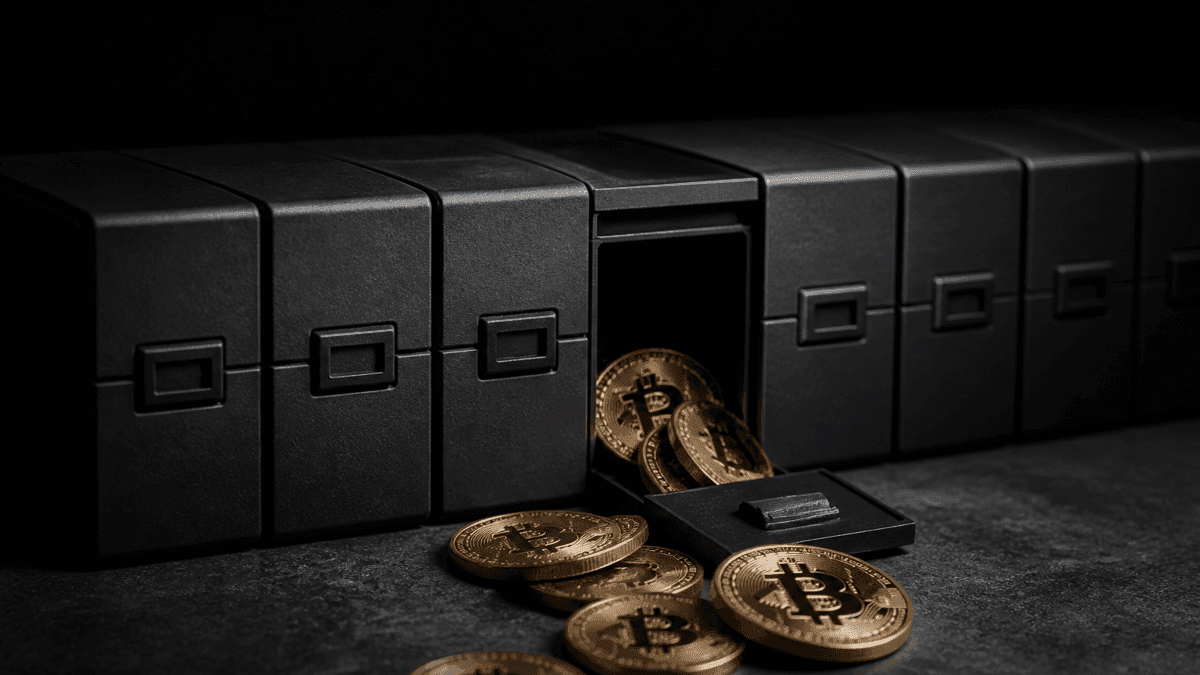
Transparency note: This article was produced with the assistance of artificial intelligence and reviewed by our editorial team before publication. All figures and claims were checked against the primary sources linked in the text. The feature image was generated with AI.
Related articles
- Sparkasse Crypto Trading: An Assessment of the Planned October Launch
- Sparkasse Crypto Custody: Why You Get No Key to Your Bitcoin and What to Check First
- Bitget Hack of $351 Million: What to Check at Your Crypto Exchange Now
- Crypto Withdrawal to Your Own Wallet: Ten Providers Checked, Three Will Not Let Your Coins Out
- Crypto Through Sparkasse and Volksbank: 1.5 Percent Commission Plus a Spread, and No Product Page Names the Price
Which topics should we dive deeper into?
Select what genuinely interests you. Your picks feed directly into our editorial planning.
Crypto news that's actually worth your time.
Weekly. 60 seconds. Carefully curated by our editors: no hype, no promo flood, no spam.

August 21, 2026 4:17 PM

Crypto Withdrawals to Your Own Wallet: Why Exchanges Demand Proof of Address Ownership Above €1,000
Above €1,000 your provider has to establish whether the destination address really belongs to you. Article 14(5) of the transfer of funds regulation, five permitted methods, and the reason a withdrawal stalls without this step.
October 9, 2026 7:29 AM
Exodus Wallet: 71.5 percent of revenue comes from swaps, the spread vs the exchange fee
The Exodus Wallet is free to download, yet 71.5 percent of the provider's revenue in the second quarter of 2026 came from swaps inside the app. What the spread costs, how custody works and from what point a device of your own pays off.
August 20, 2026 1:17 AM

Crypto Withdrawal Fees: What Moving Coins to Your Own Wallet Really Costs
We measured the withdrawal fees for 475 assets on August 17, 2026 and set them against the actual network fee. For Bitcoin, the exchange charged eight to sixteen times what a transaction cost in the same minute.
September 28, 2026 10:26 AM
Phantom Wallet and Solscan: What a Solana Transfer Really Costs and Where It Fails
A transfer on Solana costs 0.000005 SOL, a new token account ties up 0.00148844 SOL once — both values measured on-chain by us today. This practical guide shows how to set up Phantom, how to get there from the exchange, how to read Solscan and what applies for tax in Germany.
August 15, 2026 9:31 PM
Crypto Exchange Shutting Down: What to Do Before the Deadline Passes
Binance, BitMart, Luno and Revolut have ended or cut back their European business within seven weeks. This guide shows which deadline expires first, how a forced sale is treated for tax, and what to secure before the account closes.
September 6, 2026 10:12 PM

MoonPay Fees: Up to 4.5 Percent, a Partner Margin on Top, and a Markup You Never See as a Fee
MoonPay is the buy button built into many crypto wallets. The European price list names four layers of cost, and only three of them show up as line items. What the provider is allowed to do, and what it expressly is not.
August 23, 2026 1:16 PM
Address Poisoning: Why Seven of Forty Characters Were Enough to Divert $2 Million
A fake wallet address matched the real one in just seven of forty characters and still intercepted 2 million USDC. Our own count of the affected wallet shows that a third of all counterparties in its history belong to such look-alikes.

August 13, 2026 4:59 PM

Trezor Data Breach: First 13,689 Customers, Then Roughly 67,000 More Exposed
A breach at Trezor shipping partner ShipMonk exposed names, phone numbers and home addresses of 13,689 customers in August; in September Trezor reported roughly 67,000 more in the US. Devices are safe, phishing risk is not.
March 10, 2022 3:23 PM

How To Add Ethereum Mainnet to Metamask?
In this article, we go over how to add Ethereum Mainnet to Metamask. MetaMask is a very well-known and popular crypto wallet. Let's see how to use it.
September 29, 2026 10:26 AM
Shiba Inu after the Shibarium switch: the old RPC endpoints are off, what you can do now
Shibarium replaced its public access points in September 2026, and the old RPC endpoints no longer answer. What holders of SHIB and BONE now need to update in their wallet, at the bridge and in their records.

September 24, 2026 10:11 PM

Bitcoin Price Prediction: What to Check on Levels, Holding Period and Leverage Before the October 28 Rate Decision
Bitcoin is trading at around $83,800, a third below its October 2025 high, while the sentiment index reads greed. Which dates, levels and deadlines over the coming weeks really decide your net gain, and which of them you steer yourself.
September 20, 2026 10:11 PM
Kraken Review: Fees, MiCA Licence and Withdrawals in Euro
A purchase through Kraken's standard interface costs 1 percent plus spread; on Kraken Pro it is 0.40 to 0.80 percent. What deposits, trading, withdrawals and tax records really cost at the crypto exchange, with the numbers from the official fee schedule.
September 4, 2026 10:32 AM

Crypto Deadlines This Autumn: Nine Cut-Off Dates Checked, and Only Three Leave You Time After Trading Ends
Nine running crypto deadlines, eleven provider pages, one query date: we counted how much time really lies between the end of trading and the withdrawal cut-off. In six of nine cases the stated date is the end of the line.
September 4, 2026 10:17 AM
Cypher Shutdown on September 6: What Users Should Know Now the Withdrawal Deadline Has Passed
Recap as of September 27, 2026: Cypher had announced it would take its app, dApp and withdrawal window offline on September 6, 2026 and end the token protocol. This article describes the situation before the deadline, how the payout worked and what our own measurement showed at the time about what was left of the CYPR token.
March 12, 2022 12:32 PM
How to Add Binance Smart Chain to Metamask?
How to add Binance Smart Chain to Metamask? In this easy guide, we take you step by step and show you how exactly to plug Metamask to BSC.
March 20, 2021 9:55 AM

METAMASK Review – What is METAMASK and how to USE IT?
Crypto users need a decentralized way to sign-in to Dapps with a secured process. What is METAMASK and how to USE IT?
December 26, 2025 1:50 PM
Breaking: Trust Wallet Chrome Extension Hack Drains $7M, Full Reimbursements Promised
A supply-chain attack hit Trust Wallet’s Chrome extension, draining $7M from users. Binance’s CZ says all victims will be reimbursed.
May 15, 2024 12:04 PM

Crypto Scams: How to Protect Your Cryptos?
With the rise of crypto scams, and while international efforts are still working to combat these threats and protect investors, some recent tactics have been identified, and here is your full guide.
September 3, 2026 10:32 PM
Crypto Fees at Neobrokers: Why the PFOF Ban Raises Your Stock Costs but Leaves Your Coin Purchase Untouched
Since September 2, N26 charges 0.90 euros per stock order again, while the same provider takes 1.5 to 3.5 percent for a coin purchase. We retrieved and analysed the crypto costs of ten providers ourselves.
September 23, 2026 4:12 AM
How to Set Up a Crypto Wallet: Securing Your Coins in Seven Steps
Your own crypto wallet is set up in twenty minutes, yet a single step decides everything that follows. This guide takes you through wallet type, recovery words and the test amount, and sets out what BaFin and the tax office expect.
September 8, 2026 7:33 AM
Withdrawal Whitelist at the Crypto Exchange: How to Lock the Withdrawal Path Against Foreign Addresses
A withdrawal whitelist lets balances leave only to addresses approved in advance, and it works even when password and second factor are compromised. On September 8, 2026 we checked which of thirteen providers document the function publicly.
August 24, 2026 1:22 PM
Phantom Wallet Ends Sui and Monad Support: What to Do Before the Deadlines
Phantom Wallet removes Monad from its app on August 26 and Sui on September 24. The balances are not lost, but only one of the two ways out leaves your tax position untouched.
August 21, 2026 4:27 PM

Wallet App Without BaFin Authorisation: When Holding Crypto-Assets Requires a Licence
On 19 August 2026 BaFin published two consumer notices on wallet offerings. Who controls the means of access decides whether an authorisation is needed.
August 20, 2026 4:24 PM
Bitcoin Across Multiple Wallets: How Austria Works Out the Acquisition Cost
Bitcoin spread across several wallets? How Austria works out the acquisition cost and the rolling average price for tax purposes.
April 25, 2024 11:44 AM
Beware of New Ethereum Node Scam: USDT Fraud Exposed
Crypto Scammers exploit Ethereum nodes and USDT to deceive crypto users. How are they pulling it off and what essential tips can help you protect yourself against these crypto scams?
October 1, 2026 7:15 PM

Bitpanda fees from 0.99 to 2.49 percent: what is behind it
Bitpanda assigns every coin to one of four price tiers, from 0.99 percent for Bitcoin to 2.49 percent for small caps. What 100 euros costs in and out, why the spread is missing from the mandatory document, and where 0.25 percent is enough under the same roof.
August 31, 2026 7:20 AM
Browser Extensions as Wallet Thieves: How a Sports App Became a Seed Phrase Collector
In August 2026 the security firm Socket disclosed two separate campaigns: 40 confirmed malicious Firefox extensions and 19 for Chrome and Edge, all of them from the official marketplaces. Nine of them were harmless sports apps that only turned into wallet thieves through an update.
More from CryptoTicker