
Bitway today: up 50 percent, and on one venue BTW trades 43 percent lower
Bitway reached an all-time high of $2.77 overnight into Wednesday, with no announcement from the project to explain the jump. At the same time BTW is quoted at $2.61 at Gate and $1.50 at DigiFinex, where the order book holds not a single bid.





Which topics should we dive deeper into?
Select what genuinely interests you. Your picks feed directly into our editorial planning.
Crypto news that's actually worth your time.
Weekly. 60 seconds. Carefully curated by our editors: no hype, no promo flood, no spam.
Bitway (BTW) hit an all-time high of $2.77 overnight into Wednesday, putting it 50.03 percent above where it stood 24 hours earlier. No announcement from the project explains the jump. Something else matters more: what BTW costs right now depends on where you look. On the two largest venues the token trades at around $2.61, on a third at $1.50. cryptoticker.io compiled this analysis itself on October 14, 2026, drawing on the prices and order books of the venues themselves as well as public market data on BTW; 16 trading pairs across 13 venues were reviewed.
Bitway at $2.77: a 50 percent daily gain while Bitcoin stands still
With a market value of roughly $7.26 billion the token is the 19th largest cryptocurrency by market value. Over seven days BTW has gained 118.98 percent, over 30 days around 255 percent. The all-time high of $2.77 came in the early hours of October 14.
This move stands alone. Bitcoin trades at $83,395, 0.35 percent below the previous day, and Ethereum at $2,503.74, down 1.17 percent. A broad upswing across the market that might have carried BTW along is therefore absent.
What does not hold up as an explanation
The project launched an interest-bearing staking programme on August 13 that offered a base rate of 8 percent in USDT plus a bonus of 4 percent in the provider's points. That programme expired on September 1 and does not explain today's jump. The publicly available documentation on the token lists nothing new for October 14. The fundamentals of the token are set out in the project documentation on BTW.
In practice that means buying a price move here, not a piece of news. The distinction counts at the next reversal, because there is no documented trigger to anchor an expectation to.
91.3 percent of daily turnover sits with two venues
Across all 16 trading pairs, daily turnover adds up to roughly $167.5 million. Of that, $95.4 million runs through Gate, or 56.95 percent, and $57.5 million through Bitget, or 34.34 percent. Together these two venues carry 91.3 percent of all trading.
The rest is spread across eleven further addresses. MEXC accounts for 2.72 percent, the decentralised venues on BNB Chain for around 2.7 percent combined, DigiFinex for 1.52 percent and HTX for 0.89 percent. After that it thins out sharply: Toobit 0.38 percent, KCEX 0.27 percent, BitKan and Ourbit 0.12 percent each, Poloniex 0.02 percent.
Turnover ratio: 2.31 percent of market value
Set daily turnover against market value and the turnover ratio comes to 2.31 percent. For this token that is a strikingly high figure. cryptoticker.io measured a turnover ratio of 0.55 percent for BTW on October 11, 2026; the details of that survey appear in the October 11 report on daily turnover and the token release. Trading has therefore multiplied since then, and at precisely two addresses.
Concentration at this level is above all a question of access. If one of the two venues is unavailable to you, perhaps because you cannot open an account there, practically only the other one remains for an order.

The price gap: $2.61 at Gate, $1.50 at DigiFinex
Here lies the real finding of the day. At Gate BTW costs $2.6116, at Bitget $2.6165. Those two values are less than half a cent apart, so the market between them is in balance. At DigiFinex a price of $1.4951 stands at the same moment. That is 42.75 percent below Gate, a gap of 43 percent when rounded.
Nor is the gap a snapshot taken mid-way through a fast move. The daily high at DigiFinex is $1.5294 and the daily low $1.3649. That venue did not join the upward move at any point: while BTW ran from $1.756 up to $2.7996 at Gate, the price there moved in a range whose upper bound still sits below the daily low of the large venues.
A quote is not a price as long as nobody trades
The term price gap describes a state in which the same asset is quoted at the same time on different venues at markedly different prices. Traders normally close such a gap within seconds, because the difference can be turned into money. When it stays open for hours, the precondition for that is usually missing, namely tradable goods on both sides.
 Find a licensed exchange for your order
An order book with no bid and no ask
That is exactly the case at DigiFinex. In the order book for BTW there is neither a bid nor an ask, so no offer to buy and none to sell. The quoted price of $1.4951 is therefore the price of the last trade, not a price at which anyone could buy or sell now.
The distinction has practical weight. A portfolio tracker that pulls this venue as its source will show a position 43 percent below what the large venues quote for the same token. In the other direction, an optically low price is worth nothing when nobody there is selling.
How to spot an empty book
Open the order book in the trading window and look at the top line on both sides. If no quantity appears there, or a zero, trading is dormant. A second clue is the daily range: if it diverges sharply from the range other venues show for the same token, something there is not keeping up.
The top of the book carries $732 on the buy side
At the two large addresses, too, the book is thin at the surface. At Gate the best buy side holds 280.3 BTW, which at a price of $2.6102 comes to roughly $732. The best sell side holds 146 BTW, about $382. At Bitget both sides hold 89.18 BTW each, around $233.
These figures describe only the best price level in each case, not the depth of the whole book. What they show is the amount at which the first price level is used up. Anyone buying $2,000 of BTW at Gate in one go clears the top level several times over and reaches into the ones above it.
The spread is tight, the quantity behind it small
The distance between the buy and sell offers at Gate is 0.13 percent. That sounds like a liquid market and at the surface it is one. What decides the matter, though, is how much stock stands ready at that tight distance, and in this case that is a few hundred dollars.
Partial fills and the spread: one order runs across several price levels
A market order takes everything in the book until it is filled. With a thin book that means the first part of an order executes at the quoted price and the rest at progressively worse ones. The difference between the price seen and the average price paid is called slippage.
A limit order guards against that. It sets the maximum price to pay and accepts that the order may be filled only partly or not at all. For a token swinging 59 percent between daily low and daily high in a single day, that is the quieter option.
Leveraged products sharpen both
Futures contracts without an expiry date, known as perpetuals, exist on BTW. There the position value is multiplied via a margin deposit. If the price moves against the position, it is closed out forcibly as soon as the margin is used up. With a daily range of $1.756 to $2.7996, even modest leverage is enough for that.

Licensing and trading pair: the purchase route from Europe
BTW trades predominantly against USDT, that is against a stablecoin rather than against euros. A purchase from Germany therefore runs in two steps: euros into the stablecoin first, then the stablecoin into BTW. Each step costs a fee and a spread, and the first step moves funds into a foreign currency.
The second point is licensing. Under the EU Markets in Crypto-Assets Regulation, providers addressing customers in the EU need authorisation as a crypto-asset service provider. cryptoticker.io reported on October 11, 2026 that none of the venues listing BTW holds such authorisation. Before placing an order, check in your provider's register which supervisor your account sits under, and bear in mind that EU deposit and investor protection does not apply outside it. An overview of providers with EU authorisation appears in our comparison of regulated crypto exchanges.
What runs differently with an account outside the EU
Without EU authorisation there is no claim to the regulation's disclosure and custody duties, and in a dispute the law of the home country applies. That is not a reproach to the providers but a consequence of where they are licensed. It is one item on the list before money moves.
 Get a wallet for your own keys
27.08 percent in circulation and the next release on November 2
Of a maximum supply of 10 billion BTW, 2.708 billion are in circulation, or 27.08 percent. The remaining 7.29 billion tokens are still locked and arrive on a fixed schedule. The fully diluted value stands at roughly $26.79 billion, 3.69 times today's market value.
The next release is set for November 2 and covers 101.63 million BTW. That equals 3.75 percent of the amount circulating today and 1.02 percent of maximum supply. A release is not a sale, but it does raise the supply that can be sold. The figures on circulating supply and the release schedule can be checked on the market data page for Bitway.
Custody: two blockchains, two contract addresses
BTW exists on BNB Chain and on Ethereum, each under its own contract address. The risk there is mixing them up: tokens sent to an address on the wrong blockchain are usually lost. Before every withdrawal, check which blockchain the exchange specifies for the transfer and which one the receiving wallet expects.
Anyone who does not want to leave larger holdings on a trading account holds them in self-custody. The keys then sit with the holder, and so does responsibility for securing them. Which devices qualify depends on the amount and on how often the holder trades.
Tax: the one-year deadline and the swap into stablecoins
In Germany, gains from selling crypto assets fall under private disposals. Sell within a year of buying and the gain is taxable; after a year has passed it stays tax-free. An exemption limit of 1,000 euros per calendar year applies to these transactions as a whole.
One point matters on the route via USDT: swapping a stablecoin into BTW counts for tax as a sale of the stablecoin and a purchase of the token. The one-year clock for BTW starts with that swap. Frequent reshuffling in a token with this swing range accumulates a correspondingly large number of individual transactions to document at year end. This section does not replace tax advice.
The daily range from $1.756 to $2.7996
On the upside the all-time high of $2.77 is the mark against which the move can be measured; the highest daily level traded at Gate was $2.7996. On the downside the daily low is $1.756, and at Bitget the day opened at $1.783. Between those values lie 59 percent.
The current price of around $2.61 therefore sits some 6 percent below the daily high. Whether the move holds can be read from the turnover ratio: should it fall back towards the 0.55 percent of October 11, interest has faded, and the thin book then works in the other direction.
Bitway price gap: 43 percent difference depending on the venue
Three steps to make something of this day:
- Compare the price at two addresses before placing an order. If they differ markedly, trade at the address with the higher turnover and attach a limit. Which venues work at which costs is shown in our crypto exchange comparison.
- Separate custody from trading. Anything meant to be held longer does not belong on a trading account, if only because a token with 16 trading pairs depends on individual addresses. Suitable devices appear in the hardware wallet comparison.
- Document every transaction from the first swap on. The one-year clock runs per purchase, and the route via USDT creates two transactions instead of one. Tools for that appear in the comparison of tax software and portfolio trackers.
November 2 stands as the next documented date in the calendar. Until then the question remains open whether a price rise of 255 percent in 30 days without a nameable trigger will hold.
(As of October 14, 2026. This article is not investment advice. Prices and fee structures change; check the terms with the provider before you buy.)
Frequently asked questions about Bitway (BTW)
Transparency note: This article was produced with the assistance of artificial intelligence and reviewed by our editorial team before publication. All figures and claims were checked against the primary sources linked in the text. The feature image was generated with AI.
Related articles
- Bitway (BTW) hits a record $1.69: what you can do at $24 million in daily turnover
- Bitway (BTW) hits a record $1.43: 27 percent in a week while the market stood still
- Bitcoin Price Prediction: BTC Price of $86,000 REACHED! What Next?
- WBT Hits All-Time High at $83.64: What WhiteBIT Token Holders Should Check Now
- Hyperliquid at a Record High: What Is Behind the HYPE Jump Above $90 and What to Check Before Buying
Which topics should we dive deeper into?
Select what genuinely interests you. Your picks feed directly into our editorial planning.
Crypto news that's actually worth your time.
Weekly. 60 seconds. Carefully curated by our editors: no hype, no promo flood, no spam.

February 18, 2024 11:00 PM
Is the Bitcoin price soon going to reach an all-time high? Here’s the easiest way to buy Bitcoin!
Bitcoin prices have been skyrocketing lately. Let us walk you through how to buy Bitcoin from the trusted and regulated Bitget exchange

December 20, 2024 3:25 PM

Solana Price Prediction: Will SOL Hit $400 or Face Further Correction?
Solana price prediction shows two possible paths: a bullish surge toward $400 or a bearish decline. Will Solana overcome its hurdles and reach new heights?
July 17, 2025 6:53 PM

XRP Is Just 2% Away from a New ATH — But Which ATH Counts?
XRP is now less than 2% away from a new all-time high — at least according to some exchanges. But what’s the real ATH? And how high could XRP go next? Let’s break it down.
July 26, 2026 8:12 PM
Top 5 Crypto Coins That Promised the Future and Are Now Almost Dead
Two full cycles came and went. Five altcoins that promised to run the future now sit at least 97% below their all-time highs.
November 17, 2024 3:29 PM

Solana Price Prediction: Will History Repeat Itself For SOL Price This November?
Within the current market explosion, Solana price remains in focus and speculations about whether can SOL reach a new ATH after 3 years?
July 29, 2024 9:15 AM

Bitcoin Price Prediction: Can BTC Price Record A New All Time High Before End Of July?
This week kicked off with renewed energy across the crypto market, fueled with optimism. But would it be enough for BTC price to reach a new all-time high before July ends?
July 15, 2024 11:02 AM

Bitcoin Price Prediction: BTC Price Surge STARTING or ENDING?
Amid the current market rally, all eyes are on Bitcoin price, especially following the attack on one of its most strategic supporters. With the current BTC price surge, here are the predictions of how high and for how long.

October 5, 2026 7:21 PM

Bitcoin price at $85,662 one year after the all-time high: what to watch now
Bitcoin stands at $85,662, which is 32.1 percent below the all-time high whose anniversary falls on October 6. In euros the gap is smaller, and for anyone who bought in October 2025 the one-year tax period is running out at the same time.
May 27, 2025 11:59 AM

Ethereum Price Prediction: Will ETH Hit $3,000 in May and a New ATH in 2025?
Ethereum (ETH) is the most trending coin in May 2025. With Bitcoin cooling off, investors are now turning to ETH as their next opportunity. Potential breakout above $3,000 this month and a new all-time high before the year ends?
October 8, 2024 8:51 AM

Is The New ATH For SUI Price On The Horizon?
Is a new ATH for SUI price near or far? Here is all you need to know about SUI bullish momentum...

October 4, 2026 4:15 PM

17 days above the 200-day line: what you can do now with Shiba Inu
Shiba Inu has held its 200-day line at $0.00000531 for seventeen days, after only 23 such days in half a year. What the streak is worth, where the levels sit and what a circulating supply of 589 trillion tokens means for every price target.
April 9, 2026 2:22 PM
Is XRP Coin Worth it in 2026? Portfolio Analysis and Price Outlook
XRP trades at $1.33 as Q2 2026 begins. We analyze its portfolio value, distance from ATH, and if Ripple’s legal clarity makes it a buy.
February 16, 2025 10:36 AM

XRP Price Forecast: SEC Shift, Key Resistance Levels, and New ATH Predictions
XRP price potential push to a new all-time high is in focus as the SEC's evolving crypto stance, key resistance levels, and bullish analyst forecasts suggest potential gains ahead.
November 17, 2024 9:29 PM

BONK Price Hits New ATH, Surpasses WIF and Marks Over 100% Surge
How did BONK reach a new ATH Today? What drove this surge, and how did it surpass WIF?
June 12, 2024 2:17 PM

Ethereum (ETH) Price Prediction For BULLISH And BEARISH Scenarios
The latest analysis of Ethereum's price movements as of June 12, is divided between the 2 scenarios: bullish and bearish. But what drives each, and which is more likely to occur?
June 5, 2024 5:52 PM

Floki Inu (FLOKI) Skyrockets Like Pepe (PEPE): Will PlayDoge Follow?
Floki Inu reaches a new high, but is PlayDoge the next meme coin to explode? Here are the similarities, potential, and why experts are bullish on both and you decide!
March 21, 2024 4:54 PM
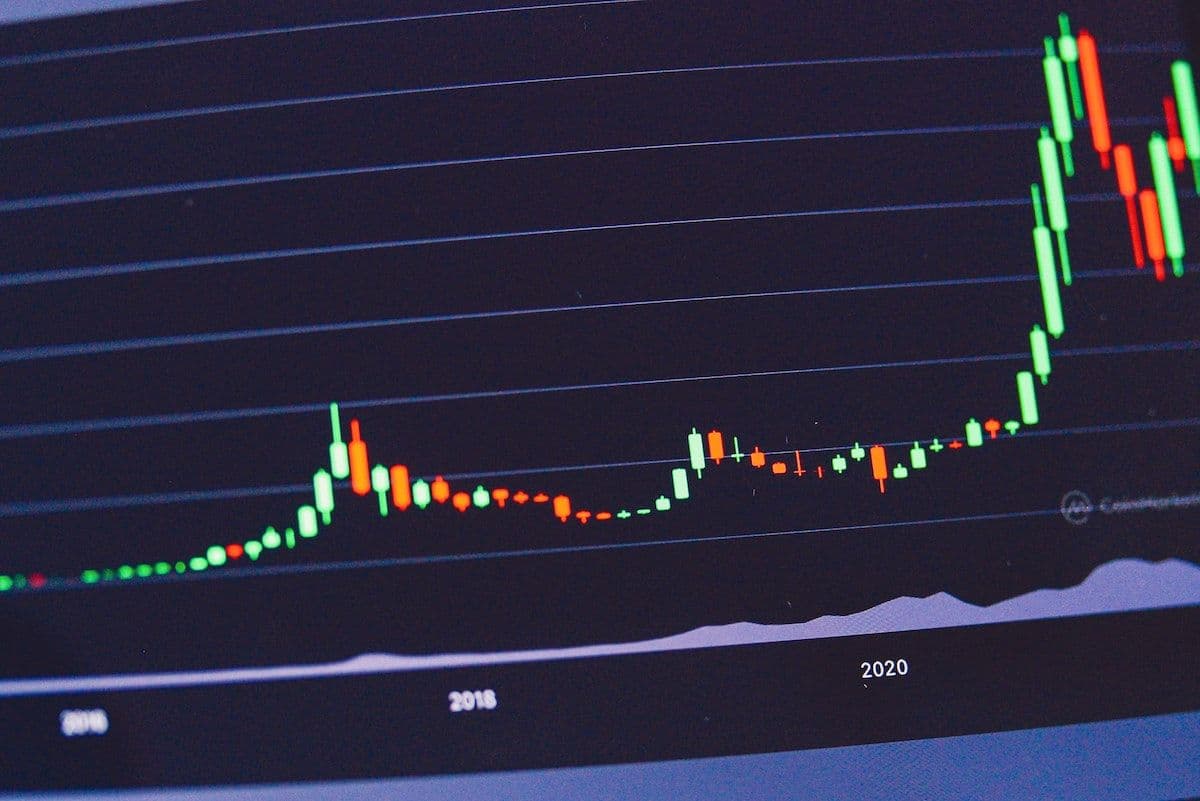
ONDO Hits All-Time High! Why ONDO Price is Rising?
ONDO saw a spike in its price, hitting a record high. Why ONDO price is rising? Let's take a look at this in more detail.
November 8, 2023 6:47 PM
Bitcoin Price Prediction: Can BTC Price Surge to an All-Time High by Christmas?
We are discussing the possibility that the price will approach its all-time high. Let's take a look at this Bitcoin price prediction article
May 26, 2020 12:37 PM
Bitcoin Price Analysis: Is BTC Price Recovering?
The Bitcoin halving event is just a few days away. The Bitcoin price is already showing a slight recovery after a considerable decline. Is this the perfect time for a rally above $10,000 and towards the all-time high at $20,000? […]
September 20, 2026 4:13 AM
Zcash Above $1,500: What ZEC Holders Should Check on Tax and Custody
Zcash rose above $1,500 on September 19 for the first time since 2016 and, after an intraday high of $1,590.80, trades back at around $1,474. For German holders three questions hang on that jump: the one-year holding period, the planned year-end cut-off and the EU anti-money-laundering regulation from July 2027.

April 1, 2025 1:00 PM
BREAKING Crypto News: Bitcoin Hits $500,000 on one Exchange – Traders in Shock!
In a shocking turn of events, Bitcoin has surged to an unbelievable $500,000 on a crypto exchange, sending traders into a frenzy. Is this the beginning of a new era?
November 22, 2024 11:10 AM

Solana hits new ATH, BUT will it be THE LAST this November?
As anticipated, November did, in fact, repeat itself three years apart as Solana (SOL) hit a new all-time high above $260. But will it be SOL's last ATH?
November 20, 2024 7:01 PM

Bitcoin Has A New ATH Above $94k Amid Market Optimism
Bitcoin breaks past $94,000 for the first time, fueled by institutional investments, ETF advancements, and strategic corporate moves. Could $100,000 be next?

February 13, 2024 8:55 AM
Bitcoin price explodes over $50,000!!!
Explore Bitcoin's surge above $50,000 due to US trading and Bitcoin ETFs, and whether it's heading towards a new all-time high.
May 16, 2023 4:59 PM

Cardano Price Down 80% From All-Time High: Opportunity to BUY ADA?
Why is Cardano price down? Is there a possibility that investors in Cardano may witness profitable returns in the coming months?

February 8, 2021 10:42 PM

Bitcoin Hits New All-Time-High as Tesla Purchases $1.5 Billion.
In another day of awesome crypto news, Bitcoin hit a new all-time high of $44,801.87 on Monday, February 8th, 2021. The price surge followed an announcement from Tesla that the company had purchased $1.5 billion in Bitcoin for a variety […]
December 27, 2020 11:53 AM
Can Bitcoin Price reach USD 30,000 before 2021? Shocking truth lies ahead
What a year for Bitcoin it was. 2020 will be talked about in the future, just like the year of 2017, where the price of Bitcoin rose and fell. On the contrary, this year was the greatest year yet, with prices rising from a low of USD 3,800 all the way to the current all-time high of USD 28,000, making a hefty 637% from the year low of the COVID-19 drop. Will Bitcoin manage to break the USD 30,000 mark and surprise all the naysayers?
More from CryptoTicker