
Zcash drops below $1,000 as Grayscale launches an ad blitz for ZCSH
Zcash fell to its lowest level since September 4 on Wednesday morning and now trades below $1,000. At the same time, Grayscale is promoting its Zcash fund with a Wall Street Journal front-page wrap and $1 million in grants, while money has been leaving the fund for weeks.

Which topics should we dive deeper into?
Select what genuinely interests you. Your picks feed directly into our editorial planning.
Crypto news that's actually worth your time.
Weekly. 60 seconds. Carefully curated by our editors: no hype, no promo flood, no spam.
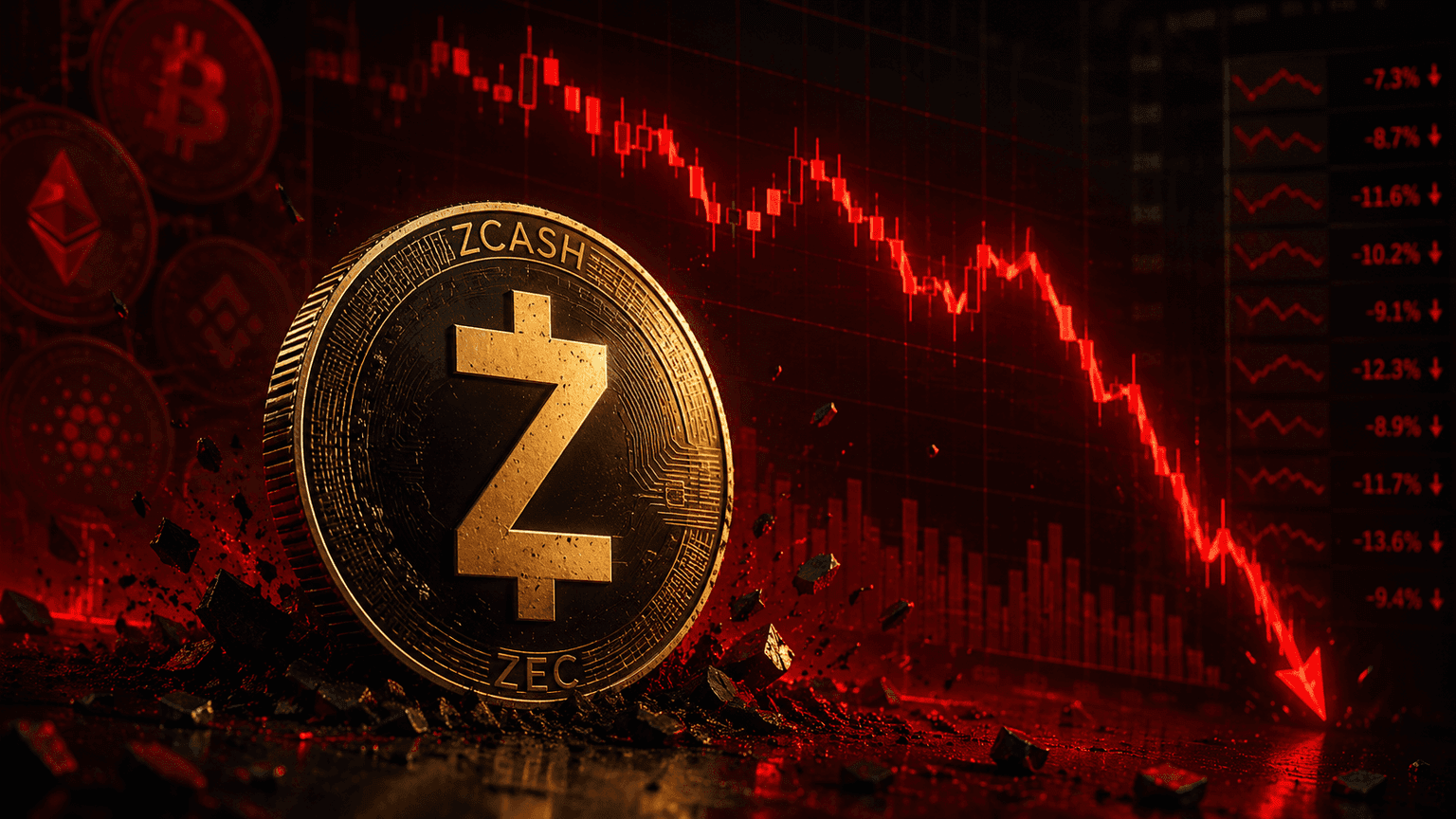
Zcash is trading below the $1,000 mark on Wednesday morning. At around 7:50 a.m. CET, one ZEC cost $980.82 according to CoinGecko, down 14.8 percent in 24 hours. On Kraken the price fell as low as $976.80, its lowest level since September 4. At the same time, asset manager Grayscale is promoting its Zcash fund ZCSH more loudly than ever, with a Wall Street Journal front page and a $1 million grant pledge. The fund's investors are pulling money out regardless.
Zcash price on November 11: $981 after a 14.8 percent drop
The decline began on Tuesday afternoon and continued overnight. CoinGecko puts the high of the past 24 hours at $1,196.04. By the morning, ZEC had given up almost $200 of that. No other coin among the 25 largest cryptocurrencies by market capitalization lost more over those 24 hours; Uniswap came next with a drop of 8.4 percent. Over seven days, Zcash is down 16.3 percent.
Zcash ranks 11th by market capitalization. Trading volume over the past 24 hours was just under $1.28 billion, according to CoinGecko. The broader market fell far less: Bitcoin lost 1.4 percent over the same period and traded at around $73,500, while Ether fell 2.9 percent. The Fear and Greed Index from alternative.me stands at 29, which signals fear. The slide in Zcash therefore goes well beyond the general weakness.
Lowest Zcash price since September 4
On Tuesday evening we reported on Zcash's slide to $1,003. ZEC lost 16 percent in under two hours at the time. The price has not recovered since. It tested the zone around $1,000 again overnight and slipped below it in the morning. The mark that just about held on Tuesday now sits roughly 2 percent above the current price.
The distance to the highs is large. The daily high of September 26 on Kraken was $1,695; Zcash has lost around 42 percent since then. It would need to rise 69 percent to return to the all-time high of $3,191.93 listed by CoinGecko. This comparison is based on Kraken daily prices since November 2024 and on CoinGecko market data; cryptoticker.io compiled it itself on November 11, 2026.
Grayscale's ZCSH campaign: zebra stripes on the front page
Grayscale chose the day of the slump to launch a broad advertising campaign. As The Block reports, Grayscale wrapped the front page of the Wall Street Journal in a zebra-striped cover on Tuesday and ran a full-page ad for the Zcash fund inside. The zebra is a symbol of the Zcash community; the Zcash Foundation's node client is also called Zebra. According to the report, the campaign is also running in print, outdoor, digital, streaming and social media.
It includes a dedicated education site at ZcashInvest.com that explains the fund and Zcash's privacy features. The address redirects to a Grayscale subpage. Steve Vanourny, head of indexes at Grayscale, told The Block that financial privacy is becoming indispensable as more economic activity moves onchain and AI makes it easier to analyze.
An exchange-traded fund (ETF) is a fund whose shares trade on an exchange like stocks. The Grayscale Zcash Trust started in 2017 as a private placement and has traded as an ETF under the ticker ZCSH on NYSE Arca since August 2026. On Tuesday, the fund's shares fell around 12 percent to $27.25, according to The Block.

$1 million grant pledge: who gets Grayscale's money
Besides the advertising, Grayscale announced more money for the Zcash ecosystem. According to The Block, the fund provider is raising its grants to non-profit Zcash organizations and projects to a total of $1 million. $400,000 has already been awarded, in four equal tranches of around $100,000.
- Zcash Foundation, the non-profit behind the Zebra node client
- Pretty Good Policy for Zcash, a policy advocacy group
- Shielded Labs, a protocol development team
- Project Tachyon, an initiative to scale shielded payments
Grayscale also intends to put up to 100 percent of the ZCSH sponsor fee into the Zcash network during its first year as an ETF, spread across development, marketing, community and education. The sponsor fee is the ongoing management fee that the fund deducts from investors' assets each year. The pledge does not change anything for fund investors on the fee side. They keep paying it; Grayscale simply spends the income differently.
 Compare crypto exchanges before you buy ZEC
ZCSH outflows: $46.25 million in October
The advertising comes as money has been leaving the fund for weeks. According to The Block, ZCSH recorded net outflows of $46.25 million in October. More than $15 million followed in November up to and including Monday; Tuesday's figures are not yet included. A net outflow means investors redeem more fund shares than new ones are created.
In September the picture looked different. Rising inflows into the fund carried Zcash's rally above $1,000 back then, and ZEC reached prices just below $1,700 at the end of September. Tuesday's campaign therefore lands in a phase in which demand from the fund is weighing on the price instead of supporting it.
Why ETF outflows push down the ZEC price
A spot ETF such as ZCSH holds actual Zcash coins to back its shares. When an investor redeems shares, the fund unwinds the corresponding amount of backing through a so-called authorized participant, an approved trading partner. These coins usually end up on the market. If money flows out for weeks, a steady stream of additional supply is created.
For a coin with a comparatively small market capitalization, this weighs more heavily than for Bitcoin. At the current price, October's outflows are equivalent to a good 47,000 ZEC. Then there is the derivatives market: when prices fall, leveraged long positions are forcibly closed, or liquidated. These sales accelerate a downward move.
NU7 upgrade without a price boost: down since November 6
Technically, Zcash has just taken a big step. The NU7 network upgrade went live on November 6, cutting the target time between two blocks from 75 to 25 seconds. On the day of activation, ZEC gained 7 percent against a falling market, as we reported on November 6.
The gain did not last. In the seven days to Wednesday morning, Zcash lost 16.3 percent. There are no reports of technical problems after the switch; the price pressure comes from trading and from the fund.

Zcash ETF in Germany: why ZCSH is missing from brokerage accounts
Anyone in Germany who wants to respond to the Wall Street Journal ad quickly hits a limit. Retail investors in the EU generally cannot buy US ETFs such as ZCSH, because no key information document under the European PRIIPs Regulation exists for them. German brokers therefore block such funds from trading. Our overview of crypto ETFs in Germany shows which crypto funds and exchange-traded products are available there.
The direct route is via a crypto exchange. Zcash remains tradable there, although the choice is smaller than for large coins. Our crypto exchange comparison shows who lists ZEC and what fees apply. Before buying, check whether the exchange is licensed under the European MiCA Regulation and whether it allows withdrawals to your own wallet.
 Find the right tool for your crypto taxes
Tax on ZEC losses in Germany: holding period and offsetting
In Germany, Zcash held as private assets is subject to the same rule as other cryptocurrencies. Gains from a sale are tax-free after a holding period of one year. Within that year they are taxable as a private sale transaction, provided gains from such transactions reach €1,000 or more in the year.
Losses work the other way round. If you sell ZEC at a loss within the one-year period, you can offset that loss against gains from other private sale transactions in the same year or carry it forward to later years. Once the holding period has expired, a loss has no tax effect. To get the period right for every single tranche, you need a complete record of your purchases. Crypto tax software and portfolio trackers that import exchange accounts and wallets can help with that.
Privacy coins and AMLR: what applies to regulated providers from July 2027
Over the medium term, another date matters more than any price level. The EU Anti-Money Laundering Regulation (EU) 2024/1624, AMLR for short, applies from July 10, 2027. It prohibits credit institutions, financial institutions and crypto service providers from keeping anonymous accounts, explicitly including accounts that allow anonymization through anonymity-enhancing coins. With its shielded addresses, Zcash is one of the best-known privacy coins.
For holders in Germany, where their coins are kept therefore matters. If your ZEC sit on a regulated exchange, you should follow the provider's announcements on privacy coins. A self-custody wallet is not directly affected by the regulation, but a later exchange through regulated providers is. Our comparison of regulated crypto exchanges lists which exchanges hold a MiCA license.
Zcash technical analysis: $933, $1,000 and $1,196
Three levels emerge from the daily prices. On the downside, the next zone is $933, the daily low of September 4 on Kraken. Back then the price turned higher there and began the rally that lasted until the end of September. If ZEC falls below this zone, there is no clear support until the area of the August prices.
On the upside, the $1,000 mark is the first hurdle. It was support on Tuesday and, now that it has broken, it is the area that will show whether buyers return. Above it, the high of the past 24 hours sits at $1,196. Only a rise above that level would fully reverse the slide of Tuesday and Wednesday.
If you trade with leverage, you should know the distances: $933 is just under 5 percent below the current price, $1,196 around 22 percent above it. With a coin that loses 15 percent in a day, a stop just below the price quickly falls within the range of normal swings.
Zcash below $1,000: three steps before the AMLR deadline
- Check how you buy: ZCSH is generally not tradable for retail investors in Germany. If you want to hold ZEC, compare fees and withdrawal rules in the crypto exchange comparison.
- Settle custody: There is time until July 10, 2027, but providers will decide earlier. Watch for announcements from your exchange and for a MiCA license, which the comparison of regulated crypto exchanges shows.
- Document for tax: Record the purchase date and price of each tranche. A loss within the holding period can be offset if it is documented; crypto tax tools do this automatically.
(As of November 11, 2026. This article is not investment advice. Prices and fee structures change; check the terms with the provider before you buy.)
Frequently asked questions about Zcash
Transparency note: This article was produced with the assistance of artificial intelligence and reviewed by our editorial team before publication. All figures and claims were checked against the primary sources linked in the text. The feature image was generated with AI.
Related articles
- Bitcoin price at $73,700: outflows from BlackRock's IBIT show no sign of stopping
- $1,003: Zcash loses 16 percent in under two hours and hits its lowest level since September
- Monero falls 5.6 percent to $568: THORChain has finished the XMR integration, but swaps are not live yet
- Zcash falls almost 8 percent: why developers want 20-second blocks
- Zcash gives back its NU7 gains: ZEC drops 7.4 percent on liquidations and an ETF outflow
Which topics should we dive deeper into?
Select what genuinely interests you. Your picks feed directly into our editorial planning.
Crypto news that's actually worth your time.
Weekly. 60 seconds. Carefully curated by our editors: no hype, no promo flood, no spam.

November 7, 2026 7:12 PM

Ethereum price holds €2,000 as ether ETFs log a sixth straight week of outflows
Analysis: Ether is hovering around €2,000 on Saturday evening after the US spot ETFs lost money for a sixth consecutive week. Which figures are confirmed, why the euro level matters more than the dollar price for investors in Germany, and which steps you can check now.

November 6, 2026 5:11 PM
Zcash after the NU7 upgrade: ZEC climbs 7 percent while the market falls
Zcash's NU7 upgrade has been live since the night of November 6 and cuts block time to 25 seconds. ZEC rose 7 percent the same day while Bitcoin and Ether fell.
November 4, 2026 7:23 PM

Ether ETF buyers sit at an average of $3,200: the Ethereum price levels that count until then
Analysis: According to an estimate by Bloomberg Intelligence, buyers of the US Ether ETFs paid just under $3,200 on average, while Ether trades at $2,425 after the election jump. We recalculate the funds' paper loss, put the outflows in context and show which levels count on the way to the cost basis.

November 4, 2026 7:42 AM

Bitcoin ETF Outflows Pass $1 Billion: Why Institutions Are Selling After the Midterms
Spot Bitcoin ETFs bled over $1 billion in three sessions as the Binance hack and the midterms spooked institutions. Where does BTC go next?
November 3, 2026 7:13 AM
Zcash drops 11 percent as a dispute over ZCG grant money precedes the NU7 upgrade
Zcash falls to around $1,135, and on-chain data show one large buyer losing $5.84 million. Behind the move are the dispute over the $124 million ZCG grant pool and the NU7 upgrade in the early hours of November 6.

November 2, 2026 11:19 PM
Zcash falls 7.4 percent ahead of block 3,543,405, the NU7 cut-off for old Sprout funds
Zcash lost 7.4 percent to $1,228.33 on October 30, 2026, making it the biggest loser in the top 25. The protocol deadline matters more than the price: with NU7 at block height 3,543,405, balances left in the old Sprout pool become unusable.
November 2, 2026 5:33 PM

Bitcoin ETFs Lost $643 Million in One Day: Most of 2026’s Gains Gone
US spot Bitcoin ETFs saw their biggest outflow since June on Friday, wiping out most of this year’s net inflows. Why it happened and what it means for the BTC price.
October 22, 2026 10:13 AM
Monero climbs to $644, leaving it about 24 percent short of January's record
Analysis: Monero gained around ten percent in a day while Bitcoin, Ethereum and Zcash stood still. The distance to January's all-time high shows where XMR really stands better than the daily percentages, and trading access in Europe is the more important question.
October 18, 2026 10:26 PM

Monero gains 8.1 percent to $592 while Zcash falls 3.7 percent: outperforming the market
Monero climbs to around $592 while Zcash loses 3.7 percent and the wider market slips. Where the gap comes from, what Article 79 of the EU anti-money-laundering regulation changes from 2027 and what that means for custody.
October 16, 2026 4:44 AM
Zcash holds $1,073 and takes back 14 percent from the low: where does ZEC stand now?
Zcash fell as far as $1,073.55 on 15 October 2026 and trades at around $1,224 again. Between the daily low and the daily high lay 16.6 percent, a range that decides more about leveraged positions, the holding period and custody than the closing level does.
October 15, 2026 10:25 AM
Zcash drops 13 percent to $1,089, the steepest fall in the top 25
Zcash loses around 13 percent within 24 hours to $1,089.72 and slips below the $1,100 mark. No other of the 25 largest cryptoassets gives up more on the day, while Monero loses just 2.3 percent.
October 13, 2026 7:17 PM
Zcash price slides from $1,315 to $1,185 before the NU7 decision on October 20: the level that decides
Zcash has lost 8.2 percent in 24 hours to $1,184.90 after leveraged long positions worth up to $26 million were force-closed. At the same time the developers decide on October 20 on the activation height of the NU7 upgrade.
October 12, 2026 10:31 AM

$1,332: Zcash is the only one of the ten largest coins with a weekly gain
Zcash stands at around $1,332, a good eight percent above the previous day. Among the ten largest cryptocurrencies, ZEC is the only one up over seven days. Two dates in October and November decide what holders have to settle beforehand.
October 10, 2026 1:19 PM
Crypto ETF Outflows Pass $1 Billion in October: Is Wall Street Dumping Bitcoin and Ethereum?
Bitcoin and Ethereum ETFs just bled over $1 billion in October. Here is who is selling, who is still buying, and what it means for your coins.
October 10, 2026 10:44 AM

Top 3 Coins to Watch Next Week: These Altcoins Could Explode
Twelve of the top 17 coins closed the week in the red. These three didn't. Here are the altcoins to watch next week and the catalysts behind them.
October 9, 2026 10:40 PM

Winklevoss Files for a Zcash ETF at 0.25 Percent, a Tenth of the Grayscale Fee
Winklevoss Asset Services applied to the SEC for a spot ETF on Zcash on October 6, 2026, planned for the Nasdaq under the ticker WINK and with a 0.25 percent fee. For portfolios in Germany the fund stays blocked, and the decisive date sits in EU anti money laundering law.
October 6, 2026 1:34 AM

93.56 million dollars out of the Zcash ETF in one week: what changes for ZEC holders in Europe
The Grayscale Zcash ETF lost money for the first time since launch in the week to October 5, 2026, a net $93.56 million. What the figure says about demand and what it means for ZEC holders in Europe.
September 29, 2026 1:33 AM

Zcash falls 8.5 percent as open interest shrinks 13.5 percent: the level that decides
Zcash trades at around $1,464 on September 28, 2026, 8.5 percent below the previous day. Our own measurement of open interest on OKX shows a fall of 13.5 percent in 24 hours, so more leverage unwinding than price loss.
September 25, 2026 10:26 AM

Crypto Prices Today: Bitcoin Slides to $84,000 While Altcoins Rally Hard
Bitcoin trades near $84,000 after an 8% weekly drop while XRP, ADA and Zcash rally. Here is what is moving crypto prices today.
September 17, 2026 10:40 AM
Crypto News Today: Bitcoin Holds $76,000 After Fed Hike and CLARITY Act Collapse
The CLARITY Act died in the Senate, the Fed hiked for the first time since 2023, and Zcash ripped anyway. Here is the full crypto market update.
September 1, 2026 10:22 AM
Crypto News Today: Bitcoin Stalls While Zcash and Monero Steal the Show
Crypto news today: Bitcoin cools after its best week in three years, Saylor buys again, and privacy coins keep running. Here are the prices and levels.
August 29, 2026 4:16 AM

Zcash ETF: Why ZCSH Is Off Limits for EU Retail Investors
Grayscale launched the world's first Zcash spot ETF on NYSE Arca on August 25, 2026. Why German brokers bar the security for retail clients, which routes stay open instead, and why buying the coin directly also carries a date in the EU.
August 23, 2026 7:34 PM

Buying Zcash Despite the EU Trading Ban: What Happens to Your ZEC From July 2027
From July 10, 2027 the EU anti-money-laundering regulation takes anonymity-enhancing crypto-assets out of regulated trading venues. What Article 79 forbids in its actual wording, why your own ZEC holding is not caught by it and what to sort out before then.
July 10, 2026 3:04 PM
Zcash Surges 8% as the Ironwood Upgrade Reignites Privacy-Coin Hype
Zcash is up more than 8% today and back above $500. Here is what is driving the ZEC rally and where analysts see the price heading next.
June 15, 2026 11:45 AM

Zcash Price Prediction: ZEC Surges 15% as Privacy Coins Lead the Crypto Rebound
Zcash price prediction as ZEC surges 15% in 24 hours, outperforming Bitcoin, Ethereum, Solana, and XRP. Can the privacy coin rally continue?
More from CryptoTicker