
Mina Hard Fork on September 3, 2026: What Happens to Your MINA During the Network Halt
Mina is halting the network on September 3, 2026 to execute the Mesa hard fork. From 10:00 UTC no transfers land on the chain, exchanges pause deposits and withdrawals, and delegators receive no block rewards for the duration of the window.





Which topics should we dive deeper into?
Select what genuinely interests you. Your picks feed directly into our editorial planning.
Crypto news that's actually worth your time.
Weekly. 60 seconds. Carefully curated by our editors: no hype, no promo flood, no spam.
The Mina network will temporarily suspend operations on Thursday, September 3, 2026. Between 10:00 and 18:00 UTC, a transaction stop, a full network halt and a restart under new protocol rules follow one another. Anyone holding MINA is affected in three places: transfers submitted too late will not make it onto the chain. Exchanges will suspend deposits and withdrawals. And anyone who has delegated their holdings will receive no block rewards for the duration of the pause, because no filled blocks are produced during that time.
The upgrade is called Mesa. The development company o1Labs has published the timetable with exact times, along with an overview of what users, exchanges and node operators can expect. Both documents are publicly available and form the basis of this article. The deadline is three days away, and the only preparation the vast majority of investors need takes five minutes.
Mina Mesa Hard Fork: What Exactly Happens on September 3, 2026
Mesa is a hard fork, meaning a change to the protocol rules that is not backwards compatible. A hard fork requires every node on the network to switch to the same new software at the same time, because the old version would no longer recognize the new blocks as valid. At Mina, this switch does not happen while the network keeps running. The chain is halted on schedule, brought into a defined final state, and then restarted under the new version.
The date was prepared in several stages. The rule changes were confirmed in an on-chain vote that ran from December 8 to December 15, 2025; voting power was determined by a snapshot date of November 22, 2025. A dedicated testnet and dry runs with node operators followed. On August 19, 2026, Mesa was first rolled out on the Devnet testnet before the mainnet date was set.
For you as an investor, the governance history matters in one respect only: it shows that the date is a planned event rather than an emergency measure after an incident. That sets Mesa apart from the chain halts that have followed attacks recently. Knowing the difference between a planned halt and a forced one makes reports about stalled blockchains far easier to read calmly.
The Mesa Timetable in Detail: From 10:00 UTC to the First Mesa Block
The o1Labs timetable names four markers, all on September 3, 2026 and all in UTC. Central European Summer Time runs two hours ahead, so 10:00 UTC is 12:00 in Berlin.
- 10:00 UTC: The stop-transaction slot begins. From this point on, submitted transfers are no longer included in the chain that continues after the upgrade.
- 15:00 UTC: The stop-network slot is reached. The network halts and no further blocks are produced.
- 16:30 UTC: The Mesa packages are released. From here, node operators can obtain the new version.
- 18:00 UTC: The first Mesa slot begins and block production starts up again.
- Between 10:00 and 15:00 UTC the network technically keeps running, but produces only blocks without content.
In practice this means the decisive moment for you is 10:00 UTC, and not 15:00 UTC. From the late morning onwards the chain is already dead for transfers, even though it is still technically writing blocks. Anyone who initiates a withdrawal at 14:00 UTC has missed the train, without any error message saying so.
Hard Fork Explained: Why a Blockchain Has to Halt for a Rule Change
A blockchain is a shared ledger without a central authority. For thousands of computers to arrive independently at the same result, they have to apply the same rules. When those rules change, there are two routes. Either the new version is built so that old nodes continue to accept the new blocks, which is called a soft fork. Or the change goes deep enough that the old and the new version reject each other, and then it is a hard fork.
For Mesa, Mina takes the orderly route through a defined halt. The network agrees on a final valid state, freezes it, and restarts from that state. The advantage is that two competing chains cannot emerge, as has happened with contested hard forks in the past. The price is the downtime you will feel on September 3.
What that looks like in practice can be read off a second date in the same week: Zilliqa is carrying out its hard fork as early as September 2, with its own swap mechanism for the tokens. We described that case in Zilliqa Hard Fork on September 2, 2026. The Pasteur hard fork at BNB in August followed the same pattern. The comparison is worth making, because it shows how differently the networks handle the same underlying problem.

Stop-Transaction Slot: Why MINA Transfers After 10:00 UTC Are Lost
The stop-transaction slot is the point from which submitted transfers no longer feed into the state that survives the upgrade. The wording in the timetable is unambiguous: transactions submitted after the stop-transaction slot are not present on the chain after the upgrade.
This is not a loss of your balances. Your holdings remain where they were before 10:00 UTC. The movement is what disappears; the money stays put. So anyone sending MINA from an exchange to their own address at 11:00 UTC has to expect that the transfer simply did not take place and will have to be initiated again after the restart.
It gets awkward wherever a payment is tied to a deadline. If you are settling an invoice in MINA, want to post collateral for a position elsewhere, or have a deadline to meet with a third-party provider, take September 3 out of your planning altogether. The calmest route is to get everything necessary done on September 1 or 2 and treat Thursday as a public holiday.
MINA on Exchanges: Why Deposits and Withdrawals Pause
The vast majority of investors hold MINA on a trading venue and not in their own wallet. For this group the message is clear: MINA deposits and withdrawals will be suspended during the downtime window. No individual exchange is choosing this. It follows inevitably from a chain that processes no transfers at all during that period.
Trading on the exchange itself can carry on unaffected. Buying and selling take place in the provider's own books and never touch the blockchain. Anyone who only wants to trade may notice nothing at all. Anyone who wants to move MINA in or out on that day stands in front of a locked door. Which trading venues come into question, and how they differ on deposits and withdrawals, is shown in our comparison of the best crypto exchanges.
How to Check Whether Your Exchange Has Announced a Pause
Every provider announces pauses of this kind in its own notification area, usually under headings such as Announcements or System Status. Two points matter here. First, the exchanges' windows rarely start and end exactly at the protocol's times; most providers add a safety buffer before and after. Second, the absence of an announcement says nothing about whether the pause is coming. It is coming regardless, because the chain has stopped. The announcement only tells you how generous the buffer is.
If you have a withdrawal firmly scheduled and find no notice by the evening before, asking support is the faster solution than trying your luck on the day itself. A stuck withdrawal is laborious to resolve, as our article on transfers that do not arrive shows with a different example.
 Crypto Exchanges Compared
Three Hours or Eight Hours? What the Conflicting Downtime Figures Mean
This is where the two o1Labs publications diverge, and the difference deserves to be named openly. The timetable with the exact times puts the network halt at 15:00 UTC and the first new block at 18:00 UTC, which comes to three hours. The accompanying overview speaks instead of roughly eight hours of expected downtime during the upgrade window.
Both figures can be reconciled once you separate what each one measures. The three hours are the period in which no blocks are produced at all. The eight hours cover the entire window from 10:00 UTC, during which the chain is already unusable for transfers even though it is still writing empty blocks. For you as a user, the second number is the more honest one, because a chain that no longer accepts your transfer has come to a standstill as far as you are concerned.
Plan with the larger figure. If the upgrade runs faster, you lose nothing. If it is delayed, which happens regularly with hard forks, you have already built the buffer into your plans. During a coordinated halt, delays are routine as long as the developers communicate the current status.
Delegation and Block Rewards: What MINA Stakers Lose During the Network Halt
Mina works with delegation. Anyone who does not run a block producer themselves transfers their voting weight to an external node and receives a share of that node's rewards in return. These rewards come from blocks that are produced, and that is exactly where the upgrade intervenes.
The timetable states that no block rewards are generated during the upgrade phase, because the blocks remain empty. For delegators this means a shortfall in earnings for the duration of the window. Measured against an annual yield, the amount from a few hours of downtime is small, but it is real, and it hits every delegator equally.
What an Empty Block Means for Your Yield
An empty block is a block without transactions. It formally keeps the chain running, but carries no fees and, in this phase, no reward either. Anyone calculating their yield across the year should book windows of this kind as part of routine network maintenance. Anyone calculating with day-by-day earnings, for example because they hold a position on borrowed money, should show the shortfall in their figures.
A second point concerns the choice of block producer. A node that sleeps through the upgrade will produce nothing at all after the restart. Delegators have no direct influence on that, but they can check after September 3 whether their node is delivering blocks again, and switch if in doubt. How providers differ on yield, fees and availability is set out in our comparison of staking platforms.
Node Operators: Which Version You Have to Install Before the Deadline
Anyone running a Mina node themselves has real work to do before September 3. The timetable distinguishes two routes. Those using the automated operating mode, Automode, install the stable version 4.0.0. Those updating by hand install the stop-slot version 3.5.0 first and switch to the Mesa version 4.0.0 once the packages have been released.
For block producers there is an additional requirement that is easily overlooked: at least one node has to keep running continuously until after the stop-network slot. Shutting your node down early because nothing is happening anyway withdraws capacity from the network in its most sensitive phase. The task is therefore to update in good time and to leave the node running afterwards instead of switching it off early.
The upgrade itself runs automatically under Automode as soon as the packages are available at 16:30 UTC. Anyone working by hand should have that time in their calendar and should not count on catching it in passing.

Archive Nodes and Schema Migration: The Step Many Overlook
An archive node is a node that holds the full history of the chain in a database instead of only checking the current state. Block explorers, tax tools and exchanges fall back on archives of this kind when they have to evidence old transfers.
These operators face a requirement of their own: the database schema migration has to be complete before the stop slot. Anyone who misses it ends up after the restart with a database that no longer fits the new chain, and has to catch up while everyone else is already running again.
Even if you do not run an archive yourself, there is something in this for you. When archives lag behind after a hard fork, explorers and analysis tools temporarily display incomplete histories. If you pull a tax report during that period and wonder about the gaps, repeat the export a few days later before passing it on to the tax office. Which tools are suitable for that is shown in our overview of crypto tax tools.
MIP 6 to MIP 9: What Mesa Changes Technically at Mina
Mesa bundles four improvement proposals, which are tracked in the Mina ecosystem as Mina Improvement Proposals. A Mina Improvement Proposal is a formalized request to change the protocol, which holders vote on before it is implemented.
- MIP 6 shortens the block time and thereby increases transaction throughput.
- MIP 7 raises the limit for state data on the chain from eight to thirty-two fields.
- MIP 8 extends the limits for events and actions that an application is allowed to emit.
- MIP 9 increases the number of account updates a zkApp can carry out in a single operation.
For investors with no interest in development work, one thing above all is relevant here: all four points target capacity and the applications that are meant to run on Mina. Whether that actually translates into more usage will only be decided in the months after the upgrade. Anyone trading the date as a price event is trading an expectation, with no proven effect behind it.
 Staking Platforms Compared
Self-Custody or Exchange: Where Your MINA Is Better Off on the Day
A hard fork is one of the few moments when custody stops being a question of principle and becomes a question of logistics. Both routes have a visible drawback on September 3.
On an exchange you depend on its buffer. If the buffer is generous, you may already be unable to withdraw on September 2 and have to wait until September 4. In return, you do not have to concern yourself with node versions and timings. In your own wallet you keep control, but your transfer fails just the same if you miss the window, and nobody catches the mistake for you.
The sober answer is therefore that the place of custody is secondary for this one day, while the timing is what counts. Anyone already thinking about pulling larger holdings off an exchange should do it before September 1 and not in the week of the upgrade. Which devices come into question for that is set out in the hardware wallet comparison.
Phishing Around Hard Forks: Why Nobody Will Ask You for Your Recovery Phrase
Every announced upgrade attracts fraud attempts, because it supplies a credible reason for urgency. The pattern is always the same: a message warning of an alleged loss, a link to a page dressed in the project's visual identity, and a request to connect your wallet or enter your recovery phrase.
With Mesa the situation is unambiguous. For holders of MINA no action on the wallet is required: no swap, no migration, no confirmation. Anyone claiming otherwise is after your holdings. The only addresses that count for this date are the project's official channels and the notification areas of the trading venues.
A second note concerns the time after the upgrade. If a transfer does not arrive after the restart, the first place to look is the block explorer, and not a help page that a search engine puts at the top of its results. Fake support offers live off exactly this moment of uncertainty.
Surviving the Mina Hard Fork: What to Take Away
The date is manageable as long as you know about it. Three steps are enough to prepare.
- Complete all MINA transfers by September 2. From 10:00 UTC on September 3, nothing submitted after that point lands on the chain. Check your trading venue's notification area to see when its pause starts; an overview of the relevant providers is in the exchange comparison.
- Expect a shortfall in earnings if you delegate. No block rewards are generated during the window. Check after September 4 whether your block producer is delivering again, and switch if in doubt; the differences between the providers are set out in the staking comparison.
- Postpone reports and tax exports by a few days. Archives need time after a hard fork before the history is complete again. Exporting too early means working with gaps; which tools are suitable for the job is shown in the tax tool comparison.
The sources for this article are the o1Labs timetable with the times for the upgrade day and the accompanying overview of what users, exchanges and operators can expect. Both can be read here: Timetable for the Mesa upgrade and What to expect from Mesa.
(As of August 31, 2026. This article is not investment advice. Prices and fee structures change; check the terms with the provider before you buy.)
Transparency note: This article was produced with the assistance of artificial intelligence and reviewed by our editorial team before publication. All figures and claims were checked against the primary sources linked in the text. The feature image was generated with AI.
Related articles
- Base Hard Fork on September 30: Binance Freezes Base Transfers an Hour Before Cobalt
- Core DAO: CORE Transfers Frozen, Emergency Hard Fork Announced. What Our Chain Measurement Shows
- Zcash NU7 Upgrade on November 5, 2026: What You Must Do With Your ZEC
- Pi Network Protocol 27 on September 15: What Our Measurement on Mainnet and Testnet Shows
- Pi Network Protocol 28 goes live October 16, node operators have until October 13
Which topics should we dive deeper into?
Select what genuinely interests you. Your picks feed directly into our editorial planning.
Crypto news that's actually worth your time.
Weekly. 60 seconds. Carefully curated by our editors: no hype, no promo flood, no spam.

September 6, 2026 4:34 AM

MultiversX Supernova of September 10: What EGLD Holders Should Know After the Hard Fork
Recap as of September 27, 2026: MultiversX had scheduled the Supernova hard fork for September 10, 2026 to cut block time from six seconds to 600 milliseconds. Our own query of the MultiversX API on September 27 shows 600 milliseconds. This article describes the situation before the hard fork and what exchange and staking users should have checked beforehand.
August 23, 2026 4:14 AM

Glamsterdam Has a Date: Ethereum Forks Sepolia on September 28, 2026
The Ethereum upgrade Glamsterdam has a date for the first time: the Sepolia test network is due to fork on September 28, 2026 at 14:44:48 UTC. We show you where the number comes from, why September 3 is the more important date and what changes for you as an ETH holder.
September 12, 2026 1:36 AM

Ethereum Upgrade Glamsterdam: What Stakers Need to Check on Their Client Now
Glamsterdam is due to go live on the Sepolia test network on October 6, 2026, while the main network still has no date. We counted the version levels of all ten major Ethereum clients and show what stakers should check now, and what they should not.
September 5, 2026 10:33 AM
ZIL Withdrawals Frozen: Why Your Zilliqa Balance Is Stuck After the Hard Fork
The Zilliqa hard fork of September 2, 2026 moved the ZIL balances of ten exchanges to new addresses. Three days later, deposits and withdrawals were still halted at the three venues we checked: what that means for your balance, what self-custodians are waiting for, and why the announced compensation is not a decision yet.
August 30, 2026 1:13 AM

Zilliqa Hard Fork on September 2, 2026: What Happens to Your ZIL in the Migration
On September 2, 2026 a hard fork at block height 34,844,968 moves the ZIL balances of ten exchanges onto new addresses, after which deposits and withdrawals are meant to reopen. Anyone holding ZIL in self-custody, by contrast, is still waiting for a migration tool with no date attached.
August 22, 2026 10:39 AM

Maya Protocol Exploit: MAYAChain Is Halted, What to Check Now on Cross-Chain Swaps
On August 18, 2026 an attacker drew roughly $1.65 million out of MAYAChain's liquidity pools through six chained faults, and the team then halted the chain globally. Anyone who swapped or provided liquidity there can check in a few minutes whether their own money is stuck in the halted system.
August 19, 2026 10:16 PM

Ethereum upgrade after Glamsterdam: what is actually decided in Hegotá
66 proposals are circulating for Hegota, yet on August 16, 2026 the Ethereum developers' official planning document holds exactly one firmly scheduled entry. We counted EIP-8081 ourselves and show you how to read the four stages of an upgrade and place future reports in minutes.

March 6, 2025 7:00 PM

What is Ethereum Pectra Upgrade?
Ethereum's Pectra upgrade is set to revolutionize the network with enhanced scalability, lower fees, and smart accounts. Here's all you need to know about the Ethereum Pectra upgrade.
August 22, 2026 10:29 AM

Bitcoin Fork: What Happens to Your Coins When the Chain Splits
On October 31, 2026 a new chain called ECX splits off from Bitcoin, and every holder is credited automatically. Who actually receives the coins depends on the private keys, on voluntary replay protection and on a tax rule many overlook.
September 9, 2026 10:33 PM

Binance Halts Deposits on Selected Networks: What AVA, GNS and TOWNS Holders Should Know After September 14
Recap as of September 27, 2026: according to its notice, Binance has no longer accepted several networks for AVA, Gains Network and Towns Protocol since September 14, 2026, 08:00 UTC. Deposits over those routes are not credited; this piece works out which route stays open for each token and what it costs.

March 10, 2026 1:49 PM

Pi Network Price UP ahead of Pi Day: More Upside to $0.24?
Pi Network (PI) rises 2.15% to $0.221. Speculation around Pi Day on March 14 and the v20.2 upgrade is fueling bullish momentum for the mobile-mining token.

September 2, 2026 10:17 AM

Converting MKR to SKY: Why the Upgrade Penalty Jumps to Five Percent in the Coming Days
The conversion contract currently withholds four percent: one MKR becomes 23,040 SKY instead of 24,000. We read the full history of the penalty off the blockchain ourselves and show why the next step is due within days.
August 31, 2026 7:27 PM

Bitcoin Fork with BLAKE2b: What the September 1, 2026 Launch Means for Your Bitcoin
Supporters of the Bitcoin Knots software plan to launch their own chain on September 1 and to swap the hashing algorithm from SHA-256d to BLAKE2b. For holders that means: move nothing, but check four things.
November 23, 2025 5:11 PM
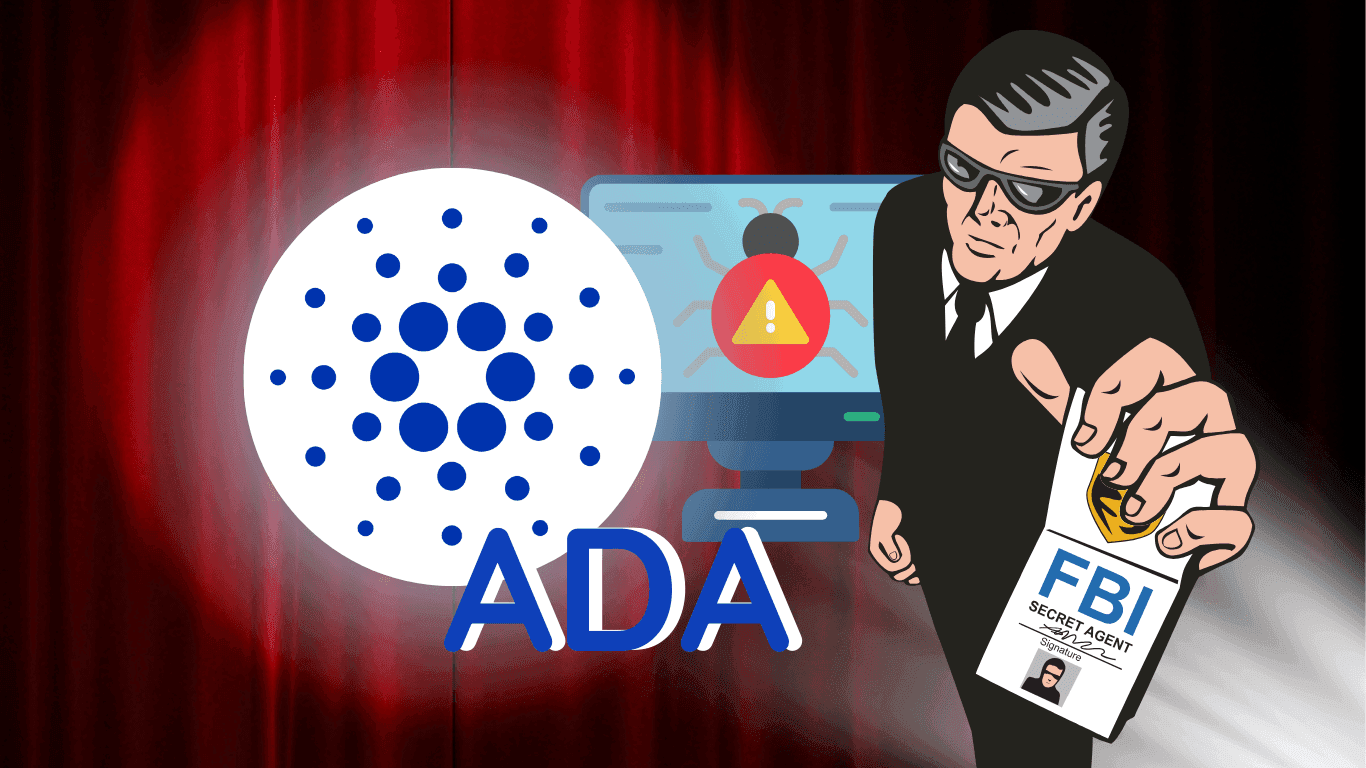
Cardano Network Split After Software Bug – FBI Gets Involved
Cardano suffered a rare network split after a staking transaction triggered a hidden software bug. While the issue is now contained, Charles Hoskinson has involved the FBI. Here’s what happened.

January 14, 2022 8:58 AM
What are Bitcoin Forks? Here’s a Deep Dive into what Forks are
In this article, we will be looking into Bitcoin Forks and the entire fork in the history of the digital asset. What are Bitcoin Forks?

January 15, 2019 1:20 PM

What is the Difference Between an Airdrop and a Fork?
Airdrop and a cryptocurrency fork are two important pillars of the crypto world. Hard Forks and Airdrops are both ways of obtaining new coins. They are related but imperceptibly different. This has driven to chaos among people in the cryptocurrency […]
October 11, 2026 10:35 AM

16 games on one chain: where Ronin stands after the Karst upgrade
Ronin adopted Ethereum's Fusaka changes with the Karst upgrade on October 7 and is tying itself more closely to Optimism standards. At the same time RON holders are voting on treasury money for the first time, while the token sits around 98 percent below its high.
September 30, 2026 10:32 PM

Ethereum Glamsterdam: On October 6 Sepolia Forks, Not the Mainnet, the Next Step for Your ETH
Ethereum forks the Sepolia testnet on October 6, 2026, not the mainnet. Nothing changes for your ETH that day, and according to the Ethereum Foundation the real mainnet date is still not fixed.
September 28, 2026 4:15 PM

Ethereum Price Prediction: The Level That Decides ETH Before the October 6 Sepolia Fork
Ethereum trades at $2,675.39 on September 28, just under 3 percent below the supply zone at $2,750 to $2,800. On October 6 the Sepolia test network forks to Glamsterdam, and separately from that, holders in Germany still have to settle before the year end what the holding period and the exemption limit allow.
September 21, 2026 10:11 PM

Switchboard Oracle Shutdown on September 25: What Solana DeFi Users Should Know Now the Deadline Has Passed
Recap as of September 27, 2026: Switchboard announced on September 19, 2026 that it would end all oracle services on September 25; Kamino, Jito, MarginFi and Drift on Solana were among those named. This article describes the situation before the deadline and our own check of eight public pages where the notice of the deadline was missing.
September 12, 2026 10:20 PM

VeChain Interstellar on September 16: What VET Holders Should Know About the Hardfork
Recap as of September 27, 2026: the VIP-255 hardfork was set for block 25,902,540, not for a fixed time of day. Before the fork, cryptoticker.io measured the mainnet's block time and the software versions of 105 nodes itself, and recalculated the activation point from them.
September 4, 2026 10:24 AM

IoTeX on Coinbase: What IOTX Holders Should Know After the September 23 Trading Halt
Recap as of September 27, 2026: Coinbase had announced it would halt trading in IOTX on September 23, 2026, and eight days earlier Trust Wallet dropped the IoTeX network from the app. Our own query of the Coinbase API on September 27 shows IOTX-USD as delisted. This article describes the situation before the deadline.
August 31, 2026 4:12 AM

Cronos chain halt: how a Tectonic exploit emptied the chain's largest lending market
On August 30, 2026, the validators of the Cronos chain halted block production after an attacker had emptied the lending market Tectonic via an inflated TONIC price. What is established, why the damage figures diverge, and what you can check if your balance sits on a haltable chain.
August 19, 2026 10:30 AM

The bitcoin.de Trading Halt: An Assessment of What the Standstill Means for Your Balance
Trading and deposits at bitcoin.de have been suspended since 12 June 2026, and no new start date has been named so far. This assessment separates the documented from the presumed and shows what you can check yourself for your balance today.
August 14, 2026 8:58 PM

Pi Network Protocol 26: Deadline Passed on August 11 – How Many Nodes Are Really Affected
Pi Network forced every mainnet node onto Protocol 26 by 11 August 2026. Miss it and your node loses its connection, with no grace period. Far fewer machines are affected than the widely quoted 421,000 suggests.


More from CryptoTicker