
Kraken replaces 176 trading pairs: what you can do before November 6
Kraken is swapping 176 native trading pairs for synthetic ones, 140 of them with the euro as the quote currency. Open orders do not travel with them: cancel them yourself before Friday, November 6 at 3 p.m. German time, or Kraken cancels them for you.





Which topics should we dive deeper into?
Select what genuinely interests you. Your picks feed directly into our editorial planning.
Crypto news that's actually worth your time.
Weekly. 60 seconds. Carefully curated by our editors: no hype, no promo flood, no spam.
If you have a limit order sitting on a smaller altcoin at Kraken, review it before Friday, November 6. At 3 p.m. German time the exchange switches 176 trading pairs into what it calls cancel-only mode. From that moment Kraken accepts no new orders on those pairs, and anything still open in the book is deleted over the following days. Balances are not affected, so your coins stay in the account. The only thing lost is the order itself: the price at which you wanted to buy or sell.
The good news first, because it applies to most readers: not a single one of the major euro pairs is on the list. Bitcoin, Ethereum, XRP, Solana, Cardano and Dogecoin keep their euro order books unchanged. The ones affected are smaller assets, and there are a great many of them. If you trade only the heavyweights, the rest of this article is background. If instead you trade second-tier assets in euros or use exotic quote currencies, you have a concrete task before Friday.
176 native trading pairs give way to synthetic pairs
Kraken announced the change on October 27 in its status area and published the full list in its help centre. The substance of the move is technical and sounds more harmless than it is for order books: the exchange is replacing 176 native trading pairs with synthetic ones. The assets themselves all remain tradable on Kraken. What changes is only the way the pair comes about.
Kraken states the required action unambiguously in its help article on the affected pairs: open orders do not carry over to the replacement pairs. To keep control of your orders, cancel them yourself beforehand. That wording is not boilerplate; it describes the difference between a deliberate decision and a forced cancellation that happens at some point between Friday and Monday, without you knowing when.
The difference between a native and a synthetic trading pair
A native trading pair has an order book of its own. If you trade CRO against the euro and the pair is native, your order and another customer's opposing order meet directly. Supply and demand for exactly that combination form the price.
A synthetic trading pair has no book of its own. The exchange derives the price from two other books, as a rule routing through the US dollar. It converts the coin against the dollar and the dollar against the euro and presents the result to you as a single pair. On screen it looks almost the same. Technically it is a detour, and that detour has two consequences worth knowing.
First, liquidity no longer depends on the often thin euro book of a second-tier asset but on the considerably larger dollar book. For small altcoins that can even improve execution. Second, the exchange rate enters as an additional variable. If the euro-dollar pair moves, your synthetic euro price moves with it, even when the coin itself stands still. That is precisely why an old limit is not automatically the same limit after the change, and precisely why Kraken deletes the orders rather than transferring them.
That euro order books at crypto exchanges are often thinner than their dollar counterparts is not a new theme. For small altcoins the detour through the dollar is therefore frequently not a drawback but a gain in market depth.
140 of the 176 pairs are euro pairs
The list is markedly more European than one would expect from a US exchange. Of the 176 pairs, 140 carry the euro as the quote currency. Then come ten pairs against USDT, six against USDC, five against the British pound, four each against Bitcoin and the Japanese yen, three against the Australian dollar, two against DAI and one each against Ether and EURC. Roughly four fifths of the move therefore concerns the euro business.
Which assets it hits can be summed up in a sentence: the second and third tier. The list includes CRO, IMX, YFI, ZRX, QTUM, GMX, STORJ, RPL, ENJ, OSMO, ORCA, JTO, LPT and METIS, each against the euro, plus a long run of young tokens from the AI and meme segment. Cronos is the best-known name in the euro part of the list.
Among the non-euro pairs it is striking that cross rates bear the brunt: Bitcoin Cash loses its native books against the pound, the yen and the Australian dollar, Shiba Inu those against USDT and USDC. ADA against the Australian dollar, ETH against the yen and LINK against the yen are also included. These are books in which on some days barely a trade comes about, so they are candidates where the synthetic version should in the end deliver better execution for the customer.

The timeline from Friday to Monday
Kraken has set out the sequence in four stages. On Friday, November 6 at 3 p.m. German time (2 p.m. UTC) the affected pairs move into cancel-only mode: existing orders can still be cancelled, new ones are no longer accepted. Between November 6 and November 9 the exchange then deletes all remaining open orders and removes the native pairs from trading. On Monday, November 9, at the end of the day, Kraken lists the synthetic replacement pairs. From then on you can place new orders on the replacements.
For the status notice itself Kraken gives a later date, November 10. What matters for you, though, is not that date but the Friday: that is the moment from which you can no longer change anything. The exchange's status page lists the move under planned maintenance.
 Compare the best crypto exchanges
Open orders lapse, balances stay untouched
The most important distinction in this move: it is not a delisting of coins. No token disappears from the exchange, no withdrawal is blocked, no deadline runs for your balance. Kraken states expressly that balances are not affected. If you simply leave your coins where they are and have no order in the book, there is nothing to do.
That is a tangible difference from the events we have reported on more often at this exchange lately. The delisting of 14 tokens in October concerned coins that actually left the platform and had to be withdrawn. Here it is only about the shell in which trading happens.
The group affected is therefore narrowly defined: everyone with an unfilled order in the book on one of the 176 pairs. These are typically limit buys far below the current price, limit sells far above it, and stop orders meant as protection. Those are precisely the orders you set up and forget, which makes them the real risk group for this date.
The open orders view shows in two steps whether this affects you
You do not have to work through the list of 176 pairs. The reverse route is quicker: open the overview of your open orders in the app or the browser. If there is no entry at all, you are done. If something is listed, compare only those few pairs with Kraken's list.
Pay attention to how the pair is written, not just to the coin. The combination is what counts. An order on SHIB against the euro is not affected, one on SHIB against USDT is. The same logic applies to BCH: the euro book stays, the books against the pound, the yen and the Australian dollar disappear. If you use several accounts or a trading bot, check each account separately, because a bot that automatically replaces limits keeps producing orders until Friday that are deleted afterwards.

Stop-loss and limit: a deleted order shifts your risk
A stop-loss is an order that sells automatically as soon as the price falls through a set level. It is insurance against the case where you happen not to be watching. If it is quietly deleted, the insurance is gone, and precisely when nobody is thinking about it: at the weekend.
That produces the actual task for this date. Cancelling the old order is not enough. Anyone who had protection in place needs a new one on the replacement pair from Monday. In between lies a weekend without cover, from Friday afternoon to Monday evening, because the new pair does not exist before that. To avoid leaving that gap open there are two options: reduce the position beforehand, or place the protection on a pair that is not being changed, such as the euro book of the same coin where one exists.
With limit buys the situation is more relaxed. Here the worst case is missing a favourable entry. A note is still worth making: which limit sat where? After the relisting on Monday the order is back in place in two minutes, provided you still have the number.
Margin pairs stay out of it
Kraken expressly excludes margin pairs from the change. If you trade on credit, you do not have to touch your positions because of this date. That is consistent, because with leveraged positions far more hangs on liquidation than on a lapsed limit.
If leveraged trading is a topic for you anyway, it is still worth using the occasion for a look at the cost side: financing costs and spreads differ considerably between providers, and a synthetic pair with an exchange rate component does not make the arithmetic any simpler.
 Find the right crypto broker
A MiCA licence and an order book are two different things
Because the change bears so heavily on the euro side, the question suggests itself whether regulation is involved. The answer is: by everything Kraken itself writes, no. The exchange cites the structure of the trading pairs as the reason, not an official requirement.
A look at the framework for context all the same. Kraken runs its European business through the Irish company Payward Europe Solutions Limited and has received a licence from the Irish central bank under the EU regulation MiCA. MiCA is the European rulebook for crypto service providers in force since 2024; a licence in one member state permits offering services across the entire European Economic Area. For customers in Germany that means Kraken operates here on a regular footing, and BaFin supervises the provider in concert with the Irish authority.
That licence says nothing, however, about which trading pairs an exchange offers. The order book is a commercial decision, not a supervisory one. If the licensing status of your provider matters to you in principle, the overview is in our comparison of regulated crypto exchanges.
November 6 carries two different deadlines at Kraken
This is where the greatest risk of confusion lies with this date, and it is self-inflicted. On the same Friday, November 6, and even at the same time, a second and entirely different deadline falls at Kraken: the withdrawal block from the delisting cycle we reported on in the summer. In that case it is about tokens that actually leave the exchange, and about balances that have to be withdrawn by a cut-off date. The details are in our article on the forced liquidation in the Kraken delisting.
The two processes have nothing to do with each other. One costs you an order, the other can cost you coins. If you have a notice from Kraken about November 6 in your inbox, a second look at which of the two it refers to is worthwhile.
A structurally similar case ran back in September, incidentally: at that point 45 coins at Kraken stood on cancel-only, while 21 had been announced. What had to be watched then is described in our piece on the blocked trading pairs at Kraken. The mechanism is the same, the occasions differ, and the number of announced pairs was not the final one back then.
A cancelled order has no tax consequences
For the German tax office an unfilled order is a non-event. Under section 23 of the Income Tax Act only the disposal becomes taxable, meaning the actual sale within the one-year holding period. A deleted order triggers nothing, changes no acquisition date and has to be recorded nowhere.
Tax only becomes relevant if you trade because of this date. If you sell a position early to avoid the gap at the weekend, that sale counts entirely normally: if the purchase is less than twelve months back, the gain is taxable, provided all private disposals in the year together exceed the threshold of 1,000 euros. Above that threshold the entire gain is taxable, not only the excess. That is the difference between a threshold and an allowance, and the two are regularly confused.
If you hold several purchases of the same coin from different dates, sort the holding periods before selling. A change at the exchange is a poor reason to unwind a position three weeks before the one-year mark.
Kraken orders: there is time to cancel until November 6 at 3 p.m.
There are a good nine days until the change. Three steps are enough:
- Look at your open orders. Open the overview of your open orders and match the pairs listed there against Kraken's list. No entry means nothing to do. If this is the moment you notice you have lost track across several exchanges, the comparison of the best analytics platforms helps with the clean-up.
- Deal with protection first. For every affected stop or limit order, note the pair, the quantity and the price, cancel it, and decide whether you can live with the gap until Monday or will hedge differently before then. How differently providers handle stop orders and partial fills is shown by our comparison of the best crypto brokers.
- Set up again from Monday. Place your orders on the replacement pairs and check the price before you confirm: with a synthetic pair the euro-dollar rate is baked in. Whatever you have already traded this year is best recorded as you go, and the tools for that are in the comparison of crypto tax software and portfolio trackers.
(As of October 28, 2026. This article is not investment advice. Prices and fee structures change; check the terms with the provider before you buy.)
Frequently asked questions about the Kraken trading pairs
Transparency note: This article was produced with the assistance of artificial intelligence and reviewed by our editorial team before publication. All figures and claims were checked against the primary sources linked in the text. The feature image was generated with AI.
Related articles
- Kraken: 45 coins are on cancel only, 21 were announced – what to check when trading pairs are blocked
- Euro Trading Pairs at Crypto Exchanges: At Coinbase Exchange 34 of 399 Assets Have a Euro Order Book
- VANRY on Kraken: withdrawals stay blocked until five minutes past the deadline — what you can do now
- Bitcoin ETP Trading Hours Before the Fed Decision: When Your Venue Is Really Open
- Kraken Lands Full Dubai Licence: Dirham Trading Goes Live for UAE Crypto Investors
Which topics should we dive deeper into?
Select what genuinely interests you. Your picks feed directly into our editorial planning.
Crypto news that's actually worth your time.
Weekly. 60 seconds. Carefully curated by our editors: no hype, no promo flood, no spam.

June 7, 2023 6:17 PM
BIG NEWS: Binance US Streamlines Trading Pairs and Halts OTC Operations
Binance US, has announced significant changes to its trading operations. The exchange will remove 40 trading pairs.
February 4, 2019 11:00 PM

Kraken Acquires Crypto Facilities
Cryptocurrency exchange services provider Kraken has formally acquired crypto derivatives trading platform and index provider, Crypto Facilities, in a nine-figure deal, reported Fortune. After this acquisition, some Kraken users can obtain both spot and futures dealing. The firm also has […]

October 8, 2026 7:18 PM

Kraken delisting on October 23: what you can do about the 13 removed tokens
Kraken halts trading in 13 crypto assets on October 23, 2026, with withdrawals running until the end of January 2027. Eleven of the assets have a euro pair, and across all eleven together only around 22,300 euros changed hands in a single day.
September 3, 2026 4:41 AM
Kraken Delists 21 Tokens: Trading End on September 11 Has Passed, Withdrawals Run Until December 10
As of September 27, 2026: Kraken had set the end of trading and deposits for 21 cryptocurrencies for September 11, 2026 at 14:00 UTC, and that date has passed. According to the exchange, withdrawals remain possible until December 10, 2026 at 15:00 UTC. Our September 3 survey showed that none of these tokens could be deposited at Bitvavo, Coinbase or Bitstamp.

April 16, 2026 7:11 PM
Bitpanda Launches Bitpanda Fusion 2.0: Here's What to Expect...
Bitpanda Fusion launches as a pro-grade platform, aggregating 12+ global order books to provide deep liquidity and tighter spreads for European traders.
October 27, 2026 3:24 AM

Pi Network: only 0.55 percent of PI trading runs through euro pairs
cryptoticker.io reviewed all 24 trading pairs for PI: only two quote a euro price, and 95 percent of turnover runs through the stablecoin USDT. At the same time the Core Team has announced its first Ecosystem Summit for November 17 to 19.
October 19, 2026 7:16 PM

Only 1.59 percent of Shiba Inu trading runs in euros: SHIB vs Bitcoin in the order book
A proprietary analysis of the hundred largest SHIB trading pairs on October 19, 2026 shows the euro carrying 1.59 percent of turnover and the Turkish lira 6.54 percent. Between the cheapest and the most expensive euro pair, the bid-ask spread differs 30-fold on the same day.

October 19, 2026 7:22 AM
Bitcoin price at $82,769 after two days on a third of the turnover: the level that decides
Bitcoin opens the week at $82,769, 1.6 percent above Friday's close. The gain was built over two days running on a good third of the usual turnover, and that is exactly why the level at $81,501 now decides.
October 6, 2026 4:16 AM

13 exchanges list MemeCore, not one euro pair: hold or sell M?
Not one of the 14 markets that list MemeCore trades against the euro: every exit runs through Tether or USDC. What the thin order book, the monthly tranche of 56.1 million M and the holding period mean for your M position.
September 26, 2026 10:12 AM

Canton Jumps 15.6 Percent to $0.13: What to Check on Trading Volume Before You Order
Canton (CC) gains 15.64 percent in 24 hours to $0.13443, making it the strongest mover in the top 25. Our own count shows that CC trades at just 0.94 percent of its market capitalisation, a fifth of the median.
September 20, 2026 7:20 PM

Coinbase Fees: What a Purchase Really Costs, and Where the Spread Is Hidden
The fee Coinbase shows you before a purchase is not the whole price. Alongside it sits the spread, built into the rate, and limit orders add another percent on top. We read the current terms at the source and show the four places where the exchange earns.
September 19, 2026 10:20 AM
RAIN Jumps to $0.0134: What Holders of the Prediction Market Token Should Check Now
The prediction market token RAIN stands at $0.0134 on September 19, 2026, 5.5 percent above the previous day and in 16th place by market capitalisation. Anyone wanting to buy or hold it from Germany meets a markedly narrower field of trading venues than that ranking suggests.
September 9, 2026 10:11 PM
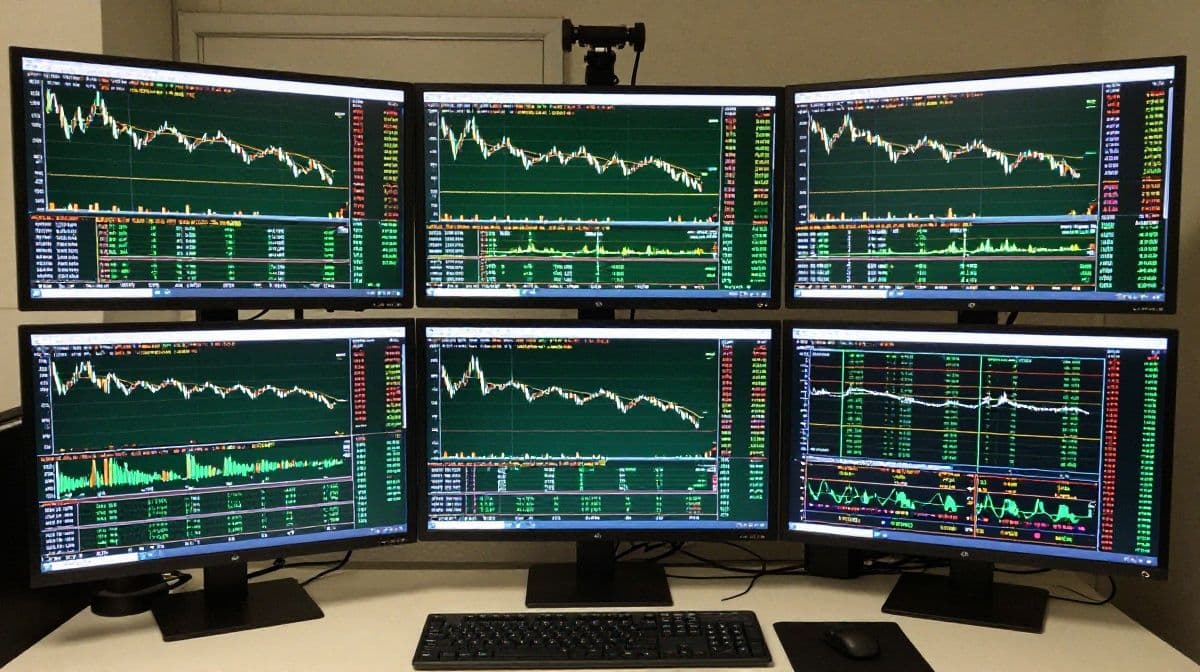
Crypto Trading for Beginners: Order Types, Charts and Risk Explained
Trading is a different exercise from buying and holding. This introduction explains the three order types, what a chart really shows, how position size is calculated and what trading triggers for your taxes.
September 4, 2026 10:32 AM
Crypto Deadlines This Autumn: Nine Cut-Off Dates Checked, and Only Three Leave You Time After Trading Ends
Nine running crypto deadlines, eleven provider pages, one query date: we counted how much time really lies between the end of trading and the withdrawal cut-off. In six of nine cases the stated date is the end of the line.
August 30, 2026 10:13 PM
Coinbase Halts STORJ and BADGER Trading on September 28: What Holders Must Check Now
Coinbase is ending trading in Badger DAO and Storj on September 28, 2026, and both order books have run in limit-only mode since the announcement on August 28. Withdrawals remain possible; selling at Coinbase does not.

November 21, 2024 11:50 AM
Bitcoin Price Is 2% Away From $100,000: Is Today THE DAY?
With almost 2% away from breaking the Bitcoin $100,000 price mark, a historic milestone for the crypto market. Could Today be The Day?

February 4, 2024 2:20 PM

Solana Reveals Chapter 2: The Next Saga Phone
Discover the new Solana Saga Phone 2 - a more affordable, crypto-focused smartphone launching in 2025. Preorder now for exclusive perks.
January 31, 2024 10:30 AM

Kraken won against Ripple XRP Lawsuit
Explore Kraken's defense of user privacy in the Ripple XRP lawsuit, highlighting their efforts to secure customer data in the crypto world.
November 21, 2023 7:55 PM

Crypto Crash Incoming: SEC on the Move and Crypto Winter Coming?
Two recent developments involving major exchanges Binance and Kraken have sent ripples through the industry. Will crypto crash?
November 21, 2023 7:24 PM

Kraken SEC Lawsuit: Regulatory Pressure on Crypto Exchanges Growing?
The U.S. Securities and Exchange Commission (SEC) filed a complaint against Kraken, one of the major cryptocurrency exchanges. What happened?
October 31, 2023 1:35 AM

Shiba Inu (SHIB) Price Prediction for November 2023: Will SHIB Soar High Again?
Explore our in-depth Shiba Inu (SHIB) Price Prediction for November 2023. Discover if SHIB will soar high again amidst fluctuating crypto trends. Read now for comprehensive analysis and insights.
September 28, 2023 5:36 AM

Kraken’s Growth in Europe
Explore Kraken's latest strides in Europe as they secure crucial licenses in Ireland and Spain. Dive into the implications for EU crypto enthusiasts and Kraken's strategic vision for the future.
March 24, 2023 1:47 AM

Best Bitcoin-Only Platforms for 2023
Looking to invest in Bitcoin in 2023? Check out our review of the best Bitcoin-only platforms, including Swan Bitcoin, Bisq, and Bull Bitcoin
October 20, 2022 1:14 PM

Kraken Review 2022 – Is Kraken a Good Exchange?
Kraken is one of the oldest crypto exchanges in the market. In this review article, we take you through all you need to use Kraken.
December 4, 2021 4:13 PM
Looking to Buy the Dip? Here’s a Quick Guide on How to Buy ETH post-Crash
Is it the right time to Buy Ether after the crypto crash? In this article, we're going to quickly recap how to Buy Ether from Kraken.




More from CryptoTicker