
Crypto ETN in Your Portfolio: How to Check Who Really Owes You the Bitcoin
A Bitcoin ETN is legally a debt security, not a fund unit. We counted the 122 crypto ETNs tradable on Xetra ourselves and show you the three details worth checking before you buy.




Which topics should we dive deeper into?
Select what genuinely interests you. Your picks feed directly into our editorial planning.
Crypto news that's actually worth your time.
Weekly. 60 seconds. Carefully curated by our editors: no hype, no promo flood, no spam.
If you buy Bitcoin through your ordinary securities account, you are as a rule not buying Bitcoin. You are buying a note that certifies a claim against a company. That note is called a crypto ETN, usually marketed as an ETP, and in legal terms it is a debt security. If the firm behind it collapses, the price of the coin will do little for you. That is exactly why the products actually tradable in Germany deserve a closer look.
On September 12, 2026 we downloaded the official Deutsche Boerse product list for crypto ETNs on Xetra and counted it line by line. The result: 146 trading lines, behind them 122 distinct products from 16 issuer families, whose securities identification numbers originate in six different countries. cryptoticker.io compiled this analysis itself on September 12, 2026.
The trigger is recent. The European Securities and Markets Authority, ESMA, published its second risk report of the year on September 10, 2026 and left market risk, contagion risk and operational risk at the highest level. Its argument: the links between crypto markets and the traditional financial system keep growing. The exchange-traded crypto ETN is precisely that link, and it is the one sitting in German securities accounts.
Crypto ETN Explained: Why a Bitcoin ETN Is Not a Fund Unit
An exchange traded note, or ETN, is a bearer debt security that tracks the price of an underlying asset and whose repayment depends on the issuer. That is the definition that matters, and it separates the product fundamentally from an ETF.
An ETF is legally a segregated fund. Investors' money is held separately from the assets of the fund company and does not fall into the estate if that company becomes insolvent. An ETN has no such construction. It is a receivable, which makes you a creditor. If the debtor defaults, your claim joins the queue with every other claim.
Issuers address this with collateral: they deposit the coins with a custodian and pledge them in favour of investors, often through a trustee. That is a genuine and effective improvement on an unsecured note. It does not replace a segregated fund, however, and it only works as well as the custody chain behind it. Anyone who wants to grasp the difference between a securitised claim and genuine ownership will find the same mechanism at work in tokenised equities.
The practical advantage remains, and it explains why these products have been so successful: you need no wallet, no private key and no account at a crypto exchange. The purchase runs through your brokerage account and settles along the usual securities paths. How the underlying asset itself develops is an entirely separate question; our running assessment sits in the Bitcoin price prediction.
Our Own Count: How We Tallied 122 Crypto ETNs on Xetra
The method in one sentence: we downloaded the table of crypto ETNs tradable on Xetra published by Deutsche Boerse, together with the accompanying list of admitted underlyings, in their original form, evaluated both files programmatically and then checked every single securities identification number against the product pages of Boerse Frankfurt.
What we examined: 146 table rows, 122 unique securities identification numbers, 27 entries on the admission list and 122 individual product page requests. Every request returned status code 200, so each of the 122 identification numbers led to an existing product page on the day of the survey. The survey date is September 12, 2026. The source material is available on the Deutsche Boerse overview page for crypto ETNs.
What we did not survey has a section of its own further down. The most important point up front: the product list carries a cut-off date of March 31, 2026. It therefore states what was admitted to trading on that date, and our cross-check only shows that a page still exists today for each of those identification numbers. Whether every product is still continuously traded today is not established by this.

146 Trading Lines, 122 Products: Why the Same Note Shows Up Twice
The gap between 146 and 122 has a simple explanation. 24 products are listed twice: once in euros and once in US dollars, each with its own ticker but under the same securities identification number. It is the same note, the same issuer and the same risk, only a different trading currency.
That has two consequences for you. First, buying via the dollar line incurs a currency conversion whose cost your broker sets and which appears nowhere in the product itself. Second, the same title can show up twice in a search mask and display two different bid-ask spreads. Pick the worse line and you pay more for nothing in return. So check the identification number and the trading currency, not just the product name.
How to Work Out Which Line You Are Actually Trading
Open the order mask in your brokerage account and look at which trading venue and which currency are preset. Many brokers automatically select the venue with the best margin for themselves rather than the tightest spread. If a foreign currency is set there while your settlement account is held in euros, every purchase and every sale triggers a conversion.
16 Issuer Families and Six Countries of Origin: Which Law Applies
The 122 products are spread across 16 issuer families. By number of distinct products, 21Shares leads with 26, followed by CoinShares with 19, Bitwise with 15, VanEck with 14 and WisdomTree with 12. Then come Virtune with 11, Valour and Global X with five each, Deutsche Digital Assets with four, nxtAssets with three, and Hashdex and Xtrackers with two each. Fidelity, Invesco, iShares and Issuance Swiss each account for one product.
More interesting than the ranking is where the securities identification numbers come from, because that reveals the legal jurisdiction in which the note was issued. Our count gives the following picture: 39 identification numbers begin with GB, 36 with DE, 31 with CH, eleven with SE, three with XS and two with JE. Behind those codes stand the United Kingdom, Germany, Switzerland, Sweden, an international identifier and Jersey.
This is no formality. Which insolvency law applies in an emergency, which court has jurisdiction and how quickly collateral can be realised all depend on the registered seat of the issuing entity. A German special purpose vehicle and a Jersey company mean two different procedures with different deadlines. In our count each issuer family uses exactly one country of origin, with one exception: CoinShares issues under both GB and JE.
Brand Name and Legal Entity: Who Your Debtor Really Is
A well-known brand appears on the product. Your debtor is as a rule a purpose-built special vehicle that does nothing except issue these notes and hold the collateral. That is not a flaw but standard practice in the securities business, because it shields the product from the issuer's remaining business risk. You simply need to know that the company on the marketing material and the company on your settlement statement need not be the same.
A verifiable example from our survey: for the Bitwise Physical Bitcoin ETP with identification number DE000A27Z304, the Deutsche Boerse product page names ETC Issuance GmbH as the legal entity. The brand name is Bitwise, the debtor a German limited liability company. Both are true at the same time, and only the second name determines whom your claim is directed against.
The check takes less than a minute. Call up the product page at Boerse Frankfurt, enter the identification number and look at the issuer field. If a name other than the one on the factsheet appears there, that is the legal entity worth remembering.
 You buy crypto ETNs through a broker
Collateral According to Issuer Information: What the Exchange Checks and What It Does Not
On the Boerse Frankfurt product pages, the section on deposited assets carries a remarkable heading. It reads "Collateralisation (according to issuer information)" and asks below whether the note is collateralised and what type of collateral is involved. The parenthesis is the real information: the exchange reproduces what the issuer has declared. It does not confirm that the coins exist.
That is factually correct and legally clean, because an exchange is not an auditor of custody balances. For you it still means that the chain of issuer, custodian and trustee is the load-bearing construction, not the tick mark on the product page. Anyone who wants to follow the collateral seriously has to read the securities prospectus and the custodian's reports.
Three questions will take you furthest here. Who holds the coins in custody, and does that custodian sit in the same jurisdiction as the issuer? Is there a trustee holding the collateral for investors, and is that trustee independent of the issuer? And does the provider publish addresses or proof of holdings that you can check yourself?

31 Staking ETNs on Offer: Why the Yield Is a Separate Question
31 of the 122 products carry staking in their name. They additionally deploy the deposited coins in the relevant network and pass the proceeds on to the note in whole or in part. By provider the split is as follows: CoinShares supplies eleven of these products, 21Shares seven, Bitwise six, Valour three, Virtune two, and WisdomTree and Issuance Swiss one each. Among the underlyings, Ethereum dominates with five products and Solana with four.
Staking means locking coins in a proof-of-stake network, which pays out new coins as compensation on an ongoing basis. Inside an ETN wrapper this becomes a yield component that is either distributed or accumulated in the price. Tax treatment is a separate matter entirely, because income earned inside a security is handled differently from staking income you receive directly in your wallet. If you run a securities position and a wallet balance side by side, you should document both types of income separately.
The additional risk is equally real. Staked coins are not freely available for the duration of the lock-up period, and in some networks faulty validator behaviour can lead to deductions. Whether and how the issuer bears that risk is set out in the prospectus, not in the product name.
38 Products Track an Index Instead of the Coin: The Difference in the Small Print
Our count of the underlyings reveals a split. 84 of the 122 products track a coin directly. For the remaining 38, the underlying is an index, a reference rate or a basket. In total we arrive at 69 different underlyings, because many providers apply their own calculation method.
Sorted by coin, Bitcoin leads: 21 products carry Bitcoin as their underlying, 13 Ethereum. Solana, Chainlink, Cardano and Polkadot follow with single-digit product counts each.
The distinction between a coin and a reference rate looks technical, but it determines the price you end up with. A reference rate is calculated at a fixed point in time from several trading venues. That smooths outliers and makes the price traceable. It also means that in a hectic moment your note will not track exactly the price you can see on an exchange. Anyone trading solely through a broker should know this before mistaking the gap for an error. Which providers grant access to these notes in the first place is shown in our comparison of the best crypto brokers.
The Admission List of Underlyings Still Dates From November 2024
Alongside the product list, Deutsche Boerse publishes a second file containing the crypto assets admitted as underlyings for ETNs on Xetra. That list comprises 27 entries, from Aave through Bitcoin and Ethereum to TRON, Uniswap and USD Coin. Its stated cut-off date is November 22, 2024.
Cross-checking it against the product list is revealing: four products track underlyings that do not appear on this admission list, namely Celestia, Pyth and SUI, the last of these in two products. We expressly do not claim that any of these notes is inadmissible. The obvious explanation is that the admission list has not been updated for almost two years while trading carried on. We were unable to clarify the point, and the practical lesson for you is a different one: a file that looks official is only as current as its cut-off date.
Compulsory Redemption: What an ETN Issuer Can Decide Unilaterally
The idea that an issuer can terminate a note is no grey theory. The same product list contains the 1Valour STOXX Bitcoin Suisse Digital Asset Blue Chip ETP with identification number GB00BPDX1969 and ticker BCIX. Valour declared a compulsory redemption for this note under condition 10.1. According to the issuer's notice of August 12, 2026, investors had until September 1 to deliver a valid redemption notice if they wanted the coins rather than cash. The last trading day fell on September 11, 2026, the redemption date on September 15, with settlement on September 16.
Anyone who missed this receives cash in their settlement account and is left with a taxable sale in their portfolio that they did not initiate. We described the process in detail when the compulsory redemption with its September 1 deadline became known. The point for this article is a different one: the option to do so is written into the terms of practically every ETN. It is part of the product category and not an isolated case.
One concrete habit follows from this. Record the identification numbers of your crypto ETNs in your files so that you can find them again, and read the investor notices from your broker instead of archiving them unopened. Those notices are the only channel through which such a deadline will reliably reach you.
 Securities and wallet in one tax overview
ESMA Risk Report of September 10: Why Interconnectedness Is Now the Issue
The European Securities and Markets Authority published its second risk report of the year on September 10, 2026. It kept market risk, contagion risk and operational risk at the highest level and named tokenised equities, incidents in decentralised finance and prediction markets among the areas it is watching. According to the authority, the value of tokenised equities grew from 0.3 to 1.9 billion euros within eighteen months, while the crypto market as a whole lost considerable value from the end of October onwards.
ESMA expressly does not find in the report that crypto currently poses a threat to the stability of the EU financial system. Its concern is the growing connection: the more closely crypto products dock onto banks, funds and exchanges, the more easily disruptions can jump from one side to the other. The report and the accompanying statement are available from ESMA.
For retail investors this is no cause for alarm, though it is a reason to put things in perspective. 122 exchange-traded notes with a coin reference inside a single trading system are exactly the bridge the supervisor has in mind. And anyone investing across that bridge carries a second risk on top of the coin's price risk, one that has nothing to do with the coin.
Limits of This Survey: What We Could Not Verify
Our count rests on two files published by Deutsche Boerse and on 122 product page requests. It says nothing about whether a particular note is good or bad, and it is not a recommendation for or against any provider.
First, it remains open whether the product list has been extended with new notes or cleaned of terminated ones since its cut-off date of March 31, 2026. Second, the collateral of a product can only be verified with access to custody accounts. Third, we could not read out the issuers for all 122 identification numbers by machine, because the exchange pages load that detail dynamically; the ETC Issuance GmbH case cited above we checked individually. Fourth, it remains open why three underlyings do not appear on the admission list. And fifth, our figures say nothing about trading volumes, spreads or the running costs of the individual notes.
Checking a Crypto ETN: What to Take Away
- Find out who your debtor is. Take the identification number from your portfolio overview, use it to call up the product page at Boerse Frankfurt, and note the issuer and its country of origin. If a name other than the one on the factsheet appears there, the legal entity is the name that counts. If that prompts you to hold the coins yourself instead, the devices for doing so are in our hardware wallet comparison.
- Check the trading currency and the venue before every order. 24 of the 122 products are listed twice, in euros and in dollars. Make a deliberate choice in the order mask instead of accepting your broker's default, and compare the gap between the bid and the ask. If you are considering a direct purchase anyway, it is worth looking at our overview of the best crypto exchanges, because different costs and different risks apply there.
- File your records so that a deadline actually reaches you. The Valour case shows that a compulsory redemption can produce a sale you never wanted within weeks. Keep a list of your identification numbers, read investor notices and hold on to the settlement statements. On the tax side, a tool from our comparison of crypto tax software helps by bringing securities and wallet positions together.
(As of September 12, 2026. This article is not investment advice. Prices and fee structures change; check the terms with the provider before you buy.)
Transparency note: This article was produced with the assistance of artificial intelligence and reviewed by our editorial team before publication. All figures and claims were checked against the primary sources linked in the text. The feature image was generated with AI.
More on Bitcoin: All Bitcoin news at a glance
Related articles
- ING and Bitcoin: Around 50 Crypto ETNs in the Portfolio, and What the Delivery Claim Means for Your Holding Period
- Certificate, Bitcoin ETN or the coin itself: what each route means for tax and custody
- What is an issuer? Meaning, examples and issuer risk
- XRP ETF, Solana ETF, Ethereum ETF: What You Can Actually Buy in Germany
- Crypto at comdirect: 29 certificates with no order fee in a savings plan, but not a single coin
Which topics should we dive deeper into?
Select what genuinely interests you. Your picks feed directly into our editorial planning.
Crypto news that's actually worth your time.
Weekly. 60 seconds. Carefully curated by our editors: no hype, no promo flood, no spam.

March 31, 2026 5:13 PM

Quantum Threat to Bitcoin? Google Research Sparks Urgent Crypto Security Debate
Google’s quantum breakthrough raises fears for Bitcoin security. Can crypto survive quantum attacks—or is an upgrade urgent?

September 4, 2026 1:34 PM
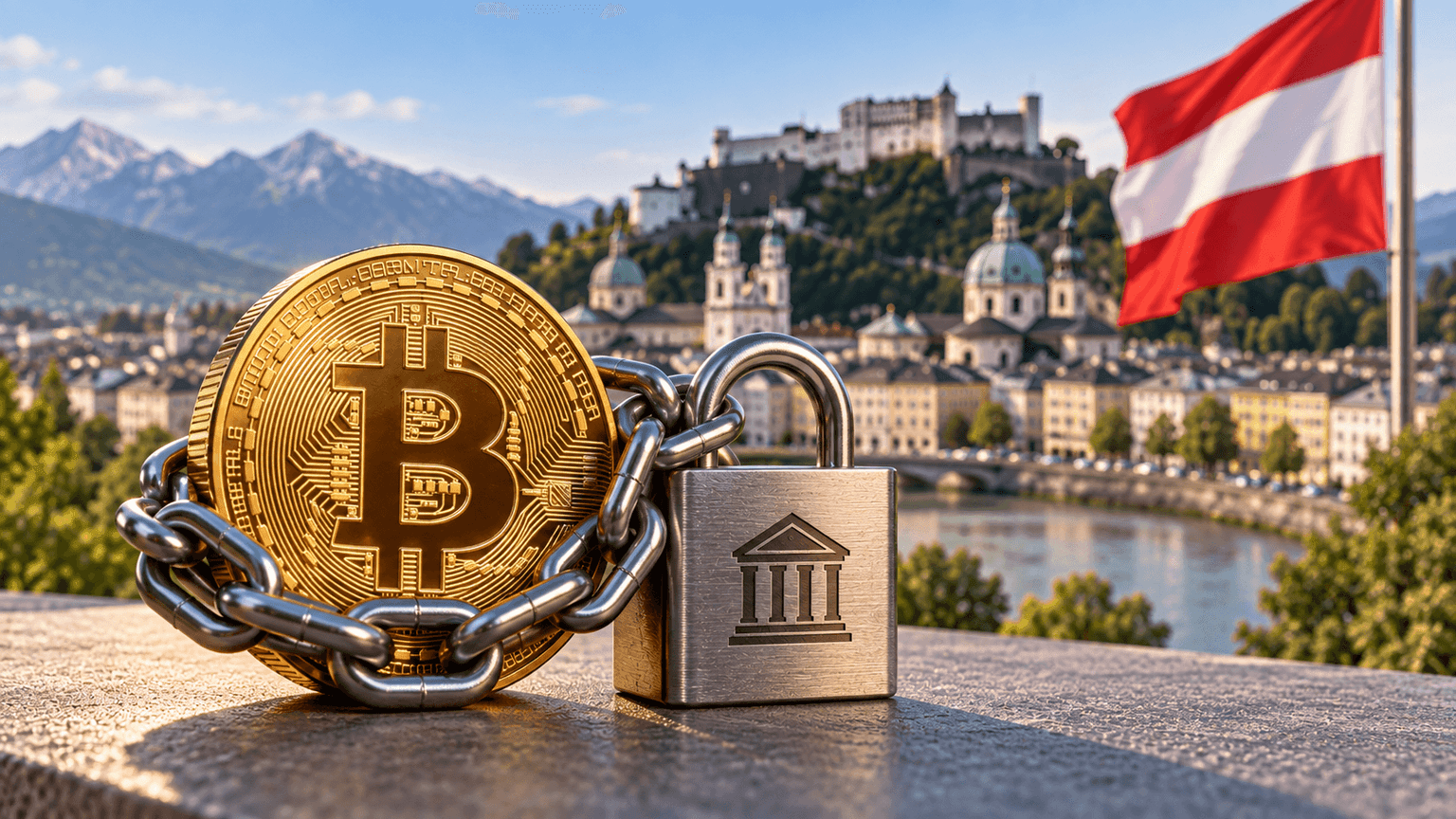
Bitcoin as Loan Collateral: When No Tax Applies in Austria
Pledging Bitcoin as collateral for a loan? As long as the coins are not realised, no sale arises in Austria in principle.
March 29, 2026 7:02 PM

Is This the First Real Global Liquidity Crisis of the Crypto Era?
War, oil shocks, and tightening liquidity are hitting crypto markets. Is this the first real global liquidity crisis of the crypto era?
March 31, 2026 7:57 PM

What Threat Could Crash the Crypto Market? War-End Rally Faces Hidden Risk
Crypto markets surge on war-end hopes, but threats to US companies and rising oil prices could trigger a sudden crash.
March 27, 2026 3:41 PM
Oil Shock Is Crushing Crypto — Here’s the Hidden Link Investors Miss
Rising oil prices and war tensions are pressuring crypto markets. Discover how the global energy shock is driving Bitcoin and altcoins down.

June 8, 2026 10:12 AM

Why Bitcoin Lagged the Nasdaq Since the US-Iran Conflict Began
Since the US-Iran war began, Bitcoin is down 3% while the Nasdaq rallied 20%, exposing a massive rift between crypto and equities.
March 6, 2026 5:36 PM
Is a Global Liquidity Shock Starting? Oil Surge, War Tensions, and Bitcoin Volatility Explained
Oil surges above $90 as geopolitical tensions rise. Are global markets entering a liquidity shock that could drive volatility in Bitcoin and crypto?
September 10, 2026 7:14 AM
Bitcoin Loan Liquidated: Tax Consequences in Austria
If a lender liquidates Bitcoin pledged as loan collateral, a taxable capital gain can arise in Austria. That holds even when the investor never chose to sell.
January 23, 2026 1:00 PM

Gold Hits New All-Time Highs as Crypto Struggles — Is Capital Bracing for a Global Shock?
Gold and silver hit new all-time highs as crypto struggles to hold support. Is rising geopolitical risk pushing markets into defensive mode?
October 11, 2026 4:50 AM
90 Crypto Kidnappings and Robberies in 7 Months: Why France Is the Most Dangerous Country for Bitcoin Holders
France logged 90 crypto kidnappings, extortions and violent thefts this year, one every 2.5 days. Leaked tax data is to blame. Here is how to protect yourself.
May 23, 2024 2:22 PM

How To Manage Crypto Market Volatility: Strategies & Key Factors
Traders, Analysts, Financial Institutions, Investors... as Beginners or Experts, this is for you! A full guide into the crypto market volatility: strategies, key factors, FAQs...
April 17, 2026 9:21 AM
Bitcoin News Today: BTC Coin Hits $75,000 as US Treasury Injects $15B Liquidity
Bitcoin price breaks $75,000 for the first time in 73 days. Read why the massive US Treasury buyback and BlackRock inflows are fueling this historic BTC rally.
December 26, 2025 1:50 PM

Breaking: Trust Wallet Chrome Extension Hack Drains $7M, Full Reimbursements Promised
A supply-chain attack hit Trust Wallet’s Chrome extension, draining $7M from users. Binance’s CZ says all victims will be reimbursed.
February 19, 2026 1:44 PM
Crypto Is Not Crashing Because of the Fed – It’s a Liquidity Shock
Crypto markets are falling despite stable Fed policy. The real driver may be a liquidity drain from the US Treasury. Here’s what it means.
January 21, 2026 5:32 PM

EU–US Economic Conflict Sparks Sharp Crypto Market Sell-Off
Crypto markets sold off sharply as EU–US economic tensions escalated, triggering volatility across Bitcoin, Ethereum, and major altcoins.
October 3, 2026 4:40 PM

Investing in Bitcoin With a Savings Plan or a Lump Sum: What the December 31 Tax Cut-Off Changes
Anyone putting money into Bitcoin now chooses between a lump sum, a monthly instalment and an ETN in a securities account. The German finance ministry’s draft bill would keep the one-year holding period only for holdings bought by December 31, 2026.

September 27, 2026 4:12 AM
Bitcoin ETF Inflows Turn 2026 Positive: How to Tell If the Demand Holds
US spot Bitcoin ETFs took in roughly $2.4 billion in the week to September 25, the strongest week since October 2025, and that turns the 2026 year-to-date balance positive. Why the daily inflow fell 87 percent within the same week, and what to check on buying route, holding period and custody.
June 15, 2026 5:00 AM

Trump Says US-Iran Deal Is Days Away: What It Means for Crypto
Trump says a US-Iran deal is set to be signed within days, reopening the Strait of Hormuz. Here's what an easing of the conflict could mean for Bitcoin and crypto.
February 5, 2026 5:36 PM
How Is the Market Crash Good News?
Crypto, stocks, and metals are crashing together. Why this market reset may actually be good news and what it signals for the next phase.
February 1, 2026 6:02 PM
A Day to Remember: Crypto Repeats a Familiar Chapter
A major liquidation wave hits crypto as markets unwind risk. History doesn’t repeat — but this chapter feels familiar.
May 23, 2026 2:50 PM

Rising US and Israel Tensions with Iran Signal Potential Conflict Escalation and Crypto Volatility
Severe friction in the US-Iran ceasefire talks and ongoing Strait of Hormuz maritime standoffs raise warning signs of a renewed military escalation.
January 3, 2026 11:37 AM
Bitcoin Hit $90,000 on 3 January 2026 Amid Venezuela Tensions: What Happened Next
On 3 January 2026 the US struck Venezuela and captured Nicolás Maduro. Bitcoin briefly dipped below $90,000 and recovered. Here is what followed.
November 5, 2025 1:16 PM

$1 Trillion Wiped: Risk-Off Storm Engulfs Stocks & Crypto
Global markets plunge as tech stocks and crypto crash, wiping over $1 trillion in value amid AI bubble fears and investor risk-off panic.
June 26, 2025 1:54 PM

Barclaycard to Block All Crypto Purchases – Here's What It Means for You
Barclaycard has announced it will block all cryptocurrency purchases made with its credit cards starting June 27, 2025. The bank warns users of potential debt and lack of consumer protections.
October 22, 2026 10:27 PM
Oil above $112, Bitcoin below $82,000: what it means for Bitcoin as an inflation hedge
Brent jumps to a five-month high and the crypto market falls in step with technology stocks. This assessment separates what is documented for October 22 from what remains open about Bitcoin as protection against inflation.

More from CryptoTicker