
Nearly $1 Billion Into Bitcoin ETFs: What to Check on ETNs, Portfolio and Holding Period
US spot bitcoin ETFs took in a net $999 million on September 21, the third consecutive day of inflows. German investors cannot reach these funds: what ETNs, the holding period and your buying route mean for you.





Which topics should we dive deeper into?
Select what genuinely interests you. Your picks feed directly into our editorial planning.
Crypto news that's actually worth your time.
Weekly. 60 seconds. Carefully curated by our editors: no hype, no promo flood, no spam.
US spot bitcoin ETFs took in a net $999 million on September 21, in a single trading day. It was the third consecutive day of inflows, and it met a bitcoin price that at times stood above $87,000. For you as an investor in Germany, that number is still only half the news, because these particular funds are out of your reach.
The short answer to what you can do now: check which product you actually hold your bitcoin through, what that product is worth in an insolvency, and how it is taxed. Those three points decide your result far more than whether $999 million or $600 million flowed into American funds on Monday. The rest of this article works through them in order.
$999 Million in One Day: What the ETF Numbers From September 21 Show
The figures come from the data service SoSoValue and were picked up by several industry outlets on September 22. On that reading, the American spot bitcoin ETFs received net inflows of $999 million on September 21. The group's net assets under management stood at $110.135 billion afterwards, equal to 6.3 percent of the entire bitcoin market capitalisation. Cumulative net inflows since launch add up to $56.16 billion.
Net inflow means that more fund shares were created than redeemed. An ETF share does not come into existence because someone buys it on an exchange, but because an authorised market participant hands the fund money and the fund buys bitcoin with it. That is exactly why the number matters more to the market than raw trading volume: behind a net inflow sits goods that were actually bought, that disappear from free supply and move into the fund's custody.
Two funds carried the day. BlackRock's fund took in $381 million, the product from Ark Invest and 21Shares $289 million. Together that is a good two thirds of the daily inflow, with the rest spread across the remaining issuers.
Why a Single Fund Has Gathered More Than the Whole Group
This is the point to look at a number that does not add up at first glance. Cumulative net inflows across all US spot bitcoin ETFs stand at $56.16 billion. BlackRock's fund alone comes to $64.506 billion on a cumulative basis. A component is therefore larger than the total.
The contradiction dissolves once you account for the legacy holdings. Several issuers, above all the Grayscale trust that was converted into an ETF in January 2024, have seen persistent outflows ever since. Investors who had been stuck there for years at a discount to the bitcoin price used the conversion to get out. Those outflows drag the group total down, while the newer products with lower fees keep gathering assets.
For interpretation, that means a strong day for the group is always partly a reallocation between issuers. Anyone reading inflows as a sentiment gauge should therefore watch the run, not a single daily amount. Three consecutive days of inflows are a signal; a record day in the middle of an outflow phase would not be.
Fed Rate Hike to 4 Percent: Why the Money Is Flowing Into Bitcoin Anyway
The timing is remarkable. On September 16 the US Federal Reserve raised its policy rate by 25 basis points to a range of 3.75 to 4.00 percent, the first increase since July 2023. All twelve voting members backed the step, and 16 of 18 officials expect another hike this year according to the published projections. They see core PCE inflation at 3.4 percent in December 2026.
Rising rates are classically seen as a headwind for assets that pay no running income. Immediately after the meeting bitcoin did indeed fall below $76,000. Since then the price has not merely recovered that move but more than made up for it. There is no clean explanation for this, and anyone selling you a single cause is overstating what they know. Two things are observable: equity markets rose broadly on Monday, and fresh money flowed into the bitcoin funds.
For you, there is mainly one lesson in this. The market does not trade the rate decision itself, but the deviation from what had been priced in beforehand. An expected hike can send a price higher, a surprise pause can send it lower. Sizing positions around central bank dates therefore rarely works.

Bitcoin Price at $86,000: How Far the Jump Really Carries
Our own CoinPaprika query on September 22 shows bitcoin at $85,883, up 0.77 percent over 24 hours and 11.47 percent over the week. Market capitalisation stands at around $1.73 trillion.
When it comes to classifying the price level, the accounts diverge. The dpa-sourced report on finanzen.net speaks of the highest level since May 2026, while WirtschaftsWoche, citing the Bitstamp exchange, names a daily high of $87,248 and therefore the highest level since the end of January. Both readings stand side by side because every exchange quotes its own price and the comparison dates differ. For practical purposes the range is enough: bitcoin is trading at a level it has not reached for several months.
More important than the record framing is the distance to your own entry price. Anyone who bought in the spring is sitting on gains and faces the question of the right moment. Anyone who came in during the autumn of 2025 near the old highs is still down: from the all-time high, which CoinPaprika dates to October 6, 2025, the price is still around 32 percent away according to the same query. The news about billions in inflows changes nothing about that calculation.
 Buy bitcoin on a licensed exchange
Why You Cannot Buy a US Spot ETF as a German Investor
Now to the practical part. The funds reporting these inflows are approved in the United States and are not tradable for European retail investors. The reason is not your broker, but an EU regulation.
The PRIIPs Regulation, that is Regulation (EU) No 1286/2014, requires a key information document for every packaged investment product. It is a short, strictly formatted document in the local language that discloses costs, a risk rating and possible performance scenarios. Without that document a product may not be distributed to retail investors in the European Economic Area. American fund companies do not produce it for their home products, simply because European retail distribution is not their market.
On top of that comes the funds directive: a European retail fund has to diversify and may not sit entirely in a single asset. A bitcoin ETF in the narrow sense is therefore not approvable in the EU. What you get here instead, which abbreviations stand for it and what each of them means, we have broken down in our overview of crypto ETFs in Germany.
Crypto ETNs in Your Portfolio: How the Product Works and Where the Risk Sits
The European substitute is called an ETN, in full an Exchange Traded Note. An ETN is an exchange-traded debt security: the issuer contractually promises you to track the performance of an underlying. Such crypto products are widely available on European trading venues, many of them on Xetra, and they run through your ordinary securities account.
The difference from ring-fenced fund assets
A classic fund share is ring-fenced fund property. If the fund company goes bankrupt, the fund assets still belong to the investors and do not become part of the insolvency estate. That does not apply to a debt security. If the issuer becomes insolvent, you are one creditor among many.
What physical backing achieves
Most European issuers answer that objection with physical backing: for every ETN issued, real bitcoin sits with a custodian, often additionally pledged to a trustee. That substantially defuses issuer risk, but it does not remove it. What matters is what the base prospectus says, who the custodian is and whether an independent third party provides the collateral arrangement. You will find those details in the key information document and in the issuer's prospectus, not in the product marketing.
Also check the ongoing costs and the spread. The management fee is deducted from the value daily and weighs more heavily over long holding periods than the one-off order fee. In thin trading outside the main sessions, the gap between bid and offer can cost you extra on top.
Tax on Bitcoin: Holding Period in the Wallet, Withholding Tax in the Portfolio
For German investors, the tax difference between a direct holding and a security is often a bigger lever than the fee.
If you hold bitcoin directly, that is on an exchange or in your own wallet, a sale falls under private disposal transactions pursuant to Section 23 of the German Income Tax Act. The Federal Ministry of Finance summarised the details in its circular of March 6, 2025, which replaces the 2022 version. Under it, gains are tax free after a holding period of more than one year. Within the year your personal income tax rate applies, with an exemption threshold of 1,000 euros per calendar year covering all private disposal transactions together. An exemption threshold is not an allowance: if it is exceeded, the entire gain is taxable, not merely the excess.
An ETN in your portfolio, by contrast, is a security. Income from it generally counts as investment income and is subject to the 25 percent withholding tax plus the solidarity surcharge and, where applicable, church tax, regardless of the holding period. In return the saver's lump-sum allowance of 1,000 euros applies, and the institution holding your account usually remits the tax automatically.
The treatment of ETNs that carry an actual delivery claim on the deposited cryptocurrency is disputed. Parts of the tax law literature consider treatment along the lines of a direct holding defensible here; the ministry's circular does not address the point explicitly. On this question, do not rely on a product brochure, but clarify it with a tax adviser before you buy.

Check Your Buying Route: MiCA-Licensed Exchange, Brokerage Account or Savings Plan
None of the above amounts to a recommendation for a product, but to an order in which to check things. If you want to use the holding period and keep control of the keys, the route runs through a direct purchase. Since the MiCA transition period ended on July 1, 2026, only licensed providers may serve retail clients in the EU. Whether your exchange holds a licence and in which member state it was granted is set out in the supervisor's public register and usually in the provider's legal notices as well. Which venues meet these requirements and what they cost is in our crypto exchange comparison.
If instead you want to bundle everything in your existing securities account, because offsetting losses against other investments matters to you or because you would rather not handle custody yourself, the ETN is the obvious route. Doing both at once also works, but then demands clean documentation so that in the spring you know which holding falls under which rule.
 Document holding periods and gains cleanly
Levels Above and Below: How to Measure the Next Move
For orientation without a price forecast, three documented levels from recent days. On the upside, the Bitstamp high of $87,248 cited by WirtschaftsWoche marks the upper edge of the current move. Below it lies the $84,000 mark, whose break we described on September 21. On the downside, the level of around $76,000 from the night of the rate decision remains the reference point should the move be given back entirely.
Besides the price, the inflow run itself is worth watching. If it breaks off and the daily figures turn negative while the price still holds, that is a hint that institutional demand is easing. The daily data is freely available to anyone; you do not need to subscribe to a service for it.
And one more sober point: an inflow of $999 million corresponds to a good 11,600 bitcoin at a price around $86,000. Measured against a market capitalisation of $1.73 trillion, that is a share of less than one tenth of a percent. The number sounds large because it is measured in millions, and for a single day it is. But an amount like that does not carry a price on its own.
Putting Bitcoin ETF Inflows in Context: What to Take Away
- Settle the product first, then the price. Write down whether your bitcoin sits as a direct holding or as a debt security in your portfolio. Insolvency protection and taxation follow from that. For the direct route, check that your trading venue is licensed, for instance using our exchange comparison.
- Get your holding periods onto one sheet. Anyone now thinking about taking profits at high prices should first know which part of the holding has reached the one-year mark and which has not. A portfolio tracker with tax reporting takes that work off your hands; you will find a selection in our comparison of crypto tax tools.
- Do not let billion-dollar headlines set your buying rhythm. Inflow runs turn, and anyone chasing headlines regularly catches the most expensive days. Buying regularly in fixed amounts smooths that out; the providers for it are in our overview of the bitcoin savings plan.
The number from September 21 shows that institutional money has not vanished from the market after the rate hike. What it does not show is an entry point. The questions you can answer are the ones about product, custody, deadline and buying rhythm.
Sources: The inflow data comes from the SoSoValue ETF dashboard. The tax basis for direct holdings is set out in the German Federal Ministry of Finance circular of March 6, 2025.
(As of September 22, 2026. This article is not investment advice. Prices and fee structures change; check the terms with the provider before you buy.)
Transparency note: This article was produced with the assistance of artificial intelligence and reviewed by our editorial team before publication. All figures and claims were checked against the primary sources linked in the text. The feature image was generated with AI.
More on Bitcoin: All Bitcoin news at a glance
Related articles
- Bitcoin ETF Inflows Turn 2026 Positive: How to Tell If the Demand Holds
- ING and Bitcoin: Around 50 Crypto ETNs in the Portfolio, and What the Delivery Claim Means for Your Holding Period
- Bitcoin for a gift card: what paying with crypto means for your holding period
- Bitcoin ETFs Lose $487 Million in a Single Day: the Reasons Behind the Outflow
- Crypto Tax in Germany: What Applies in 2026 and What Is Set to Change in 2027
Which topics should we dive deeper into?
Select what genuinely interests you. Your picks feed directly into our editorial planning.
Crypto news that's actually worth your time.
Weekly. 60 seconds. Carefully curated by our editors: no hype, no promo flood, no spam.

October 7, 2026 7:18 AM

Certificate, Bitcoin ETN or the coin itself: what each route means for tax and custody
A Bitcoin certificate, an ETN and the coin itself all lead to the same price, but to three different tax treatments and three different risks. The comparison shows which route fits your portfolio and why December 31, 2026 becomes the cut-off date.
August 24, 2026 10:29 AM
Buying More Bitcoin at $77,000: Savings Plan or Lump Sum
Bitcoin stands at $77,256 after gaining 22.78 percent in a week. This guide shows you how to buy more cleanly at this price and which method fits which starting position.
October 9, 2026 10:50 AM

Crypto holding period: the Bundestag rejects abolition by 445 votes to 132: what investors need to know
On 8 October the Bundestag rejected the Greens' bill to abolish the crypto holding period in a recorded vote, and the Left's motion fell too. The result by parliamentary group, the official speech from the media centre, and why it was the SPD that gave investors the real signal in the debate.
October 9, 2026 1:18 PM

Bitcoin Tax: One Year Past the $126,080 Peak, Losses No Longer Count
Bitcoin trades at $82,558 on Friday morning, 34.5 percent below an all-time high that is now a good year old. Anyone who bought back then loses more than the prospect of a quick recovery when the one-year period expires: the tax value of the loss goes with it.
October 10, 2026 10:25 PM

Chainlink's First Fund Inflow in Five Trading Days: What Changes for Investors in Germany
The two US spot funds on Chainlink took in $9.48 million on October 9, the first inflow after five sessions without any movement at all. Because you cannot buy these funds in Germany at all, your result is decided by a different route and above all by how long you hold.

September 25, 2026 1:12 PM

XRP Jumps to $1.56: What Holders Should Check on Buying Route, Holding Period and Leverage
XRP trades at $1.56 on September 25, 2026, up 6.85 percent on the day and 16.64 percent on the week. What the on-chain data and the US ETF inflows actually show, and what investors in Germany should check now on buying route, holding period, leverage and custody.
September 8, 2026 1:19 AM

Germany's Crypto Holding Period: What Happens Now Signing for Petition 201716 Closed on September 15
Recap as of September 27, 2026: the signature period for German parliamentary petition 201716, which asks for the one-year crypto holding period to be preserved, closed on September 15, 2026. This article explains what ended that day, how the petitions committee proceeds and why no investor has to sell because of it.
September 17, 2026 7:12 PM

Gifting Bitcoin to Children: Allowance, Holding Period and the Tax Office Report
Transferring Bitcoin to your child hands over your holding period and your entry price along with the coins. This guide sets out what really applies in Germany on the allowance, the reporting deadline, representation and custody.
October 2, 2026 4:39 AM

Donating bitcoin: when does the full market value count, when only the purchase price?
A bitcoin donation to a charitable organisation is deductible as a donation in kind, and the donation itself produces no taxable gain. The size of the deduction turns solely on whether a sale would have been taxable on the day of the transfer.
September 18, 2026 10:13 AM

Bitcoin and the German Exit Tax: What Applies When You Move Abroad
Anyone emigrating with Bitcoin expects an exit tax on unrealised gains and finds nothing of the sort in the statute. Where the real risks sit is decided at four points: residence, the holding period, the legal form of your investment, and automatic reporting from 2026.
September 22, 2026 10:13 AM

Circle Lends Against Bitcoin via cirBTC: Why the Wrapper Can Cost You the German Holding Period
Circle launched loans against deposited bitcoin on September 21, 2026. In Germany, the detour through the cirBTC token is very likely a swap, and a swap restarts your one-year holding period.
September 9, 2026 4:13 PM

Bitcoin 29 Percent Below Last Year: Which Crypto Losses You Can Still Use Before the One-Year Holding Period Expires
Nine out of ten major crypto assets trade lower today than exactly twelve months ago, Bitcoin alone by 29.2 percent. We measured the price series ourselves and show why the purchase date alone decides the tax value of your loss.
August 11, 2026 9:13 PM

Germany's Crypto Holding Period Faces Abolition: What Petition 201716 and the Draft Bill Mean for Your Tax
Petition 201716 calls for the one-year holding period for crypto assets to be kept and will be heard in public by the Bundestag's Petitions Committee on 12 October 2026. Correction of 8 October: the reform was not decided by the cabinet in July. A draft bill of 30 September would end the holding period for crypto acquired after 31 December 2026, and the cabinet is due to take it up on 14 October.
September 16, 2026 7:12 PM

Borrowing Against Bitcoin Instead of Selling: When German Tax Still Applies
Posting Bitcoin as collateral for a loan is not a sale in Germany, because section 39 of the Fiscal Code keeps the coins attributed to you for tax purposes. Tax arises only when the collateral is liquidated, and then the one thing that decides the bill is how long you held the coins beforehand.
October 3, 2026 4:40 PM

Investing in Bitcoin With a Savings Plan or a Lump Sum: What the December 31 Tax Cut-Off Changes
Anyone putting money into Bitcoin now chooses between a lump sum, a monthly instalment and an ETN in a securities account. The German finance ministry’s draft bill would keep the one-year holding period only for holdings bought by December 31, 2026.
October 6, 2026 1:23 AM
50 euros a month in Bitcoin, 118 instalments since 2017: savings plan vs lump sum
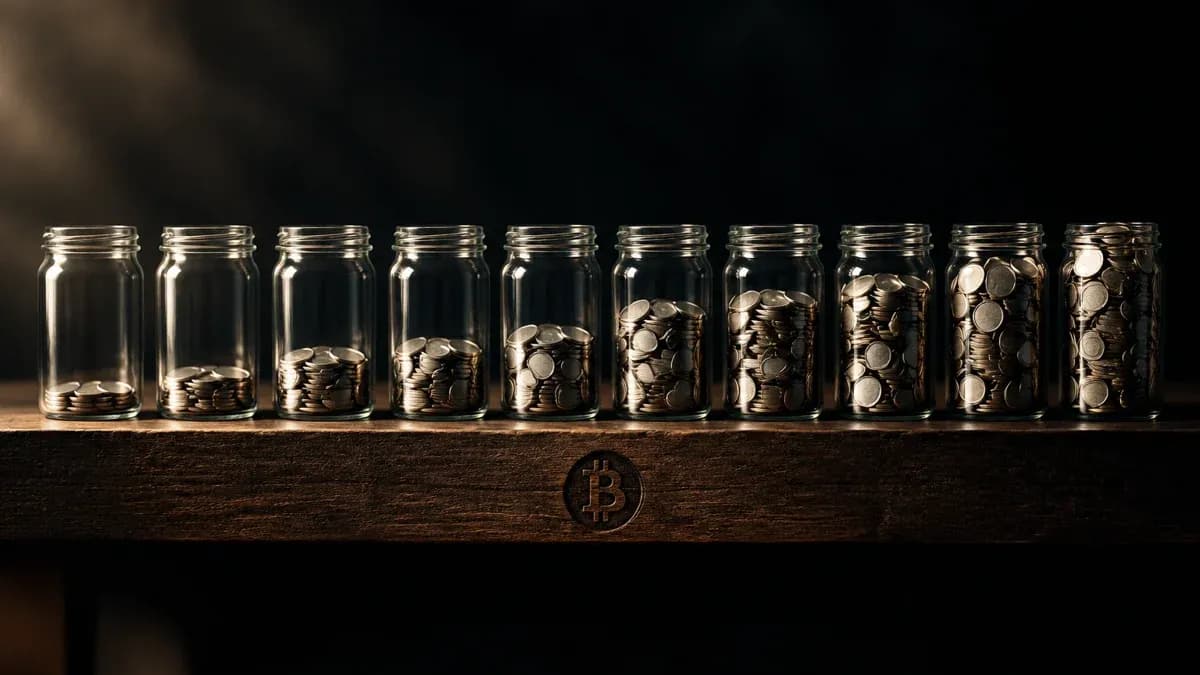
118 monthly instalments of 50 euros since January 2017 add up to €5,900 paid in and around €54,500 today. The same instalment since January 2024 is up only 14.5 percent, and since October 2025 the savings plan beats the lump sum by almost 39 percentage points.
September 26, 2026 1:19 AM
Germany’s Crypto Holding Period Is Wobbling: What to Check Before December 31
A CDU member of the Bundestag makes it plain: the coalition agreement does not guarantee that the one-year holding period for crypto assets will survive. What that means for purchases made before the planned cutoff date of December 31, 2026.
September 25, 2026 10:26 PM

Selling bitcoin privately: the tax in Germany and the records you need
A direct sale to a private individual falls under the same one-year rule as an exchange sale, but there is no tax report to go with it. This guide walks through the calculation, the 1,000 euro threshold and the records the tax office wants to see.

September 19, 2026 4:19 AM

Bitcoin Cash Jumps by Double Digits: What the Grayscale ETF Filing Really Means for You in Germany
Bitcoin Cash gained double digits on September 18 because Grayscale wants to convert its BCH trust into an exchange-traded product. The filing itself, however, states that the basis for it has not been approved at all.
September 17, 2026 10:22 PM
Selling Bitcoin at a Loss and Buying It Straight Back: What That Does to Your Holding Period
Germany has no wash sale rule: the loss stays deductible even if you buy back immediately. The buyback, however, restarts the one-year period for every new unit.
September 8, 2026 10:21 PM

Crypto Holding Period and Grandfathering: Why December 31, 2026 Becomes the Cut-Off in Germany's Draft Bill
A ministerial draft bill from Germany's finance ministry names a cut-off date for the first time: crypto assets acquired after December 31, 2026 are to fall under the flat-rate withholding tax. What that means for legacy holdings, running savings plans and staking income, and why nothing has been decided yet.
August 14, 2026 6:23 AM

Bitcoin Savings Plan and Tax: How the Holding Period, FIFO and the Exemption Limit Interact on Monthly Buys
Every savings plan instalment is a separate acquisition for tax purposes, with a holding period of its own. How the exemption limit, the order of disposal and record-keeping duties interact on monthly Bitcoin buys, with the sources from the statute and the Ministry of Finance circular.
September 22, 2026 1:37 AM

Swapping Bitcoin for Gold: What Happens for Tax in Germany
Moving from coins into gold is a sale in the eyes of the tax office, and the one-year period decides the bill. Where bars, gold ETCs and tokenised gold diverge for tax, and which records you need.
September 9, 2026 1:15 AM

Germany's Crypto Tax: 160 Million Euros for a 555-Billion Budget
The German finance ministry's draft bill puts a figure on the crypto tax for the first time: 160 million euros from 2028. What that number means in the 2027 federal budget, how 11.4 billion became 160 million, and what investors can read from it.
October 6, 2026 10:14 AM

$3.8 Million Back From the Attacker: Why the NEAR Price Is Up 7.8 Percent
The attacker has sent back the full $3.8 million from the NEAR Intents exploit, and the NEAR price is up 7.8 percent at $5.23. What is behind the recovery, what role the Bitwise NRR ETF plays, and what follows from it for buying route, holding period and custody.
September 25, 2026 4:20 AM

Crypto as a Down Payment for a German Mortgage: What Banks Require
Since April 2023 a house in Germany can no longer be paid for in Bitcoin; section 16a of the Money Laundering Act bans it outright. Your crypto holdings still work as a down payment, provided you take the route through the euro and prove the origin without gaps.
September 24, 2026 4:20 PM

Litecoin Jumps by Double Digits While the Market Falls: Check Buy Route, Holding Period and Leverage Now
Litecoin gains 11.29 percent in a day while Bitcoin, Ether and XRP give ground. What sits behind the jump, and the three points you as an investor in Germany should check right now.
More from CryptoTicker