
Bitget Pay Launches Globally With Zero-Fees Instant Crypto Payments
Bitget, the leading cryptocurrency exchange and Web3 company, has just launched its new payment service for instant crypto transactions called Bitget Pay.


Which topics should we dive deeper into?
Select what genuinely interests you. Your picks feed directly into our editorial planning.
Crypto news that's actually worth your time.
Weekly. 60 seconds. Carefully curated by our editors: no hype, no promo flood, no spam.
Bitget, the leading cryptocurrency exchange and Web3 company, has just launched its new payment service for instant crypto transactions called Bitget Pay. The release marks the introduction of a contactless, peer-to-peer crypto payment solution exclusive to the Bitget App. With a growing global interest in digital currencies, as highlighted by Statista data indicating over 250 million blockchain wallets in 2023, Bitget Pay will be utilized as an important tool to facilitate the seamless flow of digital value across borders.
Bitget Pay supports multiple cryptocurrencies, including BTC, ETH, and USDT, providing users with flexible options to suit various payment needs. Its integration of blockchain technology ensures transactions are fast, allowing payments to be completed in seconds without the complexities often associated with traditional banking systems. The user-friendly interface enables swift transfers by selecting the preferred cryptocurrency, scanning a QR code, or entering the recipient's address directly within the app.
The service is accessible to all Bitget users globally, with no geographical restrictions, provided an internet connection is available. By eliminating fees for cryptocurrency transfers, Bitget Pay offers a cost-effective solution for international payments and cross-border trade, further streamlining the user experience.
For secure transactions, Bitget Pay requires both the sender and recipient to complete KYC verification. Users can send payments by inputting the recipient’s Bitget account-bound email, phone number, or Bitget UID. Additionally, QR code scanning is available for instant transfers.
When making a payment, users can select any supported cryptocurrency from their balance, and the platform will execute the transaction at real-time exchange rates with zero fees.
By leveraging the efficiency of blockchain protocols, Bitget Pay completes transactions almost instantly, avoiding delays common in traditional systems. Users can send payments globally, with no geographical limits, using a QR code or address for seamless, zero-fee transfers.
The launch of Bitget Pay reflects the ongoing trend toward broader adoption of digital currencies, aiming to meet the growing demand for efficient, borderless financial transactions. With its secure platform and zero-fee policy, Bitget Pay will enhance the global crypto payment landscape as it inches closer to onboarding 100M users in its ecosystem.
About Bitget
Established in 2018, Bitget is the world's leading cryptocurrency exchange and Web3 company. Serving over 45 million users in 150+ countries and regions, the Bitget exchange is committed to helping users trade smarter with its pioneering copy trading feature and other trading solutions, while offering real-time access to Bitcoin price, Ethereum price, and other cryptocurrency prices. Formerly known as BitKeep, Bitget Wallet is a world-class multi-chain crypto wallet that offers an array of comprehensive Web3 solutions and features including wallet functionality, token swap, NFT Marketplace, DApp browser, and more.
Bitget is at the forefront of driving crypto adoption through strategic partnerships, such as its role as the Official Crypto Partner of the World's Top Football League, LALIGA, in EASTERN, SEA and LATAM market, as well as a global partner of Turkish National athletes Buse Tosun Çavuşoğlu (Wrestling world champion), Samet Gümüş (Boxing gold medalist) and İlkin Aydın (Volleyball national team), to inspire the global community to embrace the future of cryptocurrency.
Risk Warning: Digital asset prices are subject to fluctuation and may experience significant volatility. Investors are advised to only allocate funds they can afford to lose. The value of any investment may be impacted, and there is a possibility that financial objectives may not be met, nor the principal investment recovered. Independent financial advice should always be sought, and personal financial experience and standing carefully considered. Past performance is not a reliable indicator of future results. Bitget accepts no liability for any potential losses incurred. Nothing contained herein should be construed as financial advice. For further information, please refer to our Terms of Use.
Partner links: some links on this page are partner links. If you become a customer through one of them, we may earn a commission at no extra cost to you. Selection, ratings and ranking are decided independently by our editorial team. Ethics and Independence · Ownership and Funding
For later? Save this article and find it again in your profile.
Related articles
- Shitcoin meaning: what the term covers and why 53 percent of tokens fail
- Pump.fun explained: memecoins in one click, and 98.6 percent of tokens end up nearly worthless
- What is Zcash? ZEC, encrypted payments and the EU deadline in July 2027
- What is Render Coin? The GPU network burned $834,000 worth of tokens in October
- What is Ultra (UOS)? The gaming blockchain after a 99.98 percent price collapse
Which topics should we dive deeper into?
Select what genuinely interests you. Your picks feed directly into our editorial planning.
Crypto news that's actually worth your time.
Weekly. 60 seconds. Carefully curated by our editors: no hype, no promo flood, no spam.

November 15, 2026 11:17 PM

What is a DAO? Token holders vote on a shared treasury through smart contracts
A DAO replaces the board with votes by token holders and rules written into a smart contract. We explain governance tokens, quorum and multisig, the 2016 hack and the unresolved question of liability.
November 15, 2026 9:39 PM

Spot trading explained: real coins without leverage and no liquidation price
In spot trading, you buy bitcoin and other crypto-assets at the current price and they are credited to your account immediately. How the spot market differs from futures, perpetuals and margin, and what that means for liquidation, custody and MiCA.
November 15, 2026 3:53 PM

TradFi vs DeFi: $71 billion in smart contracts against the banking system
TradFi is the traditional financial system of banks and supervisors, while DeFi replaces the intermediary with smart contracts on the blockchain. Where the differences lie in security and regulation, and how tokenised funds connect the two worlds.
November 15, 2026 9:35 AM
What is Ethereum Classic? The 2016 split and its proof of work
Ethereum Classic is the original Ethereum blockchain, which kept running unchanged after the DAO hack of 2016. This profile explains proof of work, the 5M20 monetary policy, the risks and what to know before buying.

November 15, 2026 12:58 AM
What Is Open Interest? Crypto Open Interest Explained
Open interest counts every open futures contract. What the metric shows for bitcoin, how it builds up and shrinks on perpetuals, how to read it with price and why it signals squeeze risk.
November 14, 2026 1:15 AM

What is Cardano? Ouroboros, ADA and a treasury holding 1.4 billion coins
Cardano is a proof-of-stake blockchain with its own cryptocurrency, ADA, that runs without mining and has been governed by its users since 2025. This profile explains the technology, staking, governance, upgrades and how to buy and store ADA.
November 13, 2026 5:28 AM

DeFi wallet explained: signature phishing cost users $83.85 million in 2025
A DeFi wallet gives you the key to decentralised applications, and full responsibility for them. What happens when you connect, sign and grant token approvals, and which EU rules apply.
November 12, 2026 11:20 PM
What is Dogecoin? With no supply cap, 5 billion new DOGE arrive every year
Dogecoin started in 2013 as a joke and is now a coin with its own blockchain, ranked 12th by market value. This profile explains the technology, merged mining and inflation without a cap, and what matters when buying and storing DOGE.
November 12, 2026 12:48 AM

CBDCs explained: 146 countries are exploring central bank digital currency, three have issued one
A CBDC is central bank digital currency, a liability of the central bank itself. We explain how it differs from stablecoins and bitcoin, where it already exists and when the digital euro is due.
November 10, 2026 9:30 PM
What is Bittensor (TAO)? A market for AI computing power with 21 million tokens
Bittensor pays for AI work from subnets with its TAO token, distributed according to validators' scores. This profile explains Yuma Consensus, alpha tokens, the halving and what applies when buying in Germany.
November 9, 2026 1:31 PM
What is Aave? The largest DeFi lending market, with $28 billion in deposits
Aave lends crypto assets without a bank: depositors earn interest, and borrowers post more collateral than they borrow. This profile explains the technology, the AAVE token, the risks and what applies to investors in Germany.
November 8, 2026 9:40 AM

What Is Sui? The Layer-1 Blockchain With an Object Model and Ten Billion SUI
Sui is a layer-1 blockchain from Mysten Labs that stores data as objects instead of account balances and processes transactions in parallel. This profile explains the technology, the SUI token, staking, risks and what applies to buying and tax in Germany.
November 8, 2026 7:23 AM

Margin trading explained: how trading with borrowed money works
Margin trading means trading a larger position with borrowed money. We work through profit and loss at 2x, 3x and 5x leverage, explain margin level, margin call and liquidation, and show where you can trade with a licence in the EU.
November 7, 2026 11:29 AM

PnL in Trading: Realised Gains Count for Tax, Unrealised Ones Only on Screen
PnL shows how much a trading position gains or loses. What matters is the difference between realised and unrealised PnL, because only the realised gain after fees counts for your account and for the tax office.
November 7, 2026 7:30 AM
What Is Tron (TRX)? The Blockchain Holding More Than Half of All USDT
Tron is the blockchain that carries most Tether transfers, and TRX is its fuel. This profile explains the technology, fees, staking and tax for investors in Germany.
November 6, 2026 1:20 PM
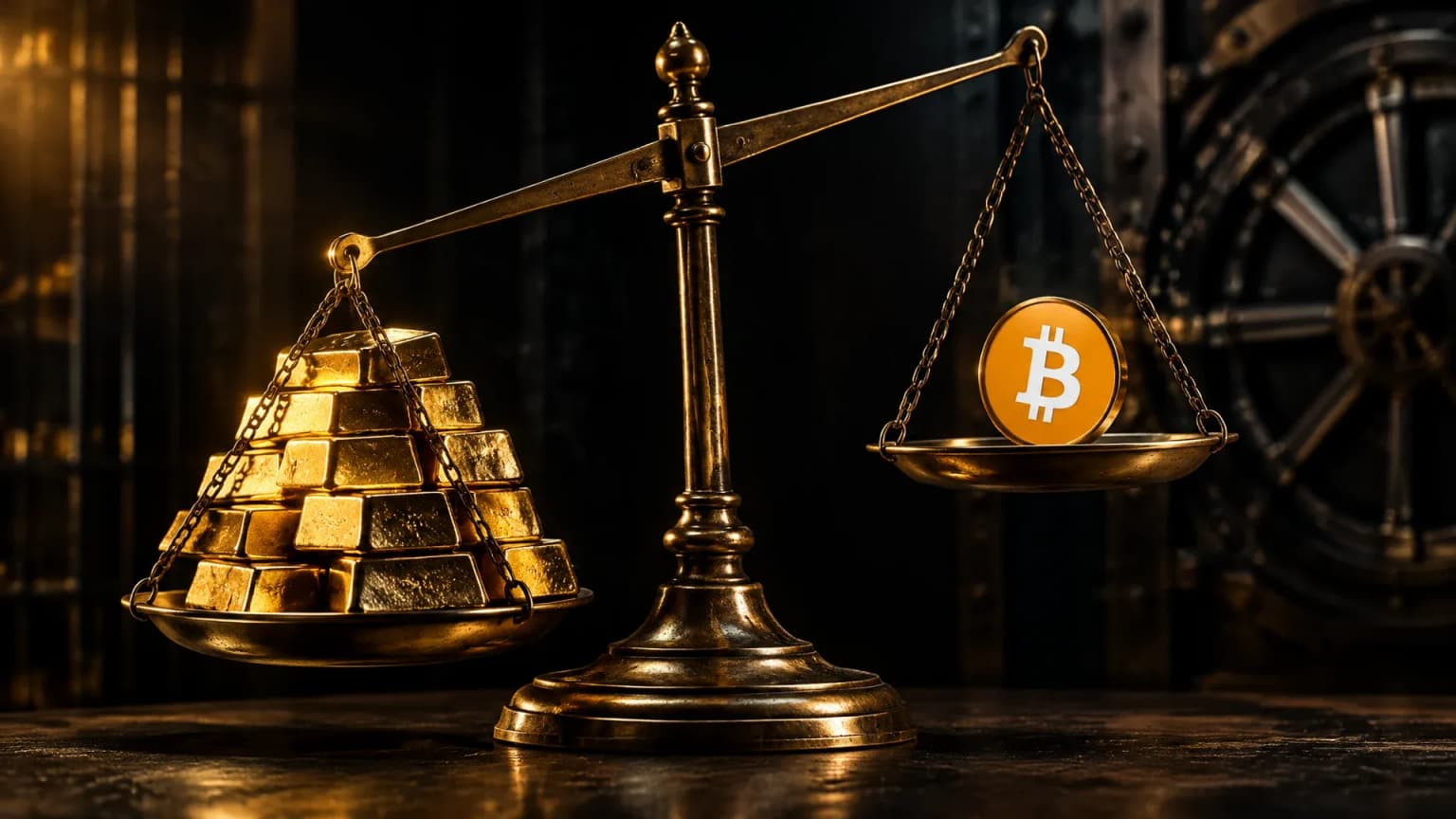
Crypto market cap explained: Bitcoin vs gold and Apple
Market capitalization shows how large a coin is valued in the market and exposes the fallacy of cheap unit prices. We explain the formula, Bitcoin dominance and FDV with current figures and show why Bitcoin, at $1.53 trillion, trails far behind gold.
November 6, 2026 5:32 AM

Bear market: what it means, how long it lasts and where stocks and Bitcoin stand in 2026
Bitcoin has been in a bear market since November 2025, and the Nasdaq 100 is closing in on the threshold. What a bear market is, how long it lasts on average, how to spot its end and what you can do now, worked out from 27 S&P 500 bear markets since 1928.
November 6, 2026 1:34 AM

What Is Shiba Inu? SHIB, Shibarium and 410 Trillion Burned Tokens
Shiba Inu is a memecoin on Ethereum that has spawned its own layer-2 blockchain and three side tokens. This profile explains supply, burns, Shibarium and the risks, and sets out what applies to buying, storing and taxing SHIB in Germany.
November 5, 2026 11:14 AM

What is KYC in crypto? The five details no exchange will let you trade without
KYC is the identity check without which no licensed crypto exchange in Germany will open an account. Here you learn which data you hand over, how long it is stored and what the Travel Rule, DAC8 and the AMLR from July 2027 change.
November 4, 2026 1:19 PM

What is XRP? 100 billion coins, one ledger and the role of Ripple
XRP is the cryptocurrency of the XRP Ledger, built for payments in seconds and without mining. This profile explains Ripple, escrow, the SEC case and what to watch for when buying in Germany.
November 3, 2026 11:24 AM

What is VeChain (VET)? The supply-chain blockchain where only staking earns VTHO
VeChain is a blockchain for tracing goods and runs on two tokens, VET and VTHO. Since the Hayabusa upgrade, new VTHO is only generated for staked VET.
November 3, 2026 1:33 AM

Polkadot (DOT): the network behind 2.1 billion tokens and its parachains
Polkadot links independent blockchains under a shared security umbrella, and since 2026 the DOT supply has been capped at 2.1 billion tokens. This profile explains the relay chain, Asset Hub, coretime and the 28-day lock-up for staking.
November 2, 2026 5:52 PM

What is Hedera (HBAR)? Hashgraph, the corporate council and what HBAR is used for
Hedera orders transactions with a hashgraph method instead of blocks, and the network is governed by a council of 33 companies. This profile explains the technology, HBAR supply, fees and the tax rules that apply in Germany.
October 30, 2026 9:39 AM
NEAR Protocol explained: how sharding and 2.5 percent staking work
NEAR Protocol is a layer-1 blockchain that spreads its work across sections running in parallel and is secured by stakes. What the NEAR token does, how staking and custody work and what to check before you buy.
October 29, 2026 9:49 PM
Is This the End? How Low Bitcoin Could Fall After the Binance Hack
About $2.8 billion left a Binance hot wallet and Bitcoin slid below $79,000. Whether this turns into a real crash depends on one question. Three scenarios, the key price levels for Bitcoin, Ethereum and Solana and what to do now.

October 22, 2026 12:31 AM
What Is Bitcoin Mining? How It Works and When It Pays Off
Miners secure the Bitcoin network and earn 3.125 BTC per block. How proof of work functions, what an ASIC costs in electricity in Germany and at what power price mining breaks even.
September 30, 2026 5:03 PM
Bitget after the hack: withdrawals are back and the Protection Fund is above $300 million
Six days after the attack, Bitget is back with strong numbers: withdrawals for Bitcoin, Ether and USDT are running again, the Protection Fund was refilled two days ahead of its own deadline, and the proof of reserves shows 131 percent coverage.
More from CryptoTicker