
Two Routes Out of an Exchange Insolvency: Coins Back, or a Dividend in Euros
If the same coins come back after an exchange insolvency, the holding period from the year of acquisition runs on. If a dividend is paid out in money instead, the position is open, and the evidence question decides the case.





Which topics should we dive deeper into?
Select what genuinely interests you. Your picks feed directly into our editorial planning.
Crypto news that's actually worth your time.
Weekly. 60 seconds. Carefully curated by our editors: no hype, no promo flood, no spam.
If a crypto exchange becomes insolvent and you later get something back, what decides the crypto tax is not the size of the payment but its form. If the same coins return into your control, nothing has happened for tax purposes: acquisition date and acquisition cost run on unchanged, and a holding period that expired long ago stays expired. If money arrives instead on a filed insolvency claim, the event is an entirely different one, and the tax authorities have not expressly regulated it to this day.
That difference is the whole article. It concerns many German investors right now, because several large proceedings are stuck in the wind-up phase and a deadline at Mt. Gox expires on October 31, 2026. Both routes are set out below in detail, along with the evidence question on which most cases turn in practice.
Two Routes Out of the Proceedings: Segregation in Coins or an Insolvency Claim in Euros
When insolvency proceedings open, the assets split into two pots. Everything belonging to the debtor forms the insolvency estate and is distributed among the creditors. What belongs to a third party, even though it sits with the debtor, is not part of it. For that case the German Insolvency Code provides for segregation: under Section 47 InsO, a person holding a right in an object that does not belong to the estate may demand its surrender. They are then not an insolvency creditor but an owner reclaiming their property.
Whether that route is open to you depends on the custody arrangement. If your coins sat in a holding that was separated from the exchange's own assets and attributed to you, much speaks for segregation. If they were mingled in the exchange's pooled wallets with the holdings of every other customer, the result is as a rule a simple insolvency claim under Section 38 InsO: a monetary claim valued as at the opening date which brings only a dividend in the end. We have written up the legal side of that distinction in a separate piece on segregation in an exchange insolvency, and how a filing works in practice is shown by the zondacrypto case.
Why This Classification Comes Before the Tax Question
The tax treatment follows the classification under civil law, not the other way around. Anyone who does not know whether they will get coins or a monetary claim back cannot determine the tax consequence. In case of doubt, the answer sits in the insolvency administrator's letter and in the schedule of claims: if a claim is listed there in euros or dollars, you are an insolvency creditor.
Surrender of the Same Coins Is Not a Disposal Within the Meaning of Section 23 EStG
Under settled case law, crypto-assets are “other assets” within the meaning of Section 23(1) sentence 1 no. 2 of the German Income Tax Act (EStG). The Federal Fiscal Court decided this in its judgment of February 14, 2023, and the Federal Ministry of Finance circular of March 6, 2025 carries that classification forward. Gains from a sale of privately held assets are therefore taxable only if no more than one year lies between acquisition and disposal.
The two terms are decisive. An acquisition is the acquisition from third parties for consideration. A disposal is, as its mirror image, the transfer of the acquired asset to third parties for consideration. Both presuppose consideration and a change of legal owner. When an insolvency administrator surrenders your own coins to you, they are fulfilling a claim for surrender. You pay no consideration for it, and ownership does not change hands but merely becomes accessible again. On that definition there is no private disposal, and the return itself triggers no tax.
One qualification belongs here: the Ministry circular does not deal with the insolvency case separately at this point. The classification follows from the general definitions set out in it, and not from any statement by the tax authorities on insolvency proceedings.
On Surrender, the Holding Period From the Year of Acquisition Runs On
The one-year periods of Section 23 EStG begin anew after every exchange of assets. A surrender is not an exchange, so nothing begins anew. For you that usually means good news: whoever bought in 2021, lost access in 2022 and receives the same coins back in 2026 holds assets whose holding period expired years ago. A sale after that is tax-free for privately held assets, regardless of how far the price has risen in the meantime.
Conversely, the same mechanism also works against you if the acquisition fell shortly before the collapse and the surrender came quickly. Then the period may still be running. For the total gain of a calendar year, the exemption threshold of Section 23(3) sentence 5 EStG remains: if the sum of all private disposals stays below €1,000, it stays tax-free. Up to the 2023 assessment period that threshold stood at €600. This threshold applies to all private disposals of one year taken together, not per coin.

Mt. Gox: The Extended Repayment Deadline Ends on October 31, 2026
The most concrete date for those affected in Germany comes from Japan. By a notice from the Rehabilitation Trustee of October 27, 2025, the trustee of the Mt. Gox proceedings moved the deadline for the base repayment, the early lump-sum payment and the intermediate repayment from October 31, 2025, to October 31, 2026, Japanese time. Japan is eight hours ahead of Germany, so for you the effective moment still falls on the preceding day.
As the reason, the trustee names that many creditors have not completed the necessary procedural steps to this day, among them identity verification and the lodging of payment details. It is already the third postponement of this kind. Anyone still waiting will find the particulars in our piece on the Mt. Gox repayment deadline. In tax terms the date matters because it fixes the assessment period in which the inflow falls.
 Evidence your crypto tax cleanly
The Dividend in Money Meets an Open Point in the Ministry Circular
The second route is the harder one. In the large proceedings, customer claims are not satisfied in coins but valued in money as at the opening date and later paid out as a dividend. At FTX, which opened Chapter 11 proceedings in November 2022, that is the basic structure of the wind-up. In economic terms you therefore receive money for coins you never sold.
On the wording of Section 23 EStG this can be read in two directions. One reading holds that a transfer to third parties for consideration is missing: the coins have perished in the estate, and the dividend is repayment on a claim, hence not a disposal and not taxable. The other reading sees the disposal event already in the conversion of the coins into a monetary claim. It would then turn on whether more than a year lay between the acquisition and the opening of the proceedings, which is almost always the case for holdings from the years before 2022.
Both readings lead to the same result for legacy holdings, namely no tax. They diverge only where the acquisition fell shortly before the collapse. The Ministry circular says nothing about the dividend payment from insolvency proceedings. If your case turns on that question, it is the case for a binding ruling from the tax office under Section 89(2) of the German Fiscal Code or for a tax adviser, and the facts belong openly in the return rather than quietly in a single line.
Payment in US Dollars: The Foreign Currency Balance Is an Asset of Its Own
Here lies a trap that has nothing more to do with the coins. Large proceedings pay out in US dollars. A foreign currency balance is, taken on its own, likewise an “other asset” within the meaning of Section 23(1) sentence 1 no. 2 EStG. With the inflow of the dollars you acquire that asset, and a one-year period of its own begins for it.
If you exchange the dollars into euros within that year and the dollar has gained against the euro in the meantime, a taxable gain can arise from it. That holds even if the underlying coins were long since unobjectionable for tax purposes. The exemption threshold of €1,000 applies here too, because it is the same category of income. Anyone holding the dollars for longer than a year has the question off the table.
Which Units Count as Returned Is Determined by Individual Attribution and FIFO
If only part of your holdings comes back, the question arises which units these are. The Ministry circular names the principle of individual attribution for this. Where individual attribution is not possible, the crypto-assets of one trading designation acquired first count as disposed of for the holding period, and the average method is to be applied for valuation. For simplification it may be assumed that the units acquired first were disposed of first, that is, first in, first out.
On top of that comes a wallet-based view: within one wallet the method chosen is to be retained until all units of that trading designation there have been disposed of. The account at the insolvent exchange was, in this logic, a unit of its own. Anyone who bought there in several tranches over the years has to reconstruct the order before calculating anything at all.

Paragraph 89: Missing Records Are Borne by the Taxpayer
The hardest sentence for those affected sits not in insolvency law but in tax law. The Ministry circular states verbatim at paragraph 89: “Missing records and data losses (for example because of the insolvency of the trading platform or as a result of a hacker attack) are borne by the taxpayer.” The insolvency of the exchange is thereby named expressly, and it is no excuse.
In practical terms that means: the tax office does not have to believe that you bought in 2017 merely because the platform has disappeared. The burden of evidencing the acquisition and its date rests on you. What usually carries weight are bank statements of the original transfer, archived transaction overviews, old confirmation emails from the exchange, blockchain transfers to an address of your own, and the documents from the insolvency proceedings themselves, that is, the filing of the claim and an extract from the schedule of claims. How such a line of evidence is built up, we worked through in the case of stolen coins.
For Foreign Trading Platforms, the Extended Duty to Cooperate Applies
Mt. Gox was wound up in Japan, FTX in the United States and the Bahamas. Almost every known proceeding therefore concerns a foreign operator, and the Ministry circular holds a tightening ready for exactly that. Where crypto-assets are acquired or disposed of through the central trading platforms of a foreign operator, that establishes an extended duty to cooperate under Section 90(2) of the German Fiscal Code. You must then not merely disclose the facts but clarify them and procure the necessary evidence. Expressly named is the regular and complete retrieval of transaction overviews for as long as the platform still exists.
For the tax reports of private providers the circular draws a clear line: a report can carry the audit trail if it appears plausible, is coherent in itself and does not contradict other findings of the authority. Obviously missing acquisition costs or missing trading platforms argue against plausibility. Adjustments and corrections, by contrast, do no harm where they are marked as such and reasoned comprehensibly, for instance because acquisition data is missing after an insolvency. Anyone who has to bring several sources together will find in our comparison of crypto tax software and portfolio trackers the programs that deliver exactly that consolidation and the settings extracts required.
 Get your holdings out of the insolvency estate
Total Loss Without a Dividend: Section 23 EStG Knows No Write-Down to Zero
If proceedings end without a dividend, or with a dividend close to zero, the question of the loss suggests itself. The answer is uncomfortable. A loss under Section 23 EStG presupposes a disposal event just as a gain does. If the holding falls away without replacement and nothing is transferred, that event is missing, and for privately held assets no loss arises that you could deduct under Section 23 EStG.
Even where a loss is recognised, it is tightly fenced in. Under Section 23(3) sentence 7 EStG, losses may be offset only up to the amount of the gain you achieved from private disposals in the same calendar year. An offset against employment income, interest or share gains is ruled out. Section 23(3) sentence 8 EStG does at least allow a carry-back to the immediately preceding year and a carry-forward to the following years, but there too only against gains of the same kind. Which routes remain in an individual case, we have compiled under crypto total loss and tax.
Self-Custody Takes the Insolvency Risk Out of the Calculation
Everything described above arises only because a third party holds the keys. Coins in a wallet of your own never pass into the control of an exchange and therefore never into an insolvency estate. The question of segregation, dividend and opening date does not arise at all then, and the acquisition records sit in your own documents rather than in the books of a company that can disappear.
You pay the price for it elsewhere, namely in the key risk. Whoever loses the recovery words has no administrator with whom to file a claim. Which programs are suitable for your own custody and where their limits lie is shown by our comparison of software wallets. For larger holdings, separating the trading balance from the long-term holding remains the simplest rule: only what you really intend to move sits in an account belonging to a third party.
Exchange Insolvency: Your Next Three Steps
- Clarify the form of the return and gather the evidence. Read in the administrator's letter whether coins will be surrendered to you or a claim is being listed in money, and file purchase receipts, transfers and old transaction overviews in one place. A tool from the comparison of crypto tax software holds the acquisition records together with the settings extract the tax office wants to see for plausibility.
- Move the recovered holding into your own custody. What comes back out of proceedings does not have to land on the next trading account. A device from our hardware wallet comparison takes the holding out of every future insolvency estate, and the transfer to an address of your own is not itself a taxable event.
- Choose your future trading venue by authorisation and custody segregation. Whether a segregation succeeds when it matters is decided years earlier by the question of whether customer holdings are kept separately. Our overview of regulated crypto exchanges shows which providers are subject to European supervision.
(As of October 7, 2026. This article is not investment advice. Prices and fee structures change; check the terms with the provider before you buy.)
Frequently asked questions about crypto tax after an exchange insolvency
Transparency note: This article was produced with the assistance of artificial intelligence and reviewed by our editorial team before publication. All figures and claims were checked against the primary sources linked in the text. The feature image was generated with AI.
Related articles
- Forced Sale on a Crypto Exchange: Which Moment Counts for the Holding Period and What You Must Document
- Writing Off a Total Crypto Loss: When the Tax Office Recognises Worthless Coins
- Coins Stolen in an Exchange Hack: What the German Tax Office Accepts as a Loss
- Crypto Mining and Tax: When the Tax Office Treats Your Mining as a Business
- Crypto Tax in Germany: What Applies in 2026 and What Is Set to Change in 2027
Which topics should we dive deeper into?
Select what genuinely interests you. Your picks feed directly into our editorial planning.
Crypto news that's actually worth your time.
Weekly. 60 seconds. Carefully curated by our editors: no hype, no promo flood, no spam.

September 16, 2026 7:12 PM

Borrowing Against Bitcoin Instead of Selling: When German Tax Still Applies
Posting Bitcoin as collateral for a loan is not a sale in Germany, because section 39 of the Fiscal Code keeps the coins attributed to you for tax purposes. Tax arises only when the collateral is liquidated, and then the one thing that decides the bill is how long you held the coins beforehand.
September 23, 2026 10:32 AM

Switching crypto exchange: what happens to the holding period and the tax when you transfer
A transfer to another exchange or to your own wallet triggers no tax and does not reset the one-year period. What does get lost is the acquisition data, and that is exactly what you need later as evidence.
September 26, 2026 1:19 AM

Germany’s Crypto Holding Period Is Wobbling: What to Check Before December 31
A CDU member of the Bundestag makes it plain: the coalition agreement does not guarantee that the one-year holding period for crypto assets will survive. What that means for purchases made before the planned cutoff date of December 31, 2026.
October 6, 2026 10:24 PM

Germany's Crypto Holding Period Before the Petitions Committee on October 12: What Matters Now
The Bundestag's petitions committee debates the crypto holding period on Monday, October 12, 2026, from 12 noon in a public sitting, with federal government representatives on hand for questions. Two days later the cabinet is to decide on the draft bill that removes the one-year period for purchases from 2027.
August 24, 2026 10:16 AM

Crypto Tax: Why You Have to Secure Your Transaction History Before the Exchange Closes Your Account
Deadlines run out at several crypto exchanges by early September, after which accounts close and holdings are sold off by force. Anyone who does not export the trading record beforehand faces the tax return with no proof of acquisition date and purchase price.
September 8, 2026 10:21 PM

Crypto Holding Period and Grandfathering: Why December 31, 2026 Becomes the Cut-Off in Germany's Draft Bill
A ministerial draft bill from Germany's finance ministry names a cut-off date for the first time: crypto assets acquired after December 31, 2026 are to fall under the flat-rate withholding tax. What that means for legacy holdings, running savings plans and staking income, and why nothing has been decided yet.
September 9, 2026 1:15 AM

Germany's Crypto Tax: 160 Million Euros for a 555-Billion Budget
The German finance ministry's draft bill puts a figure on the crypto tax for the first time: 160 million euros from 2028. What that number means in the 2027 federal budget, how 11.4 billion became 160 million, and what investors can read from it.
August 14, 2026 6:23 AM

Bitcoin Savings Plan and Tax: How the Holding Period, FIFO and the Exemption Limit Interact on Monthly Buys
Every savings plan instalment is a separate acquisition for tax purposes, with a holding period of its own. How the exemption limit, the order of disposal and record-keeping duties interact on monthly Bitcoin buys, with the sources from the statute and the Ministry of Finance circular.

October 5, 2026 4:26 PM

Shiba Inu price up 4.4 percent: outperforms the market, but 88 trillion SHIB sit on exchanges
Shiba Inu adds 4.4 percent on Monday, making it the strongest of the six big names. At the same time 88.08 trillion SHIB worth $525 million sit on trading venues, almost five times a single day of turnover.
September 8, 2026 1:19 AM

Germany's Crypto Holding Period: What Happens Now Signing for Petition 201716 Closed on September 15
Recap as of September 27, 2026: the signature period for German parliamentary petition 201716, which asks for the one-year crypto holding period to be preserved, closed on September 15, 2026. This article explains what ended that day, how the petitions committee proceeds and why no investor has to sell because of it.
September 18, 2026 10:13 AM

Bitcoin and the German Exit Tax: What Applies When You Move Abroad
Anyone emigrating with Bitcoin expects an exit tax on unrealised gains and finds nothing of the sort in the statute. Where the real risks sit is decided at four points: residence, the holding period, the legal form of your investment, and automatic reporting from 2026.

September 24, 2026 10:12 AM

XRP Falls 9.7 Percent: What to Check on Holding Period and Buying Route
XRP is down around 9.7 percent on the morning of September 24, twice as much as the typical large crypto asset. Our count of 18 coins shows who the pullback hits and which three things hold true regardless of the price.
September 14, 2026 10:23 AM

Take Ethereum Profits or Wait Out the Holding Period? What the Price Jump Means for Your Tax Bill
Ether reached its highest level since the end of January on September 11, 2026, and many are asking whether to sell now. In Germany the answer hangs on the purchase date first: we work out which tranches are tax free and which of them are showing a gain at all.
September 9, 2026 4:13 PM

Bitcoin 29 Percent Below Last Year: Which Crypto Losses You Can Still Use Before the One-Year Holding Period Expires
Nine out of ten major crypto assets trade lower today than exactly twelve months ago, Bitcoin alone by 29.2 percent. We measured the price series ourselves and show why the purchase date alone decides the tax value of your loss.
August 11, 2026 9:13 PM

Germany's Crypto Holding Period Faces Abolition: What Petition 201716 and the Cabinet Decision Mean for Your Tax
Petition 201716 in the German Bundestag calls for the one-year holding period for crypto assets to be kept and has already passed the quorum of 30,000 signatures. This article sets out what the cabinet decision of July 6, 2026 provides for, how much of it is binding and which records you should be pulling together now.
September 7, 2026 7:22 AM

German Crypto Holding Period Stays: The Income Tax Reform 2027 Leaves Section 23 Untouched
On September 2, 2026 the German federal cabinet adopted the draft of an Income Tax Reform Act 2027, and crypto assets do not appear in it. The one-year holding period under Section 23 of the Income Tax Act therefore continues to apply unchanged.
September 27, 2026 10:35 AM

Crypto Exchange Tax Report Wrong: How to Correct It Before the Tax Office Does
Missing acquisition costs, transfers booked as sales, holding periods restarted: your exchange's report is an aid and not proof. How to check it, how to correct it and which deadline is running.
September 17, 2026 7:12 PM

Gifting Bitcoin to Children: Allowance, Holding Period and the Tax Office Report
Transferring Bitcoin to your child hands over your holding period and your entry price along with the coins. This guide sets out what really applies in Germany on the allowance, the reporting deadline, representation and custody.
October 2, 2026 4:39 AM

Donating bitcoin: when does the full market value count, when only the purchase price?
A bitcoin donation to a charitable organisation is deductible as a donation in kind, and the donation itself produces no taxable gain. The size of the deduction turns solely on whether a sale would have been taxable on the day of the transfer.
September 24, 2026 1:13 AM

Solana DEX Trades Overtake the NYSE: What to Check on Swaps, Tax and Oversight
Solana's decentralised exchanges settled roughly 208 million trades in a single week and overtook the New York Stock Exchange for the first time. The figure is real, but it measures something other than the comparison suggests, and for German investors it carries tax duties that no provider takes on.
September 23, 2026 10:25 AM

Airdrop tax: when free coins are taxable in Germany
Whether you have to pay tax on an airdrop is decided by a single question: did you do something for the coins? This guide takes you through both cases, the valuation at the market price, and the records the tax office has demanded since the 2025 assessment period.
September 17, 2026 10:22 PM

Selling Bitcoin at a Loss and Buying It Straight Back: What That Does to Your Holding Period
Germany has no wash sale rule: the loss stays deductible even if you buy back immediately. The buyback, however, restarts the one-year period for every new unit.
October 6, 2026 4:32 AM
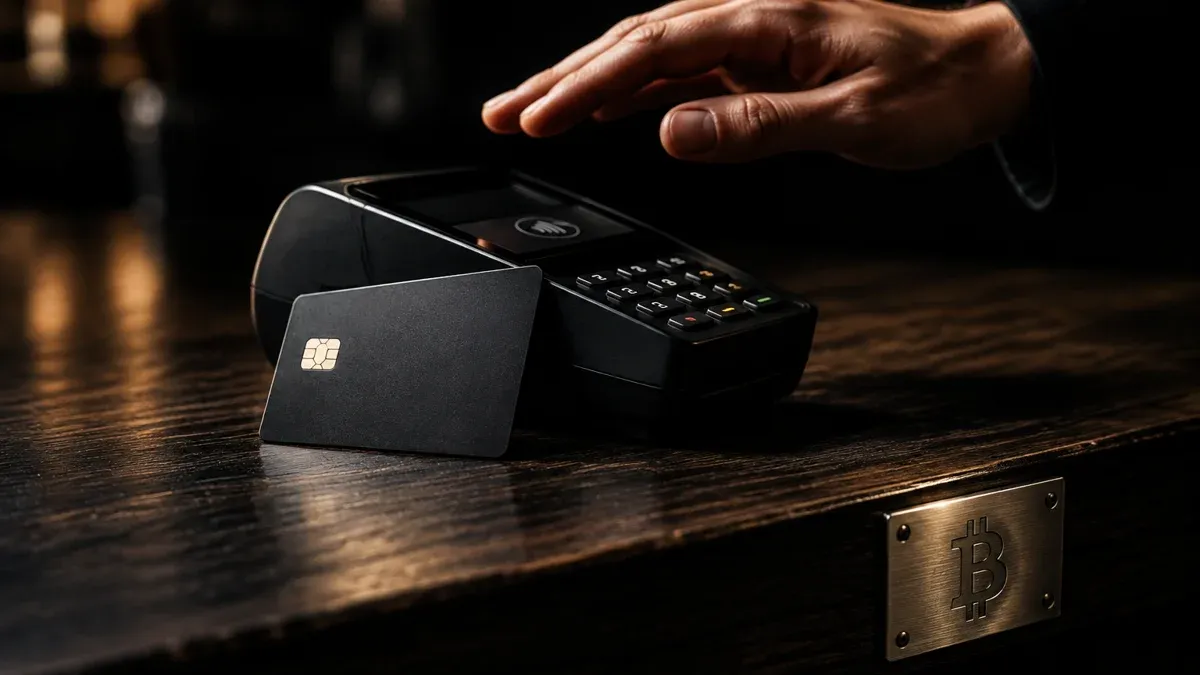
Bitcoin for a gift card: what paying with crypto means for your holding period
Paying for a gift card with Bitcoin is a sale for tax purposes. What counts as the disposal proceeds, when the twelve-month holding period bites, and the four records the tax office expects.
October 2, 2026 1:33 PM

Crypto tax before the cabinet on October 14: “Comments are only possible until October 6”
Germany's Federal Ministry of Finance sent the draft bill on crypto taxation to the associations on September 30, 2026, and the cabinet is to decide on October 14. For your holdings one date counts above all: December 31, 2026.
September 22, 2026 10:13 AM

Circle Lends Against Bitcoin via cirBTC: Why the Wrapper Can Cost You the German Holding Period
Circle launched loans against deposited bitcoin on September 21, 2026. In Germany, the detour through the cirBTC token is very likely a swap, and a swap restarts your one-year holding period.
August 21, 2026 7:38 AM

Crypto Exchange Insolvency: When Your Coins Can Be Segregated and When They Fall Into the Estate
If a custodian goes under, neither the deposit guarantee nor investor compensation covers crypto-assets. Whether the holdings are still yours is decided by the right of segregation under Section 47 of the German Insolvency Code, and you can read up on the condition for it beforehand.

More from CryptoTicker