
MEV exploit worth $25 million: US judge acquits the Peraire-Bueno brothers
A federal court in New York acquitted Anton and James Peraire-Bueno on November 16, 2026, in the $25 million MEV exploit case. What lies behind the ruling and how you can protect your own swaps from sandwich bots.


Which topics should we dive deeper into?
Select what genuinely interests you. Your picks feed directly into our editorial planning.
Crypto news that's actually worth your time.
Weekly. 60 seconds. Carefully curated by our editors: no hype, no promo flood, no spam.
Key points
- Judge Jessica Clarke acquitted Anton and James Peraire-Bueno of all charges in New York on November 16, 2026.
- Prosecutors had accused the brothers of using a flaw in the MEV-Boost software in April 2023 to take about $25 million from sandwich bots.
- In the judge's view, the government failed to prove a false statement, which a wire fraud conviction requires.
The best-known criminal case over MEV on Ethereum has ended without a conviction. A federal court in Manhattan acquitted the two MIT-trained brothers, Anton and James Peraire-Bueno, on Monday, November 16, 2026. Judge Jessica Clarke granted the defence motion for acquittal and thereby threw out the charges of wire fraud, conspiracy to commit wire fraud and conspiracy to commit money laundering. There will be no second trial.
For users of decentralised exchanges, the case is more than a court note. It revolves around the very bots that profit from other people's swaps every day. The ruling, however, only establishes that this conduct was not punishable as wire fraud under US law. Whether it was fair, the court expressly left open.
MEV trial acquittal: why Judge Clarke found no fraud
Under US federal law, wire fraud requires that someone deceives by means of a material false statement. That is precisely the point Clarke did not consider proven. The prosecution had not shown that the brothers made false promises in their transactions, Cointelegraph reports. Prosecutors had argued that the brothers, acting as validators, broke a kind of commitment to honest behaviour. A validator is a computer that proposes blocks on Ethereum and stakes ether as collateral to do so.
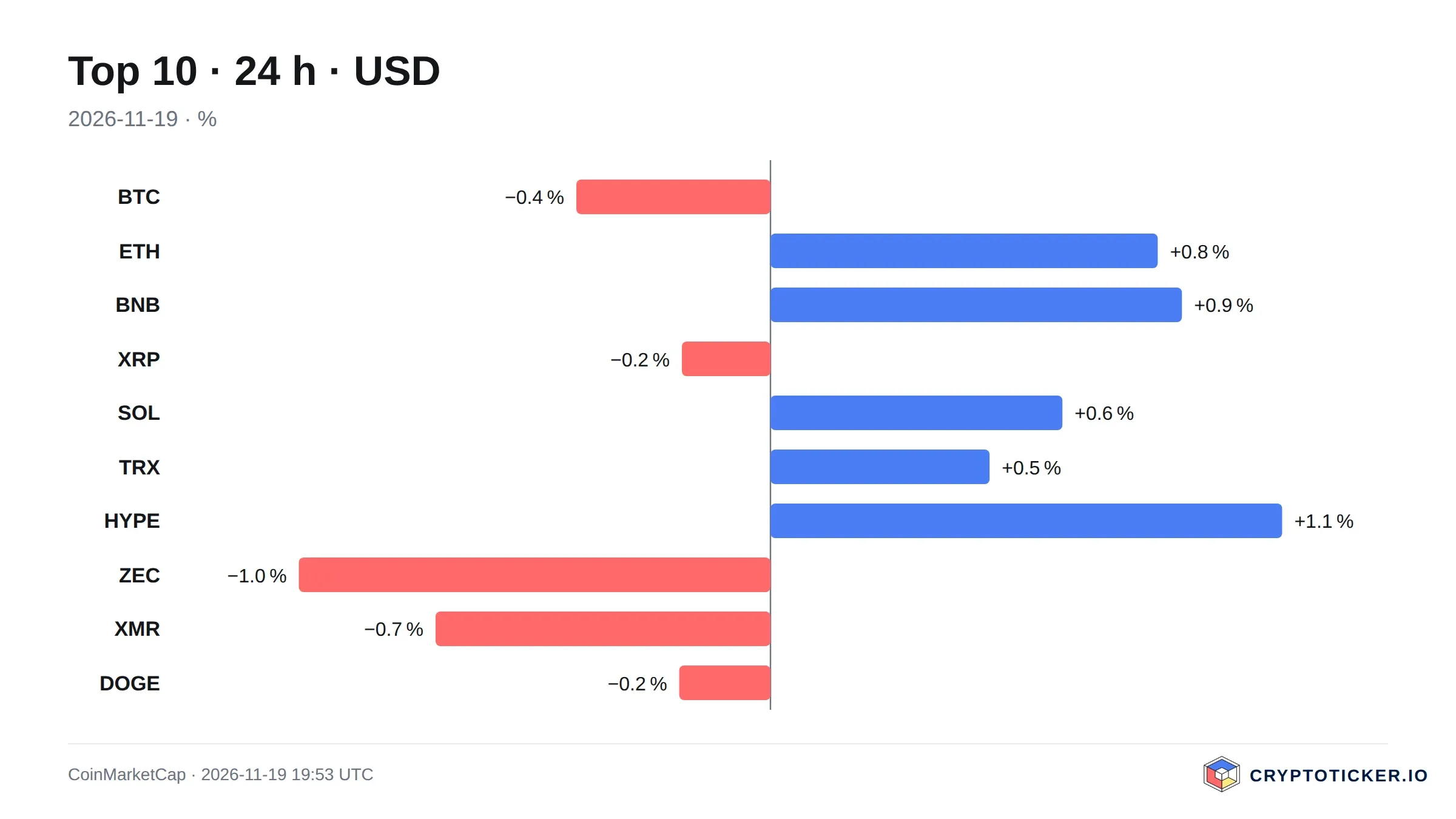
Clarke countered that the prosecution's arguments ignored evidence about the Ethereum ecosystem and the technical meaning of a commitment. That is how the magazine Gizmodo quotes the decision, citing the news agency Reuters. The judge also made clear what she was not deciding:
“The question before the court is not whether the Peraire-Buenos’ conduct was right or moral.”
Jessica Clarke, judge at the US District Court in Manhattan, decision of November 16, 2026, as quoted by Reuters (source)
Nor did the court examine whether the conduct might have violated other laws that were not charged. The decision is therefore no free pass, but a rejection of one particular theory of the case.
MEV-Boost and sandwich bots: what happened on Ethereum in April 2023
MEV stands for maximal extractable value. It refers to the profit that can be made by deciding the order and selection of transactions in a block. A sandwich bot is a program that spots a large buy order in the blockchain's waiting area, buys just before it and sells at a higher price right after. The actual buyer pays a worse price, and the difference goes to the bot.
MEV-Boost is add-on software through which validators obtain ready-built blocks from specialised providers. In between sits a so-called relay, an intermediary service that is supposed to release block contents only once the validator has committed to the block. According to the indictment, in April 2023 the brothers deliberately placed bait transactions in the waiting area, which sandwich bots took. Through a vulnerability in the relay software, they allegedly saw the block contents early and rearranged the bots' transactions so that their stakes ended up with the brothers. By the prosecution's account, about twelve seconds were enough, and it put the haul at roughly $25 million.
Gizmodo describes the pattern vividly: the brothers squeezed the sandwich traders themselves. The victims were therefore not retail investors trying to swap a token, but operators of automated trading programs that in turn live off other people's orders.
 Compare MiCA-regulated crypto exchanges
From mistrial to acquittal: how the case has unfolded since 2024
The US Department of Justice unsealed the indictment in May 2024, and the brothers were arrested in Boston at the time. The trial before Judge Clarke ended in November 2025 without a verdict: the jury could not agree on a single count, and the court declared a mistrial.
Prosecutors then sought a second trial. The defence instead moved for acquittal under Rule 29 of the US Federal Rules of Criminal Procedure. This rule allows the court to acquit defendants if the evidence is insufficient for a reasonable jury to convict. Clarke has now granted that motion.
Cointelegraph places the decision alongside the case of Mango Markets trader Avraham Eisenberg. There, too, a judge in 2025 saw too little evidence of false statements. Both cases show how hard US prosecutors find it to capture trades over open protocols with the classic fraud statute.
Coin Center and validators: why the Ethereum community is relieved
The industry welcomed the acquittal. Peter Van Valkenburgh, executive director of the advocacy group Coin Center, spoke of “excellent news”, according to Cointelegraph. His concern was the “honest validator” theory on which the prosecution had built its case. Had it held, the state could in effect have used fraud law to dictate how validators on Ethereum must behave. Anyone taking part in an open network would then have to wonder whether prosecutors might later declare their conduct unlawful.
For operators of validators and block builders, the decision thus brings some legal certainty in the US. It remains open how courts will judge other MEV strategies, because the ruling covers only these facts and only the offences charged. That attacks on Ethereum's infrastructure are no theory was shown just this week by the theft of $6.45 million from a Safe multisig, which, however, worked differently.
 Get the key crypto news in your inbox
The MEV ruling in Germany: what it means for DeFi users
Legally, a decision by a US district court binds no German authority and no German court. Nor does it change the mechanics behind the case: sandwich bots keep operating, and every publicly visible swap on a decentralised exchange can be their target. Anyone trading on Uniswap and similar platforms bears this risk alone, as there is no deposit protection or complaints office there.
Centralised trading venues are a different matter. There, orders run through an internal order book rather than through the blockchain's public waiting area, so a sandwich along the lines of this case is not possible. Which platforms are authorised under MiCA in Germany is shown in our comparison of regulated crypto exchanges, and the fees of the major providers are listed in our exchange comparison.
Sandwich protection: three settings against MEV bots on every swap
The bots in the Peraire-Bueno case were themselves the victims, but in normal operation they profit from ordinary trades. No court ruling protects you from them; the right setting before you click does:
- Keep slippage tight. Slippage tolerance is the maximum price deviation you accept on a swap. The wider it is, the more room a bot has. Most wallets allow a manual limit; which wallets handle this clearly is shown in our software wallet comparison.
- Use protected transmission. Some wallets and services do not send transactions to the public waiting area but directly to block builders. A sandwich bot then cannot see your order before it is in the block. Check your wallet's network settings to see whether it offers such an option.
- Trade large amounts via an order book. For larger trades, a licensed exchange with an order book is often the safer choice, because nobody can read your order on the network in advance. Our comparison of regulated crypto exchanges offers an overview.
The case against the brothers is closed with the acquittal. It does not answer the underlying question of how much exploitation of the rules is allowed in open networks. Many observers expect it to come up again with the next indictment.
(As of November 19, 2026. This article is not investment advice. Prices and fee structures change; check the terms with the provider before you buy.)
Partner links: some links on this page are partner links. If you become a customer through one of them, we may earn a commission at no extra cost to you. Selection, ratings and ranking are decided independently by our editorial team. Ethics and Independence · Ownership and Funding
Researched and compiled with AI. Before an article goes live, automated systems check the source links and hold back quotes and attributions without a verified source. Responsible editor: Dennis Weidner. The feature image was generated with AI. How we use AI
For later? Save this article and find it again in your profile.
Related articles
- Chainflip hack tops $12 million: vaults drained with a suspected copy of the signing key
- Kava Lend exploit: attacker drains 55 million KAVA from the lending pool
- Crypto Crash Prediction: Where Will 3 Major Coins Bottom Out?
- Why Is Crypto Crashing? The 3 Reasons Behind This Brutal Sell-Off
- Arcus exploit: perp DEX loses $2.23 million to a sub-account bug
Which topics should we dive deeper into?
Select what genuinely interests you. Your picks feed directly into our editorial planning.
Crypto news that's actually worth your time.
Weekly. 60 seconds. Carefully curated by our editors: no hype, no promo flood, no spam.

November 11, 2026 11:19 AM

Initia hack: compromised cloud key drains $3.27 million and halts the blockchain
Initia has been attacked for the second time in three weeks: a compromised Google Cloud key opened the way to forged withdrawals from five rollups, moving around $3.27 million. The network is halted, with $2.16 million frozen.

November 9, 2026 1:17 AM

Ethereum drops below €2,000: will the $2,000 support hold?
Ether lost around 4.5 percent within an hour on Sunday evening and traded at roughly €1,904 late in the evening. We show when the sell-off hit, which price levels now matter and what leverage, the holding period and custody mean for investors in Germany.

November 7, 2026 9:46 AM

Crypto Crash: Why Bitcoin, Ethereum, XRP and Solana Fell This Week and What Comes Next
Bitcoin lost its post-election gains, ETH hit a 10-week low and XRP led the losses. The four drivers behind this week's crypto crash and the levels to watch.
November 6, 2026 7:17 PM

Ethereum price prediction: 986,847 ETH queue to stake while only 4,320 ETH wait to exit
Close to one million ether is waiting to enter staking, while only 4,320 ETH want out. What that ratio says about ether at $2,229, which levels matter until the end of November and what stakers in Germany need to know about tax.
November 5, 2026 8:13 AM

Crédit Mutuel Arkéa hack: French bank confirms cyberattack as ZachXBT traces $133 million
French bank Crédit Mutuel Arkéa has confirmed a cyberattack involving fraudulent operations and says customer assets were not affected. Investigator ZachXBT is tracing more than $133 million that allegedly left via crypto exchanges and Monero.
November 4, 2026 5:20 PM

Ethereum price jumps above $2,400: why Ether is outpacing Bitcoin after the US midterms
Ether (ETH) has recovered almost 8 percent in twelve hours from its US election-night low and is rising faster than Bitcoin (BTC). What is driving the move, which chart levels matter now and what investors in Germany should consider on buying, tax and custody.
November 3, 2026 8:28 AM

Why Is Crypto Down Today? The 5 Reasons Behind the November 3 Sell-Off
Why is crypto down today? Bitcoin sits near $76,000 after the Binance hack, a hawkish Fed and a Nasdaq slide. The five drivers, explained.
November 3, 2026 1:58 AM

Crypto Hack News: Every Attack Since the Binance Hack and How to Stay Safe
Binance, Mercado Bitcoin, BTCPay Server, a WordPress plugin and hijacked WhatsApp accounts: since 29 October hardly a day has passed without a crypto hack. Every case with its status, the loss and the steps that keep you safe now.
November 2, 2026 11:13 PM

Mercado Bitcoin halts withdrawals after more than $46 million drained in attack
Mercado Bitcoin has confirmed a cyberattack and suspended all deposits and withdrawals; according to Cointelegraph, more than $46 million flowed out. What is known about the attack path and the frozen funds, and how to shield your holdings from the fallout of an exchange hack.
November 2, 2026 9:18 AM

THORChain halts Bitcoin and Ether swaps: Binance loot stalls, RUNE down 18 percent
An Ethereum reorg has halted swaps on ten blockchains at THORChain, and Bitcoin, Ether and Solana remain blocked. That also stalls a route used to launder the loot from the Binance hack, and the RUNE price is down more than 18 percent.
October 31, 2026 12:36 AM

Binance Hack, Then a Stock Market Crash: Coincidence or Connection?
The largest crypto theft in history on Thursday evening, Wall Street's worst day since June on Friday. Are the Binance hack and the stock market crash connected? Our analysis of timeline, sizes and money flows, and where crypto and stocks really meet.
October 30, 2026 9:14 AM

How Much Would It Take to Bankrupt Binance? The $6 Billion Hack Explained
Binance lost $6.3 billion in the biggest crypto hack ever. How much would it take to bankrupt the exchange, and what does it mean for the crypto market?
October 29, 2026 9:54 PM

Biggest Crypto Hack Ever? Binance Joins the List of Exchange Hacks
At about $2.8 billion the suspected Binance hack would be the largest theft a crypto exchange has ever suffered. The biggest crypto hacks at a glance, why exchanges are hit more often, what Tornado Cash has to do with it and what past cases meant for prices.
October 29, 2026 9:50 PM
Ethereum Crash: The Binance Hacker Sits on 195,000 ETH. Is a Sell-Off Coming?
Ether fell 2.6% within an hour after the Binance hack. The bigger risk: about 195,460 ETH sit with the attacker and, unlike stablecoins, cannot be frozen. How big the selling pressure really is, which price levels matter and why Ethereum itself was not hacked.
October 29, 2026 9:49 PM

Is This the End? How Low Bitcoin Could Fall After the Binance Hack
About $2.8 billion left a Binance hot wallet and Bitcoin slid below $79,000. Whether this turns into a real crash depends on one question. Three scenarios, the key price levels for Bitcoin, Ethereum and Solana and what to do now.
October 29, 2026 9:40 PM

Crypto Crash After Binance Hack: $628 Million Liquidated in One Hour
At 20:24 UTC a Binance hot wallet was drained of about $2.8 billion. Within an hour Bitcoin fell below $79,000 and BNB lost 6.3%. Here is the minute-by-minute timeline, the prices of all major coins and what could come next as Asia wakes up.
October 27, 2026 12:48 PM

Bloom trading bot: 9,408 SOL drained, what to watch now
The Telegram trading bot Bloom reports an outflow of 9,408 SOL from 49 addresses and points to a flaw in a third-party module. The provider promises reimbursement in full; the decisive question about the key remains open.
October 22, 2026 4:17 PM
Railway hack hits crypto bots and wallets: what to check and replace now
US host Railway reports possible access to its customers' secrets. For crypto bots and wallets that is particularly dangerous: analysts already count outflows of around $371,000.
October 19, 2026 7:37 PM

Cysic halts the bridge: ten million CYS with no backing, 6.22 percent more in circulation
On October 17 an attacker created ten million CYS with no backing through the Cysic bridge; 76 minutes later the foundation blacklisted the address, and 7.2 million tokens were already gone. The bridge remains switched off, and for holders of wrapped tokens the case reframes one question.
October 5, 2026 10:24 AM

$6 million out of a Base vault: what you can do now with your DeFi deposits
A vault on Base was drained of around 1,783 wstETH on October 4, 2026, about $6 million. The route ran through an entry on the permission list, not through a hole in Aave's protocol.
October 2, 2026 4:32 AM

NEAR Intents halts withdrawals after a $3.8 million exploit: here are the reasons
NEAR Intents confirms an exploit of more than $3.8 million and holds deposits and withdrawals on eleven networks. Reimbursement is promised, a date for it is not.
September 30, 2026 10:24 PM

$766 Million Lost to Crypto Hacks in One Month: What It Means for Your Custody
CertiK counts around $766.4 million in damage for September 2026, the highest monthly figure of the year. Two incidents carry more than 92 percent of it, and both hit a place where your balance could be sitting too.
September 30, 2026 10:15 AM

Ethereum Price Prediction: 1.6 Million ETH Face a 28-Day Wait for Activation, and What You Can Do Now
1,603,958 ETH are standing in the entry queue for Ethereum staking and waiting almost 28 days for activation. What that tied-up supply means for the price levels, for your yield and for the 256 euro exemption limit at the German tax office.
September 23, 2026 4:10 PM

Fetch.ai Bridge Exploit: What FET, AGIX and NTX Holders Must Check Now
A single call drained the FET liquidity of the SingularityNET bridge on September 19, and hundreds of millions of unbacked tokens were minted afterwards. What is affected, what Fetch.ai has halted, and what to check in your wallet, at your exchange and on tax.
September 13, 2026 10:12 PM

Chainflip Hack on Tron: How to Check Whether Your USDT Swap Is Still Stuck
An attacker drained 736,442 USDT through Chainflip's Tron rail on September 12, 2026, and trading has been at a standstill ever since. On September 13 we measured for ourselves which functions of the protocol are switched off and which are still running.
September 3, 2026 10:21 AM

Bitcoin Lost in a Wallet Hack: What Tax Applies in Austria?
Bitcoin lost to hackers? In Austria, the theft of privately held coins generally does not create a capital loss you can use for tax. Only a later payout can change that.
August 30, 2026 1:22 AM

Ajna Exploit: $775,400 Drained and No Pause Button in the DeFi Lending Protocol
Between August 28 and 29, 2026 roughly $775,400 drained out of seven Ethereum pools of the lending protocol Ajna v2. Because the contract is immutable and has no governance, there is no pause button: users have to withdraw themselves.
More from CryptoTicker