
CLARITY Act: The Senate Votes September 15, And Traders Give It A 14% Chance
The US Senate votes on crypto's biggest bill on September 15. Here is what the CLARITY Act actually does and why the market is betting against it.





Which topics should we dive deeper into?
Select what genuinely interests you. Your picks feed directly into our editorial planning.
Crypto news that's actually worth your time.
Weekly. 60 seconds. Carefully curated by our editors: no hype, no promo flood, no spam.
On September 15, the US Senate holds a procedural vote that will decide whether the crypto industry gets the regulatory framework it has been chasing for five years, or whether the whole thing dies until at least 2027.
The bill is the Digital Asset Market Clarity Act. Prediction markets currently price its chance of becoming law this year at 14%, down from a peak of 82% in February. That gap between how important this bill is and how little the market believes in it is the story.
Here is what is actually on the table.


What Does The CLARITY Act Actually Do?
Strip away the politics and the bill answers one question: who regulates crypto in the United States, the SEC or the CFTC?
Right now the answer is "both, unpredictably, through enforcement actions." The CLARITY Act replaces that with a split. The CFTC gets exclusive authority over digital commodities, which covers spot trading of assets like Bitcoin. The SEC keeps authority over digital securities and over issuers. The bill also sets out criteria for when an asset is decentralized enough to stop being treated as a security and start being treated as a commodity.
The Senate version introduced a term that matters more than it sounds: the ancillary asset. That covers a network token whose value depends on the entrepreneurial or managerial efforts of an originator or a related person. Those assets get tailored SEC disclosure requirements rather than the full securities regime. If you have ever wondered which bucket your favourite altcoin lands in, this definition is where it gets decided.
Around that core sit the provisions that will actually change day-to-day operations:
- Registration for intermediaries. Exchanges, brokers and dealers face registration requirements and operational standards, plus consumer protection, AML and disclosure obligations.
- Custody treatment. Customer assets held in custody would not count as assets or liabilities of the custodian, which brings crypto custody in line with how traditional custody has always been treated.
- Insider resale restrictions, aimed squarely at the pattern where early holders quietly exit into retail demand.
- The DINO fix. Senator Lummis has described a loophole that let platforms claim decentralized status while running the show behind the interface. The revised bill pulls exchanges, DeFi platforms and crypto ATMs inside the Bank Secrecy Act and the sanctions framework.
- Roughly $150 million allocated to anti-fraud work.
Why Has The CLARITY Act Taken So Long?
The House passed this bill 294 to 134 in July 2025. That was more than a year ago.
It then sat. The Senate Banking Committee finally advanced it on May 14, 2026 by a vote of 15 to 9, with all 13 Republicans joined by two Democrats. Even those two signalled that a committee vote did not guarantee support on the floor.
The blockage has not been technical. It has been one provision: ethics. Democrats want stronger conflict-of-interest and illicit-finance safeguards, specifically around how much government officials can profit from crypto while in office. Elizabeth Warren has argued repeatedly that the draft falls short given the Trump family's crypto holdings. Republicans want a bipartisan coalition and the market certainty that comes with it. Neither side has moved far enough.
President Trump gathered regulators and exchange executives at the White House on August 19 and pressed the Senate to act. It did not unblock the negotiation.


What Happens On September 15?
September 15 is not a vote on the bill. It is a cloture vote on the motion to proceed, which is the vote on whether to allow debate on the bill to begin. It requires 60 votes to overcome a filibuster. Republicans hold enough seats to bring it forward but need roughly ten Democratic senators to cross over.
Thune filed the cloture motion before the Senate left for recess, which is why the date is locked in. The Senate returns on September 14.
If cloture fails, the bill is effectively dead for 2026. If it passes, the Senate still has to get through floor debate, a possible amendment process and a final passage vote. Then the Senate version has to be reconciled with the House version, most likely through a conference committee, before anything reaches the president.
And here is the calendar problem. When lawmakers reconvene, there are only 14 working days before an October election recess, and 22 in total through the end of the year. They also have to fund the government in that window.
Why Do Prediction Markets Give It Only 14%?
Because 14% is not a bet on the September 15 vote. It is the compound probability of every step in the chain happening in sequence: cloture, floor passage, reconciliation with the House, both chambers approving the conference report, and a presidential signature on a bill that contains restrictions on his own financial activities.
Each link multiplies the risk. That is how a bill can be genuinely likely to clear one hurdle and still be unlikely to become law.
The trajectory tells its own story. The contract peaked at 82% in February, sat at 43% after reports of an ethics breakthrough in July, fell to 32%, then to 16% once the August recess arrived without a vote. It now sits at 14% with more than $11 million traded. Polymarket called several procedural outcomes on the GENIUS Act correctly weeks ahead of traditional analysts, so this is not a crowd with a bad track record on congressional timing.
One more factor sits behind the number. If Democrats take the House in November, they are expected to prioritise oversight investigations over crypto legislation. That closes the window rather than reopening it in 2027.
What Does This Mean For Crypto Prices?
A failed cloture vote on September 15 is unlikely to crash the market on its own. At 14% odds, failure is already the base case, which means it is largely priced in. The asymmetry runs the other way. Passage would be the surprise, and surprises move markets.
The assets with the most riding on the outcome are the ones whose classification is genuinely ambiguous. $Bitcoin is a commodity under any framework anyone has proposed. The tokens that would benefit most from a clear ancillary-asset definition are the large-cap altcoins that have spent years in a regulatory grey zone, along with the exchanges and custodians that would finally get a registration path instead of an enforcement risk.
Watch September 15 for the cloture count, not for the price. If ten Democrats cross over, the odds on everything downstream reprice immediately.
Related articles
- CLARITY Act Countdown: The Senate Has Days Left to Move Crypto's Biggest Bill
- CLARITY Act 2.0: What Happens to US Crypto Regulation After the Senate Defeat?
- The Crypto Bill Washington Promised Just Got Pushed Back Again
- AI Stocks Went From A Few Trillion To $22 Trillion. Can The CLARITY Act Do The Same For Crypto?
- Crypto Clarity Act Vote: Could May 14 Finally Push US Crypto Regulation Forward?
Which topics should we dive deeper into?
Select what genuinely interests you. Your picks feed directly into our editorial planning.
Crypto news that's actually worth your time.
Weekly. 60 seconds. Carefully curated by our editors: no hype, no promo flood, no spam.

July 26, 2026 1:20 PM
CLARITY Act Stalls Despite Trump's Personal Intervention: What Happens to Crypto Regulation Now?
Trump met senators and signed off on ethics rules. Democrats rejected them within hours. Here's the vote math that decides the CLARITY Act's fate.

June 24, 2026 10:37 AM
CLARITY Act Vote: Why Bitcoin's Next Move Could Hinge on the Senate
The Senate is racing to vote on the CLARITY Act before recess. Here's why the crypto market structure bill could decide Bitcoin's next big move.
September 15, 2026 5:00 PM

What Happens If the CLARITY Act Fails Today: Will Crypto Still Win?
The Senate votes on the CLARITY Act today. Even if it fails, US crypto keeps its rules, its regulators and its president. Here is why.
February 10, 2026 2:20 PM

Trump Hosts Crucial White House Meeting to Finalize Crypto CLARITY Act
President Trump meets with industry leaders today to resolve the CLARITY Act stalemate, focusing on stablecoin interest and market manipulation.
November 3, 2025 12:01 AM
Senators Push Crypto Bill Forward, But Not Everyone’s Convinced...
U.S. Senators push crypto market structure bill forward, but official updates show delays and no confirmed November passage.
June 12, 2025 3:50 PM

GENIUS Act Now in Play: A Turning Point for Crypto Regulation and Stablecoins?
After the U.S. Senate pushed the GENIUS Act closer to becoming law, this groundbreaking crypto legislation could reshape the future of stablecoins, digital assets, and global crypto adoption. But how?
September 15, 2026 4:24 PM

Why Is Crypto Crashing Today? Bitcoin Slides to $76,000 as the CLARITY Act Vote Wobbles
Bitcoin slid to $76,000 and the entire top 20 turned red as CLARITY Act odds collapsed before today's Senate vote. Here is what is really driving it.
January 16, 2026 10:26 AM
Brian Armstrong Slammed the CLARITY Act in January 2026: What Happened to the Bill
In January 2026 Coinbase CEO Brian Armstrong withdrew support for the CLARITY Act over stablecoin rewards. The bill stalled for months and failed a procedural Senate vote on 15 September.
May 12, 2026 9:19 AM
Senate Banking Committee Unveils 309-Page Crypto Clarity Act Draft
The US Senate Banking Committee released a 309-page Crypto Clarity Act draft. It defines SEC and CFTC roles while adding strict stablecoin yield rules.
June 26, 2026 9:09 AM
Why Nearly 100 Catholic Leaders Just Turned Against Crypto's CLARITY Act
Nearly 100 Catholic leaders are fighting a key CLARITY Act provision over trafficking concerns — and it's piling pressure on an already-bleeding crypto market.
May 3, 2026 11:09 AM

Coinbase Confirms Bipartisan Deal on Landmark U.S. Crypto Bill
Coinbase confirms a bipartisan deal on the CLARITY Act, a move set to unlock institutional trillions and end regulatory uncertainty for the U.S. crypto market.
September 19, 2026 10:17 AM
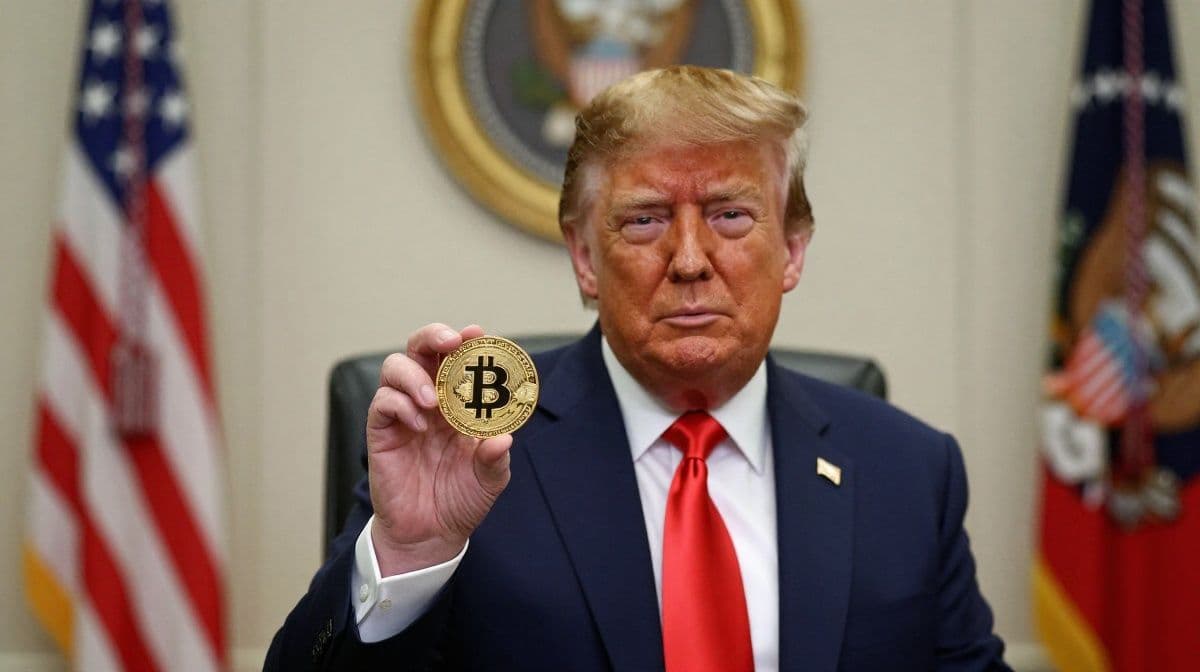
Trump's Crypto Empire Just Killed the Clarity Act, But Bitcoin Ripped Past $80,000 Anyway
The Clarity Act is dead and crypto insiders are blaming Trump's own coins. Bitcoin shrugged it off and squeezed past $80,000. Here is what actually changed.
March 20, 2026 9:16 PM

US Stablecoin Deal Reached Amid Iran Ground War Fears
US Senators and White House reach a stablecoin deal as CBS reports potential ground forces in Iran, sending crypto prices into a volatile tailspin.
January 12, 2026 9:45 PM
XRP Price Analysis (January 2026): Ripple Dips to $2.07 as Regulatory Clouds Gather
XRP slipped to $2.07 on 12 January 2026 ahead of a planned Senate debate on the CLARITY Act. The debate was called off, the bill failed in September, and XRP trades near $1.57.
August 11, 2026 9:17 AM

SEC Sets August 14 Vote to Launch Its First Major Crypto Rule
The SEC meets Friday to propose Regulation Crypto, its first real crypto rulemaking. CLARITY slipped to September. Regulation did not wait.
July 28, 2026 5:16 PM

Russia Just Passed Its Own Crypto Clarity Act While the US Senate Keeps Stalling
Russia's crypto trading law is on its way to Putin's desk while the US CLARITY Act sits unvoted on a shelf. Here is what the split means for prices.
May 2, 2026 7:00 PM

Crypto Regulation News: Stablecoin Yield Rules Could Trigger the Next Bitcoin Move
New US stablecoin yield rules could reshape crypto regulation, stablecoin adoption, and Bitcoin’s next major market move.
April 4, 2026 9:30 AM

Bitcoin Bottom Near? Goldman Sachs and Regulatory Shifts Signal April Recovery
Goldman Sachs signals a Bitcoin bottom as institutional inflows return and the U.S. prepares the "Clarity Act" for a major April 2026 crypto market shift.
March 9, 2026 10:20 AM

Crypto Market News: Bitcoin Price Battles $67k as US CPI and CLARITY Act Loom
Bitcoin recovers to $67,500 while the market eyes US CPI data and the CLARITY Act. Discover the key events driving crypto prices next week.
May 22, 2024 11:41 AM

New Crypto Law: How Will It Reshape The Crypto Market?
The U.S. Congress has made a historic move by passing its first standalone crypto legislation, targeting the controversial SEC SAB 121. Here is a full understanding of this new legislation and its impact on the Crypto Market.
March 12, 2026 9:58 AM

SEC and CFTC Unite on Crypto Regulation: What It Means for Bitcoin and Altcoins
SEC and CFTC sign historic agreement to coordinate crypto regulation. Could regulatory clarity trigger the next Bitcoin and altcoin rally?

September 18, 2026 10:24 PM

CLARITY Act Fails, the CFTC Takes Over: What the New US Crypto Rules Change for Investors in Germany
The CLARITY Act has failed in the US Senate, yet regulation moves on: the CFTC has filed two rule proposals of its own and the SEC has opened trading in tokenised stocks. What that means for Bitcoin, XRP and the rest, and what you should check as an investor in Germany.
September 2, 2026 4:28 PM

XRP ETFs Just Had Their Best Week of 2026. So Why Is the Price Still Falling?
US spot XRP ETFs pulled in record weekly inflows while XRP slipped toward $1.38. A Senate vote on September 15 may decide who is right.
January 21, 2025 8:21 PM

SEC Launches Crypto Task Force Under Trump's Administration to Develop Clear Regulations
The SEC has created a dedicated crypto task force under Trump's administration to establish clear regulations for the crypto industry, signaling a new era of regulatory clarity in 2025.
August 2, 2024 3:57 PM

SEC Retracts Token Security Classification in Major Crypto Victory
In a landmark decision, the SEC has withdrawn its attempt to classify popular tokens like Solana, Cardano, and Polygon as securities in its lawsuit against Binance.

More from CryptoTicker