
Aave Liquidity Crisis: The 'Slow Burn' Trap Freezing Millions in USDC and USDT
Aave faces a liquidity trap as USDC/USDT utilization hits 100%. Here's how the 'Slow Burn' mechanism freezes lender withdrawals and benefits borrowers.





Which topics should we dive deeper into?
Select what genuinely interests you. Your picks feed directly into our editorial planning.
Crypto news that's actually worth your time.
Weekly. 60 seconds. Carefully curated by our editors: no hype, no promo flood, no spam.
The world’s largest decentralized lending protocol, Aave, is currently grappling with a localized "bank run" scenario. On the Ethereum mainnet, utilization for the two most critical stablecoins, USDC and USDT, have pinned at 100%. This means every single dollar deposited into these pools is currently being borrowed, leaving the "available liquidity" at zero and lenders unable to withdraw their assets.
Why Can't I Withdraw from Aave?
If you are currently attempting to withdraw USDC or USDT from Aave and receiving errors, it is because utilization has reached 100%. In DeFi lending, you can only withdraw if there is "idle" capital in the pool. When all funds are utilized by borrowers, lenders must wait for someone to repay their loan or for new deposits to enter the pool. This is a classic liquidity trap, currently exacerbated by a new interest rate model.
The 'Slow Burn' & Slope2 Risk Oracle
To understand why this crisis is persisting, we must look at the Slope2 Risk Oracle. Historically, Aave used a "kinked" interest rate model. Once utilization passed a certain threshold (e.g., 90%), the interest rate would spike instantly to 80%+ APY to force borrowers to repay.
The new Slow Burn mechanism, managed by the Aave Generalized Risk Stewards (AGRS), changes this. Instead of an instant spike, the Slope2 parameter escalates rates gradually over a 24 to 72-hour window. Currently, many of these rates are capped at a modest 10-12% during the initial escalation phase.
What Happened to DeFi Users: Lenders Frozen, Attackers Protected
The "Slow Burn" was designed to prevent volatile "flash" liquidations, but in a crisis, it creates a massive imbalance of power:
- For Borrowers: An attacker or institutional borrower sitting on hundreds of millions in debt is essentially paying a "cheap" interest rate (12%) to keep the liquidity trapped.
- For Lenders: Users are not being compensated for the risk. While their funds are frozen, they are earning a fraction of the market "risk premium" because the oracle prevents the rate from hitting the necessary 80%+ to force a repayment.

Institutional Flight: The $8B Deposit Exodus
The lack of immediate liquidity has triggered a massive loss of confidence. Data suggests an estimated $8 billion deposit flight from the ecosystem. Major players like Abraxas Capital and users on exchanges like MEXC have moved aggressively to pull assets. Those who did not exit before the 100% utilization mark are now locked in, watching the "Slow Burn" play out in slow motion.
Technical Structure: How the Slope2 Math Works
In technical terms, the Variable Borrow Rate (Rt) is calculated using the following logic:
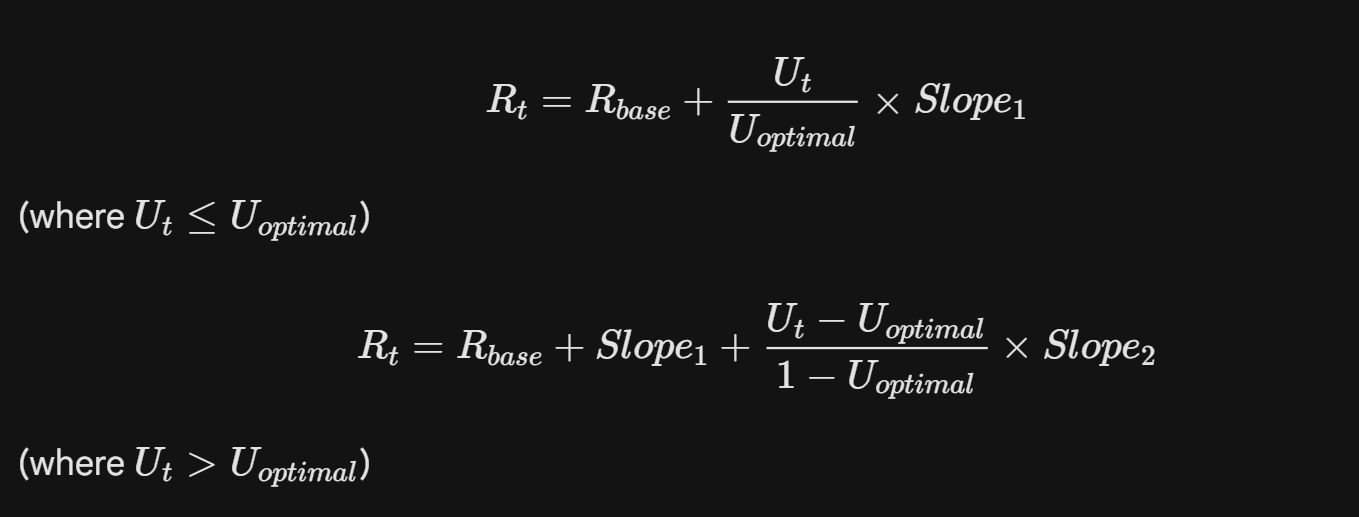
In this crisis, the Slope2 value is no longer a fixed constant but a dynamic variable that climbs slowly. This "wait-and-see" approach by the protocol has turned what should have been a 1-hour liquidity crunch into a multi-day crisis.
What's going to Happen to DeFi Users?
For now, retail lenders in USDC and USDT pools must wait for the "Slow Burn" to eventually reach a punitive level—likely above 50%—to force borrowers to return the funds. This event serves as a cautionary tale regarding the trade-offs between "smooth" interest rate curves and protocol protocol agility during black swan events.
Related articles
- How Fed Rate Cuts Could Shake Global Markets and Boost Tokenized Treasuries
- Bitcoin Lending in Austria: When Tax Falls Due
- Moonwell Exploit on Base: How a MAMO Oracle Manipulation Drained $8.7 Million From the Lending Market
- $3.5 Million Against $550,000 of Collateral: How to Check Which Tokens Your DeFi Lending Market Accepts
- Is This the First Real Global Liquidity Crisis of the Crypto Era?
Which topics should we dive deeper into?
Select what genuinely interests you. Your picks feed directly into our editorial planning.
Crypto news that's actually worth your time.
Weekly. 60 seconds. Carefully curated by our editors: no hype, no promo flood, no spam.

August 19, 2026 4:26 PM

Crypto Lending: Where the Interest Comes From and Which Risks You Carry
Lending platforms advertise interest far above an instant-access savings account. What you hand over is your coin; what you keep is a claim. This guide explains the mechanics, the regulatory gap and the tax treatment in Germany.

March 6, 2026 5:36 PM

Is a Global Liquidity Shock Starting? Oil Surge, War Tensions, and Bitcoin Volatility Explained
Oil surges above $90 as geopolitical tensions rise. Are global markets entering a liquidity shock that could drive volatility in Bitcoin and crypto?

March 2, 2026 11:30 AM

How to Generate a Steady Income During Crypto Market Volatility
Crypto market crashing hard? Learn how to use stablecoins to generate a reliable income while protecting your capital from market swings.
April 2, 2026 8:04 PM

Crypto Is Ignoring Bullish News — Why Bitcoin and Altcoins Are Still Falling
Crypto is falling despite bullish macro news, IMF adoption signals, and market rallies. Why is Bitcoin ignoring good news?
May 12, 2025 9:05 PM

US-EU Trade Tensions Rise as US-China Conflict Cools Down
Just as the long-standing US-China trade war appears to ease, new tensions are emerging between the United States and the European Union. With Trump calling Europe “nastier than China,” are we about to witness a new transatlantic trade conflict?

August 29, 2020 7:46 PM
Aave: How To Earn Interest On Your ERC-20 Tokens
Aave is a decentralized lending platform built on Ethereum. The most important step the project took, was transforming from a market place for loans to pool lending. In pool lending, lenders put their tokens together in a pool, out of […]

November 28, 2022 7:47 AM

Aave Review 2022 – Is Aave Worthwhile?
This article is all about Aave review 2022 and whether Aave is worthwhile or not. Let’s take a look at it in more detail.
March 11, 2021 6:55 PM
Your Definite Guide on How to use AAVE App
Aave is one of the fastest-growing Lending and Borrowing DeFi Platforms. Growth has been exceptional for the platform. How to use Aave App?
October 20, 2026 4:17 AM

Stablecoin interest: MiCA article 50 bans it, and lending yield is taxable from 256 euros
No issuer in Europe pays interest on the token itself, and article 50 of MiCA expressly forbids it. Where a quoted yield actually comes from and how the tax office treats it.
August 31, 2026 4:12 AM
Cronos chain halt: how a Tectonic exploit emptied the chain's largest lending market
On August 30, 2026, the validators of the Cronos chain halted block production after an attacker had emptied the lending market Tectonic via an inflated TONIC price. What is established, why the damage figures diverge, and what you can check if your balance sits on a haltable chain.
April 21, 2026 11:15 AM

Breaking: Arbitrum Security Council Freezes $71M in ETH Linked to KelpDAO Exploit
The Arbitrum Security Council has frozen 30,766 ETH tied to the KelpDAO hack, sparking a fierce debate over decentralization and emergency powers in DeFi.
June 1, 2021 8:49 PM

What Is Yield Farming? Simplest Guide To Farm Yield!
Crypto isn't about only buying and hodling anymore. There's yield farming by which you can make your assets useful and earn interest. How?

January 18, 2021 3:45 PM
DeFi News Ticker – CryptoTicker
Decentralized finance (better known as DeFi) is a set of peer-to-peer financial services running on decentralized blockchains, most commonly Ethereum. It includes financial services such as lending and borrowing, decentralized exchanges, interest generation (yield farming), synthetic assets, insurances, etc… DeFi offers very high interest rates, […]
June 12, 2025 3:50 PM

GENIUS Act Now in Play: A Turning Point for Crypto Regulation and Stablecoins?
After the U.S. Senate pushed the GENIUS Act closer to becoming law, this groundbreaking crypto legislation could reshape the future of stablecoins, digital assets, and global crypto adoption. But how?
February 19, 2026 1:44 PM
Crypto Is Not Crashing Because of the Fed – It’s a Liquidity Shock
Crypto markets are falling despite stable Fed policy. The real driver may be a liquidity drain from the US Treasury. Here’s what it means.
October 21, 2026 2:13 PM

Crypto lending under MiCA: BTCS Strategy Advisor Wojciech Kaszycki on the EBA's plans
The EBA wants crypto lending and access to DeFi brought under MiCA. Wojciech Kaszycki, Strategy Advisor at BTCS S.A., explains in this interview which part of the market stays in the EU and where the rules reach their limit.
August 16, 2026 9:11 PM
Swapping Bitcoin for Stablecoins: Does Austria Charge Tax?
Anyone swapping bitcoin for USDT or another stablecoin usually pays no tax in Austria yet. When the swap does become taxable after all.
June 17, 2024 10:59 AM
TOP 3 DEX for June 2024
What are the best DEXs to use in 2024? Here are the top 3 for June 2024!
September 1, 2026 7:30 PM

Switchboard Oracle Compromised: Why Price Feeds on Sui, Aptos, IOTA and Movement Have Stopped
The oracle provider Switchboard halted its price feeds on Sui, Aptos, IOTA and Movement on August 29, 2026, after a manipulated price allowed around 4.94 million VUSD to be minted. 45 users were liquidated, and Full Sail suspended deposits and withdrawals.
May 4, 2026 11:07 AM
1 Billion USDT Minted: Tether Injects Massive Liquidity Into Crypto Markets
Tether Treasury has just minted 1 billion USDT. This massive liquidity injection signals rising demand and potential upcoming volatility in the crypto market.
April 20, 2026 9:52 AM

DeFi Hack: Aave and LayerZero Hit by Sophisticated DPRK Attack
DeFi confidence hits a new low as Aave freezes markets following a sophisticated $293M exploit on Kelp DAO’s rsETH, linked to North Korea's Lazarus Group.
December 30, 2025 10:07 AM

Polymarket Traders Expect the Fed to Pause Rates in 2026: What That Usually Means for Crypto
Polymarket traders see the Fed holding rates in 2026. Here’s how rate pauses have historically affected crypto prices.
April 27, 2026 6:00 AM

3 Cryptocurrencies to Watch This Week
Three specific assets dominated the charts this week. Here is why these market leaders might face high volatility and price adjustments in the coming days.
March 27, 2026 3:41 PM

Oil Shock Is Crushing Crypto — Here’s the Hidden Link Investors Miss
Rising oil prices and war tensions are pressuring crypto markets. Discover how the global energy shock is driving Bitcoin and altcoins down.
February 20, 2026 6:00 AM
Top 3 Reasons Why Cryptos Might Crash Hard Soon: Geopolitics and Macro Risks
Is a crypto crash coming? Explore the top 3 reasons why Bitcoin and altcoins could face a major sell-off, from Middle East tensions to Fed policy.

More from CryptoTicker