
TON wallet and Tonviewer: what you can do when your Gram never reaches the exchange
The transfer shows up in the explorer, the exchange account stays empty. Almost always a single line is missing, the one TON calls a comment. How to send Gram properly, what it costs and how to recognise a TON address.




Which topics should we dive deeper into?
Select what genuinely interests you. Your picks feed directly into our editorial planning.
Crypto news that's actually worth your time.
Weekly. 60 seconds. Carefully curated by our editors: no hype, no promo flood, no spam.
Setting up a TON wallet takes two minutes. The trouble usually starts afterwards: the transfer is visible on the network, the explorer marks it as successful, and nothing has arrived in the exchange account. In almost every case a single line is missing, the one TON calls the “comment” and other networks list as a memo or a tag. This article explains how to set up a transfer on The Open Network so that it actually lands, how to read in Tonviewer what really happened, and what the rename from Toncoin to Gram changes in practice.
The network itself is no longer a niche project. According to the figures the project publishes on its own home page, 325 validators currently secure the chain, more than 182 million contracts run on it, and around four million transfers are settled every twenty-four hours. Gram trades at about €1.38 and ranks 31st by market value. Anyone moving money here is moving it through a busy network with rules of its own, and those rules are precisely why guides written for the Ethereum world do not apply.
Your Gram arrived on the network but the exchange balance stays empty
The most common cry for help about TON always sounds the same. Someone sends Gram or USDT from their own wallet to an exchange, sees the transfer in the explorer, and nothing happens in the customer account. No error, no reversal, no notice. The money has not disappeared; it is simply sitting somewhere that belongs to nobody in particular.
The reason is a practice many large trading venues use: instead of giving every customer an address of their own, they operate a single pooled address for everyone. Which amount belongs to which customer is then decided not by the address but by a short piece of extra text sent along with the transfer. On XRP that text is called a destination tag, on Cosmos a memo, on TON simply a comment. Without it, the payment lands on the pooled address and no booking picks it up.
The comment is not an accessory here; it is part of the protocol. The project’s technical documentation states explicitly that the message body of an internal transfer can carry a plain-text or an encrypted comment. Every transfer on TON is a message, and that message has a field for text. Leaving it empty is like sending a letter to an open-plan office without a name on it.
Before you even think about the comment, you need a wallet that offers you one. Not every wallet puts it in the same place, and in some it hides behind an inconspicuous toggle.
Setting up a TON wallet: Tonkeeper, MyTonWallet and the wallet inside the messenger
TON is not an EVM network. That is the single most important sentence for anyone arriving from Ethereum, Polygon or the BNB Chain. There is no chain ID to enter anywhere, no RPC node to register by hand, and MetaMask cannot simply add the network. You need a wallet that speaks TON natively.
In practice three routes converge. Tonkeeper is the most widely used standalone app and works on the phone as well as on the desktop. MyTonWallet additionally offers a browser extension, which helps anyone working at a computer. And since the end of August a self-custody wallet has run directly inside the messenger, which we covered in detail in our piece on the rename from Toncoin to Gram. All three are wallets in which you hold the key yourself, and all three hand you a sequence of recovery words when you set them up.
Those words are the actual ownership. The app is interchangeable, the key is not. Anyone who photographs it and stores it in the cloud has effectively given it away. Anyone holding larger amounts keeps it on a device that never touches the network; which models qualify, and how a genuine unit differs from a tampered one, is covered in our hardware wallet comparison.
One quirk shows up on first launch: some wallets ask for a version. TON knows several generations of wallet contracts, and the same recovery words produce different addresses depending on the version. Someone who loads their words into another app and sees an empty account has usually not lost their money, only picked the wrong version. The settings allow you to switch between them, and as a rule the balance then reappears.
The comment field in the TON protocol is what other networks call a memo or tag
When you send, every TON wallet shows an additional line below the amount field. Sometimes it is labelled comment, sometimes message, sometimes memo. What belongs in that line is exactly what the exchange shows you on its deposit page: usually a string of digits and letters, occasionally just a number.
Three rules apply, and every one of them has already cost somebody money.
First: typing it out is the worst method. The comment is built so that a single transposed character makes it worthless. Copy and paste, then compare the last four characters once.
Second: capitalisation counts. Many trading venues issue comments in mixed case, and the matching is letter-exact.
Third: the comment belongs only on the way to the exchange. When you withdraw from the exchange to your own wallet, you do not need one. Your own address belongs to you alone, so there is nothing to allocate. A superfluous comment does no harm, but it muddies the record when you read back through it later.
And if it has already gone wrong? Then the money is not gone, merely unsorted. Trading venues have a procedure for exactly this case, usually a form in the help section into which you enter the transaction identifier. It takes days, sometimes weeks, and some of them charge a processing fee for it. What you need for it is the identifier from the explorer, which brings us to the next tool.

Tonviewer and Tonscan: how to read a TON transaction
A block explorer is a website that makes the bookings of a blockchain readable for people. TON has two widely used ones: Tonviewer and Tonscan. Both show the same data and differ only in presentation. You need no account and have nothing to connect; it is enough to drop an address or the identifier of a transfer into the search box.
Four fields are the ones that matter.
The status tells you whether the transfer went through. TON works with messages that can trigger further steps, so what you see here is sometimes not just a tick but a small chain of stages. What matters is that none of them is marked as aborted.
The comment appears as its own line on the transfer. This is where you check, in a dispute, whether you really sent it along. If the line is empty, you know what went wrong.
The counterparty address is where most people trip up. More on that shortly, because with tokens the explorer does not show the address you expect.
The fee appears as a separate item and is the amount the network withheld for processing. On TON it comes out so small that at first glance the figure looks like a display error.
TON fees: what a transfer really costs today
We did not take this on trust; we measured it. Across a sample of seventeen transfers that users initiated themselves on Monday morning, the fees withheld by the network ranged between 0.00031 and 0.00195 Gram. At a price of €1.38 that is between four hundredths of a cent and a good quarter of a cent, with the middle of the sample at around seven hundredths of a cent.
For context: in our network series we ran the same calculation for other chains. A USDT transfer on Tron cost just under €2 measured the same way, while on Arbitrum and Ethereum the amount depends heavily on how busy the network is. TON sits at the bottom end of what is possible at all today.
Payment is always in Gram, even when you are sending USDT. This is the point where newcomers run aground: anyone who has USDT sent to a fresh TON wallet and nothing else cannot move it on, because there is no Gram there for the fee. A small float of one or two Gram in the wallet solves that problem permanently.
A second peculiarity separates TON from almost every other network: there is a storage fee. On TON every wallet is a small contract of its own, and the network continually deducts tiny amounts for the space it occupies. On active wallets this goes unnoticed, because the sums run to fractions of a cent a year. But anyone who leaves a wallet untouched for years with nothing but dust in it may eventually find it empty.
Bounceable and non-bounceable: how to recognise a TON address
TON addresses come in two notations. The short, user-friendly form starts with two letters and is the one your wallet displays. The long raw form starts with a number, a colon and a long run of digits and letters.
That leading number is not decoration; it names the part of the network the address sits in. A 0 stands for the base chain, on which practically everything you care about runs: wallets, tokens, applications. A minus 1 stands for the masterchain, which administers the network and coordinates the validators. In our sample, the operations that corresponded to no user action carried this minus 1 throughout.
The shorter form comes in two variants, and the difference between them decides what happens to your money if something fails. With one variant an amount comes back when the receiving side cannot accept it. With the other it stays at the destination address even if no wallet has been set up there yet. Modern wallets get this right in the background, which is why you need not worry about it day to day. It becomes relevant when somebody hands you an address in raw form, or when an older application asks you which variant it should use. The rule of thumb: for a payment to a wallet that already exists, the variant that bounces back is the safe one.
Jetton instead of token: why USDT on TON has its own wallet address
Tokens on TON are called jettons, and they work differently from ERC20 on Ethereum. There, a single contract keeps one large list of all balances. On TON every holder gets a small contract of their own for every token, a so-called jetton wallet.
That sounds academic, but it has a very practical consequence, which we checked on an arbitrary active address: the same holder ran a different address there for USDT, for an in-game currency token and for a third token, and none of them was his main address. So the address an explorer shows you as sender or recipient on a token transfer belongs to the contract, not to the person behind it.
Two things follow. First: never confuse the jetton wallet with a deposit address. Anyone who takes the address they see in the explorer line of a USDT transfer and enters it somewhere as the recipient is sending money to a contract that is not expecting it. Second: a balance you can see in your wallet while its main address looks empty in the explorer is not a fault. You have to switch to the token tab in the explorer to find it.
Incidentally, the Tether contract for USDT on TON is by far the largest block on the network, and it is the reason many users are here at all: moving dollar balances for fractions of a cent is this cheap on few networks.
 Compare the best hardware wallets
A Gram float: why an empty wallet cannot move tokens
One question comes up so often that it deserves a section of its own. Someone has USDT sent to a freshly created TON wallet, sees the balance, wants to pass it on and finds that nothing works. The wallet is not broken, it is simply penniless.
Every transfer on TON costs Gram, even when what you are sending is something else. With a token there is the added fact that the transfer sets two contracts in motion, yours and the recipient’s, and that for a recipient who has never held this token a contract has to be created in the first place. That creation step is why the first transfer to a new recipient costs a little more than every one after it.
The sums stay tiny all the same. Even at the upper end of our sample a transfer came to a good quarter of a cent. Leaving one or two Gram sitting in the wallet buys you years of peace, and the amount simultaneously covers the running storage fee.
One exception is worth knowing: some exchanges pay out tokens on TON without sending any Gram along. That is not a fault on their side; it is the normal case. It is up to you to make sure beforehand that something is there for the fee. Anyone who neglects it ends up with a balance they can see but not touch, until somebody sends them a few Gram.
What TON does differently from Ethereum and the rollups
TON is not one chain but a system of chains. A masterchain coordinates, and below it works the base chain on which practically everything that concerns you runs. The design is meant to form further sections as load rises, rather than letting fees climb. Whether that promise holds under sustained load is an open question; what is demonstrable so far is that fees have stayed in the hundredths-of-a-cent range at several million operations a day.
The second big difference is the way it works. On Ethereum one contract calls another directly and everything happens in a single pass. On TON contracts send each other messages, and every message is processed on its own. That is why in the explorer you often see several entries in sequence for one single operation. For you this mainly means: on a token transfer, do not wait only for the first tick but look at whether the chain of steps ran all the way through.
What TON is not: a rollup. There is no seven-day waiting period here as on the optimistic networks on Ethereum, because there is no superordinate chain on which anything would have to be secured. A TON transfer is done within a few seconds, and done for good.
 Compare crypto exchanges and fees
Without the old bridge: how Gram reaches Ethereum or an exchange today
For years the project’s official bridge was the way to get Gram over to Ethereum or the BNB Chain. That route is closed. The bridge’s old address today merely redirects to the project’s home page; no application sits there any more. Anyone still holding wrapped balances on other chains will find the situation before and after the cut-off date in our piece on the shutdown of the TON bridge.
For everyday use that means the most reliable route from TON into other networks today runs through a trading venue. You deposit Gram at your exchange, swap there into whatever you need, and withdraw again on the target network. That costs two fees instead of one, but it is traceable and can be documented in a dispute. Which houses in Europe operate under supervision and what they charge for deposits and withdrawals is set side by side in our exchange comparison.
The second option is the so-called intent bridges, where a provider fronts you the money on the target network and collects your Gram in return. That is fast, but it shifts the risk onto that provider. Anyone taking this route should start with a small amount and only raise it to the sum that actually matters on the second attempt. How the routes differ in principle is summarised in our overview of networks, bridges and explorers.
The three most common mistakes in a TON transfer
The missing comment is by far the most frequent. It affects only deposits at trading venues that work with pooled addresses, and it is entirely avoidable: on the deposit page the comment always sits directly below the address, often in a box picked out in colour.
The wrong network is the most expensive. USDT exists on TON, on Tron, on Ethereum and on a dozen further chains, and each time it is a different token with a different address format. Anyone who sends USDT on TON to an address beginning with 0x is sending it into the void. The protection against this is simple: TON addresses look unlike anything else, and your wallet will as a rule not even accept a foreign address.
The empty fee pot is the most irritating, because it looks so harmless. The wallet shows a balance, the send button is greyed out, and there is no comprehensible explanation for it. Almost always a few tenths of a Gram are missing for the fee.
Self-custody, recovery words and phishing inside the messenger
TON has grown together with a messenger, and that is a strength and a weakness at once. The strength: a wallet is there in seconds, and payments to other users feel like sending a message. The weakness: fraudsters know this and work exactly there.
The pattern is always the same. A message from a supposed support desk, an allegedly lost login, a prize that only needs confirming. At the end stands a page asking for the recovery words. There is not one legitimate reason to enter those words anywhere except when restoring your own wallet in an app you installed yourself. No support desk in the world needs them.
The second trap is approvals. When you connect an application to your wallet, it receives certain rights. These connections persist until you break them, and the settings of every serious TON wallet contain a list for the purpose. Going through it once a quarter and disconnecting everything you no longer use is the cheapest insurance there is. Why this is no theoretical risk is shown in our piece on how to revoke token approvals.
And a third point with a flavour of its own on TON: counterfeit jettons can be created in minutes and then carry the same name as the original. The only reliable marker is the contract address. Anyone seeing a token for the first time checks it against the project’s own statement before buying.
Holding period and tax: what the tax office sees in a Gram transfer
A transfer from your own wallet to your own second wallet is not a taxable event in Germany. You have disposed of nothing, the holding remains yours, and the one-year holding period under the income tax act runs on unbroken.
In practice it can still cause trouble, namely with the documentation. Tax tools do not recognise a transfer between your own addresses by themselves. What the software sees is an outgoing here and an incoming there, and in case of doubt that becomes a sale and a purchase. Anyone who does not correct it produces gains that never existed, or throws away a holding period that had almost run its course.
The remedy is unspectacular: label the addresses in the tax tool as your own, so that the matching runs automatically. Which providers map German rules cleanly is set out in our overview of tax tools.
Two operations, by contrast, very much are relevant for tax. Anyone swapping Gram for USDT has disposed of it, even if nothing has flowed to a bank account. And anyone pledging Gram as collateral or lending it out should have the individual case looked at; the treatment depends on the exact arrangement. With larger amounts there is no way around professional tax advice.
What the rename from Toncoin to Gram means in practice
Since June 15, 2026 the token has carried its original name again. The price services have completed the switch, and at one of the large data providers the entry now reads “Gram” with the note that this is the former Toncoin. The project’s technical documentation also speaks of Gram again when it describes transfers.
For you nothing changes about your holding. There was no swap, no new ticker in the wallet, no deadline. What does change is the search: guides from past years speak of Toncoin, current pages of Gram, and some exchanges carry both spellings side by side. Anyone looking for instructions should try both terms and check the date on every guide.
The second point concerns the name of the network. The network is still called The Open Network, TON for short. The token is called Gram. When an exchange shows you a selection field for the network, it says TON there, regardless of how it labels the token.
Gram on TON: the key points for your decision
TON is one of the cheapest networks you can use for transfers today, and at the same time one with the most quirks. Anyone who understands the comment, who has grasped the business with jetton addresses once, and who always leaves a little Gram sitting for the fee has the three stumbling blocks behind them that catch almost everybody out.
- Set up a wallet of your own and secure the recovery words offline. For amounts that would hurt to lose, the key belongs on a device with no network connection; the models for that are listed in our hardware wallet comparison.
- Send a test amount with a comment before your first large deposit. A few cents in fees are cheaper than a form in the help section. Which houses handle deposits smoothly in Europe is shown by the exchange comparison.
- Enter your addresses in your tax tool once as your own. After that the holding period keeps counting correctly by itself; you will find the suitable providers in our overview of tax tools.
The sources for this article are in the project’s technical documentation, and the network figures on the site of The Open Network.
(As of September 29, 2026. This article is not investment advice. Prices and fee structures change; check the terms with the provider before you buy.)
Frequently asked questions about Gram and the TON network
Transparency note: This article was produced with the assistance of artificial intelligence and reviewed by our editorial team before publication. All figures and claims were checked against the primary sources linked in the text. The feature image was generated with AI.
Related articles
- Toncoin Is Now Gram: What the Telegram Wallet Changes for Holders
- Gram (GRAM): why the price gave back 7.5 percent after Telegram opened its wallet
- Toncoin Price Drop Below Its $4.70 Support Level Warns Of A Major Crash On The Horizon
- TON Coin Price Prediction: A New SURGE or DIP Ahead?
- Sending USDT over TRC20: Fees, Tronscan and the Most Common Traps
Which topics should we dive deeper into?
Select what genuinely interests you. Your picks feed directly into our editorial planning.
Crypto news that's actually worth your time.
Weekly. 60 seconds. Carefully curated by our editors: no hype, no promo flood, no spam.

August 16, 2026 12:21 PM

Is Toncoin a Good Buy at Current Prices?
Toncoin, now traded as Gram (GRAM), has fallen back below both moving averages and the September breakout has failed. What the Telegram wallet, volume and the base mean now: is Toncoin a good buy at current prices?

October 10, 2026 1:24 PM
TRON (TRX): Polygon Opens Its Payment Stack to $93.44 Billion in USDT: What Matters Now
Polygon opened its Open Money Stack to TRON on October 8: companies can now settle stablecoin payments entirely over the chain. We checked how much USDT really sits there, and show what decides whether it turns into demand for TRX.
September 6, 2026 10:12 PM

MoonPay Fees: Up to 4.5 Percent, a Partner Margin on Top, and a Markup You Never See as a Fee
MoonPay is the buy button built into many crypto wallets. The European price list names four layers of cost, and only three of them show up as line items. What the provider is allowed to do, and what it expressly is not.

August 26, 2024 7:44 PM

DOGS Token Major 120% Surge Within Hours Of Its Listing: BUY NOW?
The DOGS token experienced a dramatic surge of over 120% on Binance following its listing. How did the Telegram Open Network (TON) drive this surge?
July 8, 2025 1:09 PM

TON Clarifies: No Official UAE Golden Visa for $TON Stakers — Just a Private Pilot Program
Toncoin made waves last week after headlines claimed that $TON holders could secure a 10-year UAE Golden Visa. But now, the TON Foundation CEO has stepped in to set the record straight.
May 12, 2024 4:17 PM

Toncoin Price Prediction: Will TON Price reach $10?
Despite the bearish crypto market, Toncoin continues to make higher highs, reaching an ATH price of more than $7. How high will TON price reach?
September 1, 2026 1:40 PM
Wrapped TON After the Bridge Shutdown: 11.3 Million Tokens Still Stuck on the Deadline
The TON bridge shuts down on September 1, 2026. Our own count on the morning of the deadline shows 11.34 million Wrapped TON still sitting in wrapped form on Ethereum and BNB Smart Chain combined. In the final days before the cut-off, almost nothing came back.

March 22, 2025 2:39 PM
Toncoin Price Prediction: Can TON Price Reach $20?
Toncoin is gaining bullish momentum after a strong breakout but can it really climb all the way to $20?
March 15, 2025 4:01 PM
Toncoin Surges 10% as Bulls Regain Control
Toncoin is making a strong comeback, surging 10% as buyers step in. After weeks of decline, the price is showing signs of recovery.
October 1, 2024 11:05 AM

Toncoin (TON) Price Analysis: Will TON Price Continue To Surge?
Toncoin's price is on the rise as more users jump in, driven by the growing buzz around the Telegram Airdrop.
February 21, 2019 6:33 AM
Sparkpool Freezes 2,100 ETH Payout
Yesterday (20.02.2019) a transaction took place on the Ethereumblockchain, for which a whopping 2100 ETH ($310,716) transaction fees were paid. The transaction itself, as well as the horrendous price of gas, amounted to 0.1 ETH which equals ~ $14.44. At […]
August 22, 2026 1:42 PM
TON Bridge Shutdown on September 1: What Wrapped TON and j-Token Holders Should Know Now the Deadline Has Passed
Recap as of September 27, 2026: the cross-chain bridge bridge-v3.ton.org was announced to shut down permanently on September 1, 2026. This article describes the situation before the deadline for holders of Wrapped TON on Ethereum or BNB Smart Chain and of j-tokens such as jUSDT on the TON network.
June 6, 2026 1:44 AM

Toncoin Crashes to $1.53 as Key Ecosystem Services Face Major Outages
Toncoin (TON) price has crashed sharply to $1.53 amid widespread infrastructure issues, leaving major mini-apps and network portals completely offline.
October 9, 2026 7:29 AM
Exodus Wallet: 71.5 percent of revenue comes from swaps, the spread vs the exchange fee
The Exodus Wallet is free to download, yet 71.5 percent of the provider's revenue in the second quarter of 2026 came from swaps inside the app. What the spread costs, how custody works and from what point a device of your own pays off.
October 5, 2026 1:36 PM

Paper Wallet with a Single Key: The Printed Storage Method Compared with the Seed Phrase
A paper wallet carries a single private key on paper, and that is exactly where its weaknesses lie: printers, change, misread characters. What the storage method achieves, where it fails and how to wind up an old sheet safely.
September 28, 2026 10:26 AM
Phantom Wallet and Solscan: What a Solana Transfer Really Costs and Where It Fails
A transfer on Solana costs 0.000005 SOL, a new token account ties up 0.00148844 SOL once — both values measured on-chain by us today. This practical guide shows how to set up Phantom, how to get there from the exchange, how to read Solscan and what applies for tax in Germany.

November 26, 2025 11:00 PM
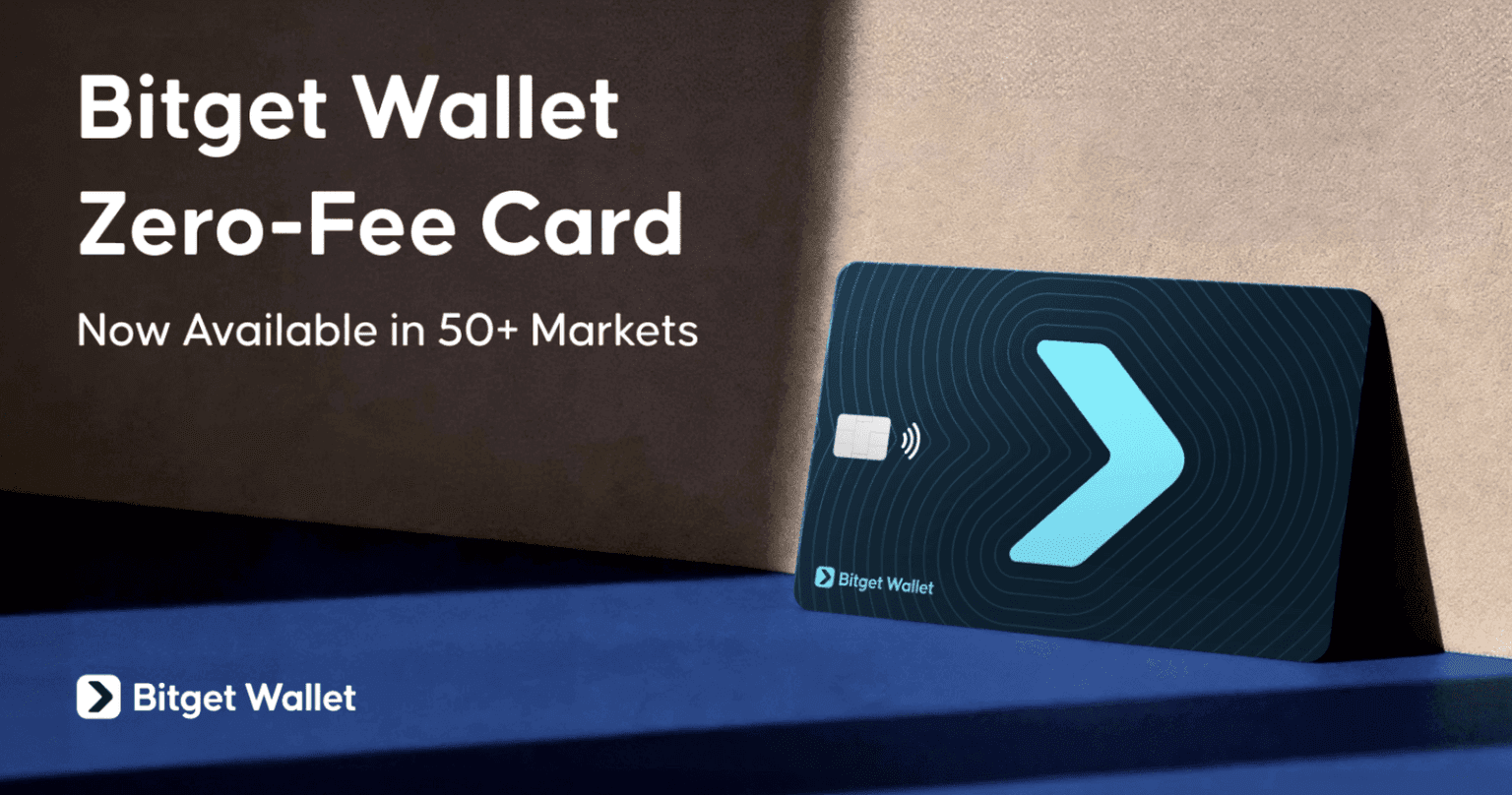
Bitget Wallet Introduces Zero-Fee Feature for Its Crypto Card in Over 50 Markets
The Bitget Wallet Card enables fee-free stablecoin spending and customized designs, expanding everyday crypto payments across Visa and Mastercard networks.
October 27, 2024 5:07 AM
Toncoin Price Prediction: TON Surpasses Cardano and Avalanche with $12.5 Billion Market Cap
Toncoin has proven its strength in the market, with its market cap surpassing big names like Cardano (ADA) and Avalanche (AVAX).
October 10, 2026 7:15 AM
Sparkasse Crypto Fees: 99 Cents per Order, but Your Own Hardware Wallet Is Blocked as a Destination
DekaBank has published the contractual documents for “Krypto – powered by Deka”. That puts a 0.99 euro transaction fee, a 250,000 euro order ceiling and five minimum delivery amounts on the record at source for the first time. Your own hardware wallet remains excluded as a recipient address.
May 28, 2025 4:12 PM

Why Is Toncoin Price Up?
Toncoin just surged past key resistance levels. The sudden rally isn’t random it’s tied to a major AI announcement involving Elon Musk’s xAI and Telegram.
May 3, 2025 4:29 PM
TON Price Prediction: Can Toncoin Hit $4 in May?
Toncoin (TON) has quietly been building strength under resistance. The technical indicators flashing early bullish signs.
January 24, 2025 10:19 AM
XRP News Today: Will the SEC Silence and Trump Crypto Executive Order Fuel an XRP Price Rally?
With the silence revolving around the SEC appeal, followed by the Trump crypto executive order, in favor of digital assets with a focus on America being the capital of AI and Crypto, fuel an XRP price rally soon?
September 9, 2024 11:48 AM
Toncoin (TON) Price Prediction: Major Bull Run Ahead?
Toncoin (TON) has seen its price drop further, testing the $4.45 level. It's currently below a key bearish trend line, with resistance at $6.00 on the daily chart. What’s next for TON?
August 2, 2024 10:32 PM
Ethereum Price Crash: What Next Support Levels For ETH Price Below $3K?
Ethereum fees just hit their lowest since late 2023, and now Ethereum price is trading near $3K with a high potential to drop below it... What's next?
June 15, 2024 2:10 PM

TOP 5 Blockchains For JUNE 2024
Despite having several key metrics commonly used to assess blockchains, here are the top 5 blockchains for June 2024, based on their largest TVL.

More from CryptoTicker