
37 banks, one licence: the Qivalis euro stablecoin cannot launch yet
De Nederlandsche Bank authorised Qivalis as an electronic money institution on October 14, 2026; according to the company, 37 European banks from 15 countries stand behind the planned euro stablecoin. Qivalis may not issue the token yet, because the whitepaper required under the MiCA regulation is still missing.





Which topics should we dive deeper into?
Select what genuinely interests you. Your picks feed directly into our editorial planning.
Crypto news that's actually worth your time.
Weekly. 60 seconds. Carefully curated by our editors: no hype, no promo flood, no spam.
The Dutch central bank De Nederlandsche Bank granted the Amsterdam company Qivalis B.V. authorisation as an electronic money institution on October 14, 2026. Qivalis may therefore issue a euro-denominated e-money token, backed according to the company by 37 European banks from 15 countries. It is not yet allowed to issue the token, however: before the first issuance it still lacks the whitepaper that the MiCA regulation requires.
For now, that means there is nothing to buy. What there is: a date, an authorisation and an unusually broad list of owners. This piece sets out what the licence means, which obligations remain open, and how to tell for yourself who is actually allowed to issue a euro stablecoin in Europe.
What the EMI authorisation from De Nederlandsche Bank actually permits
An electronic money institution, EMI for short, is a supervised payment company. It may issue electronic money, meaning balances that are created against a payment in and can be redeemed at face value at any time. In its statement of October 14, Qivalis says it has received authorisation as an electronic money institution from De Nederlandsche Bank and is thereby entitled to issue euro-denominated e-money tokens (Qivalis statement).
The authorisation was granted under the Dutch Financial Supervision Act. For the European single market, that is the decisive point: an authorisation granted in the Netherlands takes effect across the entire European Union through the passporting mechanism, Germany included. A German institution needs no second authorisation from BaFin for the same line of business as long as Dutch supervision carries the licence and distribution has been properly notified.
An authorisation is not a product approval, though. It confirms that a company meets the requirements on own funds, management, safeguarding of client money and anti-money-laundering controls. It says nothing about the timing of issuance, the blockchain used or the token's name. All three questions remain open at Qivalis to this day.
One note on the company's own website is worth flagging. Its legal information states that Qivalis currently issues no electronic money and provides no payment services to the public. The authorisation is in place; the business is not yet running. Anyone who comes across offers promising a tradable Qivalis token in these days should treat them with considerable scepticism. An overview of regulated trading venues helps to tell offers from licensed providers apart from those without a licence.
37 banks from 15 countries: who stands behind Qivalis
Qivalis describes itself as a joint venture of 37 European banks from 15 countries. In its report of October 14, CoinDesk names BBVA of Spain, BNP Paribas of France, Dutch lender ING and DZ Bank, the central institution of Germany's cooperative banks based in Frankfurt, among the participants. The company does not publish a full list in the body text of its homepage.
That ownership structure sets the project apart from the large dollar stablecoins. Tether and Circle are companies that issue a token and hold reserves against it. Qivalis is a creation of commercial banks that intend to pass the token on to their own customers later. It changes the question of whom you are trusting when you hold such a balance: behind the balance sits a supervised institution whose shareholders are in turn supervised banks.
The consortium has grown. A company statement of May 20, 2026 reported that 25 further banks had joined. cryptoticker.io reported on the banking group's plans on September 9, 2026 and named Ethereum as the intended blockchain at the time. On today's homepage Qivalis names no blockchain; answering that question means waiting for the whitepaper.
Chief executive Jan-Oliver Sell is quoted as saying: “Europe's currency deserves Europe's rules, onchain.” The sentence stakes out a position against dollar dominance in the stablecoin market. It says nothing about dates.

E-money token: the difference from an asset-referenced token under MiCA
The MiCA regulation knows two kinds of stablecoin, and the distinction is more than terminology. An e-money token, abbreviated EMT, is denominated in exactly one official currency, here the euro. An asset-referenced token, abbreviated ART, refers to a basket of several currencies, commodities or other assets.
E-money tokens face the stricter rules because they come closest to money. Only a credit institution or an electronic money institution may issue them. That second door is the one Qivalis has walked through with its authorisation. An ART issuer, by contrast, needs its own MiCA authorisation and is subject to partly different obligations.
In practice, classification as an e-money token means your balance has to be fully backed and that you can redeem it at face value at any time. That is the core of the promise, and the reason supervisors look so closely here.
 Find an exchange licensed under MiCA
The MiCA whitepaper requirement is holding up issuance
Between authorisation and a first token lies another stage. Before an e-money token is offered to the public or admitted to trading in the EU, the issuer has to draw up a crypto-asset whitepaper, submit it to the competent supervisor and publish it. CoinDesk reports that Qivalis still has to meet the remaining MiCA requirements, including publication of a whitepaper, before the token can be issued (CoinDesk report of October 14, 2026).
The whitepaper is not a marketing brochure. It describes the issuer, the rights and obligations of holders, the technology, the reserves, the redemption procedure and the risks. It is the most important document for investors, because it sets out whom you have a claim against in case of doubt and how you assert it.
On timing, the company is keeping quiet. CoinDesk writes that Qivalis wants to issue the token in the coming months without naming a date; the second half of 2026 had originally been announced. A statement of October 5, 2026 still spoke of a planned launch later in 2026. Anyone looking for a firm date will not find one. The obligations coming up for crypto companies in Europe as a whole are set out in our overview of the MiCA licence.
How to check the MiCA registers yourself to see who may issue a euro stablecoin
You do not have to rely on press releases. Public registers exist for both questions, authorisation and the right to issue.
The first route leads to the public register of De Nederlandsche Bank. The supervisor lists the institutions it has authorised there, with legal form and type of authorisation. To check whether a provider really is an electronic money institution, search for the exact company name, here Qivalis B.V., rather than for a brand name.
The second route leads to the register of the European Securities and Markets Authority, ESMA. It holds the issuers of e-money tokens and asset-referenced tokens, along with the whitepapers that have been published. If a token does not appear there, it is not properly offered in the EU. If it does appear, the accompanying whitepaper gives the details on reserve and redemption.
The third route concerns the trading venue, not the token. An exchange offering euro stablecoins needs its own MiCA authorisation as a crypto-asset service provider in the EU. A look at the stablecoin overview shows which euro tokens are available at all at the moment and where they trade.
No interest on e-money tokens: what MiCA forbids issuers
One point surprises many investors. E-money tokens may pay no interest. The MiCA regulation prohibits issuers and service providers from granting holders any remuneration that depends on how long they hold. For the planned token, CoinDesk explicitly points out that holders can redeem it at face value at any time and that it may pay no interest.
That rule has a purpose: an e-money token is meant to be a means of payment, not a savings product that pulls deposits out of the banking system. A euro stablecoin therefore brings you no return. Its use lies in settlement, in moving amounts quickly and around the clock.
A provider promising a yield on a euro stablecoin balance is a warning sign. Either the instrument is not a MiCA-compliant e-money token, or the return comes out of an additional business such as a lending platform. That additional business carries its own default risk, which has nothing to do with the backing of the token.

Distribution through banks and exchanges rather than straight to retail customers
According to the CoinDesk report, the planned token will not reach consumers directly. Qivalis intends to distribute it through banks, crypto exchanges and payment service providers. You would obtain it from your bank, your payment provider or an exchange, not from Qivalis itself.
That model shifts a practical question. How well a euro stablecoin works for you then depends less on the issuer than on whoever passes it on: on their fees, their withdrawal limits, and whether they offer redemption in euros into your account. The backing of the token is regulated; the route to you only as far as the distribution partner is itself supervised.
It is also open which of the 37 banks will actually bring the token into their apps. A stake in the issuer is not yet a commitment to offer the product too. Until announcements from individual institutions are on the table, the distribution route remains a statement of intent.
 Compare crypto tax tools for your stablecoin trades
Euro stablecoin against USDT and USDC: where the difference lies for European investors
The stablecoin market is a dollar market. Investors in Germany trading crypto assets usually park balances in USDT or USDC and thereby carry a currency risk that is often overlooked: the euro-dollar rate can move between entry and exit, and that move feeds through to your result even if the stablecoin itself stays stable at one dollar.
A euro token takes that risk out, provided you count in euros, pay in in euros and cash out in euros. In return the market is narrower. The large trading pairs on exchanges are denominated in dollars, and a euro stablecoin with little in circulation means wider gaps between the bid and the ask.
The offering is not new. Several euro stablecoins are already authorised and in circulation in the EU. What sets Qivalis apart is its backing by commercial banks, and with it the prospect that such a token finds its way into payment settlement between institutions rather than only into trading on crypto exchanges.
Tax in Germany: swapping into a stablecoin is a disposal
One misunderstanding is persistent. Swapping Bitcoin or Ether into a stablecoin is not simply parking in tax terms, it is a disposal. In Germany, swapping one crypto asset for another counts as a private disposal transaction under the Income Tax Act. If the purchase is less than a year old, the gain is taxable as soon as the exemption threshold is exceeded.
A euro stablecoin changes nothing about that. Swapping into USDC or into a euro token is the same for tax purposes: both are crypto assets within the meaning of the law, and both trigger a taxable event. Switching frequently between coins and stablecoins creates a number of transactions that is hard to reconstruct without records.
It is therefore worth documenting the holding period for each purchase before the first swap comes up. Which programmes record purchase, swap and holding period automatically is covered in our survey of tax tools.
Qivalis euro stablecoin: no token without a whitepaper, licence or not
The authorisation of October 14, 2026 is a milestone, not a starting gun. Qivalis may issue a euro token in future, has not yet done so, and the date remains open. Three steps make sense now:
- Put offers in context. As long as no whitepaper has been published, no tradable token from this issuer exists. With any offer, check first whether the trading venue itself holds a licence; the overview of regulated crypto exchanges ranks providers by their authorisation.
- Document holding periods. Every switch into a stablecoin is a taxable event in Germany. A tax tool or portfolio tracker records the purchase date and holding period before the first swap comes up.
- Compare the euro tokens that already exist. Settling in euros today does not mean waiting. Which euro stablecoins are already authorised in the EU and where they trade is set out in the stablecoin overview.
(As of October 14, 2026. This article is not investment advice. Prices and fee structures change; check the terms with the provider before you buy.)
Frequently asked questions about Qivalis
Transparency note: This article was produced with the assistance of artificial intelligence and reviewed by our editorial team before publication. All figures and claims were checked against the primary sources linked in the text. The feature image was generated with AI.
Related articles
- MiCA Register of Stablecoin Issuers: 23 Authorised Firms, 43 White Papers and Two Dead Links
- SoFi Settles Card Payments in Stablecoin: What Cardholders Should Check
- Stablecoin Reserves: Why the ECB Wants the Bank Deposit Rule Scrapped
- Euro Stablecoin From 37 Banks Comes to Ethereum: What to Check on Your Euro Token Now
- Open USD is live but absent from the EU register: what matters now for investors in Europe
Which topics should we dive deeper into?
Select what genuinely interests you. Your picks feed directly into our editorial planning.
Crypto news that's actually worth your time.
Weekly. 60 seconds. Carefully curated by our editors: no hype, no promo flood, no spam.

August 27, 2026 1:12 AM
Revolut Launches the EURR Euro Stablecoin: Why Germany Is Not in the First Wave
Revolut launched the EURR euro stablecoin on August 26, 2026, starting in Denmark, Poland and Portugal. For German customers a different date matters for now: the USDT deadline ends on August 31.
August 19, 2026 4:14 AM

Digital Euro and Stablecoins: Why the Bank of England Is Testing Both Forms of Money in a Single Payment
In the Bank of England's Digital Pound Lab, a consortium around NOBO Finance, Dun & Bradstreet and Polygon has rehearsed how an exporter receives an advance in a stablecoin while the importer settles the final payment in digital central bank money. Why the difference between private and public money also matters for your stablecoin balance in Germany.
October 9, 2026 7:35 AM

Polkadot launches dotUSD without an issuer: why MiCA demands one
Polkadot launched its own stablecoin dotUSD on the mainnet on October 8, 2026, with no issuer and steered by DOT holders. On the same day ESMA requires regulated service providers to wind down non-MiCA-compliant stablecoins within three months.
September 25, 2026 10:22 AM
Fed Rules for Stablecoins: What to Check on Backing and the Redemption Right
The Federal Reserve put forward two proposed rules on backing, capital and redemption of payment stablecoins on September 24, 2026. For your holdings in Germany, however, MiCA is what counts, and different checks follow from it.
August 19, 2026 4:15 PM
Tether Audit by KPMG: What the Unqualified Opinion Means for USDT in the EU
Tether reported the first full audit of its financial statements by KPMG on August 13, 2026, with an unqualified audit opinion for the 2025 financial year. That changes nothing about whether USDT can be traded at authorised providers in the EU, because Article 48 MiCA decides that question.
October 14, 2026 7:15 AM
$2.41 billion RLUSD: Standard Chartered takes custody as MiCA approval is still missing in the EU
Standard Chartered started institutional custody for Ripple's stablecoin RLUSD on the XRP Ledger on 12 October, supervised by the regulator in Dubai. In the European register of e-money tokens, RLUSD is still absent.

September 26, 2026 7:14 AM

Cardano Before the RealFi Launch on October 1: What ADA Holders Should Check on USDr, MiCA and Tax
On October 1, 2026 the stablecoin platform RealFi goes live on the Cardano mainnet, and ADA has gained 14.67 percent in a week. What is documented about the yield-bearing dollar token USDr, and what investors should settle beforehand.

July 7, 2025 8:12 PM

BIG Crypto News: EU Approves 14 Stablecoin Issuers Under MiCA
Six months into the MiCA rollout, Europe’s crypto regulatory landscape is taking shape. From authorized stablecoin issuers to licensed crypto service providers, here’s the full July 2025 update.
October 8, 2026 10:14 PM

ESMA stablecoin deadline of January 8, 2027: what you can do with USDT now
ESMA decided on October 8, 2026 that authorised EU platforms should no longer offer services for stablecoins that do not comply with MiCA. For USDT, only selling, swapping, transferring and withdrawing remain until January 8, 2027.
July 21, 2024 6:37 PM

MAJOR Ripple News: How Will These Developments Impact XRP Price?
New developments involving Ripple could have a huge impact on XRP price. What are they and how will XRP price react to this?
September 1, 2026 4:12 AM

USDT cashback and 7 percent on stablecoins: what the MiCA interest ban means for you
A new payment card advertises up to 10 percent cashback in USDT and up to 7 percent a year on the balance. Article 50 MiCAR explains why a provider licensed in the EU is not allowed to pay you exactly that.
August 30, 2026 10:38 PM

Crypto Cards: Where Your Card Balance Really Sits and What the August 28 Solana Exploit Reveals About It
An attack on a card balance contract on Solana took the loaded balance from 1,685 users while their wallets stayed untouched. The case shows why it matters whether your crypto card holds funds as e-money at a licensed institution or in a smart contract.
May 12, 2025 9:05 PM

US-EU Trade Tensions Rise as US-China Conflict Cools Down
Just as the long-standing US-China trade war appears to ease, new tensions are emerging between the United States and the European Union. With Trump calling Europe “nastier than China,” are we about to witness a new transatlantic trade conflict?
August 20, 2026 10:24 PM

MiCA Review: What the European Commission Could Change About the EU Crypto Rules
The European Commission has reopened MiCA for review after barely two years and is asking 86 questions covering the stablecoin interest ban, staking, lending and DeFi. Brussels is taking responses until September 30, 2026.
August 6, 2026 3:05 PM
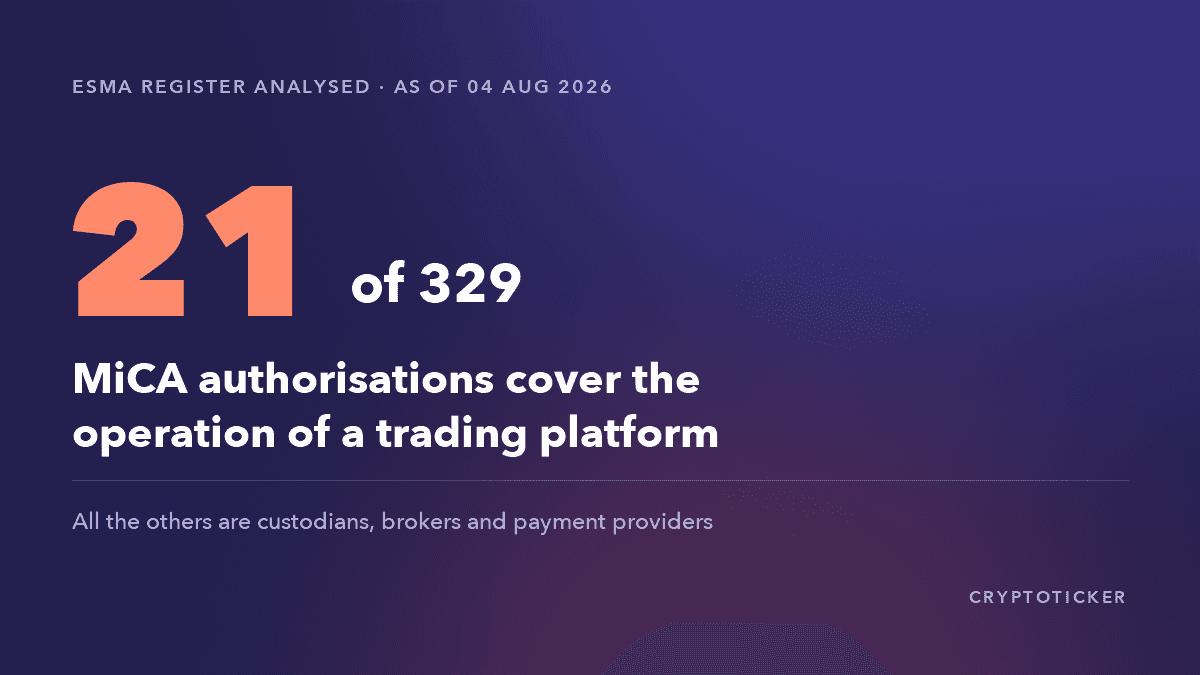
MiCA Register 2026: Only 21 of 329 Licences Are Real Exchanges
ESMA publishes the register of MiCA-authorised providers as an open file. We worked through all of it — and the result is not what the phrase “licensed crypto exchange” suggests.
October 2, 2026 10:28 PM

GENIUS Act stablecoin rules: what applies today and what stays open until 2027
The GENIUS Act creates the US framework for payment stablecoins. Which proposals are already on the table, why the OCC matters and what stays open until January 2027.
October 13, 2026 7:19 AM

Financial Stability Board on 300 billion dollars in stablecoins: “untested in severe stress and insolvency”
The Financial Stability Board handed the G20 a status report on stablecoins on 12 October: a market worth 300 billion dollars, 99 percent of it pegged to the US dollar, and a supervisory structure that remains untested in severe stress and insolvency. Here is what the gaps it describes mean for holders in Europe, where MiCA already closes them and which ones stay open.
October 2, 2026 7:30 AM

Revolut EURR Stablecoin: What the Launch in Three Markets Really Means
Revolut is testing the euro stablecoin EURR in Denmark, Poland and Portugal first. Whether it becomes usable in practice depends on access, liquidity, costs and acceptance.
September 15, 2026 4:12 PM

Digital Euro Holding Limit: What the Planned Cap Means for Your Account and Your Crypto
The digital euro is getting a cap, and the trilogue has yet to settle who fixes it and how high it goes. What the draft means for your current account, for euro stablecoins and for your crypto holdings.

June 30, 2026 11:20 PM
How to Switch from Binance to a MiCA Regulated Crypto Exchange
Binance is winding down EU services after missing the MiCA deadline. Here's why it's happening and how to move your funds to a regulated platform safely.
September 30, 2026 10:40 PM

ESMA Calls for Advertising Rules on Crypto Influencers: Six Changes Now Sitting With the EU Commission
The EU securities watchdog filed its response to the MiCA review on the final day of the consultation. Among the demands are disclosure on staking, a licensable DeFi gateway and the power to freeze crypto assets.
September 19, 2026 4:02 PM
Binance MiCA License: Did Lagarde Personally Block Binance From the EU?
The WSJ says ECB chief Christine Lagarde asked Greece not to approve Binance's MiCA license. Here is what happened, and why the ECB had no formal say.
June 25, 2026 11:19 AM
Binance Pulls Its EU Licence Bid: What It Means for Your Crypto
Binance just withdrew its MiCA licence application in Greece days before the EU deadline. Here's what it means for users, your funds, and the crypto market.
October 10, 2026 1:24 PM

TRON (TRX): Polygon Opens Its Payment Stack to $93.44 Billion in USDT: What Matters Now
Polygon opened its Open Money Stack to TRON on October 8: companies can now settle stablecoin payments entirely over the chain. We checked how much USDT really sits there, and show what decides whether it turns into demand for TRX.
February 22, 2025 3:35 PM
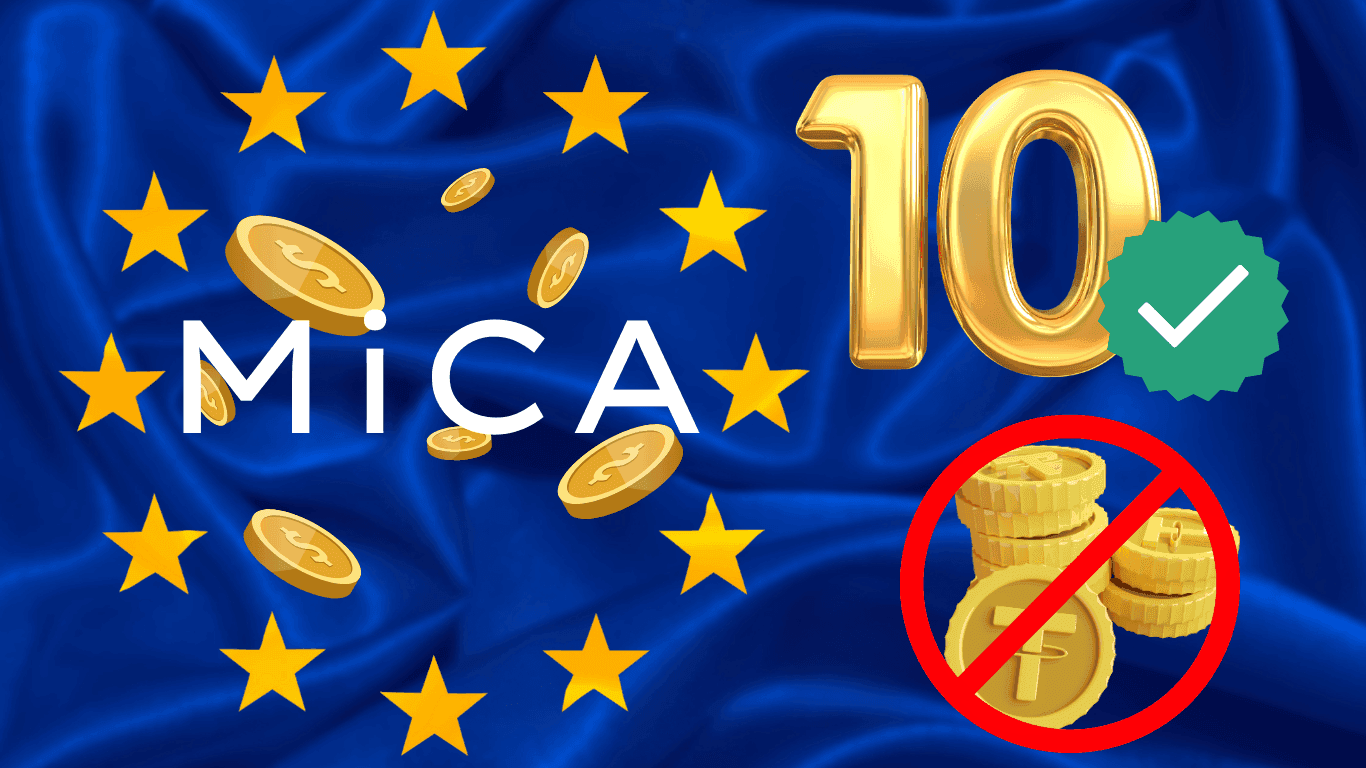
EU Approves 10 Stablecoin Issuers Under MiCA – But WHY Was Tether Left OUT?
The European Union has approved 10 stablecoin issuers under its MiCA regulations, notably excluding Tether's USDT. This decision raises questions about the future of stablecoin regulation and market dynamics within the EU.
October 13, 2026 10:37 PM

ESMA will supervise only 10 to 15 of 360 crypto firms: your exchange stays with its home regulator
On October 9, 2026 EU finance ministers agreed to place only the largest crypto service providers under direct ESMA supervision. For the vast majority of the roughly 360 authorised firms, the national authority stays in charge, in Germany BaFin.
October 12, 2026 7:43 PM

Canton Coin Arrives in Ripple Custody: What Investors Need to Know
Ripple Custody has held Canton Coin and CIP-56 tokens since version 1.43. What the institutional custody solution means for you as a retail investor, and where you can trade CC in Europe at all.
More from CryptoTicker