
ECX Fork of Bitcoin: When the Snapshot at Block 973,728 Really Lands
Layertwo Labs is copying Bitcoin's ledger onto a new chain and crediting every bitcoin with one ECX. Our own measurement shows the three fork stages hang on difficulty periods, and the snapshot reported for October 31 will most likely fall on November 1.





Which topics should we dive deeper into?
Select what genuinely interests you. Your picks feed directly into our editorial planning.
Crypto news that's actually worth your time.
Weekly. 60 seconds. Carefully curated by our editors: no hype, no promo flood, no spam.
On September 20, and again at the end of October, a new blockchain will read Bitcoin's ledger and credit every bitcoin balance with the same amount of a new coin called ECX. Your bitcoin stays untouched and does not move. All that matters is who controls the private keys to your balance at the moment of the snapshot.
The dates circulating since late August are September 20 and October 31. We ran the numbers ourselves. The schedule for this fork follows Bitcoin block heights; the calendar days are only derived from them. The three heights named are exact boundaries of difficulty periods. From the block rate we measured, the second snapshot falls into a window that closes only on November 1. Anyone planning this date to the hour is planning against a block height rather than a day in the calendar.
What the ECX fork is and who the Bitcoin snapshot affects
Behind the project stands Layertwo Labs, a company run by developer Paul Sztorc, who has worked for years on a sidechain method called Drivechain. Sztorc submitted the proposals BIP 300 and BIP 301 for it, and neither was ever activated in Bitcoin itself. Rather than keep campaigning for approval within the Bitcoin community, the company is now launching a chain of its own that takes the Bitcoin ledger as its starting point and ships with the sidechains from day one. The name is eCash, the ticker ECX.
You are affected if you hold bitcoin. According to the project, every address with a bitcoin balance receives the same amount in ECX on the new chain, so one ECX per bitcoin. The bitcoin itself does not travel, is not locked and does not change its balance. In practice, a second set of books appears that copies the state of your address at a given point in time.
The pattern is not new. Bitcoin has been through several such forks, from Bitcoin Cash in 2017 to the Knots fork with its changed hashing algorithm, which launched in early September. How holders should generally handle a chain split is something we set out in our explainer on Bitcoin forks. The difference in this case lies in the timing mechanics, and those are the actual subject of this article.
Hardfork, snapshot and drivechain: each term in a single sentence
A hardfork is a rule change to a blockchain that makes old and new software incompatible, so that from a defined point onward two separate chains keep running. A snapshot is the record of all balances at a specific block height, and it serves as the opening ledger of the new chain. A drivechain is a sidechain that takes in Bitcoin-like coins, moves them under its own rules and later hands them back, with no custodian sitting in between.
The third term matters because it explains why this project is being undertaken at all. Layertwo Labs has announced seven sidechains for the launch, among them one for fast payments, one for shielded transfers, one for decentralised names and one for prediction markets. The details come from Bitcoin.com's reporting of August 23 and from the eCash project site.
Our September 2 measurement: Bitcoin sits at block 965,186
cryptoticker.io compiled this analysis itself on September 2, 2026. We pulled Bitcoin's public block data and read the timestamps of individual blocks to answer two questions: exactly when the first stage of the fork took effect, and when the two that follow will land.
At the time of measurement, the tip of the Bitcoin chain stood at block 965,186 with the timestamp September 2, 2026, 15:09:43 UTC. Three independent public interfaces reported this height consistently. That puts the schedule in the following state:
| Stage | Block height | Distance to the tip | Status on September 2 |
|---|---|---|---|
| Alpha | 963,648 | 1,538 blocks behind | already reached |
| Beta | 967,680 | 2,494 blocks ahead | open |
| Mainnet | 973,728 | 8,542 blocks ahead | open |
According to the project, the alpha stage served for testing with practice coins. The beta stage is aimed at trading venues, wallet providers, custodians and miners. Only at the third height do the permanent ECX balances come into existence.
The three fork heights are exact difficulty periods, not calendar dates
Bitcoin adjusts mining difficulty every 2,016 blocks, so roughly every two weeks on average. Divide the three heights named by 2,016 and the arithmetic works out cleanly three times over: 963,648 gives exactly 478, 967,680 exactly 480, and 973,728 exactly 483. All three stages therefore sit precisely on the first block of a new difficulty period.
The gaps are round as well. Alpha to beta is 4,032 blocks, exactly two periods. Beta to mainnet is 6,048 blocks, exactly three periods. The schedule is clocked in periods, then, and the calendar dates quoted are estimates derived from that clock. None of the reports we reviewed mentions the connection.
That is more than a footnote. A date tied to a block height shifts with the computing power on the network. If hashrate drops out, the date moves back; if hashrate arrives, it moves forward. Anyone intending to change something about their custody shortly before the snapshot is working with an uncertainty of several hours.
Alpha block 963,648 landed on August 23 at 00:48 UTC
To check whether our method holds up at all, we first ran it against a marker that was already known. Reporting names August 23 for the alpha stage. Our measurement dates block 963,648 to August 23, 2026, 00:48:47 UTC. The preceding block 963,647 carries the timestamp 00:04:05 UTC on the same day, leaving 44 minutes between the two.
The measurement hits the only externally pre-announced marker in the observation window to the day. That is the control on the method, not merely on the result. Incidentally, the 44-minute gap shows how widely individual block times can swing even though the target value is ten minutes.
That also settles how current all this is. The first of three stages took effect a good ten days ago, and the second is due in a good two weeks. The project is running, and it has left the stage of an announcement.
Why the mainnet snapshot lands closer to November 1 than to October 31
From the gap of 8,542 blocks and the block rate we actually measured, the moment of the snapshot can be narrowed down. We calculated three rates: the protocol target value of 600 seconds per block, the current difficulty period, and the average across the eight preceding periods.
| Basis | Seconds per block | Beta at 967,680 | Mainnet at 973,728 |
|---|---|---|---|
| Protocol target value | 600.0 | Sept 19, 22:49 UTC | Oct 31, 22:49 UTC |
| Current period 478 | 595.4 | Sept 19, 19:36 UTC | Oct 31, 11:48 UTC |
| Average across 16,128 blocks | 605.1 | Sept 20, 02:20 UTC | Nov 1, 10:51 UTC |
For the beta stage this gives a window from September 19, 19:36 UTC, to September 20, 02:20 UTC. The reported September 20 therefore holds, but it sits at the upper edge of the range; the stage may equally be reached on the evening of the 19th. In German time that means the late evening of the 19th or the night into September 20.
For the mainnet snapshot the window runs from October 31, 11:48 UTC, to November 1, 10:51 UTC. The date reported as October 31 marks the lower edge of it. Calculate with the rate Bitcoin has actually held over the past eight difficulty periods and the snapshot lands during November 1. This is no forecast to the minute but a span of just under a day, and it belongs in your calendar in exactly that form.
What the measured block rate says about the accuracy of such dates
We evaluated the eight difficulty periods before the current one individually, 16,128 blocks in total. The values vary considerably:
| Period | Start | Seconds per block | Deviation from target |
|---|---|---|---|
| 470 | May 2, 2026 | 582.0 | −3.00 percent |
| 471 | May 15, 2026 | 590.1 | −1.65 percent |
| 472 | May 29, 2026 | 667.7 | +11.28 percent |
| 473 | June 14, 2026 | 560.0 | −6.67 percent |
| 474 | June 27, 2026 | 632.4 | +5.40 percent |
| 475 | July 11, 2026 | 604.8 | +0.80 percent |
| 476 | July 25, 2026 | 594.2 | −0.97 percent |
| 477 | August 8, 2026 | 609.3 | +1.55 percent |
The fastest period needed 560 seconds per block, the slowest 667.7. Almost 19 percent lies between those two extremes. Averaged across all eight periods, Bitcoin comes to 605.07 seconds and thus runs 0.84 percent above the target value. The current period 478 is moving somewhat faster at 595.4 seconds.
Scale that up to 8,542 blocks and you can see where the uncertainty comes from. One percent of deviation corresponds to roughly 14 hours over this distance. When a project sets a snapshot in block heights and the press turns that into a calendar date, the uncertainty gets lost along the way. It remains present all the same.
 Store your bitcoin safely yourself
Self-custody or exchange: who gets credited in the ECX snapshot
According to the project, the allocation follows the address on which your bitcoin sits at the moment of the snapshot. If you control the private keys yourself, you can move the corresponding ECX on the new chain as soon as its software allows it. If your bitcoin is held at an exchange or a custodian, the balance is credited to that provider's pooled address instead.
From this follows the only point on which you have to decide anything at all in the coming weeks. Whether a custodian passes the new coin on to its customers is entirely up to the custodian. Some providers credited holders in earlier forks, others explicitly refused, and others again said nothing for months. There is no obligation to do so.
Anyone who wants certainty holds their bitcoin themselves on the record date. That is not a recommendation to shuffle things around at short notice, because every movement of a balance brings risks of its own and, in Germany, possible tax consequences. If you were already toying with the idea of pulling part of your holdings out of a provider's custody, you will find the devices and their differences in our hardware wallet comparison.
And if you deliberately leave your holdings on a trading venue: ask there before the beta stage is reached. Providers usually decide such questions only once they can judge whether the new chain will attract tradable liquidity at all. An early enquiry changes nothing about that, but it documents your claim.
ECX is not XEC: the name mix-up that can cost money
A cryptocurrency called eCash with the ticker XEC has existed since 2021. That older coin emerged from Bitcoin Cash, has nothing to do with the project described here and is listed on many trading venues. The new project carries the same name and a different ticker.
This double occupancy is an open invitation to confusion, and in practice it runs in both directions. Anyone who wants to buy ECX and ends up with XEC has bought something other than what they wanted. Anyone who sees a trading offer for ECX after the snapshot should check which ticker is actually being traded there and which chain it sits on. Bitcoin.com points out this risk of confusion explicitly in its report.
Fork coins and German tax: holding period, cost basis and Section 23
For German investors the tax treatment is the more interesting part, and it has been regulated reasonably clearly since the Federal Ministry of Finance letter of March 6, 2025, with the reference IV C 1 - S 2256/00042/064/043.
The inflow of the new coins from a hardfork does not in itself generate income when held as private assets. No taxable event arises merely because ECX are allocated to you. The matter becomes relevant only on sale.
A rule applies here that works in favour of many holders: the acquisition date of the new coins is the acquisition date of the original coins. Your ECX therefore inherit the purchase date of your bitcoin. If you have already held your bitcoin for longer than a year, a later sale of the allocated ECX is likewise tax free under the rule of Section 23 of the German Income Tax Act in its original wording. If, on the other hand, you bought only a few months ago, the one-year period runs jointly for both holdings.
Under the ministry letter, the cost basis of your original bitcoin is split across both holdings, in proportion to the market prices at the time of the fork. In practice that means as long as ECX is worth barely anything, almost nothing shifts. But if the new coin attracts a meaningful price, the cost basis of your bitcoin falls arithmetically, and a later sale within the one-year period turns out correspondingly higher. Gains from disposals are additionally subject to an exemption limit of 1,000 euros per calendar year.
The whole affair is a good occasion to review your own bookkeeping. Anyone who has documented their acquisition data properly can prove the one-year period; anyone who has not is in a poor position when the tax office asks. Which programs even model this post-fork split is shown in our overview of crypto tax tools. And to say it plainly once more: this section is no substitute for tax advice in an individual case.
Scam patterns around fork snapshots: how to spot a fake claim page
Every announced fork draws attempts at fraud after it, and the pattern has been the same for years. A page appears promising to unlock your new coins for you, and demands your recovery words or a private key in return. Whoever enters them loses not the new coin but their bitcoin.
The rule against this is simple and admits no exception: an allocation from a snapshot never requires you to enter your recovery words on a website. The snapshot reads public data from the Bitcoin blockchain; nobody needs your keys for that, and you yourself need them only when you actually want to move the new coins later on.
Two further warning signs: time pressure and advance payment. Anyone telling you the window closes in a few hours wants to stop you from thinking it over. Anyone demanding a fee in bitcoin to unlock the new coins has already built the fraud in. The same pattern ran during the Knots fork in early September, as we described in our report on the BLAKE2b fork.
 Document your crypto gains properly
What Bitcoin holders should check right now
The most important sentence first: there is no compulsion to act. Your bitcoin stays untouched however this fork turns out, and whether ECX gains any market value at all is something nobody knows today.
A brief stocktake is still worthwhile. Clarify first where your bitcoin sits and who holds the keys. Ask your provider second whether a credit is planned, if your holdings are kept there. Check third whether your acquisition data is fully documented, because the one-year period for both holdings depends on it. And settle fourth that you will enter recovery words on no page whatsoever, no matter what is promised there.
Anyone who wanted to spread their holdings across several custody routes anyway now has a natural occasion to do so calmly, rather than in the week beforehand. Restructuring under time pressure is the worse option, whatever the outcome ends up being.
How to look up the block height yourself in a minute
You do not have to take our word for it, and you need no tools for it either. Open one of the public block explorers, mempool.space or blockstream.info for instance, and read off the current block height. Subtract it from 967,680 and you know the distance to the beta stage; subtract it from 973,728 and you know the distance to the mainnet snapshot.
Converting that into time is a simple multiplication. Take the distance times ten minutes for the optimistic edge and times roughly 605 seconds for the more realistic average. Your window lies between the two results. We did nothing else for this article, only with more sampling points.
Anyone wanting more precision can look up the timestamps of blocks 963,648 and 961,632 the same way. The gap between two period boundaries, divided by 2,016, gives the block rate of the period in between.
How we measured and what we could not measure
The survey date is September 2, 2026, and the requests ran between 15:40 and 15:55 UTC. The method was to retrieve individual Bitcoin blocks via public interfaces and evaluate their timestamps; the current chain tip was additionally cross-checked against two further independent providers. We examined 19 individually retrieved blocks, among them nine period boundaries for the rate measurement across 16,128 blocks, the current period with 1,538 blocks, plus the alpha block and its predecessor for the dating.
Several points remain open. We do not know, first, whether Layertwo Labs will yet change the schedule; the block heights come from the reporting and the project site, not from a state of the code we inspected ourselves. We do not know, second, which exchanges or custodians will credit ECX, because no firm commitments exist so far. We do not know, third, whether the new chain will find enough computing power after the launch to run stably. We have made, fourth, no statement about the future market value of ECX, because no price can be derived from a block measurement. And we cannot say, fifth, whether your particular wallet software will display the new balances later on.
On the distribution of the new coins, the industry service gncrypto reports that around 1.1 million ECX fall to addresses with the so-called Patoshi pattern, of which about 600,000 remained allocated and around 500,000 would be redirected to early investors and to development. We have not verified this figure ourselves and reproduce it solely as attributed; it is disputed within the Bitcoin community. For your own holdings it is of no consequence.
Frequently asked questions about the ECX fork and the Bitcoin snapshot
Do I have to move my bitcoin before the snapshot?
No. A movement is precisely not necessary and in Germany can even trigger tax consequences. All that matters is who holds the keys to the address on which your balance sits at the time of the snapshot.
Do I get ECX if my bitcoin is held at an exchange?
The exchange decides that. The allocation goes to the custodian's address, and whether it passes it on to you is its own affair. There is no legal obligation to do so.
When exactly does the snapshot land?
It lands at block height 973,728, not at a fixed clock time. By our measurement, that point lies between midday on October 31 and midday on November 1 UTC, depending on how quickly the blocks are found until then.
Is ECX the same as XEC?
No. XEC is an existing cryptocurrency that emerged from Bitcoin Cash. ECX is the ticker of the new chain described here. Both carry the name eCash, but they are different projects.
Is the allocation of ECX taxable?
The inflow itself triggers no tax when held as private assets. What counts is the later sale, and for that the new coins inherit the acquisition date of your bitcoin under the Federal Ministry of Finance letter of March 6, 2025.
Checking the ECX snapshot: what to take away
- Clarify your custody before the beta stage is reached. Whoever holds the keys determines who the new coin is credited to. Which devices are suited to this and how they differ is set out in our hardware wallet comparison.
- Get your acquisition data in order. The allocated ECX inherit the purchase date of your bitcoin, and if it comes to it you must be able to substantiate the split of the cost basis. Which programs model this after a fork is shown in the overview of crypto tax tools.
- Ask your trading venue in writing what it intends to do. If your holdings are held in custody, that is the only route to a binding answer. Where your provider stands in the field and which alternatives exist is set out in our overview of crypto exchanges.
(As of September 2, 2026. This article is not investment advice. Prices and fee structures change; check the terms with the provider before you buy.)
Transparency note: This article was produced with the assistance of artificial intelligence and reviewed by our editorial team before publication. All figures and claims were checked against the primary sources linked in the text. The feature image was generated with AI.
More on Bitcoin: All Bitcoin news at a glance
Related articles
- Pocket Bitcoin Data Breach: When Name, Home Address and Bitcoin Address Circulate Together
- Bitcoin Abroad: The Tax Duty Austrian Investors Carry Themselves
- Shielded Bitcoin: what the privacy proposal means for your Bitcoin addresses
- Bitcoin Fork: What Happens to Your Coins When the Chain Splits
- Deutsche Bank to Custody Bitcoin and Ether: Why Retail Clients Are Missing and What to Check in Your Own Custody
Which topics should we dive deeper into?
Select what genuinely interests you. Your picks feed directly into our editorial planning.
Crypto news that's actually worth your time.
Weekly. 60 seconds. Carefully curated by our editors: no hype, no promo flood, no spam.

October 7, 2026 10:33 PM

Bitcoin Price Falls as 41,700 BTC Leave Binance: The Exchange Reserve Drops to 663,100 BTC
Binance's bitcoin reserve has fallen by 41,700 BTC to around 663,100 bitcoin since September 20, the largest weekly outflow since June 2023. Why the price is giving way all the same, and what the finding means for your custody.
April 17, 2026 10:14 PM

FIBE Berlin 2026 Review: Bitcoin, AI Trading & Tokenization at Europe's Biggest FinTech Conference
FIBE Berlin 2026 brought together the future of finance — from AI-powered crypto portfolios to Bitcoin self-custody and tokenized real-world assets.

September 7, 2026 1:27 PM
Liquid Network: Around 4,000 Bitcoin Drained via a Peg-Out, and What L-BTC Holders Must Check Now
Around 4,000 Bitcoin drained out of the Liquid Network federation wallet on September 6, even though no key was stolen. The network is halted and redemption is blocked. Here is what you should check now as an L-BTC holder.
September 11, 2026 1:26 PM

Alby Hub Security Flaw: How to Check Whether Your Bitcoin Lightning Node Is Reachable From the Internet
Alby confirmed a critical flaw in Alby Hub v1.7.0 through v1.18.5 on September 9, 2026; it is only exploitable if the management interface sits openly on the internet. What to check on your node, why the fix is a good twelve months older than the warning, and which step comes before the update.
September 27, 2026 4:32 AM

Hester Peirce Leaves the SEC: What Now Applies to Your Custody in Germany
The most crypto-friendly voice at the US securities regulator goes on October 2, 2026, and the commission shrinks to two members. For investors in Germany it is still the European rulebook that decides, and there a deadline falls in July 2027.
September 18, 2026 7:12 PM

Zcash NU7 Upgrade on November 5, 2026: What You Must Do With Your ZEC
Zcash activates the NU7 network upgrade on November 5, 2026, bringing 25-second blocks and the end of v4 transactions. Anyone holding ZEC has nothing to move; action is only needed from those running their own node, indexer or block explorer.
September 10, 2026 4:15 PM

BW-Bank Opens Bitcoin Trading Inside the Securities Account: What to Check Before Your First Buy
Since September 9, 2026, BW-Bank customers have been able to trade ten crypto assets through their securities account, executed and held in custody by Bitpanda. The familiar securities-account setting hides three points you should settle before your first order.
September 5, 2026 10:33 AM

ZIL Withdrawals Frozen: Why Your Zilliqa Balance Is Stuck After the Hard Fork
The Zilliqa hard fork of September 2, 2026 moved the ZIL balances of ten exchanges to new addresses. Three days later, deposits and withdrawals were still halted at the three venues we checked: what that means for your balance, what self-custodians are waiting for, and why the announced compensation is not a decision yet.
August 24, 2026 1:22 PM
Phantom Wallet Ends Sui and Monad Support: What to Do Before the Deadlines
Phantom Wallet removes Monad from its app on August 26 and Sui on September 24. The balances are not lost, but only one of the two ways out leaves your tax position untouched.
August 23, 2026 7:34 PM

Buying Zcash Despite the EU Trading Ban: What Happens to Your ZEC From July 2027
From July 10, 2027 the EU anti-money-laundering regulation takes anonymity-enhancing crypto-assets out of regulated trading venues. What Article 79 forbids in its actual wording, why your own ZEC holding is not caught by it and what to sort out before then.
August 12, 2026 9:12 AM

Bitcoin Losses and Dividends in Austria: How the Tax Offset Works
Can a Bitcoin loss be offset against dividends? This is how loss offsetting works in Austria. It also shows when a tax return is needed for it.
September 19, 2026 7:12 PM

Bitcoin Sold Without Austrian Tax Withheld: What to Do Next
Sold Bitcoin but no Austrian capital gains tax was withheld? That does not make the sale tax free. When investors have to declare the gain themselves at 27.5 percent.
August 26, 2026 10:25 PM

Selling Bitcoin at a Loss: Loss Offsetting in Austria
Sold Bitcoin at a loss? Austria allows the loss to be offset against certain investment income. When loss offsetting is possible and which limits apply.
August 10, 2026 9:15 PM
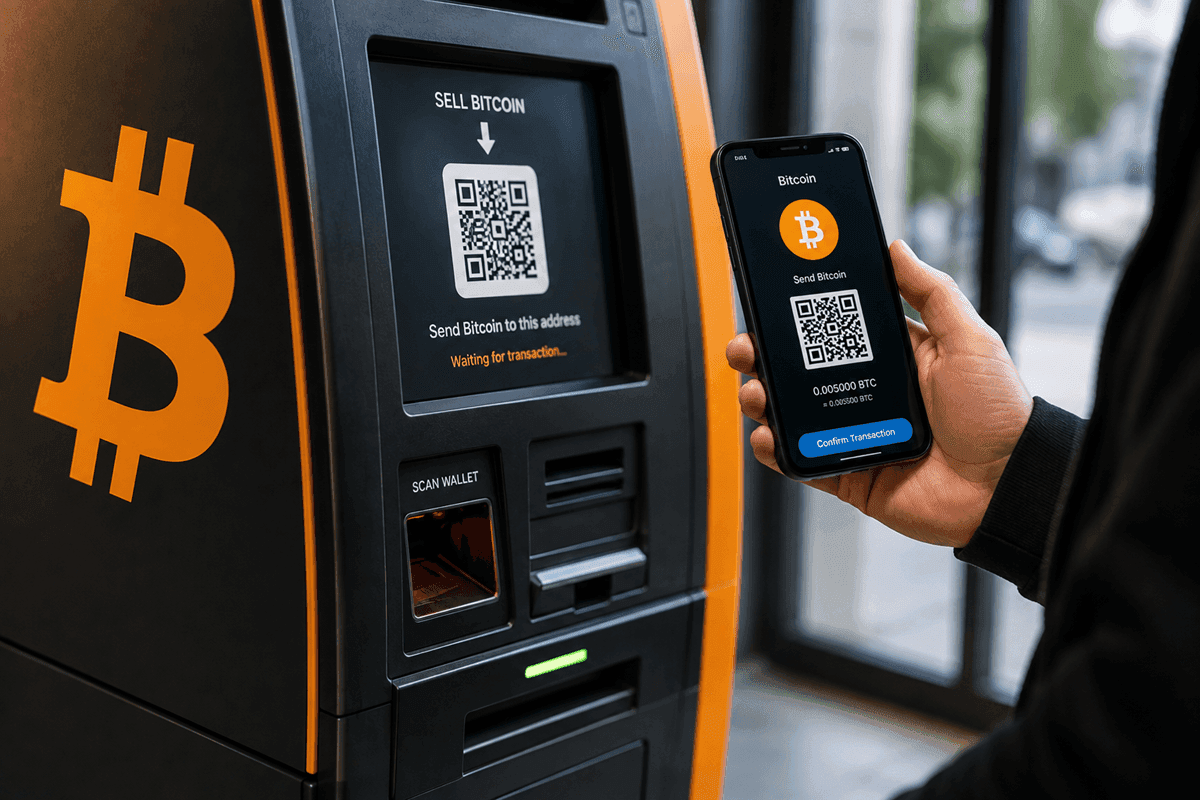
Selling Bitcoin at an ATM: Tax Rules in Austria
Selling bitcoin for cash at an ATM: when the 27.5 percent rate applies in Austria and which records you need to keep.
August 21, 2026 1:33 PM

Bitcoin With No Cost Basis: How Austria Taxes the Sale
Bitcoin purchase price no longer provable? How Austria works out the capital gains tax, when a flat-rate cost basis applies and what investors can do.
August 22, 2026 4:47 PM

Offsetting Bitcoin Losses Against Stock Gains in Austria
Offset bitcoin losses against gains on shares? Austria allows it in principle, but only under certain conditions and usually via the tax return.
August 17, 2026 10:24 PM
Bitcoin Capital Gains Tax in Austria: When Exchanges Withhold 27.5 Percent
When Austrian crypto exchanges deduct 27.5 percent capital gains tax automatically, which Bitcoin gains are affected and when investors have to declare the income themselves.
September 25, 2026 10:14 PM

Sequans sells its last 314 bitcoin: what to check if you hold a treasury stock
Semiconductor maker Sequans has wound down its bitcoin reserve completely, 15 months after setting a target of one hundred thousand coins. What the case reveals about treasury stocks, and which tax rule applies to the share and to the coin.
September 22, 2026 1:28 PM

Selling Bitcoin and Cashing Out in Euros: How It Works in Germany
Between the sell order and the euros in your current account stand the exchange, your bank and the tax office. Knowing the order of events saves fees, waiting time and, in the best case, the entire tax on the gain.
September 18, 2026 10:14 PM

Bitcoin Back Above $80,000: Buy More, Hold or Take Profits? What to Check Now
Bitcoin is back above $80,000, for the first time since September 7. Whether you buy more, hold or take profits depends less on the daily price than on three things you can check yourself: your holding period, the way you buy, and where your coins are kept.
September 11, 2026 10:18 AM

Bitcoin Tax Audit: What Proof Austria Requires
Which bitcoin records can the Austrian tax office examine? Purchase dates, wallet transfers, acquisition costs and sale proceeds are what count.
August 18, 2026 7:13 AM

Bitcoin Tax Reporting in Austria 2026: What Applies
Bitcoin tax reporting in Austria: which data investors can request from crypto exchanges in 2026, and when the report matters for the tax return.

June 25, 2024 12:18 PM

After Bitcoin Crash, Will Altcoins Gains Reach 500%?
In the latest Bitcoin News today, and mainly after the Bitcoin Crash, crypto analysts predict a major shift towards altcoins with market corrections near the end and BTC dominance drop. Will the altcoins gain reach 500%?
October 7, 2026 7:18 AM

Certificate, Bitcoin ETN or the coin itself: what each route means for tax and custody
A Bitcoin certificate, an ETN and the coin itself all lead to the same price, but to three different tax treatments and three different risks. The comparison shows which route fits your portfolio and why December 31, 2026 becomes the cut-off date.
October 6, 2026 1:23 AM
50 euros a month in Bitcoin, 118 instalments since 2017: savings plan vs lump sum
118 monthly instalments of 50 euros since January 2017 add up to €5,900 paid in and around €54,500 today. The same instalment since January 2024 is up only 14.5 percent, and since October 2025 the savings plan beats the lump sum by almost 39 percentage points.
September 27, 2026 4:12 AM
Bitcoin ETF Inflows Turn 2026 Positive: How to Tell If the Demand Holds
US spot Bitcoin ETFs took in roughly $2.4 billion in the week to September 25, the strongest week since October 2025, and that turns the 2026 year-to-date balance positive. Why the daily inflow fell 87 percent within the same week, and what to check on buying route, holding period and custody.
September 24, 2026 10:11 PM

Bitcoin Price Prediction: What to Check on Levels, Holding Period and Leverage Before the October 28 Rate Decision
Bitcoin is trading at around $83,800, a third below its October 2025 high, while the sentiment index reads greed. Which dates, levels and deadlines over the coming weeks really decide your net gain, and which of them you steer yourself.
More from CryptoTicker