
ECB Platform Pontes Goes Live: What to Check on Tokenized Securities Now
The Eurosystem launched its Pontes platform on September 21, 2026, allowing trades in tokenized securities to be settled in central bank money for the first time. Nothing changes in your portfolio today, but the distinction between a crypto-asset and a crypto security will decide tax and liability in future.




Which topics should we dive deeper into?
Select what genuinely interests you. Your picks feed directly into our editorial planning.
Crypto news that's actually worth your time.
Weekly. 60 seconds. Carefully curated by our editors: no hype, no promo flood, no spam.
In short: The Eurosystem brought its Pontes settlement platform into operation on September 21, 2026. Banks and securities depositories can use it to close trades in tokenized securities and settle the cash leg in central bank money. Nothing changes in your brokerage account or your wallet on the day itself. What matters is the distinction behind the launch: a token can be a security or a crypto-asset, and liability, custody and tax all follow from that.
The launch is still more than a story for specialists. For the first time, the settlement of securities that sit on a blockchain is backed by central bank money. That single point separates the infrastructure German banks are now building from the tokenized stocks you can buy at some crypto providers. This article sets out what Pontes is, who takes part, and the three things you should check in your own positions.
What is Pontes and what does the Eurosystem settle on it?
Pontes is a Eurosystem settlement solution that allows large-value transactions in tokenized assets to be settled in central bank money. The name is Latin for bridges: the platform connects the private blockchain networks where the securities sit with the central bank's existing payment systems. The European Central Bank's press release of September 21, 2026 describes the launch as the first step of a programme through which the Eurosystem intends to make central bank money usable for tokenized markets.
Two terms deserve a clear definition, because the rest of the article builds on them. A tokenized security is a security whose ownership is recorded neither in a paper certificate nor in a conventional central register, but as an entry in a distributed ledger, in other words on a blockchain. Central bank money is money held directly at the central bank, as opposed to a balance at a commercial bank, which is a claim against that one institution.
One point of context matters here: Pontes is a wholesale platform for banks, central securities depositories and similar institutions. Access, according to the ECB, is open to anyone with access to the T2 payment system or recognised as an authorised operator of a market platform based on distributed ledger technology. There is no private account there, and there will not be one.
Central bank money instead of commercial bank money: why settlement risk falls
In every securities transaction there is a moment when one side has delivered and the other has not yet paid. The technical term delivery versus payment resolves this settlement risk: delivery and payment are linked so that either both happen or neither does. Pontes implements this for tokenized paper, using a mechanism the ECB calls a hash link, which ties the securities leg on one platform to the cash leg on the other.
The difference from the previous route lies in the cash leg. Anyone who until now swapped tokenized paper for a stablecoin or for a balance at a commercial bank carried an additional risk: the stablecoin issuer or the bank could fail. Central bank money does not know that kind of default. Piero Cipollone of the ECB's Executive Board frames the launch in the statement by saying that Pontes brings the stability and trust of central bank money to Europe's ecosystem for tokenized financial transactions. ECB President Christine Lagarde points out that the Eurosystem is working towards a more integrated, innovative and resilient European financial market in the digital age.
For you, this is above all a benchmark. When a provider sells you a tokenized security, you can now ask what the cash leg of that transaction is actually settled in. The answer separates a construction embedded in supervision from one where a token issuer ultimately stands behind everything.
Who is taking part in Pontes: Deutsche Bank, DZ Bank, KfW and the Bundesbank
In its statement, the ECB names the institutions that have completed the onboarding process and can start immediately. From Germany these are Deutsche Bank, DZ Bank, BayernLB, DekaBank, NRW.BANK, Kreditanstalt fuer Wiederaufbau and the Deutsche Bundesbank. They are joined by the European Investment Bank, ABANCA, Caisse des Depots et Consignations, Cecabank, Memo Bank, Santander and Societe Generale. Axiology, Cashlink, Clearstream and SWIAT are on board as operators of market platforms based on distributed ledger technology.
That list is the real news value. This is not a laboratory project at the edge of the market but houses where many German investors already hold their current account or their securities account, plus two promotional banks whose bonds sit in countless fixed income funds. Once these institutions settle digital bonds through a central bank rail, the product class becomes more ordinary in the German market, and sooner or later it will reach you as an investment product.
A second point from the statement is notable: the ECB announces that it will invest a small part of its own portfolio in tokenized securities and settle those purchases in central bank money via Pontes. The central bank wants to build its own practical experience in trading, settling and managing such holdings.

Two settlement routes: cash tokens on the DLT platform or booking in T2
According to the ECB, Pontes offers two routes. In the first, settlement takes place directly on the Eurosystem platform and the cash leg runs there through what are known as cash tokens. In the second, payment runs through T2, the Eurosystem's existing real-time gross settlement system, in which the final booking is made in central bank money.
The reason for the twin track is practical. Some market participants want to move their entire settlement onto the blockchain; others want to tokenize their security but keep the payment route they trust. The ECB leaves both doors open and points out that Pontes initially offers only a core set of services, to be extended step by step. Longer operating hours and additional technical functions are to follow, with full implementation expected by 2028.
A sober expectation follows from that wording: September 21, 2026 is a beginning, not a finished market. Anyone who now sees an advertisement for a product that supposedly already runs entirely on the central bank rail should read closely which of the two routes is meant, and whether the paper was issued at one of the named institutions at all.
 Regulated Crypto Exchanges Compared
Crypto-asset or crypto security? This distinction decides your tax
This is the part that touches your money directly. Under German law these are two different things, even though both sit on a blockchain and both are colloquially called tokens.
A crypto-asset within the meaning of the EU's MiCA regulation is, for example, Bitcoin or a utility token. Held as private assets, a sale falls under private disposal transactions pursuant to section 23 of the German Income Tax Act. From that follow the familiar one-year holding period and the exemption threshold of 1,000 euros per calendar year. The German Federal Ministry of Finance set out the details on March 6, 2025 in a circular on the income tax treatment of certain crypto-assets, which replaces the 2022 version and describes the record-keeping and cooperation duties in considerably more detail.
A crypto security under the German Electronic Securities Act, by contrast, is a security. It is entered in a crypto securities register, and for tax purposes the rules for investment income under section 20 of the Income Tax Act apply: flat-rate withholding tax on the gain, the saver's allowance, and no one-year holding period after which a sale would be tax free. Anyone who mixes both categories in one portfolio and treats them alike is calculating one of the two wrongly.
In practice this means: before you open such a position, establish the category rather than the packaging. Whether the provider markets its product as a digital bond, a tokenized security or a security token says nothing about the tax treatment. If you are collecting records anyway, a clean portfolio and tax tool helps you keep the two categories apart; the established solutions for the German market are set out in our comparison of crypto tax software and portfolio trackers. How the holding period works in detail for tokenized stocks, we have written up separately.
Crypto securities register under the eWpG: how to check what you actually hold
The German Electronic Securities Act has been in force since June 10, 2021. It recognises the crypto security as an electronic security entered in a crypto securities register. Anyone maintaining such a register provides a financial service that requires authorisation and is supervised by BaFin; the authority describes the activity of crypto securities register keeping on a page of its own.
A concrete check follows from this. Ask the provider who keeps the register and whether that entity holds a BaFin authorisation for it. For a crypto security issued in Germany there is an answer with a name and an address. For a token that merely replicates a share there is none, because no securities right is embodied there; what exists is a claim against the issuer of the token. What that means for the question of ownership if things go wrong, we set out in our piece on ownership and issuer risk in tokenized stocks.
A second check concerns the trading venue. A provider offering crypto-asset services in the EU has needed an authorisation since MiCA became fully applicable; the obligations attached to it are set out in our hub on MiCA licensing duties for crypto companies. For buying crypto-assets themselves, you will find the houses with European authorisation in our overview of the best regulated crypto exchanges.
What Pontes does not change for your Bitcoin holdings
On social networks the launch will quickly be shortened to the claim that the central bank is moving into crypto. That is not the case. Pontes settles securities that sit on distributed ledgers. Bitcoin is not a security, and a central bank rail for trading crypto-assets has been neither built nor announced with this project.
For your holdings in a self-custodied wallet, the consequence is: no new reporting duty, no new custodian, no changed tax status. Your access to an exchange also stays the same. What may change over the medium term is the environment. If digital bonds become normal on banking rails, custody solutions, registers and securities account processes will grow that can later be used for other token categories as well. That is a plausible consequence and not a documented commitment, and it should be read that way.

Pontes, Appia and the digital euro: three projects you must not confuse
Several undertakings are running at the ECB at the same time, and headlines regularly mix them up. Pontes is the wholesale settlement solution for tokenized securities that has now gone live. Appia is the second track of the same programme; the Eurosystem and Danmarks Nationalbank are working on it with public and private sector participants, and a concept is expected by 2028 according to the ECB. The digital euro is something else, namely a form of central bank money for private individuals in a separate undertaking with its own timetable; we reported on its pilot phase and the dates involved in our piece on the digital euro pilot project.
Anyone who keeps these three apart will avoid two widespread false conclusions. The first is that the launch of Pontes marks the beginning of the digital euro. The second is that the ECB is now buying cryptocurrencies. Neither is true.
 Document Your Crypto Taxes Properly
Timetable to 2028: which intermediate steps matter for investors
For the build-out of Pontes the ECB names the horizon 2028 and describes the path there as a gradual extension with additional services, longer operating hours and further technical functions. There is no single date in the statement on which something changes for retail investors.
Even so, the points where it becomes concrete for you can be named. The first is issuance: when a promotional bank or a commercial bank issues a digital bond settled through Pontes, it will at some stage appear in a fund or in an investment product offered to you. The second is custody: as soon as your custodian bank can take digital securities into your account, a new category will appear in your paperwork. The third is the tax statement: with a genuine crypto security the bank treats you as it would for any other security, and the tax is withheld by the institution. With a crypto-asset, the reporting work stays with you.
Bull and bear case for tokenized bonds in Europe
Both sides belong side by side, and both are assessment rather than forecast.
The line-up speaks for the confident reading. Clearstream brings a large central securities depository on board, KfW and the European Investment Bank two issuers that regularly place substantial bond volumes, and the Bundesbank the national central bank. That lowers the hurdle for further issuers, because counterparties, settlement and the legal framework are already in place.
The ECB itself speaks for the cautious reading. It explicitly describes the launch as a core set of services with limited scope and pushes full implementation out to 2028. Infrastructure projects of this size need volume to carry themselves, and whether issuers will choose the new route broadly is an open question today. The central bank gives no figure for expected volume, and we therefore give none either.
ECB Pontes launch: what to take away
- Establish the category before you buy. For every token product, ask whether it is a crypto security under the eWpG or a crypto-asset under MiCA, and who keeps the register. Tax and liability depend on it. If you want to buy crypto-assets through a platform authorised in Europe, you will find the houses in our overview of the best regulated crypto exchanges.
- Keep the two categories separate in your tax file. A one-year holding period and a 1,000 euro exemption threshold apply to crypto-assets, not to securities. Separate the records from the first purchase; the right tools are in our comparison of crypto tax software.
- Change nothing about your custody because of Pontes. For self-custodied crypto-assets, nothing follows from the launch. If you are reconsidering your custody anyway, take your bearings from the hardware wallet comparison and not from a news item about wholesale infrastructure.
(As of September 22, 2026. This article is not investment advice. Prices and fee structures change; check the terms with the provider before you buy.)
Transparency note: This article was produced with the assistance of artificial intelligence and reviewed by our editorial team before publication. All figures and claims were checked against the primary sources linked in the text. The feature image was generated with AI.
Related articles
- ECB Develops Settlement System for Distributed Ledger Technology Transactions
- ECB Prepares for Potential Digital Euro Launch Amid Trump’s Crypto Revolution
- SoFi Settles Card Payments in Stablecoin: What Cardholders Should Check
- Cardano Foundation Tokenizes Veridian Shares: ADA Up 7.3 Percent and Outperforms the Market
- Digital Euro Holding Limit: What the Planned Cap Means for Your Account and Your Crypto
Which topics should we dive deeper into?
Select what genuinely interests you. Your picks feed directly into our editorial planning.
Crypto news that's actually worth your time.
Weekly. 60 seconds. Carefully curated by our editors: no hype, no promo flood, no spam.

September 10, 2026 4:15 PM

BW-Bank Opens Bitcoin Trading Inside the Securities Account: What to Check Before Your First Buy
Since September 9, 2026, BW-Bank customers have been able to trade ten crypto assets through their securities account, executed and held in custody by Bitpanda. The familiar securities-account setting hides three points you should settle before your first order.

May 4, 2026 6:15 PM

DTCC Tokenized Securities: Is Wall Street About to Bring Stocks On-Chain?
DTCC plans tokenized securities trades in July 2026, signaling Wall Street’s next major step toward blockchain-based financial markets.
May 15, 2024 12:04 PM

Crypto Scams: How to Protect Your Cryptos?
With the rise of crypto scams, and while international efforts are still working to combat these threats and protect investors, some recent tactics have been identified, and here is your full guide.
September 24, 2026 10:29 AM

Bank Closed Your Account Over Crypto: Your Rights and the Route to a Replacement Account
After a withdrawal from a crypto exchange, banks repeatedly end the banking relationship, usually without giving a reason. What the German Payment Accounts Act guarantees you anyway, which notice period applies, and in what order you approach the supervisor, arbitration and the courts.
August 19, 2026 4:14 AM

Digital Euro and Stablecoins: Why the Bank of England Is Testing Both Forms of Money in a Single Payment
In the Bank of England's Digital Pound Lab, a consortium around NOBO Finance, Dun & Bradstreet and Polygon has rehearsed how an exporter receives an advance in a stablecoin while the importer settles the final payment in digital central bank money. Why the difference between private and public money also matters for your stablecoin balance in Germany.
May 11, 2026 6:16 PM

Dubai Makes it a Reality to Pay Government Fees with Crypto
Dubai officially integrates cryptocurrency for government fee payments via Crypto.com, marking a major step for the UAE's cashless and digital economy strategy.
September 29, 2026 7:12 PM
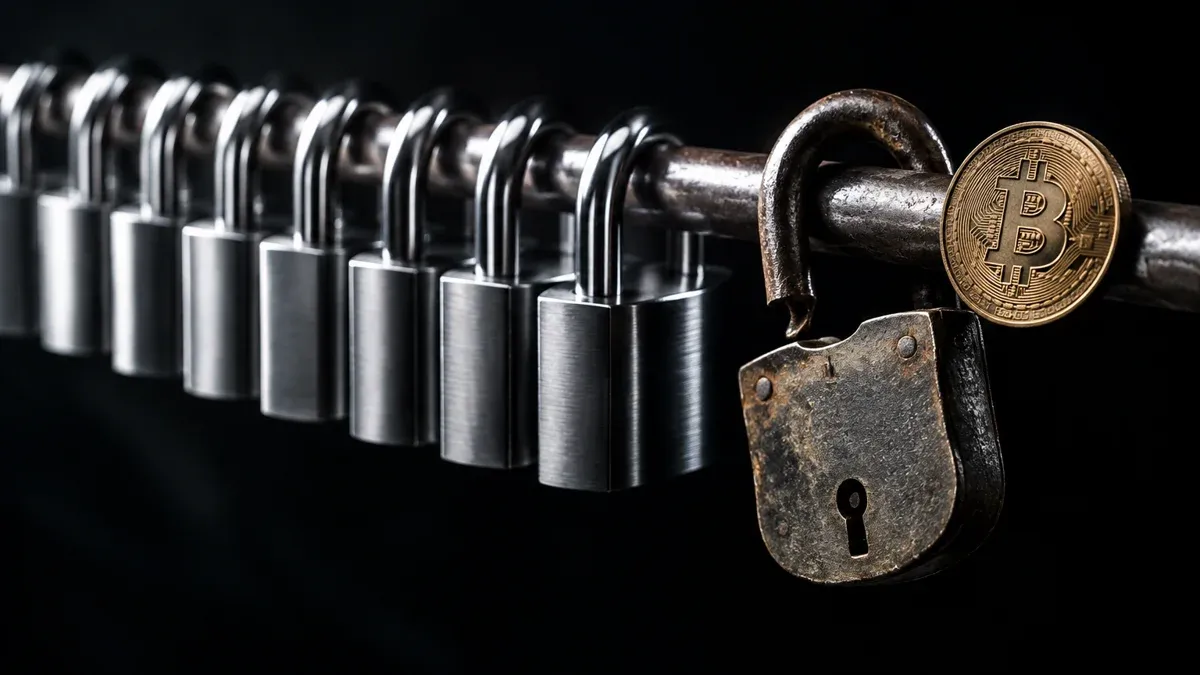
MEXC Refunds $340,000: The Attacker's API Key Survived the Account Freeze
During an account takeover at MEXC, an attacker created an API key with withdrawal rights that the exchange did not revoke when it restored the account. Twenty-seven minutes after the withdrawal freeze expired, roughly $340,000 was gone.
September 22, 2026 10:15 PM

Stablecoin Reserves: Why the ECB Wants the Bank Deposit Rule Scrapped
The European System of Central Banks filed its response to the MiCA review on September 22 and calls in it for an end to the requirement to hold 30 to 60 percent of stablecoin reserves as a bank deposit. What lies behind it, and what you can check on your own token.
August 6, 2026 6:01 PM

X Is Building a Bank Without Crypto — and Now Its Product Chief Is Leaving
Nikita Bier is stepping down as X's head of product. His exit lands in the weeks X Money launched in the US — with Visa and 6 percent yield, but not a single crypto capability.
May 12, 2026 9:19 AM

Senate Banking Committee Unveils 309-Page Crypto Clarity Act Draft
The US Senate Banking Committee released a 309-page Crypto Clarity Act draft. It defines SEC and CFTC roles while adding strict stablecoin yield rules.

February 23, 2026 6:00 AM
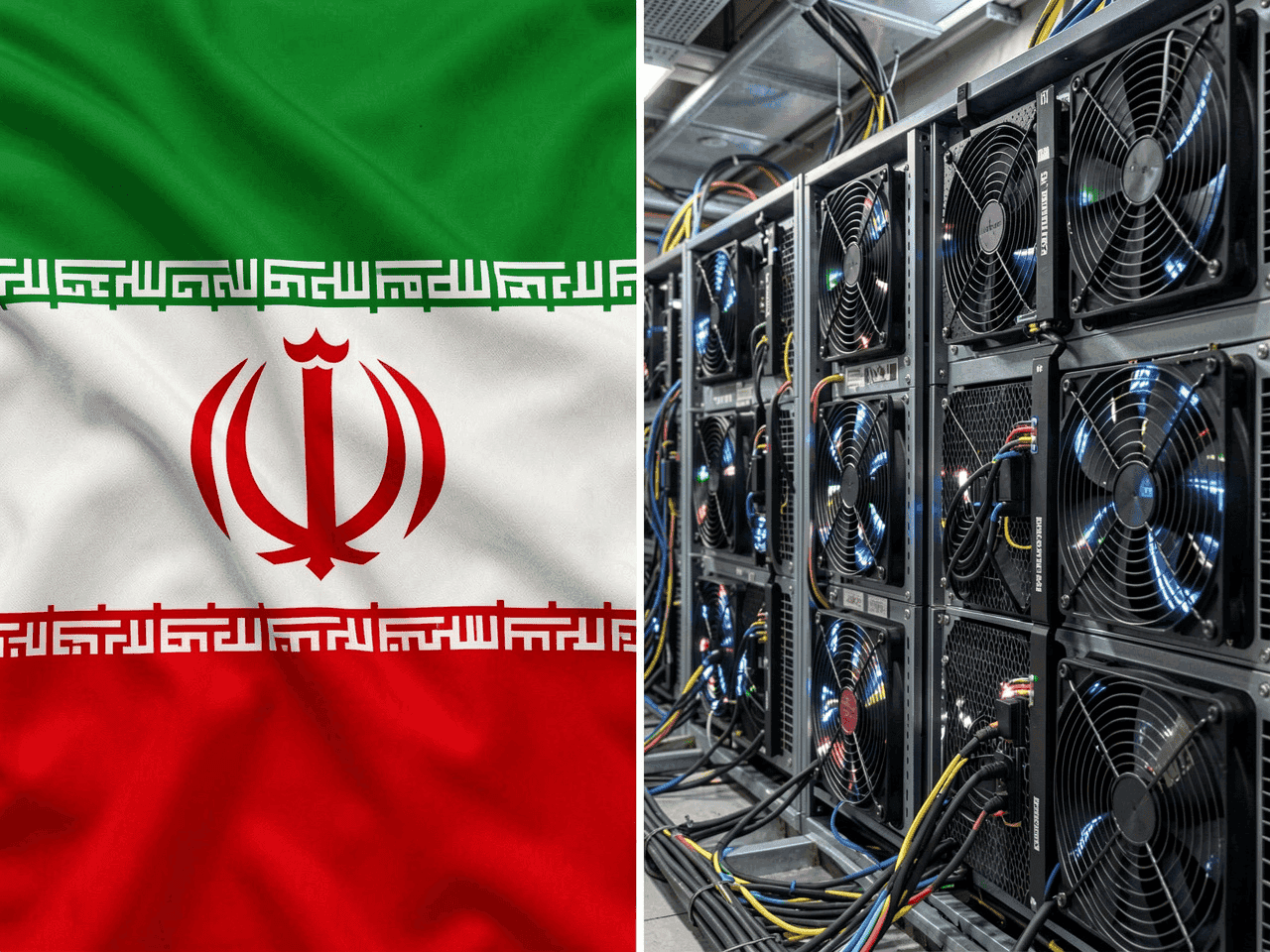
Is Iran Still the Cheapest Place to Mine Bitcoin in 2026?
Mining 1 Bitcoin in Iran costs just $1,320 due to subsidized power. Explore how miners achieve a 50x ROI despite government crackdowns and sanctions.
August 2, 2024 3:57 PM

SEC Retracts Token Security Classification in Major Crypto Victory
In a landmark decision, the SEC has withdrawn its attempt to classify popular tokens like Solana, Cardano, and Polygon as securities in its lawsuit against Binance.
October 5, 2026 1:29 AM

Chainalysis attributes $387 million from the Bitget hack to North Korea: what matters now for investors in Germany
The analytics firm Chainalysis attributes the theft of around $387 million at Bitget to actors with ties to the DPRK and puts the annual total above one billion dollars. What that means for custody, choice of exchange and record-keeping in Germany.
September 4, 2026 4:39 AM

Source of Funds at a Crypto Exchange: Why a Deposit Can Freeze Your Account for 15 Days
OKX chief Star Xu described on September 2 what an unusual deposit sets off: reviews of 15 days and longer, during which balances and account functions can be restricted. What that means for investors in Germany, and which documents you should keep to hand.
August 30, 2026 10:38 PM

Crypto Cards: Where Your Card Balance Really Sits and What the August 28 Solana Exploit Reveals About It
An attack on a card balance contract on Solana took the loaded balance from 1,685 users while their wallets stayed untouched. The case shows why it matters whether your crypto card holds funds as e-money at a licensed institution or in a smart contract.
August 19, 2026 4:15 PM

Tether Audit by KPMG: What the Unqualified Opinion Means for USDT in the EU
Tether reported the first full audit of its financial statements by KPMG on August 13, 2026, with an unqualified audit opinion for the 2025 financial year. That changes nothing about whether USDT can be traded at authorised providers in the EU, because Article 48 MiCA decides that question.
May 13, 2026 8:48 AM

JPMorgan Expands Tokenization Push with New Ethereum Money-Market Fund
JPMorgan Chase files to launch its second tokenized money-market fund on Ethereum, targeting stablecoin reserves and institutional liquidity.

September 17, 2024 6:38 PM

Breaking News: More than 50 Crypto Tokens including ADA, LUNA, and TRX Now Considered Securities by the US SEC
US SEC has declared over 50 tokens, including ADA, LUNA, and TRX, as securities. Let's take a look at these crypto tokens as securities.

September 5, 2019 3:26 PM

Weekly Tidbits: Crypto News from the German-Speaking Sphere
German Cabinet and Bundesbank tries to resolve CBDC issues The Cabinet of Germany and Deutsche Bundesbank are working together on issues regarding central bank digital currencies (CBDCs). The Cabinet published an official response to a request from the Free Democratic […]
October 8, 2026 7:59 PM

Cardano CIP-0113 live: issuers can now freeze and seize regulated tokens, ADA falls 10.3 percent
The Cardano Foundation activated the CIP-0113 standard on the mainnet on October 7, 2026: issuers can write freezing, seizure and KYC rules directly into a token, enforced by the network. ADA itself stays freely transferable and trades at $0.2294, 10.32 percent below the previous day.

October 4, 2026 7:13 AM

DTCC Tokenization Goes Live on Canton in October: 50 Institutions and an SEC Letter With an Expiry Date
The US depository DTCC moves its tokenization service into commercial operation in October, and one of the two launch chains is Canton. What the rebuild of securities settlement is worth, and why Canton Coin still remains a security with a tiny euro market.
September 29, 2026 10:14 AM
387.5 million dollars at Bitget: the attack ran through a bought-in security product, what to watch now
Bitget has disclosed how the attackers reached its withdrawal systems on September 24: through a previously unknown flaw in a security product it had bought in. The second stage of the withdrawal schedule opens today at 08:00 UTC, and for the balance you keep on any exchange the case changes the arithmetic.
September 26, 2026 7:14 AM

Cardano Before the RealFi Launch on October 1: What ADA Holders Should Check on USDr, MiCA and Tax
On October 1, 2026 the stablecoin platform RealFi goes live on the Cardano mainnet, and ADA has gained 14.67 percent in a week. What is documented about the yield-bearing dollar token USDr, and what investors should settle beforehand.
September 25, 2026 4:11 AM
Bitget Hack of $351 Million: What to Check at Your Crypto Exchange Now
Bitget reports unauthorised outflows of around $351.6 million (later revised to $387.5 million) and has suspended withdrawals. For existing customers in Europe, that closes the one route MiCA had left them.
September 20, 2026 4:13 AM

Zcash Above $1,500: What ZEC Holders Should Check on Tax and Custody
Zcash rose above $1,500 on September 19 for the first time since 2016 and, after an intraday high of $1,590.80, trades back at around $1,474. For German holders three questions hang on that jump: the one-year holding period, the planned year-end cut-off and the EU anti-money-laundering regulation from July 2027.
September 1, 2026 4:12 AM

USDT cashback and 7 percent on stablecoins: what the MiCA interest ban means for you
A new payment card advertises up to 10 percent cashback in USDT and up to 7 percent a year on the balance. Article 50 MiCAR explains why a provider licensed in the EU is not allowed to pay you exactly that.

October 2, 2023 5:39 AM
Chainlink Collaborates with ANZ Bank: A Glimpse into Cross-Chain Tech’s Future
Explore Chainlink's strategic alliance with ANZ, a banking powerhouse with over $670 billion in assets. Uncover the potential of the Cross-Chain Interoperability Protocol in revolutionizing tokenized assets.
More from CryptoTicker