
XRP Ledger Explained: How the Network Behind XRP Works
The XRP Ledger is the blockchain behind XRP: consensus without mining, confirmation in three to five seconds and a fee of 0.00001 XRP that is destroyed. This explainer shows how validators and the UNL work, what the DEX, AMM, escrow and Multi-Purpose Tokens do and which amendments went live up to October 2026.




Which topics should we dive deeper into?
Select what genuinely interests you. Your picks feed directly into our editorial planning.
Crypto news that's actually worth your time.
Weekly. 60 seconds. Carefully curated by our editors: no hype, no promo flood, no spam.
The XRP Ledger, or XRPL for short, is a public, open-source blockchain that runs the cryptocurrency XRP. It works without mining: instead of burning computing power, servers called validators vote every three to five seconds on the next version of the shared ledger. Once that version is confirmed, a payment is final, and the fee of 0.00001 XRP goes to nobody. It is destroyed.
Beyond payments, the network ships with its own exchange, liquidity pools, escrow, payment channels and its own tokens, all built into the protocol. New features arrive through validator votes, most recently in February 2026 with token escrow and an exchange reserved for verified accounts.
The XRP Ledger at a Glance: Key Facts in October 2026
| Feature | XRP Ledger |
|---|---|
| Mainnet launch | June 2012 |
| Consensus | XRP Ledger Consensus Protocol, no mining, no staking |
| Confirmation | new ledger version every three to five seconds, final once confirmed |
| Validators | more than 150 in total, more than 120 active, more than 35 on the default list (UNL) |
| Native currency | XRP, 100 billion units created at launch, no new issuance |
| Total XRP on 8 October 2026 | 99,985,593,827 XRP (ledger version 107,505,650) |
| Standard fee | 10 drops, or 0.00001 XRP, which is destroyed |
| Account reserve | 1 XRP base reserve, plus 0.2 XRP per owned object |
| Built-in features | exchange (DEX), AMM, escrow, payment channels, checks, NFTs, Multi-Purpose Tokens, credentials |
| Rule changes | through amendments: at least 80 percent of trusted validators for two weeks |
| Active amendments on 8 October 2026 | 94 |
The figures come from the documentation at xrpl.org, from its pages on reserves and transaction costs, and from the ledger itself, which records total supply, fee, reserve and active amendments in every version.
XRP Ledger, XRP and Ripple: Three Names, Three Different Things
The three terms are mixed up almost all the time, even though each one means something else.
The XRP Ledger is the blockchain itself: the jointly maintained database plus the software that keeps it going. XRP is the network's native cryptocurrency, the only unit used to pay fees and the only asset on the ledger without an issuer. Ripple is a US company that builds payment software, holds a large amount of XRP and issues its own stablecoin, Ripple USD (RLUSD), on the XRP Ledger among other networks.
The distinction decides who owns what. The ledger belongs to nobody, the software is open source, and anyone may run their own server. XRP belongs to whoever holds the matching cryptographic keys. Ripple is one user and contributor among many, with considerable economic weight but no special rights in the protocol.
Quick definition: A blockchain is a record of transactions kept identically by many independent computers, so that no single operator can change entries after the fact.
History of the XRP Ledger: From the Mining Debate in 2011 to Launch in June 2012
The project history on xrpl.org dates the beginning to 2011. Developers David Schwartz, Jed McCaleb and Arthur Britto were studying Bitcoin and were bothered by the energy cost of mining. They wanted a method that solves the same problem, agreeing on the order of payments without a central authority, without burning computing power to do it.
The XRP Ledger went live in June 2012. Chris Larsen joined shortly afterwards, and in September 2012 the group founded a company called NewCoin, soon renamed OpenCoin and in 2013 Ripple Labs. The founders gave that company 80 billion XRP, or 80 percent of the total supply.
In December 2017 Ripple placed 55 billion XRP in 55 escrow accounts on the ledger. According to Ripple's announcement, up to 1 billion XRP is released on the first day of each month; whatever the company does not need that month goes into a new escrow at the end of the queue.
In the early years the name Ripple stood for everything at once: the open-source project, the consensus method, the network and the digital unit itself, which was then called ripples. Because that kept causing confusion, the currency code XRP took over as the name. Today's split into ledger, coin and company is the result of that clean-up.
Two traits that still matter today follow from this history: there was never any mining that creates new units, and the full supply was fixed from day one. Both set the XRPL fundamentally apart from Bitcoin.
Consensus on the XRP Ledger: Voting Instead of Mining
Instead of a race for computing power, the XRPL uses a voting process that the documentation calls the XRP Ledger Consensus Protocol. Every three to five seconds, specially configured servers, the validators, agree on the next version of the ledger.
Quick definition: A validator is a server that actively proposes the next ledger version and checks the proposals of others. Anyone may run one; no permission or minimum capital is needed. Unlike staking, a validator locks up no funds and earns no reward.
Each round follows the same pattern. Every validator collects incoming transactions, proposes a set, listens to the proposals of the servers it trusts and adjusts its own proposal until a large enough majority proposes the same thing. Every server then applies the same rules to the same list and must reach the same result. If the results match, the new ledger version counts as confirmed and is final.
Unlike Bitcoin, there is therefore no waiting for additional confirmations. A payment is either in the confirmed version or it is not. The protocol is also designed so that, when in doubt, the network would rather stop than let an invalid transaction through.
Not every computer on the XRPL is a validator. Most servers are plain nodes: they hold a copy of the ledger, relay transactions and answer requests from wallets and applications, but make no proposals of their own. Exchanges, wallet providers and analytics platforms run such nodes so they can read the data without relying on third parties. Your wallet talks to one of these servers in the background.

Validators and the Unique Node List: Whom a Server Trusts
The key building block of the process is the Unique Node List, or UNL. It is the list of validators that a given server believes. Each operator sets it themselves. Recommended default lists are published by the non-profit XRP Ledger Foundation and by Ripple; a server can adopt one of them, combine both or keep a list of its own.
The thresholds are spelled out in the project's consensus research. If fewer than 20 percent of trusted validators are faulty, operation continues normally. If the share lies between 20 and 80 percent, the network stops making progress. Confirming an invalid transaction would take collusion by more than 80 percent of trusted validators. To keep the network from splitting, the lists of any two servers must overlap by 90 percent in the worst case.
For scale, the project's overview page cites more than 120 active validators, run by universities, exchanges and companies among others, and more than 150 validators in total, of which more than 35 sit on the default list. Ripple says it runs exactly one of them.
This is where the most common criticism of the XRPL comes in: whoever maintains the default list influences whom most servers trust. This kind of decentralisation differs from that of a mining network, and whether it is enough is a judgement call, not a question of fact.
 Where to buy XRP in Europe
Account Reserve on the XRP Ledger: 1 XRP Always Stays in the Account
You notice the first practical quirk as soon as you send XRP to an address of your own. The XRPL requires a reserve that stays in the account permanently and cannot be spent. It keeps the shared ledger small and makes throwaway accounts expensive.
Two values apply on mainnet: a base reserve of 1 XRP per account and an owner reserve of 0.2 XRP for every object your account owns in the ledger. Objects include trust lines, open offers on the exchange, escrows, payment channels, checks, NFT pages and signer lists. The first two trust lines can be created with only the base reserve. Validators set the reserve levels by vote, so they can change.
Two consequences follow. A new account only comes into existence once at least 1 XRP arrives in it; a smaller first deposit fails. And you cannot get the reserve out while the account exists. If you close it with an AccountDelete transaction, the remaining balance including the base reserve goes to another account, and you pay a fee of at least one owner reserve, currently 0.2 XRP.

Fees on the XRP Ledger: 0.00001 XRP That Nobody Receives
Every transaction on the XRP Ledger destroys a small amount of XRP. For a standard transaction the minimum is 10 drops, or 0.00001 XRP; one drop is a millionth of an XRP. Under heavy load the fee rises temporarily until the queue has been cleared.
The difference from almost every other network lies in the recipient: there is none. Fees go neither to miners nor to validators. They disappear. That makes spam expensive and shrinks the total supply.
How slowly can be read from the ledger itself. 100 billion XRP were created. The ledger version of 8 October 2026 still held 99,985,593,827 XRP. Since launch in June 2012, about 14.4 million XRP have therefore been destroyed through fees, a little over 0.014 percent of the initial supply. Burning protects against mass requests; as a scarcity factor it hardly matters.
Speed Compared: XRP Ledger, Bitcoin and Ethereum
How quickly a payment becomes final depends on the consensus method. The table compares the three networks using the figures from their own project sites.
| Feature | XRP Ledger | Bitcoin | Ethereum |
|---|---|---|---|
| Consensus | voting by trusted validators | proof of work (mining) | proof of stake |
| Rhythm | new ledger version every 3 to 5 seconds | new block about every 10 minutes on average | one slot every 12 seconds |
| Finality | with the confirmed ledger version | 6 confirmations count as safe, about one hour | about 15 minutes to finality |
| Fee recipient | nobody, it is destroyed | miners | base fee is burned, tip goes to validators |
| Supply | 100 billion XRP at launch, no new issuance | at most 21 million BTC | no fixed cap |
Sources: xrpl.org, bitcoin.org, ethereum.org on proof of stake and ethereum.org on finality.
Destination Tag: Without This Number, Exchange Deposits Get Stuck
Exchanges often use a single XRP address for many customers. To credit an incoming payment to the right customer, there is the destination tag, a number you enter in addition to the address.
Quick definition: The destination tag is a 32-bit integer attached to the payment. On the ledger itself it does nothing; it only tells the receiving system which internal account the amount belongs to.
If the tag is missing on a deposit to a shared address, the money is not lost, but it sits with the operator and has to be assigned by hand by its support team. That takes time, some providers charge a handling fee, and occasionally it fails altogether. How to match address and tag before you send is explained in detail in our article on the destination tag for XRP transfers.
Built-in Features: DEX, AMM, Escrow, Payment Channels and Tokens
The XRPL is more than a payment network. Many features that other blockchains need smart contracts for are hard-wired into the protocol. They therefore work the same everywhere and at the same low fee.
Decentralised Exchange (DEX)
On the built-in exchange, buy and sell offers sit directly in the ledger, as an order book for every currency pair, whether XRP against a token or token against token. A payment can change currency on the way: someone holding euro tokens can send a recipient dollar tokens, and the ledger finds the cheapest route through the order books, using XRP as a bridge if needed.
Automated Market Maker (AMM)
Since 22 March 2024, liquidity pools have complemented the order books. Each pool holds exactly two assets, at most one of them XRP. Anyone who adds liquidity receives LP tokens as a share certificate. Holders of these LP tokens vote on the pool's trading fee, which may range from 0 to 1 percent. Offers and payments automatically use the better price from pool and order book, or a mix of both.
Escrow
An escrow locks an amount until a condition is met: a point in time, a cryptographic condition or both. Until then nobody can spend it, not even the sender. Ripple uses exactly this feature for its escrow accounts. For a long time it only worked with XRP; since 12 February 2026 tokens can be locked too, provided their issuer allows it.
Payment Channels
Payment channels are designed for many very small payments. The sender deposits XRP in a channel and then only sends the recipient signed claims, which can be verified instantly off the ledger. Settlement happens later in a single transaction. The feature works with XRP only.
Tokens: Trust Lines and Multi-Purpose Tokens
Besides XRP, other tokens can be issued on the ledger, such as stablecoins pegged to the dollar or the euro. Such tokens are always a claim against their issuer. The classic form requires a trust line.
Quick definition: A trust line is a statement by your account of how much of a particular issuer's token it will accept. Without one, nobody can send you that token.
Since 1 October 2025 there have also been Multi-Purpose Tokens, or MPT. They need no trust line; the recipient only has to agree once to hold them. The issuer can store a description and key figures directly on the ledger, set a maximum supply, charge a transfer fee of up to 50 percent and freeze or claw back balances if it enabled those options at issuance. MPT cannot yet be traded on the built-in exchange; the extension needed for that is in development.
One point matters for the overall picture: only XRP itself has no issuer. Every other token on the ledger stands or falls with the company behind it, however solid the technology underneath.
NFTs, Credentials and Permissioned Exchanges
The ledger has supported NFTs natively since October 2022, and since June 2025 also NFTs with changeable data. For regulated applications, three building blocks arrived in 2025 and 2026: credentials, with which an issuer confirms a property of an account, such as a completed identity check; permissioned domains, closed areas for accounts holding certain credentials; and, built on top of them, the permissioned DEX, order books in which only approved accounts can trade.
Amendments: How the XRP Ledger Gets New Features
New features enter the XRPL protocol through amendments. An amendment is a clearly defined rule proposal on which validators vote. If it keeps the support of at least 80 percent of trusted validators for two weeks, it takes effect automatically. This process replaces the hard fork that other networks need for such changes.
The most important amendments since 2024, with their activation date on mainnet according to the Known Amendments list:
| Amendment | What it adds | Active since |
|---|---|---|
| Clawback | issuers can claw back tokens if they set this before issuance | 8 February 2024 |
| AMM | liquidity pools on the built-in exchange | 22 March 2024 |
| DID | decentralised identities on the ledger | 30 October 2024 |
| PriceOracle | price data from external providers as a ledger object | 2 November 2024 |
| AMMClawback | clawback also for tokens in liquidity pools | 30 January 2025 |
| DeepFreeze | issuers can freeze tokens completely | 4 May 2025 |
| DynamicNFT | NFTs with changeable data | 11 June 2025 |
| Credentials | proofs such as an identity check as a ledger object | 4 September 2025 |
| MPTokensV1 | Multi-Purpose Tokens without trust lines | 1 October 2025 |
| PermissionedDomains | closed areas for accounts with credentials | 4 February 2026 |
| TokenEscrow | escrow for tokens, not just for XRP | 12 February 2026 |
| PermissionedDEX | order books for approved accounts only | 18 February 2026 |
In early October 2026, two more amendments held the required majority: BatchV1_1, which lets several transactions be bundled into one package, and PermissionDelegationV1_1, which lets an account delegate individual permissions to another account. If the majority holds, PermissionDelegationV1_1 takes effect on 8 October and BatchV1_1 on 9 October 2026. The Lending Protocol and Single Asset Vault are also up for vote but had no majority at that point. In development are, among other things, MPT trading on the built-in exchange and smart escrows.
We follow these votes closely, for example the activation of an XRPL amendment, the Batch amendment XLS-56 and Permission Delegation. If you run your own wallet software or your own server, keep the software up to date: a server that does not know an activated amendment is blocked and loses its connection to the network.
XRP Ledger Wallet: Exchange, App or Hardware Wallet
There are three ways to hold XRP. If your XRP sits on an exchange, you own no keys; you hold a claim against that company. For small amounts and active trading that is acceptable. A software wallet on your phone keeps the keys itself, for example the XRPL-focused app Xaman, formerly called Xumm. A hardware wallet keeps the keys on a separate device away from the internet and is the most robust option for larger amounts and a long horizon.
With any wallet of your own, you are responsible for the seed. The seed is the string from which your account's private keys are derived. Lose it and you lose access for good, because there is nobody who can reset it.
Two features of the ledger come together here. You need the base reserve of 1 XRP for the account to exist at all, and you leave out the destination tag when you withdraw from an exchange to your own address, because a personal wallet does not need one. Devices and apps we have tested are in our hardware wallet comparison and our software wallet comparison; the difference between the two designs is explained in our article on hot wallets and cold wallets.
XRP Ledger or Ledger wallet? The name often causes confusion. Ledger is also a maker of hardware wallets and has nothing to do with the network. Its devices can hold XRP, though: according to the manufacturer, you manage XRP on a Ledger device through the Ledger Live app.
XRP Ledger Explorer: Check Transactions and Accounts Yourself
Because the ledger is public, every payment can be traced. For an address, an explorer shows the balance, the locked reserve, trust lines, open offers and all transactions; for a single transaction it shows the amount, fee, destination tag and the ledger version in which it was confirmed. If a deposit is stuck, an explorer is the fastest way to find out whether it reached the ledger.
The documentation at xrpl.org lists four explorers: the XRPL Explorer, which shows the live network with the ledger versions as they close and the validators; XRPSCAN and Bithomp, with detailed account histories and overviews such as the amendments; and the technical explorer of the XRP Ledger Foundation. All four read the same public data and differ only in presentation and extra features.
Buying XRP in Germany: Licence, Costs and Withdrawals
XRP is listed on practically every major exchange available in Germany. So you choose the provider, not the coin. Three points can be checked before your first transfer; our guide to buying XRP in Germany with exchange and tax covers them in detail.
First, the licence. Under the EU Markets in Crypto-Assets Regulation, MiCA for short, providers of crypto-asset services need an authorisation from a supervisory authority in the EU. Whether your provider holds one is stated in its legal notice and can be cross-checked with the competent authority.
Second, the real costs. The advertised order fee is rarely the whole price. Add the spread, the gap between buying and selling price, and, when you withdraw to your own wallet, often a fixed withdrawal fee that can be far above the ledger's 0.00001 XRP. We compare the conditions on an ongoing basis in our crypto exchange comparison.
Third, withdrawals. Before your first purchase, check whether the provider pays out euros to a German bank account and whether XRP can be transferred to an external address. Neither can be taken for granted.
XRP and Tax in Germany: Holding Period and Exemption Limit
In Germany, cryptocurrencies held as private assets count as other assets. Gains from selling them fall under private sale transactions in Section 23 of the Income Tax Act (EStG). XRP is treated no differently from other coins.
There is a period of one year between purchase and sale. If you sell after that, the gain is tax-free. If you sell within the period, the gain counts as other income and is taxed at your personal rate. All private sale transactions in a year share an exemption limit of 1,000 euros. If it is exceeded, the entire amount is taxable, not just the part above the limit.
Swapping XRP for another coin or token is also a sale for tax purposes. Using the ledger's built-in exchange or an AMM pool therefore triggers the same events as trading on an exchange. A tool that collects your transactions and tracks the holding periods saves a lot of work here; which ones are worth it is covered in our overview of crypto tax software.
Criticism of the XRP Ledger: Distribution, Default List and Usage
Four objections to the XRP Ledger are factually grounded.
The first concerns distribution. The entire supply was created at the start, and 80 percent went to a single company. The escrow accounts make releases predictable, but they do not change the fact that one market participant controls a considerable holding.
The second concerns the trust lists. A network in which most servers follow a recommended default list distributes power differently from one in which computing power or locked-up capital decides. Supporters counter that anyone can change their own list, that two independent publishers issue lists and that Ripple accounts for only one of more than 35 entries.
The third concerns the control features. With Clawback, Deep Freeze, credentials and the permissioned DEX, tools have been added since 2024 that let issuers claw back or freeze tokens or restrict trading to verified accounts. For regulated stablecoins and tokenised securities they are a prerequisite; advocates of open networks see them as a step towards more control. XRP itself is not affected, because these features apply only to tokens with an issuer.
The fourth concerns usage. The technology has been running for more than a decade without a major outage. That does not answer how much payment traffic actually flows over the XRPL rather than through conventional channels, and reliable public figures on this are hard to come by.
XRP Price and Forecasts: Where to Find Current Assessments
Few cryptocurrencies attract as many price targets as XRP. This explainer deliberately names none, because a price forecast years ahead makes a claim about the future that nobody is accountable for.
What can be checked are the drivers: the number of active validators, the releases from the escrow accounts, actual usage by payment providers, new amendments and the regulatory situation in the EU and the US. The current price and documented assessments with names and dates are on our page on XRP price and prediction.
The XRP Ledger in Brief: Open, Fast, With a 1 XRP Reserve
- Network, coin and company are three things. The XRP Ledger is the open blockchain, XRP the cryptocurrency on it, Ripple a company with a large holding. If you want to buy, first choose an exchange with an EU authorisation; the conditions are in our crypto exchange comparison.
- The ledger's quirks belong in every plan. The base reserve of 1 XRP stays in the account, and the destination tag belongs with every deposit to a shared address. Any explorer shows whether a payment has arrived.
- The protocol evolves by vote. Since 2024, AMM, Multi-Purpose Tokens, credentials, token escrow and the permissioned DEX have been added, and every new feature needs 80 percent of trusted validators for two weeks.
As of October 2026. This article is not investment advice.
Frequently asked questions about the XRP Ledger
Transparency note: This article was produced with the assistance of artificial intelligence and reviewed by our editorial team before publication. All figures and claims were checked against the primary sources linked in the text. The feature image was generated with AI.
Related articles
- How to Buy XRP in Germany: Exchange, Destination Tag and Tax
- XRP Price Prediction: Three XRPL Updates in 17 Hours from October 8, and What Matters Now
- Sending XRP with a Destination Tag: What to Check Before Every Exchange Transfer
- XRP Ledger Amendment of September 11: What Wallet, Node and AMM Users Should Know About fixCleanup3_3_0
- XRP Ledger: permission delegation cannot go live before October 8
Which topics should we dive deeper into?
Select what genuinely interests you. Your picks feed directly into our editorial planning.
Crypto news that's actually worth your time.
Weekly. 60 seconds. Carefully curated by our editors: no hype, no promo flood, no spam.

September 18, 2026 4:16 AM

XRP Ledger Batch Amendment Pushed Back to October 9, 2026 at the Earliest: What Node Operators Should Check
Update as of September 27, 2026: activation of the BatchV1_1 amendment on the XRP Ledger has been pushed back. A new validator majority restarted the two-week period on September 25; the earliest date is now October 9, 2026 at 14:46:02 UTC. Most XRP holders need to do nothing, node operators need xrpld 3.4.1.

December 3, 2024 12:18 PM
XRP Meme Coins Surge: ARMY, BEAR, and MAG also surge as XRP Hits 7-Year Highs
XRP's impressive surge has fueled the rise of meme coins like ARMY, BEAR, and MAG on the XRP Ledger, creating excitement in the crypto community. Find out what the future holds for XRP-based tokens.
September 24, 2024 9:59 AM
Ripple Price Prediction: How High will XRP reach in 2050?
Now that things are starting to get resolved for Ripple, the main question comes back to mind: how high can XRP reach by 2050?

September 25, 2026 1:12 PM

XRP Jumps to $1.56: What Holders Should Check on Buying Route, Holding Period and Leverage
XRP trades at $1.56 on September 25, 2026, up 6.85 percent on the day and 16.64 percent on the week. What the on-chain data and the US ETF inflows actually show, and what investors in Germany should check now on buying route, holding period, leverage and custody.
April 5, 2025 9:39 PM
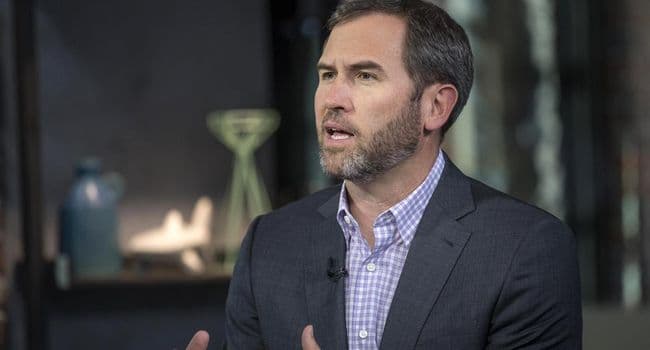
Ripple News: Brad Garlinghouse Teases Explosive XRP Updates Ahead of XRPL Apex 2025
Ripple CEO Brad Garlinghouse just dropped a bombshell—major announcements are coming at XRPL Apex 2025. The Ripple community is bracing for a potential XRP price breakout.
April 4, 2026 11:00 AM

XRP News Today: Ripple RLUSD Expansion and the CLARITY Act Impact
XRP faces technical pressure while Ripple’s RLUSD stablecoin gains global traction. Explore how the CLARITY Act could redefine the XRP Ledger ecosystem.
March 7, 2026 12:59 PM
XRP Price Prediction: Can Ripple Reclaim $1.50 Amid Record Low Liquidity?
XRP faces a critical 60% valuation reset. As exchange liquidity hits record lows, will Ripple's native token bounce back to $1.50 or sink further?
October 10, 2026 10:13 AM

XRP Ledger Closes a 2015 Flaw That Could Create XRP Out of Nothing: What It Means for Your Coins
The XRP Ledger has disclosed an overflow in its payment engine that sat in the code since 2015 and could have created spendable XRP far beyond the total supply. The flaw is closed with xrpld 3.4.1, with no indication of exploitation.
October 2, 2026 10:26 AM

Evernorth Brings 473 Million XRP to the Nasdaq: Stock or Coin?
The shareholders of Armada Acquisition Corp. II approved the merger with Evernorth on September 30. From October 8, a company holding around 473 million XRP is to trade on the Nasdaq under the ticker XRPN, and for investors in Germany a tax question hangs on it.
February 21, 2026 5:13 PM

XRP News Today: Société Générale Launches Euro Stablecoin on XRPL
Société Générale launches its MiCA-compliant euro stablecoin, EURCV, on the XRP Ledger, marking a massive milestone for institutional RWA growth on Ripple.
September 28, 2024 2:44 PM

XRP Price Surge Past Major Key Level Ahead Of Ripple Stablecoin RLUSD Launch
As XRP Ledger updates come in preparation for the launch of the Ripple stablecoin RLUSD, XRP Price surges past $0.60. What is next for XRP Price?
October 9, 2023 9:27 PM
XRP Ledger Reaches Milestone: Will XRP Price Go UP?
The XRP Ledger (XRPL) stands as a testament to this, achieving milestones that underscore its growth and versatility. Will XRP price increase?
July 2, 2025 8:25 PM
Ripple Applies for U.S. Banking License – A New Era for Crypto?
Ripple just took a major step into traditional finance by applying for a U.S. banking license. Could this move redefine the stablecoin and crypto payments industry?

September 29, 2026 4:26 AM
Chainlink reserve tops 6 million LINK as the price climbs above $15
The Chainlink Reserve holds 6,047,498 LINK, with 373,791 tokens added in September alone. The price stands at $15.56, 10.6 percent higher than the day before.
September 19, 2026 10:11 AM

Stellar Tops $0.19: What XLM Holders Should Check After the Protocol 28 Upgrade
Stellar has reclaimed the $0.19 mark and stands 5.57 percent above the previous day, while the network has been running on protocol 28 since September 16. We pulled the price and the protocol version ourselves and show what is market movement and what you should actually check on minimum reserve, memo, staking promises and holding period.

December 29, 2019 3:31 PM
Do Ripple validators get Paid?
Ripple is one of the oldest cryptocurrencies on the market. It was traded in 2013 and is now the third largest by market capitalization. The Ripple protocol was formed in 2004 by Ryan Fugger. From 2013 the company Ripple Labs took […]
September 23, 2024 8:44 AM
Is it a Good Idea to Buy XRP below $0.60?
With recent XRP price drops positioning it below the $0.60 mark, investors are left pondering. Is it a good idea to buy XRP below $0.60?
July 17, 2025 6:53 PM
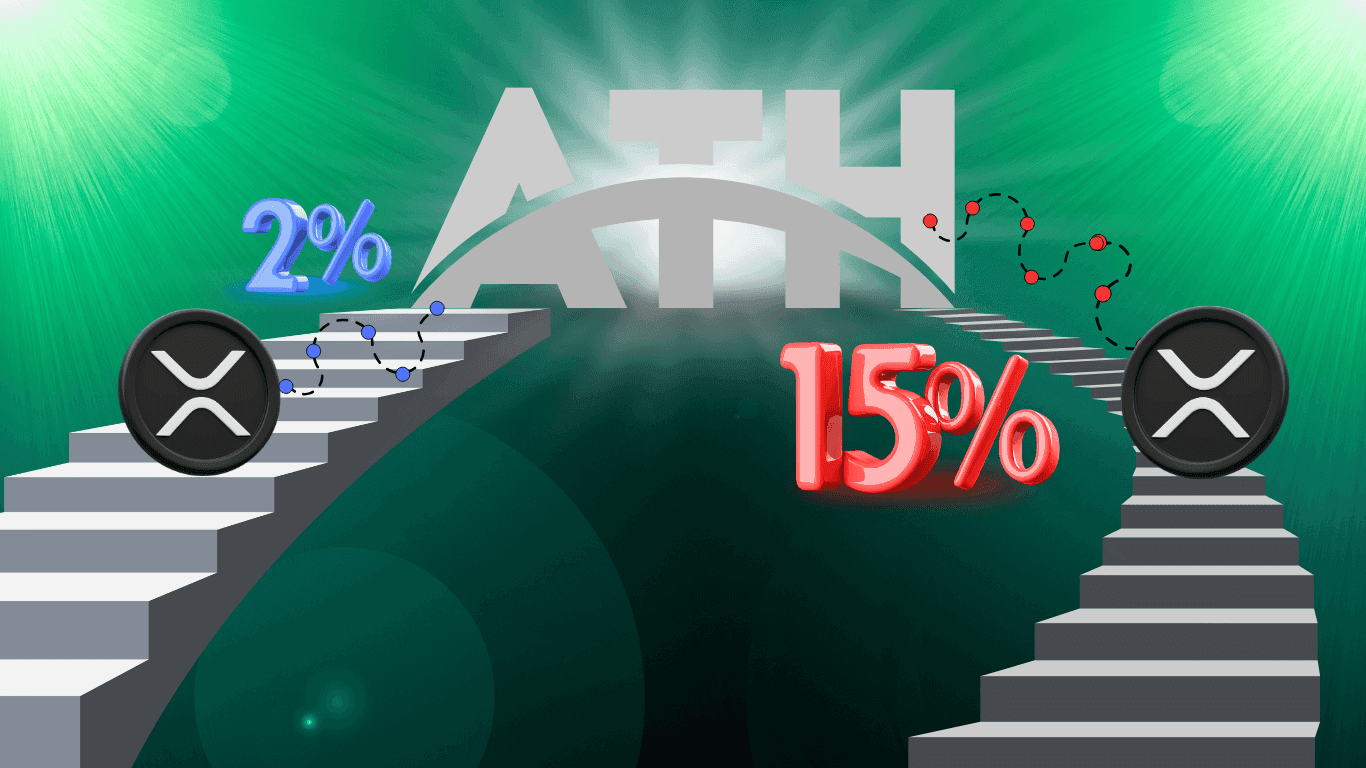
XRP Is Just 2% Away from a New ATH — But Which ATH Counts?
XRP is now less than 2% away from a new all-time high — at least according to some exchanges. But what’s the real ATH? And how high could XRP go next? Let’s break it down.
March 5, 2025 3:14 AM

XRP Price Prediction: Despite Volatility, XRP Eyes the $3 Mark
XRP has been on a wild ride, swinging between $1.8 and $3.4 this year. With recent bullish momentum, is $3 the next stop for XRP?
September 2, 2026 1:47 PM
Pi Network Protocol 27 on September 15: What Our Measurement on Mainnet and Testnet Shows
The Pi mainnet is on protocol 26 on September 2, the first testnet on 27, the second still on 26. We dated all seven protocol jumps of the past five months to the exact ledger and show what node operators and holders can read from them.
December 19, 2024 2:31 PM

XRP Crash: What Happened and What's Next for the Last Days of 2024?
XRP recent crash has left investors on edge as the crypto faces significant market turbulence. But what are the reasons behind the drop?
May 18, 2025 5:02 PM

XRP News May 2025 as Analysts Predict a $5 XRP Next Week
XRP is on the verge of a massive breakout. Will it really hit $5 next week? Here’s what top analysts are predicting!
July 4, 2025 5:49 PM
XRP Price Prediction: XRP USD Price might Crash...Unless THIS Happens
XRP price prediction: stuck between $2.10 and $2.30 as bulls and bears battle it out. After multiple successful rebounds off $2.10, is XRP price ready for liftoff — or another drop?
December 1, 2024 8:13 PM
XRP Price Breaches $2 – Is Now the Time to Buy?
XRP has smashed past the $2 mark, surging over 50% in the last week. With Trump’s pro-crypto stance, could this be your best chance to invest?
November 21, 2024 7:10 PM
XRP Price Skyrockets to $1.21 Amid Breaking XRP News of SEC Chair Resignation
XRP price surged 12% in the past 24 hours, reaching $1.21, with a 7-day performance of 58%. The rally follows breaking news of SEC Chair Gary Gensler’s resignation announcement.
October 9, 2026 5:36 PM
Ledger Hack? $86 Million Drained: What Is Behind the Tampered Wallets From Southeast Asia
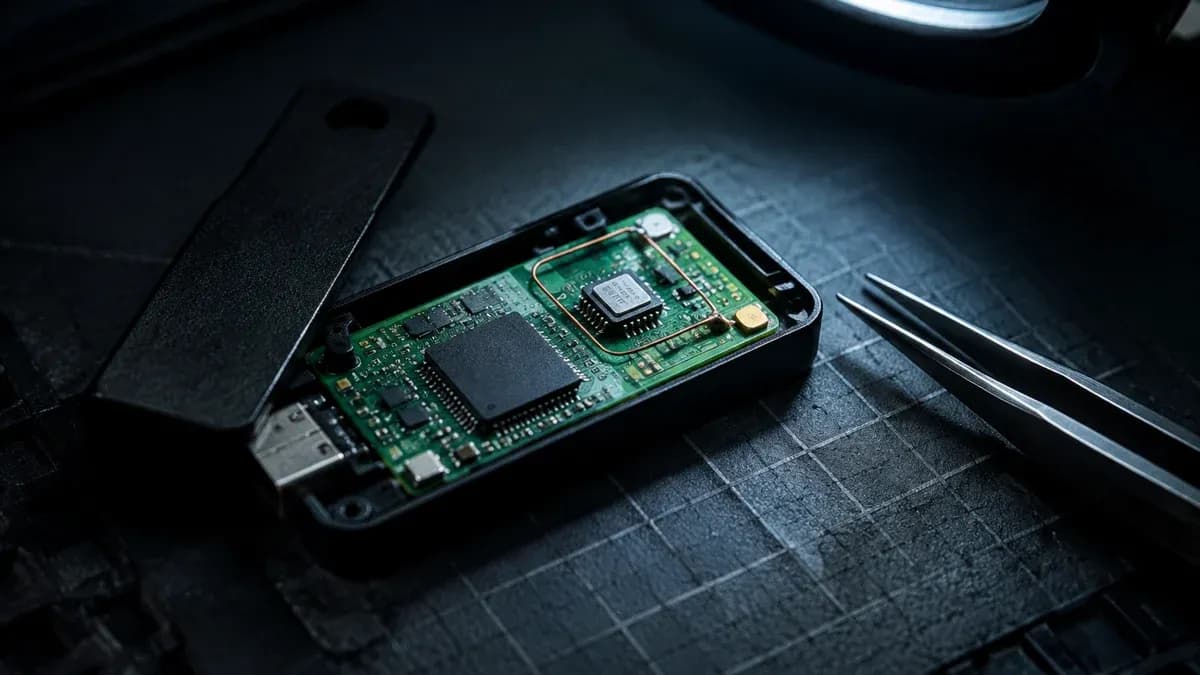
Since Friday, Ledger users in Southeast Asia have been reporting empty wallets, and analysts count more than $86 million. Ledger has halted the reseller CryptoBilis. An implant inside the device reportedly reads the seed phrase. What is known, what CZ advises and what you should do now.
More from CryptoTicker