
Oil Hits $100 as Iran Tensions Escalate — Why Bitcoin and Altcoins Are Falling
Oil surged above $100 as US-Iran tensions intensified, pushing Bitcoin below $65,000 and triggering losses across the crypto market.





Which topics should we dive deeper into?
Select what genuinely interests you. Your picks feed directly into our editorial planning.
Crypto news that's actually worth your time.
Weekly. 60 seconds. Carefully curated by our editors: no hype, no promo flood, no spam.
Bitcoin and the wider crypto market moved sharply lower on Thursday as escalating tensions between the United States and Iran pushed oil above $100 per barrel. The renewed geopolitical uncertainty erased part of this week’s crypto recovery and returned inflation and interest-rate concerns to the center of the market.
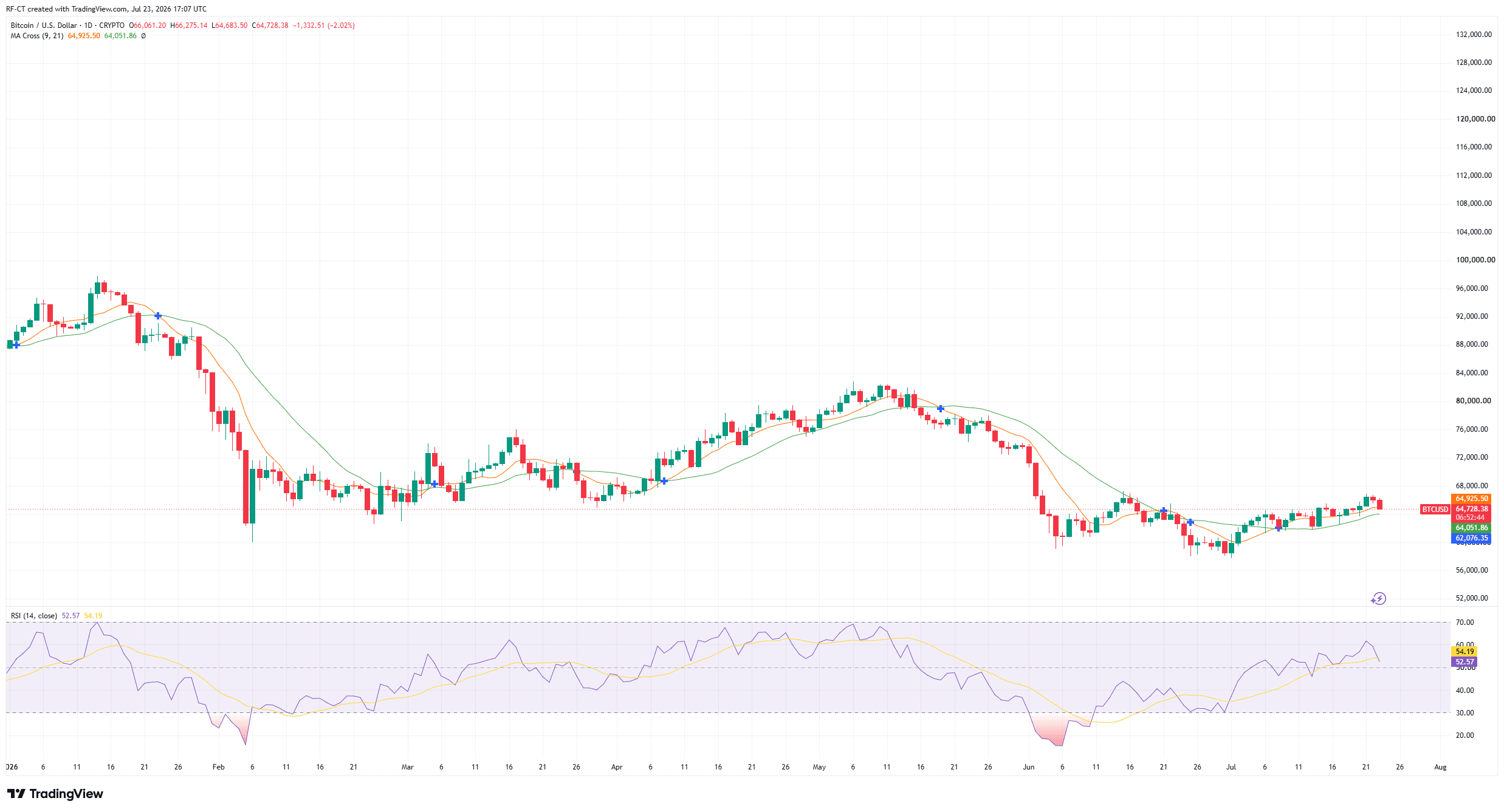
Bitcoin fell below $65,000 after recently approaching $67,000. Ethereum slipped under $1,900, while XRP, Solana, Dogecoin and Cardano recorded even larger daily losses.
The immediate question is whether this is a temporary reaction to breaking news or the beginning of another significant crypto correction.
Why Did Oil Rise Above $100?
Brent crude jumped approximately 7% to more than $100 per barrel, reaching its highest level in nearly two months. West Texas Intermediate also moved above $90.
The surge followed attacks by Iran-aligned Houthi forces on two Saudi oil tankers in the Red Sea. The group also threatened to disrupt Saudi oil shipments through the Bab el-Mandeb Strait, one of the world’s most important maritime trade routes.
These attacks are particularly concerning because shipping through the Strait of Hormuz has already been severely disrupted. If both the Strait of Hormuz and the Red Sea become increasingly dangerous for tankers, a substantial share of global energy supplies could face delays or complete interruption.
US President Donald Trump subsequently promised significant military punishment against Iran and its regional allies, raising concerns that the conflict could expand further.
Goldman Sachs analysts have warned that Brent crude could rise above $120 if the supply disruption continues.
Why Is Bitcoin Falling When Oil Rises?
Bitcoin does not depend directly on oil, but a major energy shock can affect nearly every risk asset.
Higher oil prices increase transportation, manufacturing and electricity costs. Businesses frequently pass those costs on to consumers, creating another source of inflation.
If inflation starts accelerating again, the Federal Reserve may be unable to reduce interest rates. It could even consider additional rate increases if price pressures become severe enough.
That possibility is already entering market expectations. Following oil’s surge, traders reportedly began assigning an almost 40% probability to a Federal Reserve rate hike at its next meeting. Only a few days earlier, the probability had been in the single digits.
Higher rates generally hurt Bitcoin, technology stocks and other speculative investments. Investors can earn more from government bonds while taking considerably less risk, reducing the appeal of non-yielding assets.
Crypto Market Turns Red
Bitcoin was trading around $64,700 after falling roughly 2% over 24 hours. The decline followed its rejection near the important $67,000 resistance level.
Ethereum dropped close to 3% to approximately $1,888, losing the psychologically important $1,900 level. The damage was more pronounced among several major altcoins:
- XRP declined approximately 3.8%.
- Solana fell around 3%.
- Dogecoin lost nearly 5%.
- Cardano dropped more than 5.5%.
- Stellar declined approximately 4.5%.
Hyperliquid, Zcash and Monero were among the few major cryptocurrencies remaining positive during the same period.
The performance suggests investors are reducing exposure to higher-risk altcoins first. This is typical during periods of geopolitical uncertainty, when liquidity moves toward cash, government bonds and other defensive assets.
 Crypto exchanges compared
 CryptoTicker trading game: try it free
Bitcoin’s Safe-Haven Narrative Faces Another Test
Bitcoin is frequently presented as digital gold and a hedge against political instability. However, its reaction to the latest Iran escalation tells a more complicated story.
Instead of rising alongside geopolitical risk, Bitcoin declined with stocks. This suggests that traders are still treating BTC primarily as a risk asset, especially when an international crisis threatens inflation and monetary policy.
Bitcoin may benefit from currency debasement and long-term concerns about government debt. In the short term, however, sudden market shocks often lead investors to sell liquid assets to reduce risk or cover losses elsewhere.
This does not necessarily invalidate Bitcoin’s long-term safe-haven argument. It does show that Bitcoin can behave very differently from gold during the initial stage of a crisis.
Can Bitcoin Recover?
The $64,000 to $65,000 area is now the first important zone to watch. If Bitcoin stabilizes above this region, the decline could remain a normal correction following its 13% recovery from July’s lows.
A rebound would need to push BTC back above $67,000. Breaking that resistance could reopen the path toward $70,000 and then the 200-day moving average near $72,800.
The bearish scenario would begin with a decisive loss of $64,000. That could expose the recent support zones around $62,000 and $60,000. Altcoins would likely experience proportionally larger losses if Bitcoin moves toward those levels.
The next move will depend heavily on developments in the Middle East. Any indication of de-escalation or restored shipping routes could pull oil lower and help crypto recover. Additional attacks on tankers, energy facilities or strategic waterways could push oil higher and extend the risk-off move.
Is Another Crypto Crash Coming?
The current decline is not yet large enough to confirm a new crypto crash. Bitcoin remains above its recent lows, and the market has not experienced the type of widespread liquidation cascade normally associated with a major breakdown.
However, the combination of $100 oil, rising bond yields, renewed rate-hike expectations and escalating military action creates a dangerous environment for speculative assets.
Crypto investors should therefore watch oil alongside Bitcoin. As long as Brent remains above $100 and the conflict continues expanding, BTC may struggle to regain $67,000—even if ETF demand and regulatory developments remain supportive.
For now, geopolitical risk has taken control of the market, and Bitcoin’s next major move may be decided outside the crypto industry.
Frequently asked questions about the oil price and Bitcoin
More on Bitcoin: All Bitcoin news at a glance
Related articles
- $900 Billion Surge — But Markets May Be Pricing a Peace That Doesn’t Exist
- Crypto Market Crash News As BTC Price Crash Back To 56K
- Crypto Market Crash: Why Prices Plummeted After Trump’s Iran Oil Threat
- Iran-Israel War Escalation: Why the Crypto Market is Crashing Today
- Crypto Market Up: Bitcoin Breaches $71K, Altcoins Follow Suit, Eyes on New Highs
Which topics should we dive deeper into?
Select what genuinely interests you. Your picks feed directly into our editorial planning.
Crypto news that's actually worth your time.
Weekly. 60 seconds. Carefully curated by our editors: no hype, no promo flood, no spam.

March 25, 2026 4:24 PM

Markets Are Pricing Peace — But Crypto Is Sending a Different Signal
Bitcoin holds $70K as markets rally on Iran ceasefire hopes, but weak altcoins signal caution. Is crypto doubting the peace narrative?
July 17, 2026 3:24 PM

$1 Trillion Wiped From US Stocks at Open as Iran Strikes US Bases — Is Crypto Next?
US equities shed ~$1T at the open as Iran hits US bases across the Gulf. Oil is surging, Bitcoin already slipped — here's what it means for crypto.
March 31, 2026 7:57 PM

What Threat Could Crash the Crypto Market? War-End Rally Faces Hidden Risk
Crypto markets surge on war-end hopes, but threats to US companies and rising oil prices could trigger a sudden crash.
July 29, 2024 9:15 AM

Bitcoin Price Prediction: Can BTC Price Record A New All Time High Before End Of July?
This week kicked off with renewed energy across the crypto market, fueled with optimism. But would it be enough for BTC price to reach a new all-time high before July ends?
November 5, 2025 1:16 PM

$1 Trillion Wiped: Risk-Off Storm Engulfs Stocks & Crypto
Global markets plunge as tech stocks and crypto crash, wiping over $1 trillion in value amid AI bubble fears and investor risk-off panic.

May 5, 2026 11:25 AM

Bitcoin Stability Tested: BTC Holds $80,500 After UAE-Iran Conflict Escalation
Bitcoin stabilizes at $80,500 after a brief 81k breach as Iran-UAE tensions escalate. How are geopolitical risk and oil surges impacting the crypto market?
April 12, 2026 11:07 AM

Bitcoin Price Drops to $71,500 as US-Iran Peace Talks Collapse in Islamabad
Bitcoin retraces to $71,500 after failed US-Iran peace talks in Pakistan. Geopolitical tensions resurface, impacting the global crypto market sentiment.
March 21, 2026 7:32 PM

Why Bitcoin Is Ignoring the Iran War — Markets Are Sending a Strange Signal
Bitcoin holds steady despite Iran war tensions and rising oil prices. Why is crypto ignoring geopolitical risk?
June 18, 2026 7:03 PM

Bitcoin Got the Wrong Crash: Oil Fell, But Crypto Took the Hit
Oil crashed after peace headlines, a move that should have helped Bitcoin. Instead, BTC fell below $63K, ETH dropped under $1,700, and crypto longs were wiped out.
February 25, 2026 3:25 PM

Will Crypto Prices Rise if the USA Attacks Iran? A Historical Analysis
Analyzing Bitcoin and crypto price reactions to USA-Iran tensions. Will BTC rise as a hedge or fall during geopolitical conflict?
March 20, 2026 9:16 PM
US Stablecoin Deal Reached Amid Iran Ground War Fears
US Senators and White House reach a stablecoin deal as CBS reports potential ground forces in Iran, sending crypto prices into a volatile tailspin.
March 1, 2026 6:32 PM

Iran Strikes Oil Tankers in Strait of Hormuz: Will Crypto Prices Crash on Monday?
Iran claims strikes on US and British tankers in the Strait of Hormuz. Here is how Bitcoin and crypto markets might react on Monday's open.
January 21, 2026 9:58 AM

Why Is Crypto Crashing? 3 Top Reasons Behind the Crypto Crash
The crypto market is facing a sharp correction. We analyze the top 3 reasons why Bitcoin and altcoins are crashing right now, from geopolitics to liquidations.
May 24, 2026 11:36 AM

Bitcoin Price Explodes Past $77,000 as Trump Discloses Near-Final Iran Peace Deal
Bitcoin crossed $77,000 following Donald Trump's announcement of a pending peace deal with Iran, triggering $180 million in crypto short liquidations.
May 20, 2026 4:47 PM
Bitcoin Price Poised for $82,000 as Trump Signals "Final Stages" of Iran Peace Talks
President Trump reveals the US is in the final stages of talks with Iran, sparking a major market relief rally as Bitcoin eyes a fast breakout past $80,000.
June 25, 2024 12:18 PM

After Bitcoin Crash, Will Altcoins Gains Reach 500%?
In the latest Bitcoin News today, and mainly after the Bitcoin Crash, crypto analysts predict a major shift towards altcoins with market corrections near the end and BTC dominance drop. Will the altcoins gain reach 500%?
August 10, 2026 6:52 PM
Why Is Crypto Down Today? Iran Shuts the Door on US Talks Until 2029
Crypto gave back its morning gains after Iran ruled out talks with Washington until 2029. Bitcoin lost $65,000, oil jumped 5% and altcoins bled again.
May 6, 2026 3:16 PM

Trump Warns Iran: Bitcoin Price Dips to $81,600 as Geopolitical Tensions Flare
Bitcoin drops from $82,800 to $81,600 following Trump’s latest Iran warning. Is this a trend reversal or just a healthy market correction?
June 24, 2024 10:37 AM

Bitcoin Price Prediction: Can BTC Price Fall Below 50K?
The profitability of Bitcoin futures cash-and-carry trades has plummeted amid a significant crypto market selloff. What are the reasons behind the decline and what can traders expect next?
April 20, 2024 4:07 PM

What Happened To Cryptos After Bitcoin (BTC) Halving Today?
Today's cryptocurrency market highlights: Bitcoin over $64k and Ethereum towards $3,1k. But what about altcoins?
June 18, 2026 9:43 AM

Oil Crashes 38% to a 3.5-Month Low — Why This Is Bullish for Crypto
Oil crashed 38% to $74, near pre-war levels. Lower oil means lower inflation and more rate-cut odds — and that's a tailwind for Bitcoin and crypto.
August 5, 2026 6:05 PM

Gold Price Jumped 4.4% in a Day — Why Bitcoin Stalled at $64,000
Gold gained 4.4%, adding roughly $1.3 trillion in market value, while Bitcoin remained near $64K. Here is why crypto failed to follow.
November 4, 2025 9:51 PM

BREAKING: Bitcoin Crashes Below $100K, Panic Grips the Crypto Market
Bitcoin just plunged below $100K for the first time in months, dragging the entire crypto market into a sea of red. Is this the start of the long-awaited correction?
July 15, 2024 11:02 AM

Bitcoin Price Prediction: BTC Price Surge STARTING or ENDING?
Amid the current market rally, all eyes are on Bitcoin price, especially following the attack on one of its most strategic supporters. With the current BTC price surge, here are the predictions of how high and for how long.
February 20, 2026 6:00 AM
Top 3 Reasons Why Cryptos Might Crash Hard Soon: Geopolitics and Macro Risks
Is a crypto crash coming? Explore the top 3 reasons why Bitcoin and altcoins could face a major sell-off, from Middle East tensions to Fed policy.


More from CryptoTicker