
Oil Crashes 38% to a 3.5-Month Low — Why This Is Bullish for Crypto
Oil crashed 38% to $74, near pre-war levels. Lower oil means lower inflation and more rate-cut odds — and that's a tailwind for Bitcoin and crypto.





Which topics should we dive deeper into?
Select what genuinely interests you. Your picks feed directly into our editorial planning.
Crypto news that's actually worth your time.
Weekly. 60 seconds. Carefully curated by our editors: no hype, no promo flood, no spam.
Oil has crashed roughly 38% from its war-driven peak, hitting a 3.5-month low near $74 per barrel. It now sits just about $7 away from $67 — the level it traded at before the US-Iran war even started. In other words, the entire conflict premium that inflated energy prices for months has almost completely drained out of the market.
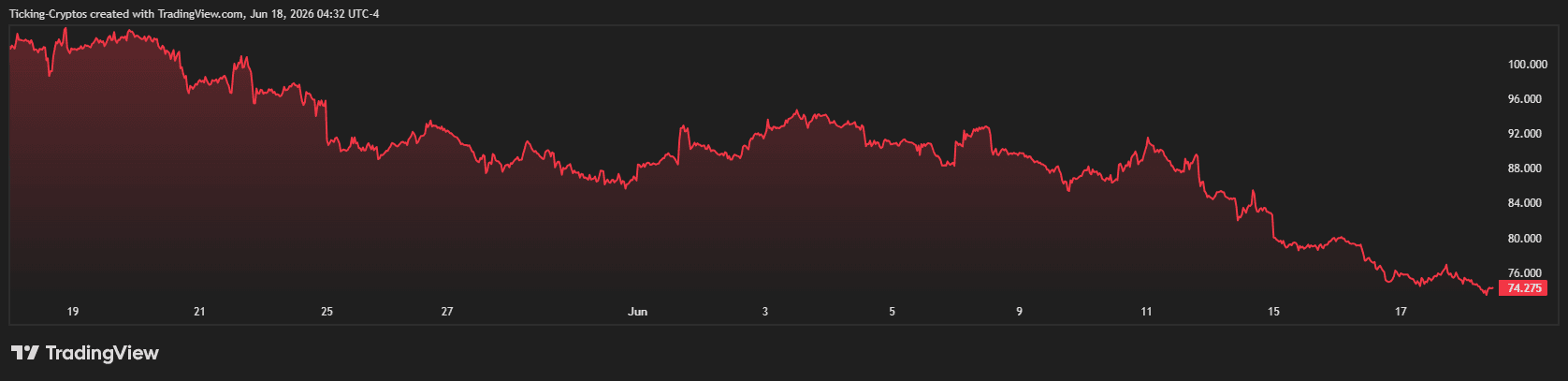
That matters far beyond the energy sector. Cheap oil sits upstream of nearly everything in the economy, and the chain reaction it sets off runs straight into the macro conditions that drive $Bitcoin and the broader crypto market. Here's why this oil crash could be one of the more underrated tailwinds for crypto right now.
Why Did Oil Crash to a 3.5-Month Low?
The collapse traces back to one catalyst: de-escalation. With the US and Iran signing an interim peace agreement that reopens the Strait of Hormuz and clears the way for Iranian oil exports to return, the supply fears that drove crude toward triple digits during the war have evaporated.
Several forces are now compounding the downside:
- Supply is coming back. The deal allows Iran to resume exports, and more than 100 oil-laden ships previously stranded in the Gulf can begin moving again.
- A looming surplus. The International Energy Agency has warned of a potential global oil glut, projecting supply growth far outpacing demand into 2027.
- Fading risk premium. Crude has fallen nearly 40% from its conflict peak as the geopolitical fear that was priced in unwinds.
The result is gasoline slipping back below politically sensitive levels and energy costs broadly resetting toward where they sat before the war.
How Do Lower Oil Prices Affect Inflation?
This is the heart of why crypto investors should care. Oil is a foundational input cost across the entire economy, and when it falls, the effects ripple outward:
- Lower prices of goods. Energy feeds into manufacturing, transportation, and shipping. Cheaper crude lowers the cost of producing and moving almost everything, which filters through to consumer prices.
- Lower inflation. Falling fuel and energy costs are one of the most direct drags on headline inflation. As oil resets toward pre-war levels, that inflationary pressure eases.
- More chances of rate cuts. This is the key link. Central banks raise rates to fight inflation; when inflation cools, the case for holding rates high weakens, and the path toward rate cuts reopens.
That final point is the bridge from a barrel of oil to your crypto portfolio.

Why Are Rate Cuts Bullish for Bitcoin and Crypto?
Crypto is among the most rate-sensitive asset classes in the market. The logic runs through liquidity and risk appetite:
- Cheaper money flows into risk. When interest rates fall, holding cash and bonds becomes less attractive, pushing capital toward higher-risk, higher-reward assets like Bitcoin, Ethereum, and altcoins.
- Looser financial conditions. Rate cuts loosen overall liquidity in the system. Crypto has historically performed best when liquidity is expanding, not contracting.
- Lower opportunity cost. Bitcoin produces no yield, so when "safe" yields drop, the opportunity cost of holding BTC falls with them — making it relatively more appealing.
The recent crypto drawdown was driven in large part by the opposite of all this: a hot labor market, sticky inflation, and rate-cut hopes getting pushed further out. An oil-driven disinflation impulse flips that script.
What Does the Oil Crash Mean for the Crypto Market Outlook?
Put the pieces together and a clear macro tailwind emerges. The single biggest geopolitical overhang on markets is lifting, energy prices are resetting toward pre-war levels, inflation pressure is easing, and the door to rate cuts is creaking back open. For an asset class that thrives on liquidity and risk appetite, that's a constructive backdrop.
A few caveats keep it honest:
- The Fed hasn't pivoted yet. Policymakers held rates steady at their latest meeting and remain cautious. Lower oil improves the odds of cuts but doesn't guarantee their timing.
- Disinflation takes time to show up. Oil's drop needs to feed through into actual inflation data before the central bank acts on it.
- The peace deal is interim. The current US-Iran framework is a 60-day arrangement, not a permanent settlement, leaving room for renewed volatility.
Oil's Loss Could Be Crypto's Gain
The oil crash is more than an energy story — it's a macro signal. Lower oil means lower input costs, cooler inflation, and a clearer runway toward the rate cuts that have historically fueled crypto rallies. While nothing in markets is guaranteed, the chain of cause and effect points in a direction crypto holders have been waiting for: easing inflation, returning liquidity, and a macro environment that finally leans risk-on rather than risk-off.
After months of geopolitical fear weighing on Bitcoin and the broader market, a 38% oil crash toward pre-war levels is exactly the kind of quiet, fundamental tailwind that tends to matter more than the headlines suggest.
Related articles
- Copper Price Slides as Gold and Silver Crash — What It Signals for Crypto and Markets
- Crypto Markets on Edge on 14 January 2026: US PPI Surprise Ahead of the Tariff Ruling
- Oil Crashes Below $81 as US–Iran Deal Reopens Hormuz — Bitcoin and Top 10 Cryptos Rally on the Week
- Trump Says Oil Will Tumble When the Iran War Ends: What That Would Mean for Crypto
- Crypto Market Prediction: Will Bitcoin Rally or Crash After US-Iran Decision?
Which topics should we dive deeper into?
Select what genuinely interests you. Your picks feed directly into our editorial planning.
Crypto news that's actually worth your time.
Weekly. 60 seconds. Carefully curated by our editors: no hype, no promo flood, no spam.

March 27, 2026 3:41 PM

Oil Shock Is Crushing Crypto — Here’s the Hidden Link Investors Miss
Rising oil prices and war tensions are pressuring crypto markets. Discover how the global energy shock is driving Bitcoin and altcoins down.
March 28, 2026 1:51 PM
Russia Bans Oil Export: Are Crypto Prices Affected?
Russia bans gasoline exports from April 1, pushing oil prices higher. Here’s how the energy shock could impact Bitcoin and crypto markets.
July 27, 2026 6:51 PM

Oil Crashes 11%, Bitcoin Price Retakes $65K: What Now?
WTI collapsed from $94 to $84 after the US paused strikes on Iran. Bitcoin reclaimed $65,000 and ETH neared $2,000. Here is why oil now drives crypto.
March 29, 2026 7:02 PM

Is This the First Real Global Liquidity Crisis of the Crypto Era?
War, oil shocks, and tightening liquidity are hitting crypto markets. Is this the first real global liquidity crisis of the crypto era?
April 15, 2026 8:34 PM

Crypto Pumping on Fed Drama — But This Rally Could Turn Fast
Crypto rises as Trump pressures the Fed and rate cuts loom. But this rally may be fragile amid political risks and market instability.
April 12, 2026 1:00 PM

Saudi Arabia Restores East-West Pipeline: Why This Is a Medium-Term Win for Crypto
Saudi Arabia restores its 7M bpd East-West pipeline, bypassing the Strait of Hormuz. We explore how this energy stability could catalyze a medium-term crypto rally.
April 2, 2026 12:08 PM

Safe Havens Are Failing — Why Gold, Silver, and Crypto Are All Falling Together
Gold and silver are crashing despite war tensions. Why are safe havens failing—and what does it mean for crypto markets?
April 21, 2026 4:33 PM
Crypto News: Trump Pressures the Fed as Iran Risks Rise — What It Means for Bitcoin
Trump pressures the Fed while Iran risks keep markets on edge. Here is why both could shape Bitcoin’s next move.
June 5, 2024 5:03 PM

Crypto Market Up: Bitcoin Breaches $71K, Altcoins Follow Suit, Eyes on New Highs
Cryptocurrencies are experiencing a surge, with Bitcoin leading the charge by surpassing $71,000. This bullish trend extends to altcoins, igniting optimism across the market. Will Bitcoin reach new highs?
December 5, 2025 4:32 PM
Bitcoin Drops Below $90K — What Caused It, and What Comes Next?
Bitcoin fell below $90K after liquidation cascades, but cooling inflation, QT ending, and rising liquidity now point to a potential rebound.
July 17, 2026 3:24 PM

$1 Trillion Wiped From US Stocks at Open as Iran Strikes US Bases — Is Crypto Next?
US equities shed ~$1T at the open as Iran hits US bases across the Gulf. Oil is surging, Bitcoin already slipped — here's what it means for crypto.
March 31, 2026 7:57 PM

What Threat Could Crash the Crypto Market? War-End Rally Faces Hidden Risk
Crypto markets surge on war-end hopes, but threats to US companies and rising oil prices could trigger a sudden crash.
July 8, 2026 6:22 PM
Why Is Crypto Crashing Today: US Strikes on Iran and a Collapsing Ceasefire
Fresh US airstrikes on Iran and a ceasefire declared "over" sent crypto into the red today. Here's why Bitcoin, Ethereum and altcoins are bleeding.
August 5, 2024 10:58 AM

What Are The Reasons Driving The CRYPTO MARKET CRASH?
The recent crypto market crash, starting with the major fall of Bitcoin and followed by major Altcoins has been fueled by multiple factors...Here are the major ones...
August 12, 2025 2:05 PM
Crypto Market Outlook After US Inflation Data: Bitcoin Eyes $125K as CPI Hits 2.7%
US CPI lands at 2.7%, boosting hopes for September rate cuts. Bitcoin eyes $125K while altcoins prepare for possible rallies.
June 24, 2024 10:37 AM

Bitcoin Price Prediction: Can BTC Price Fall Below 50K?
The profitability of Bitcoin futures cash-and-carry trades has plummeted amid a significant crypto market selloff. What are the reasons behind the decline and what can traders expect next?

October 14, 2026 7:40 PM

US inflation rises to 3.7 percent, core rate above forecast: what matters now for Bitcoin
US consumer prices rose 3.7 percent in September, and the core rate 2.6 percent. Both figures came in above forecast, two weeks before the Fed decision on October 28.
May 1, 2026 6:08 PM

Crypto Market Rally Faces New Test as Trump’s EU Tariffs Threaten Inflation Comeback
Bitcoin holds above $78K as Trump’s EU tariff threat revives inflation fears. Can the crypto market rally survive renewed trade tensions?
June 10, 2026 5:18 PM
Trump Warns Iran Will "Pay the Price" After Helicopter Downing: Crypto and Global Markets React
Donald Trump warns Iran will pay the price after a US helicopter downing, triggering military strikes and volatility across crypto and global markets.
February 11, 2026 7:58 PM

US Jobs Market: 862,000 Payroll Revision Hits 15-Year High and Cryptos are Bleeding
The US labor market was much weaker than thought. A -862,000 payroll revision for 2025 sends shockwaves through the economy and pressures Bitcoin prices.
April 14, 2026 9:02 PM
Why Is Crypto Up Today? Cooling Inflation and Fed Rate Cut Bets Spark Market Rally
Crypto is rising as inflation cools and rate cut bets grow. Here’s why Bitcoin and altcoins are rallying today.
September 14, 2024 12:01 PM
Bitcoin Surges Past $60K: The Start of a Major Rally or Just Another Bull Trap?
Bitcoin has surged past $60,000, sparking optimism among investors. But with looming market volatility and whale activity, is this the start of a new rally or just another bull trap?
January 29, 2025 8:00 AM
FOMC and Crypto: How Can the First FOMC Meeting Under Trump Affect the Crypto Market?
The first FOMC meeting under President Trump is set to take place tomorrow. Discover all possible scenarios and their impact on Bitcoin and the crypto market.
March 27, 2026 9:48 PM

$900 Billion Surge — But Markets May Be Pricing a Peace That Doesn’t Exist
$900B added to US stocks as Bitcoin surges and oil crashes after Trump’s Iran statement—but is the market pricing a false peace?
October 8, 2026 4:38 AM

Crypto Market Slides: Bitcoin Loses 4.2 Percent and $651 Million of Long Bets Are Liquidated
Bitcoin has lost 4.2 percent since Tuesday afternoon, and ether and XRP more still. Three reasons can be documented: outflows from the US ETFs, $651 million of forcibly closed long bets and Fed minutes holding out the prospect of another rate rise. A crash it is not, and what to check before buying more is set out here.


More from CryptoTicker