
Aave loop module: 114.09 ETH drained from two Safe multisigs, and what you can do now
Around 114.09 ETH flowed out of two Safe multisig wallets because the access control of a helper contract around Aave v3 could be bypassed. Aave's core pools and the Safe core were untouched; only wallets with an active loop module were affected.





Which topics should we dive deeper into?
Select what genuinely interests you. Your picks feed directly into our editorial planning.
Crypto news that's actually worth your time.
Weekly. 60 seconds. Carefully curated by our editors: no hype, no promo flood, no spam.
What was hit were not the lending markets of Aave but two individual wallets that had an add-on module switched on. According to the security firm SlowMist, around 114.09 ETH flowed out of two Safe multisig wallets because the access control of an external helper contract around Aave v3 could be bypassed. Anyone running a Safe of their own therefore has a clearly defined task: look at which modules are active there, and switch off everything that is not needed.
A Safe multisig is a wallet that sits on the blockchain as a contract and only acts once a set number of signatures has come together. A module is an additional contract that this wallet allows to trigger transactions even without the full signing quorum. It was precisely that short cut which was used here.
The attack in detail: FlashLoopAdapter, a forged Safe and 114.09 ETH
The component attacked is called FlashLoopAdapter and sits at the address 0x16bb8b912da187870c23ec6756bb3fad061283d8. According to SlowMist's analysis, which the firm published on October 2, 2026 via its X channel and which TechFlow Post reproduces verbatim, the access control of that adapter's open() and close() functions could be tricked with a rebuilt Safe contract. The forged contract answered every permission query with a yes. Access control means the checking routine by which a contract decides whether a caller is entitled at all.
A second weakness came on top. The internal _swap() function left the choice of the router and of the call data passed with it to the caller. A router is the contract through which a swap is executed; call data are the instructions sent along with it. Anyone who can determine both freely can redirect a swap into an arbitrary transfer. Combined with the bypassed permission check, that was enough to trigger the module execution in the victim's Safe itself.
Which assets left the contract
What was drained, according to the report by The Crypto Times, was weETH and collateral deposited with Aave. weETH is a liquid restaking token: a receipt for deposited ether that itself remains tradeable and keeps collecting staking income. To release the collateral, the attacker repaid around 1,300 WETH of debt according to SlowMist's assessment. WETH is the token-wrapped form of ether that contracts can process directly.
The operation was financed through a flash loan from Morpho of 11,537 WETH, around 31 million dollars at the rate at the time according to The Crypto Times. A flash loan is a loan without collateral that has to be repaid within the same transaction; if repayment fails, the entire transaction is discarded. Here it was repaid as planned. What was left with the attacker at the end was a profit of 114.09 ETH, about 307,065 dollars at the time of the transaction according to the same source.
The sum is small compared with the large incidents of the year. Measured by the mechanism it is not: the attack needed no stolen key and no signature from the owner. It needed only an activated module.
What the loop module in a Safe actually does: leverage on the staking yield
Looping, sometimes also called leveraged staking, is a cycle of depositing and borrowing. You deposit a liquid staking token as collateral, borrow ether against it, swap the borrowed ether back into the same staking token and deposit again. Every round raises the share that earns income and the debt at the same time. As long as the staking yield sits above the borrowing rate, the surplus grows. If that relationship turns, the interest eats the yield.
Running this cycle several times by hand is expensive and slow. That is why there are helper contracts that bundle all the steps into one transaction. For such a contract to be able to do that for a multisig wallet, it has to be registered as a module. The gain in convenience is real, and the price for it has now appeared on the bill: the module may act without anyone signing.

The timeline: transaction on October 1, warning on October 2
The order of events explains why many holders did not notice the incident at first. According to The Crypto Times the transaction was confirmed on October 1, 2026 at 15:08:47 UTC in block 26098264 of the Ethereum blockchain. SlowMist's public warning followed on October 2, 2026 at 02:59 UTC, around twelve hours later. The same report names 0x42c2633438609881c8fBAb82414eb9A0c45F9353 as the attacker address.
Twelve hours is a long time in this situation, and it is no reproach to the analysts. A module call looks on the blockchain like an ordinary transaction from a wallet. There is no alarm bell that rings when a module does something the owner never wanted. Anyone wanting to know whether their Safe is affected has to look into the module list actively.
 Compare the best hardware wallets
Why Aave v3 and the Safe core are not affected
This point is easily abbreviated in news reports, and the abbreviation is expensive because it triggers panic in the wrong place. On The Crypto Times' account, the core pools of Aave v3 were not compromised, and the core of the Safe contracts themselves also remained untouched. The flaw sat in the FlashLoopAdapter, a contract outside both systems.
What was open to attack were therefore only Safe wallets that had enabled this adapter as a module. Anyone who deposited ether or weETH directly with Aave without using a loop module was, on this description, not part of the attack surface. Nor was anyone holding through an exchange who has never set up a Safe.
In practice that means a clean dividing line. The question is not whether you use Aave. The question is whether one of your wallets has allowed an external contract to act in its name. That is a property of your wallet, not a property of the protocol.
Module rights in a Safe: where a module replaces your signature
A Safe knows several kinds of permission, and they differ in power. A token approval lets a contract move a certain amount of a certain token. A module goes further: it may trigger transactions in the wallet's name without passing through the signing quorum. A guard, by contrast, restricts what is allowed through at all.
In practice that means a single poorly built module can defeat the whole multi-signature set-up. The three signatures you need for a transfer apply to the normal route. The module takes a different one. The case of October 1 is not the first of its kind; in September a module flaw in another context had already moved a sum in the millions without a signature.
What helps when clearing up, and what does not
An active module can be inspected and removed in the Safe interface under settings. Removing it is itself a transaction and needs the normal number of signatures, so it costs network fees and a little time. Nothing can be recovered that way: funds that have flowed out are gone, even if the module is switched off afterwards. Switching it off prevents the next access, not the last one.
Anyone holding larger amounts long term and running no automated strategies is better served by a wallet whose keys never leave a dedicated device. Which devices do what, and where the differences in handling and recovery lie, is set out in the hardware wallet comparison. For a wallet without modules there is no module flaw.
weETH, looping and liquidation: what hung on the position
The wallets affected held no dormant balances but running loop positions. That matters for placing the case, because two risks hang on a looping position at the same time. One is the interest gap between the staking yield and the borrowing rate. The other is liquidation.
Liquidation means that a lending protocol forcibly sells the deposited collateral as soon as the ratio of debt to collateral breaches a set threshold. With a leveraged cycle that margin is narrow by construction, because every round raises the debt. A price drop of a few percent in the deposited token can then be enough. That an external contract additionally had access in this incident was a third risk on top, one many did not have on their list at all.
For holders in Germany there is a tax point on top that is easily lost in these cycles. Every swap inside the cycle is an event of its own, and every round creates new acquisition dates. Anyone wanting to use the one-year holding period under Section 23 of the German Income Tax Act has to be able to evidence those dates without gaps. An automated module creates exactly such events in larger numbers, and it does so even when you have clicked on nothing yourself.
 Compare staking platforms and yields
Statements from Aave and Safe: it stayed quiet into the evening of October 2
According to The Crypto Times' report, no official statements on the incident were available from either Aave or Safe as at publication. Likewise, on this account, no confirmed patch, no pause and no compensation plan had been announced. Advice to switch the module off came from the security community, not from the protocols themselves.
That is less unusual than it sounds, and it has an understandable cause. A flaw in a contract that belongs neither to the protocol nor to the wallet software cannot be fixed from there either. Nobody can switch off an external contract on other people's behalf. For you, though, it means you should not wait for an all-clear from official quarters, because in this constellation it may never come.
For context, the third quarter of 2026 was the most loss-making of the year according to the available assessments. Against the large individual cases of those months, damage of around 307,000 dollars is a footnote. For the two wallets affected it was not, and the attack route via module rights remains open as long as the adapter is active anywhere.
Looping from Germany: the purchase route under MiCA and the holding period
Anyone entering such strategies from Germany makes two decisions that should be kept apart. The first is the purchase route. Since the start of 2026, crypto services in Germany may only be provided by firms authorised under the EU regulation MiCA; the competent supervisor is BaFin. That concerns the route by which you buy and hold ether or a staking token.
The second decision concerns what happens afterwards in your own wallet. A cycle run through a DeFi protocol runs over contracts for which you yourself are the custodian; no authorised service provider is involved there. There is no deposit protection, no complaints body and no provider that makes good a module flaw. The two together give the practical order of play: a regulated purchase route for the holding, and very deliberate decisions about every permission you hand out afterwards.
In tax terms the point made above still stands. Staking income and swap transactions are treated differently, and an automated cycle creates many events that you have to evidence after the fact. Anyone not documenting that as they go will, in case of doubt, not get the holding period recognised.
Aave loop module: What to take away
The situation is manageable and calls for no haste. Three steps make sense, in this order:
- Go through the module list in your Safe and remove what is unnecessary. Open the settings in every multisig wallet and look at the modules registered there. Anything you are not actively using goes; removal is a normal transaction with the usual quorum. How wallet types differ in handling, recovery and the granting of rights is shown by the software wallet comparison.
- Recalculate any running loop positions. Set the current staking yield against the borrowing rate and look at how far your buffer reaches to the liquidation threshold. Anyone preferring to collect income without leverage will find providers' terms in the overview of staking platforms.
- Separate the purchase route from the DeFi part. Leave the holding you only want to hold with a provider authorised under MiCA, and move into the cycle only what you could afford to lose in the worst case. Which houses hold an authorisation is set out in the overview of regulated crypto exchanges.
The core of the incident is no weakness of Aave and none of Safe. It is a reminder that a multi-signature set-up is worth only as much as the list of contracts allowed to bypass it.
(As of October 2, 2026. This article is not investment advice. Prices and fee structures change; check the terms with the provider before you buy.)
Frequently asked questions about the Aave loop module
Transparency note: This article was produced with the assistance of artificial intelligence and reviewed by our editorial team before publication. All figures and claims were checked against the primary sources linked in the text. The feature image was generated with AI.
Related articles
- Check Your Safe Wallet Modules: How One Module Moved $7.7 Million Without a Signature
- $6 million out of a Base vault: what you can do now with your DeFi deposits
- More Markets Exploit: How a Liquid Staking Token and E-Mode Pulled $9.3 Million Out of a Lending Market
- Term Finance Governance Exploit: Why Audited Code Does Not Protect Your DeFi Deposits
- DeFi Hack: Aave and LayerZero Hit by Sophisticated DPRK Attack
Which topics should we dive deeper into?
Select what genuinely interests you. Your picks feed directly into our editorial planning.
Crypto news that's actually worth your time.
Weekly. 60 seconds. Carefully curated by our editors: no hype, no promo flood, no spam.

September 12, 2026 4:57 AM

sUSDe Yield Against the Aave Borrow Rate: Why the USDe Loop No Longer Pays
Aave has raised the base rate for USDe to 6 percent. Our own measurement on September 12 shows borrow rates between 6.02 and 6.39 percent against a 5.01 percent sUSDe yield, and how to work the difference out yourself.

April 21, 2026 11:15 AM

Breaking: Arbitrum Security Council Freezes $71M in ETH Linked to KelpDAO Exploit
The Arbitrum Security Council has frozen 30,766 ETH tied to the KelpDAO hack, sparking a fierce debate over decentralization and emergency powers in DeFi.
August 27, 2026 4:31 AM

Is AAVE a Good Buy at Current Prices?
AAVE has worked its way back above both the 200-day and the 50-day moving average, yet still trades far below its twelve-month high. Using our own price data, we examine what speaks for and against an entry at current prices.

March 3, 2025 3:18 PM

Aave Price Prediction: Is the Correction Over or More Pain Ahead?
Aave has bounced from key support after a sharp correction, but is this the start of a bullish reversal or just a temporary relief rally?

October 15, 2026 7:49 PM

Aave (AAVE) 13 percent below its weekly high, Babylon applies for native Bitcoin as collateral in V4: what matters now
Babylon Labs wants to bring native Bitcoin into Aave V4 as collateral, without wrapping and without a custodian. The first $500,000 of annual revenue goes entirely to the Aave DAO.
September 26, 2026 7:34 AM

Setting Up a Multisig Wallet: When Two of Three Keys Are Worth It for You
A multisig wallet demands several keys for a transfer and so makes a single theft worthless. We show which threshold fits you, what you have to back up besides the keys, and why most setups fail at the configuration.
August 31, 2026 4:12 AM
Cronos chain halt: how a Tectonic exploit emptied the chain's largest lending market
On August 30, 2026, the validators of the Cronos chain halted block production after an attacker had emptied the lending market Tectonic via an inflated TONIC price. What is established, why the damage figures diverge, and what you can check if your balance sits on a haltable chain.
April 21, 2026 8:57 AM

Aave Liquidity Crisis: The 'Slow Burn' Trap Freezing Millions in USDC and USDT
Aave faces a liquidity trap as USDC/USDT utilization hits 100%. Here's how the 'Slow Burn' mechanism freezes lender withdrawals and benefits borrowers.
December 12, 2024 1:38 PM

Aave Price Prediction: 10x Gains in Sight?
AAVE price just hit a new yearly high of $382.11 on December 12. Is this the start of a bigger rally? Let’s find out!
July 26, 2024 11:36 AM
Aave Price Prediction: AAVE Price To Reach $200?
Curious about AAVE's future? The buzz is that Aave (AAVE) might soar to $200!
October 8, 2026 7:30 AM

Guilty Verdict over a $53.3 Million DeFi Exploit: What Investors in Germany Need to Know
A Manhattan jury has treated the exploitation of a smart contract flaw as computer fraud, throwing out the “Code is Law” defence after a little over two hours. For holders in Germany, what counts above all is that MiCA does not cover decentralised pools and that nobody is liable when something goes wrong.
August 30, 2026 1:22 AM

Ajna Exploit: $775,400 Drained and No Pause Button in the DeFi Lending Protocol
Between August 28 and 29, 2026 roughly $775,400 drained out of seven Ethereum pools of the lending protocol Ajna v2. Because the contract is immutable and has no governance, there is no pause button: users have to withdraw themselves.
August 22, 2026 10:39 AM

Maya Protocol Exploit: MAYAChain Is Halted, What to Check Now on Cross-Chain Swaps
On August 18, 2026 an attacker drew roughly $1.65 million out of MAYAChain's liquidity pools through six chained faults, and the team then halted the chain globally. Anyone who swapped or provided liquidity there can check in a few minutes whether their own money is stuck in the halted system.
March 5, 2026 2:11 PM
Bitcoin Safe Haven Narrative Returns: Will Global Instability Push Investors Toward BTC?
As geopolitical tensions rise worldwide, investors are asking if Bitcoin can act as a safe haven like gold. Could global instability push more money into BTC?
May 23, 2025 6:49 PM
Cetus Hack on Sui Network: What Happened and Why SUI Price Is Crashing
A $260 million exploit on Sui’s top DEX, Cetus Protocol, has triggered panic across the ecosystem. Here's what really happened, how Sui is responding, and what it means for the SUI token price.
May 20, 2025 9:30 AM

AAVE Price Just Broke Out: How High Can It Go?
After smashing through key resistance levels, the question is no longer if but when AAVE will test $300.
November 28, 2022 7:47 AM

Aave Review 2022 – Is Aave Worthwhile?
This article is all about Aave review 2022 and whether Aave is worthwhile or not. Let’s take a look at it in more detail.
March 11, 2021 6:55 PM
Your Definite Guide on How to use AAVE App
Aave is one of the fastest-growing Lending and Borrowing DeFi Platforms. Growth has been exceptional for the platform. How to use Aave App?
October 19, 2026 7:37 PM

Cysic halts the bridge: ten million CYS with no backing, 6.22 percent more in circulation
On October 17 an attacker created ten million CYS with no backing through the Cysic bridge; 76 minutes later the foundation blacklisted the address, and 7.2 million tokens were already gone. The bridge remains switched off, and for holders of wrapped tokens the case reframes one question.
October 14, 2026 1:36 AM

MediaMarkt and Saturn halt Ledger sales after a customer reports an implant
Since October 13 MediaMarkt and Saturn have sold no Ledger devices, neither in store nor online. The trigger is a customer's report of an implant. What Ledger confirms, why the authenticity check does not help, and which steps make sense for devices bought in a store.
October 13, 2026 10:18 PM

Papertrade loses $1.28 million on launch day: the reference price came from Hyperliquid
The perpetuals venue Papertrade launched on October 10 with leverage of up to 1,000 and drew its execution prices from the Hyperliquid order book. One trader moved the Ether price there by around three dollars and took between $1.28 million and $1.54 million out of the liquidity pool, according to several trade publications.
October 10, 2026 3:39 PM

Will AI Break Bitcoin? Vitalik Says Prepare for "Bunker Mode", Hoskinson Calls It Numerology
Vitalik Buterin says AI could crack crypto's encryption within 2 years. Charles Hoskinson says that is nonsense. Who is right, and what should you do?
October 9, 2026 5:36 PM
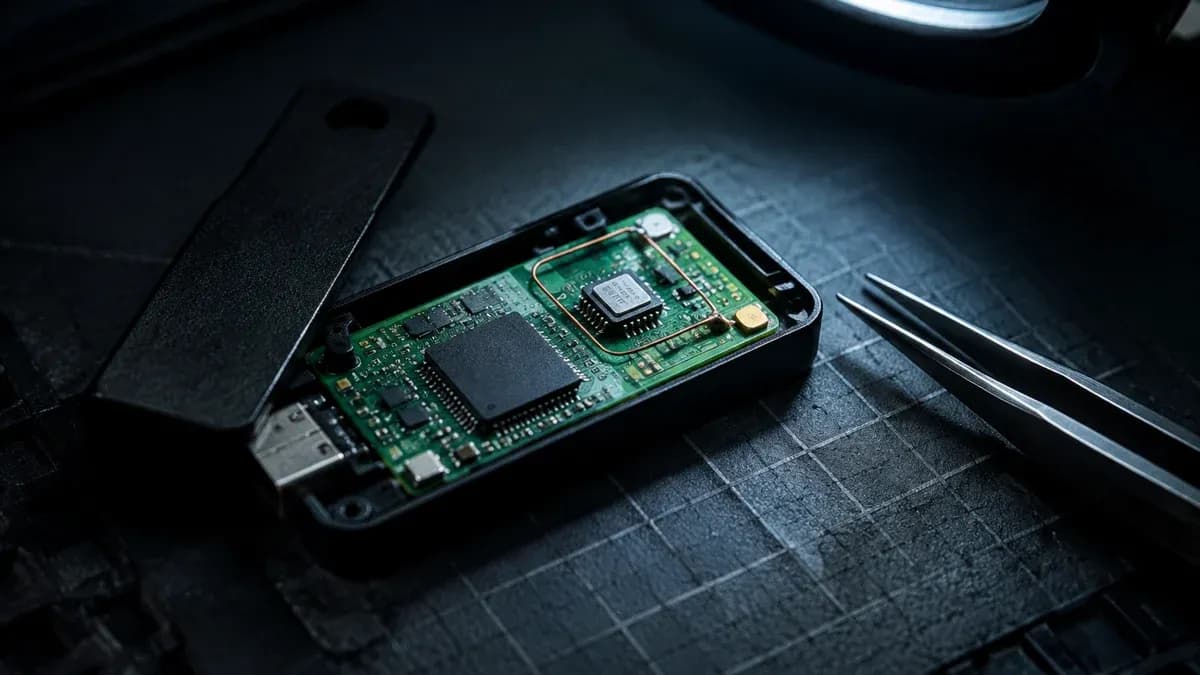
Ledger Hack? $86 Million Drained: What Is Behind the Tampered Wallets From Southeast Asia
Since Friday, Ledger users in Southeast Asia have been reporting empty wallets, and analysts count more than $86 million. Ledger has halted the reseller CryptoBilis. An implant inside the device reportedly reads the seed phrase. What is known, what CZ advises and what you should do now.
October 6, 2026 10:14 AM

$3.8 Million Back From the Attacker: Why the NEAR Price Is Up 7.8 Percent
The attacker has sent back the full $3.8 million from the NEAR Intents exploit, and the NEAR price is up 7.8 percent at $5.23. What is behind the recovery, what role the Bitwise NRR ETF plays, and what follows from it for buying route, holding period and custody.
October 5, 2026 2:14 PM
Top 5 Altcoins to Buy in October 2026: These Coins Could Rally Next
October 2026 could be the month altcoins finally wake up. These are the top 5 altcoins to buy now, with current prices and the catalysts behind them.
October 5, 2026 10:35 AM

"We deliberately invested in our expansion": Bitpanda reports a loss of around 14 million euros for 2025
Bitpanda GmbH reports a loss of around 14 million euros for 2025, after a profit of 61.7 million euros the year before, on adjusted revenue that rose to 371 million euros. What the numbers mean for your custody, your terms and the holding period.

More from CryptoTicker