
Guilty Verdict over a $53.3 Million DeFi Exploit: What Investors in Germany Need to Know
A Manhattan jury has treated the exploitation of a smart contract flaw as computer fraud, throwing out the “Code is Law” defence after a little over two hours. For holders in Germany, what counts above all is that MiCA does not cover decentralised pools and that nobody is liable when something goes wrong.





Which topics should we dive deeper into?
Select what genuinely interests you. Your picks feed directly into our editorial planning.
Crypto news that's actually worth your time.
Weekly. 60 seconds. Carefully curated by our editors: no hype, no promo flood, no spam.
A jury at the federal court in Manhattan found a 36-year-old security consultant from Maryland guilty of computer fraud and money laundering on October 7, 2026. In 2021 he had drained around $53.3 million from the decentralised exchange Uranium Finance in two attacks, according to the prosecution. His defence argued that he had called only publicly accessible functions of the smart contract, forged no credentials and deployed no malicious code. The jury took a little over two hours to decline that line.
For holders in Germany this is not a ruling about their portfolio but one about the basis on which DeFi operates. Putting coins into a liquidity pool means leaving the space where a supervisor sets rules and entering one where the programme code alone determines payout. Whether exploiting a flaw in that code amounts to a crime or merely to clever play within the rules had been an open question until this Wednesday. It has now been answered by an American court under American law, and that is exactly how far the answer reaches.
A liquidity pool is a smart contract into which users deposit two tokens so that others can swap between them; the depositors receive a share of the trading fees in return. Uranium Finance ran such pools on BNB Chain, the network behind BNB, and had derived its code from well-known templates.
The Arithmetic Flaw in the Pair Contract: 26 Liquidity Pools in One Series of Attacks
The pair contract is the contract that holds the reserves for exactly one token pair and recalculates on every swap how much may leave. At Uranium Finance that recalculation was out by a factor of one hundred, according to analyses from 2021: the contract believed its own holdings to be a hundred times larger than they were. Anyone who knew this could put in a very small amount and take out a very large one.
The flaw was introduced during a migration to a new contract version. The project had asked its users shortly beforehand to move their deposits into that new version, and the attack landed in the middle of the move. The first strike came on April 8, 2021 and took around $1.4 million, achieved through a series of calls to the reward function. The second attack on April 28, 2021 then hit 26 pools at once and forced the protocol to shut down.
The sums diverge across the coverage, and that should not be smoothed over. The prosecution cites around $53.3 million for the second attack. Trade publications add both attacks together and arrive at $54.7 million to just under $55 million. An incident database from 2021 puts the damage at $57.2 million. The range of $53.3 million to $57.2 million is therefore the honest figure.
What happened before the attack is striking: the team says it suspected a critical flaw might exist without having found it. Several reviews of the code had not identified it as critical.
“Code Is Law” as a Defence: The Jury Needed Just Over Two Hours
“Code is Law” is the notion that in an open protocol only what the programme code permits applies, and that there is no further rule left to break. On that reading the attacker had merely done what the contract offered, and the loss would be a design error on the depositors' part.
In court this became the argument that there had been no deception and no break-in, because every function used was public and callable by anyone. The jurors did not follow it. A deliberation of a little over two hours across two counts shows how little they saw to argue about. Reports on the trial describe the outcome explicitly as a rejection of that line of defence (Cryptopolitan).
What the verdict contains reaches beyond this case. It separates two things that often merge in the DeFi debate: whether a transaction is technically possible, and whether it is permitted. Until now the two could be equated, with the argument that a protocol without an operator also lacks house rules. A jury has now dismissed that argument.

Computer Fraud and Money Laundering: The Two Guilty Verdicts in Detail
The defendant was found guilty on both counts of the indictment. The first is computer fraud and relates to the two attacks themselves. The second is money laundering and relates to what happened to the money afterwards.
The statutory maximum penalties stand at ten years for the computer fraud and twenty years for the money laundering, according to the prosecution. The office itself stressed that these ceilings are set by the legislature and that the actual sentence is for the court alone. The verdict covers guilt, not punishment.
Why the Money Laundering Count Is the Heavier One
That concealment carries a higher maximum penalty than the act itself looks skewed at first, but the reason holds up: computer fraud describes a single access, money laundering a chain of acts over years. Sending stolen tokens through a mixer and then converting them into physical assets means building that chain piece by piece yourself.
 Hardware Wallets Compared
Tornado Cash, Trading Cards and Roman Silver Coins: The Route the Proceeds Took
A mixer is a service that blends deposits from many users and pays them out later, so that the link between the origin and the destination of a transfer can no longer be traced on the blockchain. Tornado Cash is the best-known of these services on Ethereum. According to the indictment, parts of the proceeds passed through it.
After that, crypto turned into something you can hold. The prosecution cites a Black Lotus trading card bought for $500,000 and antique Roman coins for $601,545. This step is the most welcome one for investigators: a card has a seller, an invoice, a shipping route and often an auction catalogue. The mixer blurs the trail on the chain; the purchase lays it bare again off the chain.
A lesson hangs on precisely that, and it reaches beyond the single case. A mixer's anonymity ends at the point where the money leaves the crypto world. The larger the sum, the harder it is to spend inconspicuously, and the more certainly a record with a name on it comes into being.

$31 Million Seized: What Victims of a DeFi Exploit Realistically Recover
On February 24, 2025 the authorities seized crypto assets worth around $31 million, valued as at that date. Measured against the range of $53.3 million to $57.2 million, roughly half is therefore back within the state's reach. Whether seized money ends up with the depositors is another matter: it goes first into a proceeding, and any distribution to victims requires separate applications, evidence of your own deposit, and time.
Uranium Finance ceased operations after the second attack. An abandoned protocol has no legal department, no customer service and no balance sheet from which compensation could be paid. Anyone who had deposited there stood without a counterpart for five years and today holds a guilty verdict but no payment.
The scale of the problem is growing. Our analysis of the quarterly figures shows that crypto hacks cost $1.26 billion in three months alone, the highest level of 2026. A verdict five years after the act changes little in that calculation.
MiCA Does Not Cover Decentralised Protocols: The Difference from a Licensed Exchange
MiCA is the EU regulation that subjects providers of crypto services to licensing and supervision. It addresses companies with a counterparty, not code. Legal commentary describes the exemption for genuine DeFi protocols narrowly: it applies where an offering is decentralised technically and in its governance, runs solely through smart contracts, and has no legal entity acting as counterparty. Where founders retain intervention rights or collect fees, an operator position requiring a licence can still arise in the individual case.
In practical terms: on a licensed exchange you have a contractual partner with a registered seat, a supervisor, a complaints route and duties to segregate client funds. In a pool you have a contract. Anyone wanting to hold both side by side will find the licensed houses in our comparison of regulated crypto exchanges; the pool side stays untouched by that, because it belongs to nobody.
What Supervisors in Germany Do and What They Do Not
Germany's BaFin publicly warns against unlicensed offerings that present themselves as DeFi staking. A flaw in the code of a genuinely decentralised protocol, by contrast, falls into no remit that any authority could repair. Nobody there can suspend trading, freeze an account or reverse a payout.
Audit Passed, Flaw Remained: What a Smart Contract Audit Covers
A smart contract audit is a paid review of contract code by third parties, meant to find errors and attack routes before money flows in. At Uranium Finance, according to the later post-mortem, several reviews had not flagged the decisive flaw as critical.
That does not make audits worthless, though it puts them in proportion. An audit relates to a particular version of the code on a particular date. Every migration after that is unreviewed until it is reviewed again, and at Uranium Finance the flaw entered the system through exactly such a migration. Audited code is therefore a snapshot and not an assurance about the version your money sits in tomorrow.
How to recognise a solid audit comes down to two questions: is the review report public in full and dated, and does it relate to the contract address your money sits in today? If either is missing, the audit covers something other than your stake.
 Regulated Crypto Exchanges Compared
German Law and the Exploit: The Case Sets No Precedent Here
The conviction was handed down under American law, and an American jury verdict binds no German court. On the state of the published legal commentary, there is as yet no ruling by Germany's highest courts on whether exploiting a smart contract flaw is a criminal offence.
Legal commentary from law firms frames the question differently in Germany than the American indictment does. On that account a pure programming error is no offence in itself; it becomes punishable only where deception is added or where there is interference with another party's data, for which the data alteration offence under Section 303a of the Criminal Code is cited. In every variant, intent has to be proven, and that is considered difficult with contracts that execute automatically. This framing comes from advisers rather than a court, and should be read accordingly.
Anyone in Germany who falls victim to an exploit therefore faces an uncomfortable finding: criminal liability is unsettled, the perpetrator is often unknown, and the protocol may no longer exist. Filing a police report remains worthwhile, because it puts the act on record and can form the basis for a late distribution of seized funds. Quick money rarely follows.
The Loss Remains a Separate Problem for Tax Purposes
A loss from an exploit is not a sale, and whether it can be claimed for tax depends on the individual case and on the documentation. Records of the deposit, its timing and its size count for more here than the legal question. Anyone not already keeping a complete log of their movements will find the programmes that produce exactly this evidence in the crypto tax software and portfolio tracker comparison.
Custody and Counterparty Risk: Where Your Coins Actually Sit in a DeFi Pool
Counterparty risk is the danger that whoever holds your assets cannot return them. In a pool you hold no coins but a claim against a contract, and that claim is exactly as sound as the arithmetic inside it. At Uranium Finance the arithmetic was out by a factor of one hundred, and the claim was worthless before anyone could react.
That mechanism yields a plain division of holdings, one that has nothing to do with a market view. Whatever is meant to sit for the long run belongs in your own custody, where no third-party contract and no third-party balance sheet stands in between. Which devices manage that and what they cost is set out in our hardware wallet comparison. Whatever works in a pool is a stake carrying total-loss risk, however high the advertised yield looks.
A second consequence concerns approvals. Granting a contract unlimited access to a token once leaves that door open even after you have long since withdrawn your deposit. Revoking such approvals regularly costs minutes and limits the damage if a contract later fails.
The February 16, 2027 Date: A Sentence of Up to Twenty Years Still Open
Sentencing is set for February 16, 2027. Until then guilt is established and the length of the sentence is not, and the ten and twenty years cited are statutory ceilings rather than a forecast. Reports on the trial place the case in a run of American proceedings in which courts increasingly treat crypto theft like conventional property crime (Crypto Briefing).
For the European market the next date is a different one. As long as the EU rules leave decentralised protocols out, responsibility for vetting a pool shifts entirely to the depositor. A verdict in Manhattan changes nothing about that, and therein lies the actual news of this Wednesday.
DeFi Exploit Verdict: $53.3 Million and No Pause Button
The guilty verdict answers a question that stood open for five years, and it answers it against the attackers. For the depositors' position it changes little: a pool without an operator has nobody who is liable when something goes wrong, and the money was gone before the court even acquired jurisdiction.
- Separate holdings from stakes. What you intend to hold belongs in your own custody rather than in a contract you have not read. The devices for it and their prices are in the hardware wallet comparison.
- Establish who your counterpart is. Where a licensed counterparty exists, there is supervision and a complaints route; in a pool there is neither. The licensed houses are listed in the comparison of regulated crypto exchanges.
- Document every deposit immediately. Without evidence of the timing and size of your deposit, neither a distribution of seized funds nor a tax treatment of the loss is enforceable. The crypto tax software comparison lists the suitable programmes.
(As of October 8, 2026. This article is not investment advice. Prices and fee structures change; check the terms with the provider before you buy.)
Frequently asked questions about the DeFi exploit verdict
Transparency note: This article was produced with the assistance of artificial intelligence and reviewed by our editorial team before publication. All figures and claims were checked against the primary sources linked in the text. The feature image was generated with AI.
Related articles
- Ajna Exploit: $775,400 Drained and No Pause Button in the DeFi Lending Protocol
- Crypto Cards: Where Your Card Balance Really Sits and What the August 28 Solana Exploit Reveals About It
- Term Finance Governance Exploit: Why Audited Code Does Not Protect Your DeFi Deposits
- Check Your Safe Wallet Modules: How One Module Moved $7.7 Million Without a Signature
- Exploring ERC-4337 on Etherscan: A Comprehensive Guide to Enhanced Ethereum Transactions
Which topics should we dive deeper into?
Select what genuinely interests you. Your picks feed directly into our editorial planning.
Crypto news that's actually worth your time.
Weekly. 60 seconds. Carefully curated by our editors: no hype, no promo flood, no spam.

September 11, 2023 1:50 AM

Exploring the Leading DeFi Tokens: A Comprehensive Guide
A comprehensive dive into the top five DeFi tokens. From Dai's stability to Uniswap's transformative approach, explore the giants shaping the decentralized finance realm.

July 7, 2023 9:14 AM

Breaking News: Multichain Potentially Compromised in a Major Exploit Exceeding $126 Million
Multichain Potentially Compromised in a Major Exploit Exceeding $126 Million. Let's take a look at this breaking news in more detail.
June 19, 2023 6:35 AM

The Game Changers: Top 5 DeFi 2.0 Tokens to Invest in Now
This article unveils the top 5 DeFi 2.0 tokens to invest in now. These tokens represent the future of finance, offering enhanced scalability.
June 13, 2023 5:06 AM
Ordinals 2.0 on Bitcoin: Recursive Inscriptions Launch DeFi 2.0
The advanced technology at the heart of this revolution? Recursive Inscriptions. Let's take a look a this Ordinals 2.0 On Bitcoin article.
March 14, 2023 2:22 AM

The Top NFT Lending Platforms of 2023
Discover the top NFT lending platforms of 2023 and learn how they work, what features they offer, and their pros and cons. Find out which platform may be best for your NFT lending needs.

January 28, 2022 3:50 PM

Everything You Need To Know About Certik Crypto and $CTK token
What is Certik crypto? In this article, we will be looking into the qualities of the Certik project and if users should invest in the project.
November 25, 2021 1:19 PM

What Is BscArmy? Will it BOOM Next?
In this article, we will be looking into BscArmy and everything that makes it stand out from other protocols on BSC.
November 8, 2021 2:52 PM

Here’s Why Mirror Protocol Sued the U.S SEC
With the United States SEC clamping down on the DeFi sector, Mirror protocol has sued them. Find out why in this article.

March 23, 2021 8:10 PM

Genesis Vision – Decentralized Fund Management
DeFi progress has been hindered by the lack of protocols dealing with decentralized fund management, but Genesis Vision is bringing change.
January 19, 2021 2:34 AM
What Is DeFi? – A Beginner’s Guide To 5 Core DeFi Protocols
Decentralized Finance (DeFi) protocols have come a long way from a few scattered vaguely known projects to multi-billion giants. These include a diverse group of protocols providing a single core functionality, experimental projects and those combining multiple core functionalities to create complex powerful platforms. In this article, we will have a look at the 5 core DeFi protocols.
January 16, 2021 10:01 PM

What Is DeFi? – A Beginner’s Guide To Decentralized Finance
What is DeFi? An alternative to the traditional finance, Decentralized Finance is an emerging blockchain based field, based on the central idea of providing financial services without the presence of third party or intermediaries. Instead, the self-executing complex logic smart contracts are used, which operate without any intervention. It's an attempt to go "bankless" - meaning developing the ability and means to override the current financial institutions and banks for a more free inclusive and less restricted system.
August 18, 2020 11:53 PM

DeFi Approaches $6.5 Billion TVL! Here Are The Top 5 Emerging Protocols
The rapidly progressing world of Decentralized Finance (DeFi) hit a new milestone as the Total Value Locked (TVL) figure appears to be fast approaching the psychological $6.5B mark. At the time of this writing, the TVL stands at $6.37B. The […]
August 4, 2020 11:32 PM

Top 5 DeFi Coins – DeFi Closes In On $4.5 Billion in TVL!
The relatively nascent, but incredibly growing and highly rewarding field of Decentralized Finance (DeFi) is currently closing in on $4.5B total value locked (TVL). At the time of this writing, the DeFi TVL has reached $4.27B and the biggest DeFi […]
July 23, 2020 9:31 AM
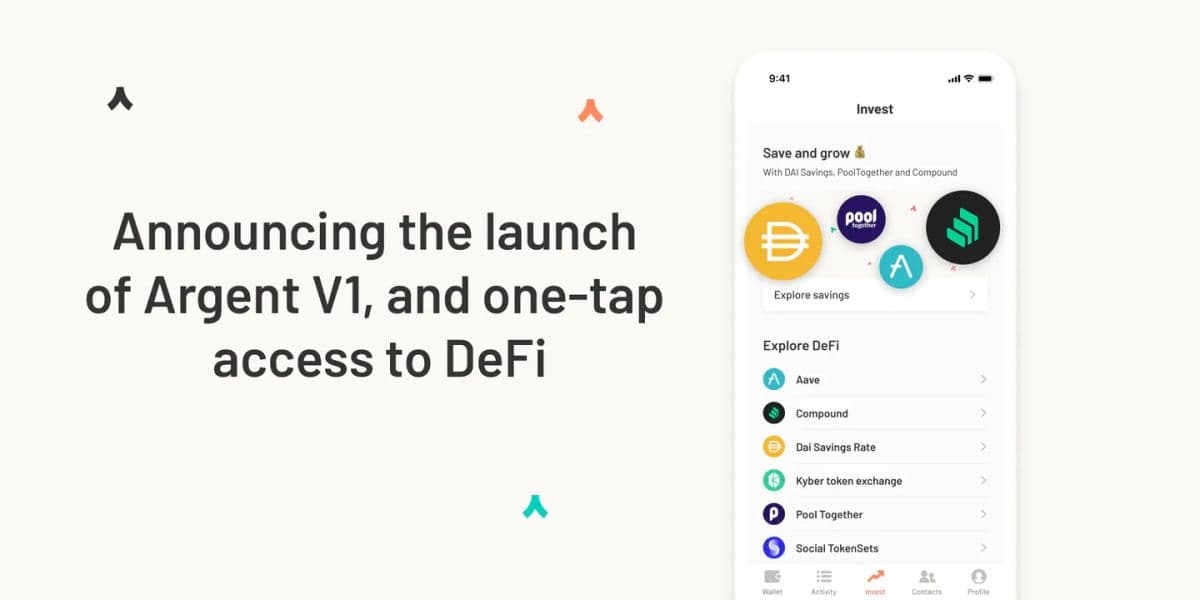
Argent v1 Smart Wallet – 1-Click Comprehensive DeFi On The Go
The Argent team announced the release of the first version of their crypto wallet with built-in comprehensive DeFi functionality on May 18. According to the release notes – “Argent is now the easiest way to access DeFi, starting with TokenSets, […]
June 12, 2020 4:26 AM

Bancor v2 – ConsenSys Audit, Potential Coinbase Listing, Furucombo Integration
The Bancor camp is abuzz with news, close to the launch of Bancor v2, which is expected in early July. The price of the native DeFi focused token BNT is responding positively, to all the recent progress and developments. As […]

October 13, 2018 9:48 PM

Smart Contracts In Play – UK’s Law Commission
The UK's Law Commission designated smart contracts as an important area of research to develop an understanding of in their annual report.

June 17, 2024 10:59 AM
TOP 3 DEX for June 2024
What are the best DEXs to use in 2024? Here are the top 3 for June 2024!
August 31, 2026 4:12 AM
Cronos chain halt: how a Tectonic exploit emptied the chain's largest lending market
On August 30, 2026, the validators of the Cronos chain halted block production after an attacker had emptied the lending market Tectonic via an inflated TONIC price. What is established, why the damage figures diverge, and what you can check if your balance sits on a haltable chain.
August 20, 2026 10:24 PM

MiCA Review: What the European Commission Could Change About the EU Crypto Rules
The European Commission has reopened MiCA for review after barely two years and is asking 86 questions covering the stablecoin interest ban, staking, lending and DeFi. Brussels is taking responses until September 30, 2026.
September 30, 2026 10:40 PM

ESMA Calls for Advertising Rules on Crypto Influencers: Six Changes Now Sitting With the EU Commission
The EU securities watchdog filed its response to the MiCA review on the final day of the consultation. Among the demands are disclosure on staking, a licensable DeFi gateway and the power to freeze crypto assets.
September 8, 2026 7:12 AM
USDT Key Control: Who Can Move Your Tether Balance, and How to Check It Yourself
A little more than half of all Tether dollars sit on a chain whose token contract is steered by a multisig address with a threshold of two out of three. We queried the structure on-chain ourselves on September 8, 2026, and show you how to verify it in five minutes.
August 31, 2026 4:27 PM

More Markets Exploit: How a Liquid Staking Token and E-Mode Pulled $9.3 Million Out of a Lending Market
Around 15.5 million WFLOW drained from the lending market More Markets on August 31, 2026, roughly $9.3 million by Blockaid's estimate. The route ran through a liquid staking token used as collateral and through E-Mode, and both building blocks sit in protocols you know.
August 22, 2026 10:39 AM

Maya Protocol Exploit: MAYAChain Is Halted, What to Check Now on Cross-Chain Swaps
On August 18, 2026 an attacker drew roughly $1.65 million out of MAYAChain's liquidity pools through six chained faults, and the team then halted the chain globally. Anyone who swapped or provided liquidity there can check in a few minutes whether their own money is stuck in the halted system.
August 19, 2026 4:15 PM

Tether Audit by KPMG: What the Unqualified Opinion Means for USDT in the EU
Tether reported the first full audit of its financial statements by KPMG on August 13, 2026, with an unqualified audit opinion for the 2025 financial year. That changes nothing about whether USDT can be traded at authorised providers in the EU, because Article 48 MiCA decides that question.
May 23, 2025 6:49 PM
Cetus Hack on Sui Network: What Happened and Why SUI Price Is Crashing
A $260 million exploit on Sui’s top DEX, Cetus Protocol, has triggered panic across the ecosystem. Here's what really happened, how Sui is responding, and what it means for the SUI token price.


More from CryptoTicker