
Solana loses 6.4 percent of its stablecoin reserves: what counts for your sell order now
Since September 25, $1.12 billion in stablecoins has left the Solana chain, around $70 million a day. That number says more about your next sell order than the price does.





Which topics should we dive deeper into?
Select what genuinely interests you. Your picks feed directly into our editorial planning.
Crypto news that's actually worth your time.
Weekly. 60 seconds. Carefully curated by our editors: no hype, no promo flood, no spam.
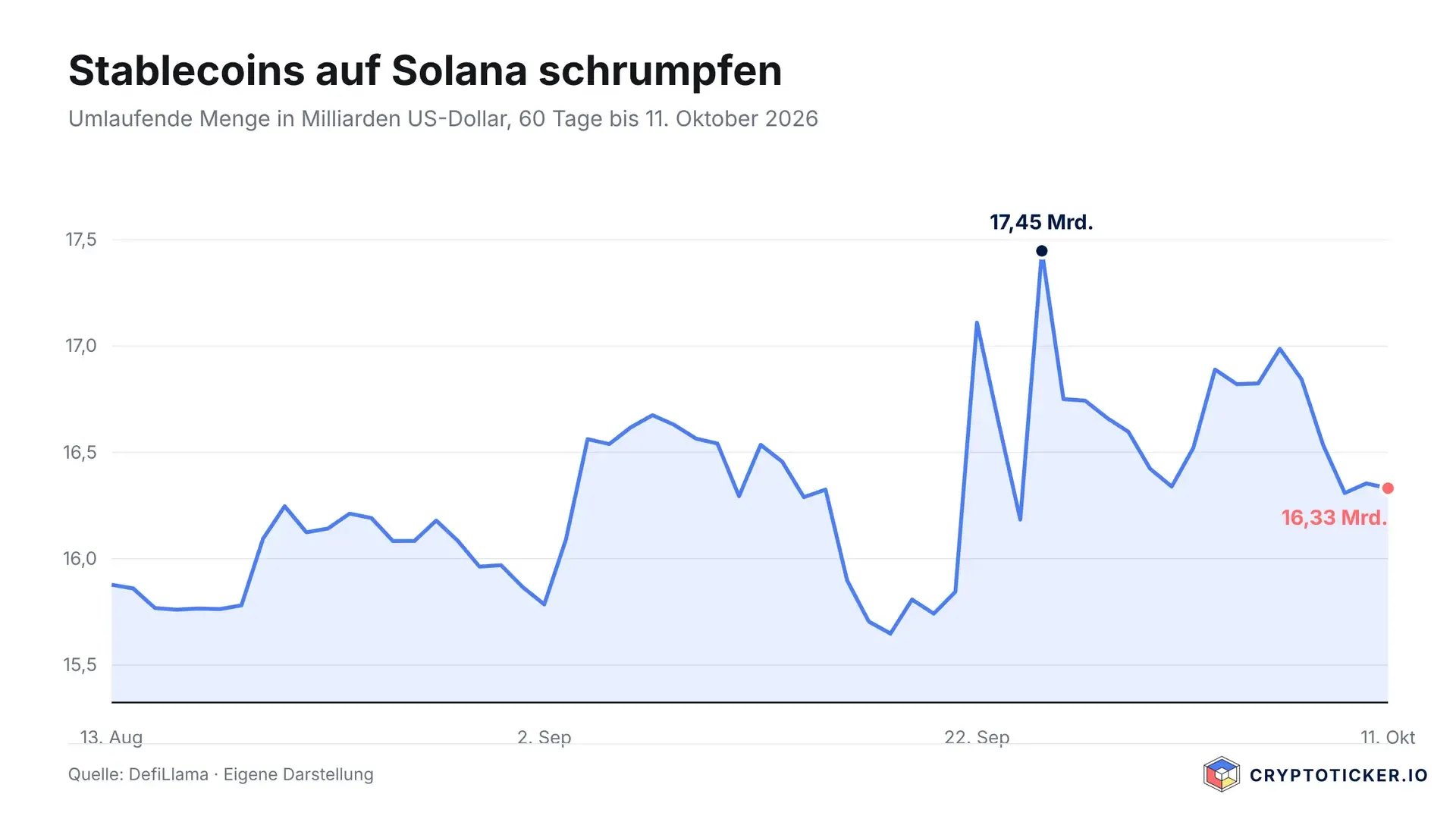
Solana holds $16.33 billion in stablecoins on Sunday afternoon. On September 25 the figure was $17.45 billion. Around $1.12 billion has therefore left the chain in 16 days, just under $70 million a day on average. That is 6.4 percent of the entire stablecoin cushion, and it is the number that reaches you when you sell, earlier than any price headline does.
Stablecoins are a blockchain's cash. Sell something on Solana and you will almost never be credited in euros; what arrives is a dollar token. When that stock shrinks, the other side of your sell order shrinks with it. The price itself says nothing about this: SOL traded at $111.79 at around 16:43 UTC on October 11, up 1.48 percent in a day, with a daily high of $111.84 and a daily low of $108.94. Over a week it is down 7.8 percent, over 30 days up 9.5 percent. The figures come from CoinGecko.
Stablecoins on Solana: $1.12 billion less than on September 25
The DefiLlama time series puts the peak on September 25 at $17.45 billion. The stock has fallen in steps since then, interrupted by two brief counter-moves in early and mid-October. The reading on October 11 is $16.33 billion. Add up all the individual dollar tokens and the result is $16.29 billion; the small discrepancy between two queries of the same database comes from different sampling times and is not smoothed over here.
What counts is the direction of travel, and the second decimal place is beside the point. A drop of 6.4 percent in a little over two weeks is more than noise. For comparison: over the preceding 60 days the stock oscillated between $15.6 billion and $17.5 billion, so the distance from trough to peak came to around $1.9 billion over two months. A third of that span has now been worked off in 16 days.
What a chain's stablecoin cushion actually tells you
The stablecoin cushion is the sum of all dollar-pegged tokens issued on a blockchain. It is no use as a price indicator, because it is a stock figure: what gets measured is how much sale-ready capital is parked on the chain. Unlike the SOL price, it does not hang on the market price. A dollar token stays worth a dollar even when SOL falls. If the total drops anyway, somebody has redeemed tokens or bridged them to another chain.
That is exactly what makes the metric useful. When the price falls, the dollar value of every locked coin falls automatically with it, without a single investor having done anything. Stablecoins carry no such arithmetic artefact. Every billion that disappears is a decision by somebody who wanted their money somewhere else.
Slippage when selling: how a thinner cushion hits your order
Slippage is the difference between the price you see when you submit an order and the price at which it is actually filled. It occurs when your order is larger than the other side available at the best price and therefore eats through several price levels.
The mechanism takes two sentences. On a decentralised exchange on Solana, every liquidity pool holds a coin on one side and a dollar token on the other. The fewer dollar tokens sitting in those pools, the more a sell order moves the price against you, because it accounts for a larger share of the pool.
For small amounts this stays invisible. Sell 500 euros of SOL and $1.12 billion less cushion will not register. It becomes visible at four- and five-figure amounts, earlier than that for illiquid Solana tokens away from the big names, and always when many holders want to sell at once. SOL's 24-hour trading volume stands at $1.70 billion according to CoinGecko, with a market capitalisation of $65.85 billion.
Solana against Ethereum and Tron: where the stablecoins sit
Among the chains, Solana remains a mid-sized venue. On the same data, Ethereum holds around $145 billion in stablecoins and Tron around $95 billion, against a good $16 billion on Solana. Solana therefore carries about a ninth of the Ethereum cushion.
That order of magnitude matters more for your own trading than it sounds. The gap explains why large sales move the price more on Solana than on Ethereum, and why an outflow of $1.12 billion weighs far more in percentage terms here. On Ethereum the same amount would have been a decline of 0.8 percent.
 Crypto exchanges with MiCA authorisation compared
USDC, USDT and USD1: which stablecoins on Solana are authorised in the EU
Trading from Germany calls for knowing not only how many dollar tokens sit on Solana, but which ones. The breakdown on October 11 looks like this: USDC from Circle leads with $6.79 billion or 41.7 percent, followed by USDT from Tether with $2.87 billion or 17.6 percent. Then come USD1 from World Liberty Financial with $1.41 billion, USDGO with $1.29 billion, BlackRock's tokenised money market fund BUIDL with $0.93 billion, PayPal's PYUSD with $0.71 billion, USDG with $0.63 billion and Ethena's crypto-backed USDe with $0.48 billion.
Under the European Markets in Crypto-Assets Regulation, MiCA for short, a dollar token needs an authorised issuer in the EU before it may be offered on licensed trading venues. The technical term is the e-money token: a crypto asset that replicates exactly one official currency and is issued by a supervised e-money institution.
The register of the European Securities and Markets Authority, ESMA, lists as of September 30, 2026 USDC and EURC from Circle Internet Financial Europe, supervised by the French ACPR, as well as USDG from Paxos Issuance Europe under the supervision of Finland's FIN-FSA, among others. USDT, PYUSD and USD1 have no entry.
Apply that to the stock and a finding emerges that appears in none of the usual market overviews: of the $16.29 billion on Solana, $7.42 billion or 45.5 percent sits in tokens with EU authorisation, and $5.00 billion or 30.7 percent in tokens with no ESMA entry. The remainder is spread across structures that are not e-money tokens at all, such as the BUIDL fund share and the crypto-backed USDe.
Holding USDT is not thereby prohibited. Owners may keep it and transfer it to their own wallet. What is missing is trading on venues with a MiCA licence. The licensing duty falls on the trading venue, while the holder is unaffected.
Revolut on August 31: a forced conversion over holders' heads
How practical this gets was on show on August 31, 2026. Revolut converted European customers' USDT holdings without those customers having to act themselves. That assessment comes from our own stablecoin comparison with MiCA status, as of October 2, 2026.
The episode is the pattern that counts: the timing belongs to the provider, and the investor has no say in it. Anyone holding an unauthorised dollar token on a European trading venue bears the risk that the position is turned at a price and on a date set by somebody else. On your own Solana wallet that risk disappears, leaving the question of where the token can later be swapped back into euros.

Check before you sell: what depth your venue really offers
The chain's stablecoin cushion is a background figure. What hits your order is the depth at the venue where you actually trade. Three things can be looked up in a few minutes.
First, the order book of a centralised exchange: it shows how much of the other side sits within 1 and 2 percent of the current price. If your planned sale is larger than the sum inside that band, you will move the price yourself. Second, the expected slippage display that every larger decentralised exchange shows before confirmation; it calculates the effect for your exact order size. Third, the question of which dollar token you end up holding, and whether your venue swaps that token back into euros.
Split the order if you are moving larger amounts. Two or three partial sales spread over a few hours cost a little more in fees and save more than they cost when the cushion is thin.
DeFi TVL on Solana: $6.19 billion and 53 percent below the 2025 high
Alongside the stablecoins, DefiLlama measures the total value locked in Solana applications. It stands at $6.19 billion on October 11. On October 5 it was $6.63 billion, a decline of 6.6 percent in six days, so at the same pace as the stablecoins.
Over 30 days, by contrast, it is up 7.6 percent, because capital flowed in during September. The value is 53.2 percent away from its peak of $13.24 billion on September 14, 2025. That figure does contain the price effect, though: when SOL falls, the dollar-denominated TVL falls with it. The stablecoin series is the cleaner signal for precisely that reason.
Set against our own earlier coverage: on the evening of October 10, SOL stood at $110.28 when the US spot ETFs lost $24.8 million net for the first time after 14 weeks of inflows. The price has gained 1.37 percent since then, while the stablecoin cushion has carried on shrinking. The detail on the ETF week is in our report on the end of the inflow streak at Solana ETFs. On the technical side, block times have been running at 200 milliseconds since October 9, as set out in our assessment of the halved slots; the chain has grown faster, in other words, while the capital drains away.
The editorial team's view: the outflow is a warning sign, not an alarm
In the editorial team's judgement the finding carries medium weight. Three pieces of evidence support it: the decline has run in the same direction for 16 days, it shows up in the TVL as a second, independently collected measure, and it coincides with the first ETF outflow after 14 weeks. Against it stands the fact that $16.33 billion is still above the level of mid-August, when the cushion stood at $15.88 billion, and that over 30 days the chain records 7.6 percent more locked capital in the same period.
What this amounts to is a cooling after a strong September, well short of a flight. If you hold SOL and have no intention of selling, nothing follows from it. If you plan to move larger amounts in the coming weeks, reckon with somewhat more slippage than in September and plan partial sales. None of this is a buy or sell recommendation, and total losses are possible with crypto assets.
Solana reserves: $1.12 billion less buffer than on September 25
- Check which dollar token you end up holding after a sale and match it against the supervisor's register. The entry in the ESMA register is what governs, and the name of the token is no guide.
- Check the depth of your trading venue within 1 and 2 percent of the price before placing a larger order. Which exchanges operate in Germany with a licence is set out in the crypto exchange comparison.
- Holdings you want to keep for longer have no business on a trading venue. The differences between the devices are set out in the hardware wallet comparison.
This article draws on the public series from DefiLlama on the stablecoin supply on Solana and on the European Securities and Markets Authority's register for the Markets in Crypto-Assets Regulation.
(As of October 11, 2026. This article is not investment advice. Prices and fee structures change; check the terms with the provider before you buy.)
 Staking providers and yields compared
Frequently asked questions about stablecoin reserves on Solana
Transparency note: This article was produced with the assistance of artificial intelligence and reviewed by our editorial team before publication. All figures and claims were checked against the primary sources linked in the text. The feature image was generated with AI.
Related articles
- ESMA stablecoin deadline of January 8, 2027: what you can do with USDT now
- Bitcoin or Stablecoins: Which Is the Best to Hold in 2025?
- Big Win for Crypto: SEC Says Dollar-Backed Stablecoins Are Not Securities
- Fed Rules for Stablecoins: What to Check on Backing and the Redemption Right
- Tax-Free Stablecoins? This US Bill Could Trigger the Next Crypto Bull Run
Which topics should we dive deeper into?
Select what genuinely interests you. Your picks feed directly into our editorial planning.
Crypto news that's actually worth your time.
Weekly. 60 seconds. Carefully curated by our editors: no hype, no promo flood, no spam.

May 17, 2025 11:04 AM

Best Yield Stablecoins 2025: Where to Earn Safely and Profitably
Stablecoins offer high yields with low risk. How to earn passive income and start growing your crypto portfolio? Here's all you need to know.
June 12, 2025 3:50 PM

GENIUS Act Now in Play: A Turning Point for Crypto Regulation and Stablecoins?
After the U.S. Senate pushed the GENIUS Act closer to becoming law, this groundbreaking crypto legislation could reshape the future of stablecoins, digital assets, and global crypto adoption. But how?

August 16, 2026 9:11 PM
Swapping Bitcoin for Stablecoins: Does Austria Charge Tax?
Anyone swapping bitcoin for USDT or another stablecoin usually pays no tax in Austria yet. When the swap does become taxable after all.

October 8, 2026 10:18 AM

Solana Price at $115.23, Samsung Brings USDC to 82 Million Galaxy Phones: US Only at Launch
Samsung Wallet is set to settle USDC transfers over Solana from the last week of October, starting on 82 million Galaxy devices in the United States. Nothing changes for holders in Germany for now, and the price barely moved on Thursday.
October 10, 2026 4:37 PM

Coinbase delists USDT and DAI on October 30: what to check before the deadline
Coinbase gives customers in the European Economic Area only until October 30, 2026 to move USDT, PYUSD, DAI and further stablecoins off the exchange. After that it converts remaining holdings into USDC itself, and tokens arriving later are no longer credited to the account.
September 22, 2026 10:25 PM
Binance Buys Into Circle: What the USDC Deal Means for Your Balance
Binance is taking a $100 million stake in Circle and extending the USDC agreement by five years. For investors in Germany, the sum matters less than the question of who earns money from stablecoins left sitting idle.
September 22, 2026 10:15 PM
Stablecoin Reserves: Why the ECB Wants the Bank Deposit Rule Scrapped
The European System of Central Banks filed its response to the MiCA review on September 22 and calls in it for an end to the requirement to hold 30 to 60 percent of stablecoin reserves as a bank deposit. What lies behind it, and what you can check on your own token.
June 30, 2026 5:20 PM
Stablecoin War Begins: Visa, Mastercard and Coinbase Launch Open USD as Bitcoin Crashes
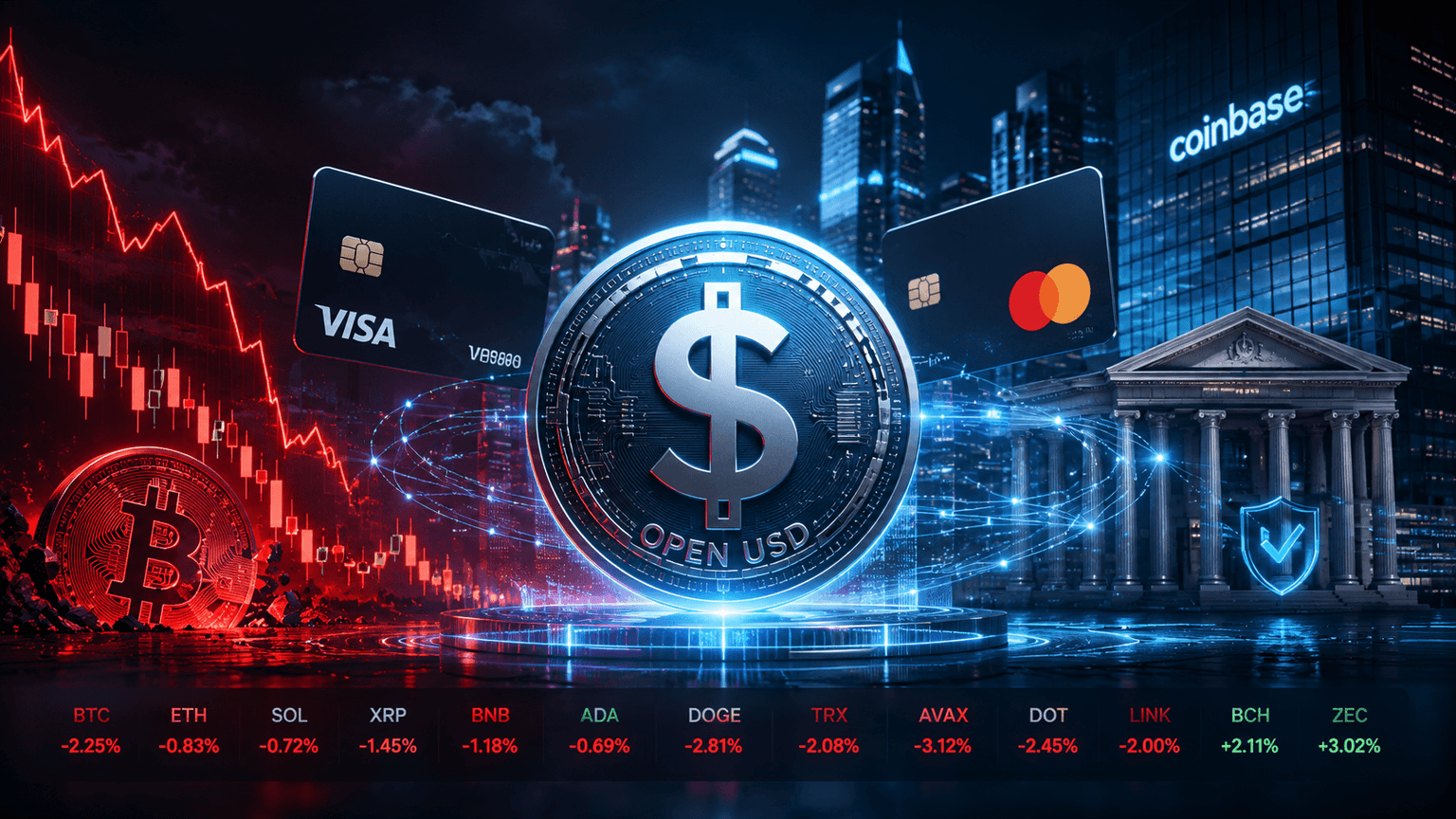
Open USD launches with Visa, Mastercard and Coinbase as Bitcoin falls below $59K. Is this the real crypto story now?

October 10, 2026 1:24 PM

TRON (TRX): Polygon Opens Its Payment Stack to $93.44 Billion in USDT: What Matters Now
Polygon opened its Open Money Stack to TRON on October 8: companies can now settle stablecoin payments entirely over the chain. We checked how much USDT really sits there, and show what decides whether it turns into demand for TRX.
October 2, 2026 10:28 PM

GENIUS Act stablecoin rules: what applies today and what stays open until 2027
The GENIUS Act creates the US framework for payment stablecoins. Which proposals are already on the table, why the OCC matters and what stays open until January 2027.
September 29, 2026 10:15 PM

Citi Becomes the Bank Behind Coinbase's Stablecoin Accounts: What Changes for Investors in Europe
Citi and Coinbase announced two products on September 28, 2026 that tie stablecoin payments to a global bank: dedicated payment accounts at Coinbase and stablecoin acceptance for Citi clients. Both launch in the United States. For your balance in Europe, MiCA, the Article 50 interest ban and Section 23 of the German Income Tax Act apply.
August 27, 2026 1:12 AM
Revolut Launches the EURR Euro Stablecoin: Why Germany Is Not in the First Wave
Revolut launched the EURR euro stablecoin on August 26, 2026, starting in Denmark, Poland and Portugal. For German customers a different date matters for now: the USDT deadline ends on August 31.
August 19, 2026 4:15 PM

Tether Audit by KPMG: What the Unqualified Opinion Means for USDT in the EU
Tether reported the first full audit of its financial statements by KPMG on August 13, 2026, with an unqualified audit opinion for the 2025 financial year. That changes nothing about whether USDT can be traded at authorised providers in the EU, because Article 48 MiCA decides that question.
October 8, 2026 10:31 AM

“In its sole discretion”: the Clause That Lets Tether Freeze Your USDT Without a Court Order
Tether may freeze a USDT balance without a court order where the company considers it prudent at its own discretion. Since October 5, 2026, a suit in New York has been attacking exactly that clause, and for holders in Germany more hangs on it than a foreign legal dispute.
August 13, 2026 6:18 AM

Revolut Delists USDT: Forced Conversion on August 31, 2026 Counts as a Sale
Revolut is taking USDT off the table on August 31, 2026: purchases have already stopped, deposits are blocked, and anyone who fails to act before the deadline faces an automatic conversion that counts as a sale for tax purposes. This article explains the deadlines, the tax treatment under section 23 of the German Income Tax Act and what you can do now.
March 14, 2026 11:00 AM
Stablecoin Market Cap Hits $320 Billion as Institutional Adoption Goes Vertical
The global stablecoin market cap has surged to a record $320 billion in March 2026, driven by the GENIUS Act and massive institutional inflows.
May 15, 2025 6:24 PM
Mastercard and MoonPay Partnership: A Game-Changer for Stablecoins and Crypto Adoption
The new Mastercard and MoonPay partnership brings stablecoins into everyday transactions, unlocking massive potential for crypto adoption across 150 million merchants worldwide.
May 12, 2025 9:05 PM

US-EU Trade Tensions Rise as US-China Conflict Cools Down
Just as the long-standing US-China trade war appears to ease, new tensions are emerging between the United States and the European Union. With Trump calling Europe “nastier than China,” are we about to witness a new transatlantic trade conflict?

August 11, 2024 6:31 AM
USDT and USDC Supplies Jump $3B During Crypto Market Surge
The combined supply of USDT and USDC surged by $3 billion as the crypto market bounced back. Find out how this rebound is affecting the crypto market!
September 23, 2026 7:15 AM

SoFi Settles Card Payments in Stablecoin: What Cardholders Should Check
Since September 22, 2026, the US bank SoFi has run its entire card business through its own stablecoin, SoFiUSD, on the Mastercard network. What sets the model apart from a crypto credit card, and which rules would apply if a European provider followed suit.
August 19, 2026 7:17 PM

MiCA Register of Stablecoin Issuers: 23 Authorised Firms, 43 White Papers and Two Dead Links
The official ESMA register lists 23 authorised issuers of e-money tokens and 43 notified white papers. We called up every document address stored there ourselves and show where the record leads nowhere.
September 6, 2026 4:21 AM

USDT Blacklist: How Tether Freezes Individual Addresses and How to Check Your Own in Two Minutes
A stablecoin issuer can shut down a single address without your key noticing a thing. We read the Ethereum chain ourselves for 14 days and queried twelve stablecoin contracts: 32 freezes, one reversal, two burns.
July 25, 2026 12:44 PM
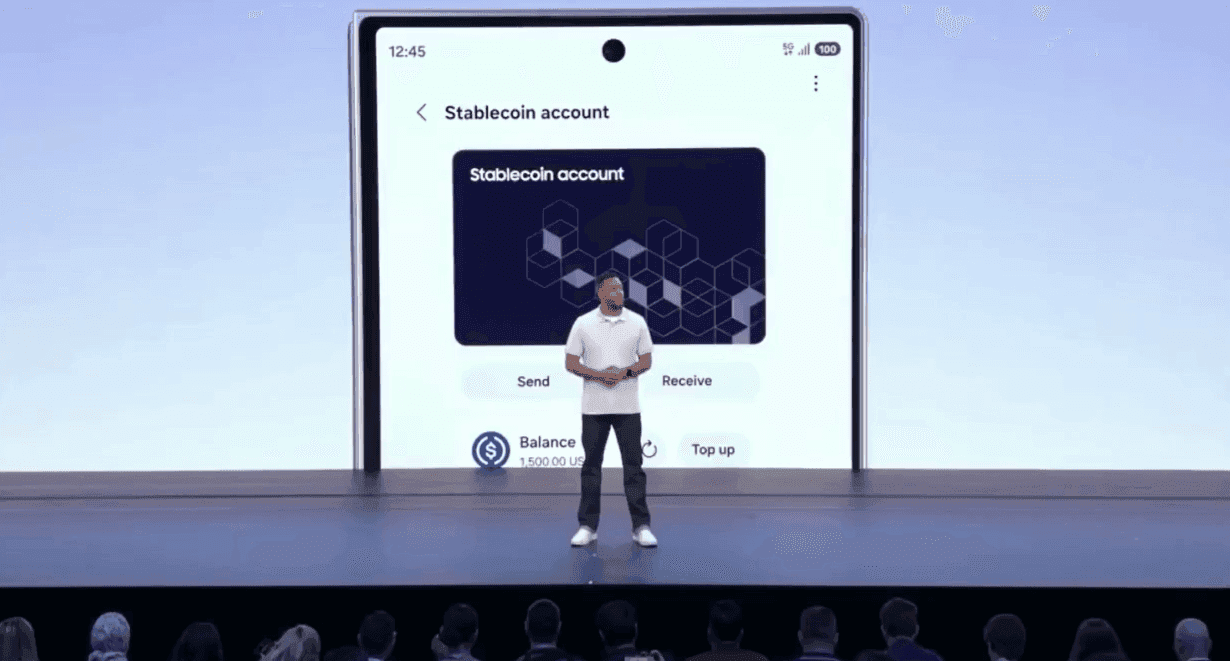
Samsung Puts Stablecoins in Its Wallet: What It Means for Crypto Prices
Samsung Wallet is getting native stablecoin support, with USDC demoed on stage. No launch date yet — but the distribution potential is real.
March 2, 2026 11:30 AM

How to Generate a Steady Income During Crypto Market Volatility
Crypto market crashing hard? Learn how to use stablecoins to generate a reliable income while protecting your capital from market swings.
February 27, 2025 8:01 PM
Crypto News: Bank of America to Launch USD-Pegged Crypto Stablecoin
BOFA is set to enter the crypto market with its USD-pegged stablecoin. It's another move to integrate digital assets into traditional banking that could reshape the financial sector.
October 4, 2026 1:31 PM

90 US banks now settle over Solana in 400 milliseconds: what it means for the SOL price
Since October 1, more than 90 banks and credit unions in North Dakota have been settling transfers with a stablecoin over Solana, provided by Fiserv, and a record in tokenised equity trading comes on top. What that means for the SOL price and which levels count.
October 1, 2026 4:28 PM

Solana loses $11.1 million from the US ETFs: here are the reasons
The US spot ETFs on Solana lost a net $11.1 million on September 30, ending a record week of $188 million. The price stands at $117.66, and the switch to Alpenglow runs over epoch boundaries in October rather than a date.
More from CryptoTicker