
Securing BTCPay Server: Why Updating to 2.4.4 Alone Does Not Protect Your Lightning Node
The project behind BTCPay Server reports that bots are probing payment servers whose Lightning interface was exposed by hand. The update to 2.4.4 closes the public default route; a reverse proxy rule you built yourself it does not clear away.




Which topics should we dive deeper into?
Select what genuinely interests you. Your picks feed directly into our editorial planning.
Crypto news that's actually worth your time.
Weekly. 60 seconds. Carefully curated by our editors: no hype, no promo flood, no spam.
Straight to the point, because it is the question that brought you here: the update to BTCPay Server 2.4.4 closes the public default route to your Lightning node. It does not remove a route you built yourself. Anyone who at some point exposed their server's LND interface through their own reverse proxy therefore has two jobs: update, and take that access away again. The project behind BTCPay Server says exactly that in its announcement of September 8, 2026.
The trigger is not a fresh theft. The project is seeing automated programs probing servers on which this access has been reopened by hand. No successful takeover by this route has been reported so far, and the project draws no link to the people behind the August incident. That is the good news in this: there is a window in which the problem can be resolved without damage.
For you as a holder or a merchant, more hangs on this than a server detail. A self-hosted payment server is the point where incoming Bitcoin payments, the keys to your Lightning node and your working balance all come together. Lose access there and you lose real money, not configuration. Which puts a second question on the same desk: how much balance really needs to sit permanently on a node that hangs on the internet, and what belongs in cold storage? If you have not drawn that line yet, our hardware wallet comparison is a better starting point than any further proxy rule.
What is happening right now: bots are calling an unprotected LND endpoint
The project describes the pattern openly. Automated programs repeatedly call one particular path of the LND programming interface: the endpoint for changing the wallet password at /lnd-rest/btc/v1/changepassword. The servers affected are explicitly those on which this access was manually switched back on after BTCPay Server disabled it by default in August.
The point that makes this delicate: the endpoint requires no authentication as long as the LND wallet is still locked. That is not a bug in the narrow sense but the design of the interface. A locked wallet cannot authenticate anyone yet, so the route to unlocking and to changing the password has to be reachable without credentials. As long as that route is reachable only inside the server, it is harmless. Only publishing it to the open internet turns it into a way in.
Macaroon, LND and reverse proxy: the three terms the rest depends on
LND is one of the common implementations of the Lightning Network, the payment layer that settles Bitcoin transfers in seconds and for fractions of a cent. If your BTCPay Server accepts Lightning payments, LND is almost always what sits underneath.
A macaroon is the credential with which LND permits commands. Think of it as a key file with graded rights. The admin macaroon is the master key: whoever holds it controls the node's wallet and its payment channels.
A reverse proxy is the server process that takes incoming requests from the internet and passes them to the right internal service. BTCPay Server ships with one of its own. Many operators have set up a second one alongside or in front of it, for instance to let a mobile wallet talk to their node while they are out. That self-built forwarding rule is precisely what this is about.
Why the window after an LND restart exists at all
The sequence is unspectacular, which is what makes it effective. After every restart of LND the wallet is locked at first. BTCPay Server has an internal unlock that supplies the password automatically. Between the service starting and the moment that unlock takes effect there is a short span.
If the interface is reachable from the open internet during that span, an attacker can be faster. The project describes the consequence soberly: whoever submits the known password at that moment can set a new one and have LND issue them an admin macaroon that controls the node. From then on the master key belongs to someone else.
One detail from the past made this worse: older BTCPay installations created their LND wallets with a shared default password. So there was nothing to guess. Anyone who knew the default only had to knock at the right moment.

The August theft and the September probing are two separate events
The distinction matters, because German-language coverage stopped in August and the two events blur into one easily.
The older event, August 7, 2026. The project published a security advisory for version 2.4.2. All earlier releases contained a hole through which an unauthenticated remote attacker could retrieve LND's macaroon files. The project confirms explicitly that the hole was exploited, that users were affected and that funds were drained. BTCPay Server's own on-chain wallets were not covered by this, the hot ones included; balances in LND's on-chain wallet, by contrast, belong to the affected node. The project and supporters later offered a reward of ten percent of any recovered Bitcoin, capped at three BTC, around $190,000 at the time.
The new event, September 8, 2026. Here there is no reported damage so far. It concerns bots looking for a way in, and a precaution taken by the project. Conflating the two claims a loss that no source supports.
 Keep your keys offline: hardware wallets compared
What the update to BTCPay Server 2.4.4 actually closes
By its own account the project tackles the sequence described above on two fronts.
First: an end to the shared password. The new LND image no longer creates wallets with a shared default password. Every newly generated wallet gets its own random password. Existing wallets still sitting on the old default are migrated automatically at startup. That removes the part of the attack which relied on prior knowledge.
Second: blocking at the network edge. The Docker setup blocks the unauthenticated routes for creating and unlocking the wallet in the bundled reverse proxy itself. Via the public default path, the restart window is now shut.
2.4.4 brought further changes that may affect you in operation even though they have nothing to do with the attack. NFC payments in checkout are now off by default and have to be switched back on in the store settings. Invoices without an amount are blocked by default. Setting up Boltcards through a card reader attached to the computer is gone; instead BTCPay Server opens the corresponding app. Anyone using the WHMCS integration needs version 4.0.0 of the plugin because of a breaking change, plus a newly generated API key. Invited store users have to accept their invitation first. And the point-of-sale module no longer allows a separate notification address per request; the one stored in the module applies.
The standard Docker setup has made a bigger jump at the same time: Bitcoin Core moves from 29.2 to 31.1, LND to 0.21.3-beta. Support for Bitcoin Knots was removed after Knots, according to the project, followed a chain that split off from the main chain. Anyone deliberately running Knots should read that before the update rather than after. On top of that comes a tighter binding to the host machine: instead of broad SSH access, the application container now only gets a key for a small list of permitted maintenance commands.
Why your own reverse proxy rule is untouched by the update
This is the core, and it is the same sentence the project already wrote in August: an update to BTCPay Server does not close access routes that you manage separately from it. A forwarding rule in your own reverse proxy, a forwarded port on your router, a Tor service you set up yourself — the update knows none of these and cannot take them back.
The project's instruction is accordingly unambiguous: do not expose the LND interface to the internet by hand through a reverse proxy of your own. If you have already done so, remove that access and update your server. Both of them, readable in that order, not as alternatives.
Anyone who was already exposed through a route of their own in August should additionally rotate their node's credentials. The update to 2.4.2 regenerated the macaroons of the standard installation automatically; that does not apply to self-managed paths. You know the same logic from the Core Lightning vulnerability at the end of August, which we took apart in this analysis of the Core Lightning hole: the dangerous assumption is never the hole itself, but the belief that a version bump handles everything that follows.
External Lightning access is back, but only with an explicit opt-in
For many operators the shutdown in August was painful, because it also removed the legitimate route: a mobile wallet such as Zeus operating your own node while you are out. The project has never disputed that and announced an orderly way back in September.
Where things stand today: a change to the routing was merged on September 11 and offers a supported option for remote access, while the interfaces of LND and Core Lightning stay off by default. That is the decisive difference from the old situation: the access exists, but you have to switch it on deliberately, and it then runs over the path the project maintains rather than over your own handiwork.
In practice that means: if you need remote access, use the switch provided and stop building a forwarding rule of your own. And take the opportunity to check which wallet on your phone should have access to your node at all. Which software wallets support which connection types is set out in the software wallet comparison linked below; not all of them come with the same permission levels, and remote access with a restricted macaroon is considerably more harmless than one with the master key.

The checklist for operators: what you work through today
In order, and regardless of whether you feel affected:
- Establish your version. The running release is shown in the footer of the admin area. If it is anything below 2.4.4, that is your first move.
- Update. On a Docker installation via Server Settings › Maintenance › Update. On an installation managed differently, by your usual route.
- Look for forwarding rules of your own. Go through your proxy configuration and watch for any rule that reaches anything below
/lnd-rest/out to the internet. Think of forwarded ports on the router and of Tor services you set up yourself as well. - Remove any routes you find. Do not comment them out and leave them lying there; take them out and reload the service.
- Rotate credentials if your node was reachable over a self-managed path. Generate new macaroons, invalidate the old ones, set up stored connections in mobile wallets again.
- Set up remote access again if you need it, through the setting provided rather than through rules of your own.
If you lack the time to do points three and four properly, the advice from the August notice still applies in spirit: a node that cannot be reached cannot be probed either. Better a few hours without remote access than an open endpoint over the weekend.
 The market situation every morning
How to tell whether your LND node has been compromised
The project published a checking routine for the August incident that holds here too. Look in your node for payments you did not initiate. Watch for channel closures you did not trigger and for counterparties unknown to you. Reconcile your on-chain balance and your channel balances against your own records. Anything you cannot explain is a reason to keep looking, not a reason to relax.
One note for perspective, so that no panic arises here: a takeover by the route observed in September has not been reported by anyone so far. The check is diligence, not damage assessment.
To be considered separately is a third incident that the project discloses in the same announcement: its self-hosted server for building plugins was compromised, discovered on September 2. According to the project, only plugin developers are affected, not their users. Published plugins were checked and had not been replaced by malicious versions, and all access tokens were rotated. Stored email addresses were probably readable; anyone registered there should expect phishing attempts over the coming weeks and treat unexpected messages accordingly.
What the incident means for German merchants accepting Bitcoin payments
In Germany, BTCPay Server is used above all by small merchants, trade businesses, clubs and online shops that want to accept Bitcoin without an intermediary. The appeal lies in the payment going straight into your own wallet. There is no service provider holding the funds in the meantime.
This design has a flip side that the current case demonstrates: where nobody sits in between, there is also nobody who is liable, who blocks or who refunds. With a custodial provider an attack would be their problem. On your own server it is yours. Responsibility for updates, for access routes and for the split between working balance and reserve rests entirely with you.
From that follows a plain operating rule that holds independently of any single vulnerability: only as much sits on the node as day-to-day payment traffic requires. Everything beyond that moves regularly into storage that does not hang on the internet. Automating that outflow and running it weekly rather than quarterly caps the damage of any future incident at a manageable sum.
Records and tax: what the tax office requires for Bitcoin payments
One point that tends to get lost in security topics but will meet you at the next audit at the latest: if your business accepts Bitcoin as payment, the inflow is business income. What counts is the value in euros at the time of the inflow, and that value needs documenting. The one-year holding period of section 23 of the German Income Tax Act, which can make private sales tax-free, does not apply to business assets. Gains and losses from a later sale stay in the business and run through section 15 of the same act.
For VAT the position has been settled for some time: the European Court of Justice ruled in case C-264/14 that exchanging conventional currency for Bitcoin and back is exempt from VAT; the German Federal Ministry of Finance implemented this for Germany in a circular dated February 27, 2018. Your actual supply of goods or services remains taxable regardless of that, measured in euros.
In practice that means: for every payment you need the time, the amount in Bitcoin, the euro rate applied and the source of that rate. BTCPay Server keeps these details in its invoice data and lets you export them. Use that before a server migration or an incident renders the database unusable. That records are subject to retention requirements, and that access has to remain possible throughout the retention period, follows from section 147 of the German Fiscal Code and applies to an SQL database just as it does to a ring binder.
When running your own node pays off, and when it does not
After two security notices in five weeks, the question of whether the effort is still proportionate is a fair one. An honest answer has to name both sides.
In favour of your own node: nobody holds your money, nobody can freeze your account and no fee per transaction flows to a service provider. For small amounts on the Lightning Network that is a noticeable difference, because a percentage cut on a two-euro purchase would be out of all proportion.
Against it stands the operating effort, and that is real. You need somebody who reads security notices, applies updates and documents access routes. If that person is missing from the business, a custodial payment provider is the more honest choice despite its fees. A badly maintained node of your own costs more than any commission, and it does so exactly once.
A middle way that works well in practice: your own node for day-to-day business with a limited balance, fixed outflows into cold storage, and a calendar entry that forces you once a month to read the project's publications. All of the past weeks' notices would have been seen in time that way.
Securing BTCPay Server: what you take away from this
- Update to 2.4.4 and remove your own LND forwarding rules. The update alone is not enough if you have built a route to the outside yourself. In the same pass, cut the balance on the node down to operational needs; the rest belongs in storage without a network connection, of the kind our hardware wallet comparison sets side by side.
- Set up remote access again if you need it. Use the setting provided rather than a proxy rule of your own, and issue a macaroon with restricted rights while you are at it. Which mobile wallet handles which connection type and which permission levels is shown by our software wallet comparison.
- Secure your payment records before you start working on the server. Export the invoice data with time, amount and the euro rate applied. Anyone doing this continuously rather than once a year will find suitable tools in our overview of crypto tax software and portfolio trackers.
The two primary sources in full: the announcement of BTCPay Server 2.4.4 of September 8, 2026 and the security advisory for version 2.4.2 of August 7, 2026.
(As of September 16, 2026. This article is not investment advice. Prices and fee structures change; check the terms with the provider before you buy.)
Transparency note: This article was produced with the assistance of artificial intelligence and reviewed by our editorial team before publication. All figures and claims were checked against the primary sources linked in the text. The feature image was generated with AI.
Related articles
- Core Lightning Security Vulnerability: What Node Operators Must Do Now
- Alby Hub Security Flaw: How to Check Whether Your Bitcoin Lightning Node Is Reachable From the Internet
- Updated Core Lightning via Docker? How to Check the Security Fix Is Really There
- Lightning Network Can Be Paralyzed With 0.25 BTCs Spend, Research Shows
- Quantum Threat to Bitcoin? Google Research Sparks Urgent Crypto Security Debate
Which topics should we dive deeper into?
Select what genuinely interests you. Your picks feed directly into our editorial planning.
Crypto news that's actually worth your time.
Weekly. 60 seconds. Carefully curated by our editors: no hype, no promo flood, no spam.

September 15, 2026 10:36 AM

Bitcoin Core 32.0 Arrives October 10: How to Check Whether Your Node Falls Out of Maintenance
The first release candidate for Bitcoin Core 32.0 has been out since September 14, with the release planned for October 10. With it, the 29 series loses its security updates - and our own count shows that affects 60 percent of reachable nodes.

August 12, 2026 5:53 PM

Bitcoin's Quantum Problem: Why 6.7 Million Coins Could Be Frozen Forever
A third of all Bitcoin sits in addresses a future quantum computer could crack. The proposed fix would lock those coins permanently. Here is the plan.
May 15, 2024 10:37 AM
Ripple Leads the Tokenization Revolution with XRP
Ripple is leveraging XRP to lead the tokenization revolution, transforming the future of finance with innovative cross-border payment solutions.
March 25, 2025 3:00 AM
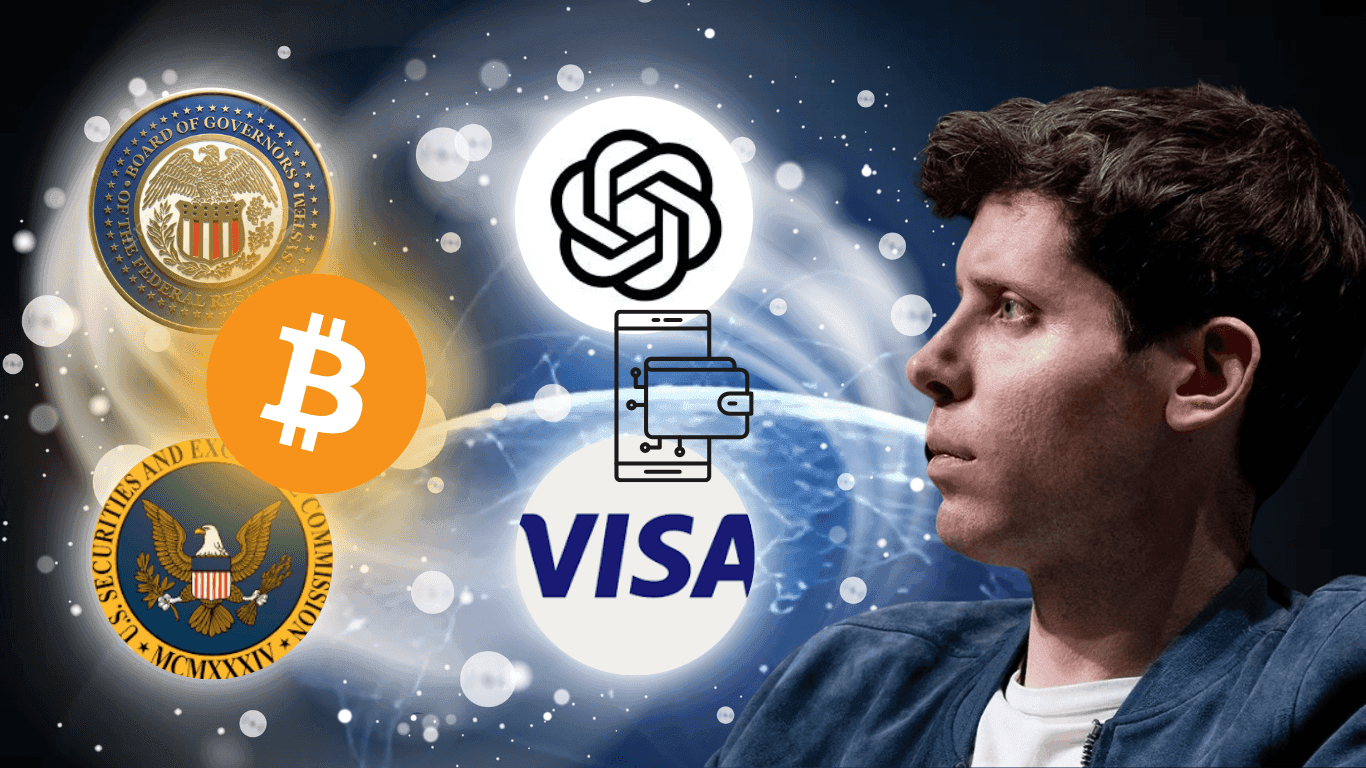
BREAKING NEWS: Visa and OpenAI to Partner for Stablecoin Payments
With the Fed pivoting, the SEC softening its stance, and Visa exploring crypto wallets with Sam Altman, could Bitcoin hit $250K?
April 8, 2026 4:30 PM

Bitcoin Replaces Oil Payments? Iran’s Hormuz Move Could Change Global Finance Forever
Iran may require Bitcoin for oil transit through Hormuz. Could crypto replace USD in global trade? A major shift in finance may be starting.
December 26, 2025 1:50 PM

Breaking: Trust Wallet Chrome Extension Hack Drains $7M, Full Reimbursements Promised
A supply-chain attack hit Trust Wallet’s Chrome extension, draining $7M from users. Binance’s CZ says all victims will be reimbursed.
August 8, 2023 5:46 PM
Is Bitcoin Good to Make Payments? Or is Bitcoin becoming Digital Gold?
Bitcoin's sharp price swings caught the attention of many, leading to the debate about its nature. Is Bitcoin good to make payments?
August 22, 2026 4:34 PM
BitBox02: Firmware 9.26.5 Closes Three Security Vulnerabilities. What to Check Now
BitBox released firmware 9.26.5 on August 17, 2026, closing three security vulnerabilities in the BitBox02 and BitBox02 Nova. Existing seeds are not affected according to the manufacturer; an update is due anyway, and with unused devices the order matters.
January 20, 2025 1:50 PM

Ethereum Price Prediction with Vitalik Buterin New Leadership after ETH Price Struggles in Bitcoin's Shadow
ETH price struggles with Bitcoin’s dominance, Trump’s crypto moves, and the Solana blockchain surge. As Vitalik Buterin announces leadership changes to reshape Ethereum’s future, what to expect for Ethereum price and blockchain?
May 15, 2024 12:04 PM

Crypto Scams: How to Protect Your Cryptos?
With the rise of crypto scams, and while international efforts are still working to combat these threats and protect investors, some recent tactics have been identified, and here is your full guide.
April 25, 2024 11:44 AM

Beware of New Ethereum Node Scam: USDT Fraud Exposed
Crypto Scammers exploit Ethereum nodes and USDT to deceive crypto users. How are they pulling it off and what essential tips can help you protect yourself against these crypto scams?
October 20, 2023 9:53 PM

How to Keep Crypto Safe
Ensuring the safety of your cryptos is paramount. We will guide you through the steps to secure your digital wealth and to keep crypto safe.
July 8, 2023 2:55 PM

Which Crypto Network was the MOST Hacked? You’ll know the answer…
Which crypto network was the most hacked and why did this happen? In this article, we analyze why hackers targeted a specific network.
April 8, 2022 10:30 AM

Forgot Your Bitcoin Password? How to Recover Your Crypto, and When It Is Lost for Good
Bitcoin has no password reset. Whoever loses the private key or the recovery phrase cannot restore access. What you can still try, and how to keep your coins safe.

August 22, 2018 12:54 PM

FTC Warns About Bitcoin Blackmail Scam
FTC, the Federal Trade Commission, an agency of the US government has warned cryptocurrency investors and enthusiasts about bitcoin blackmail scam.
September 16, 2026 7:12 PM

Borrowing Against Bitcoin Instead of Selling: When German Tax Still Applies
Posting Bitcoin as collateral for a loan is not a sale in Germany, because section 39 of the Fiscal Code keeps the coins attributed to you for tax purposes. Tax arises only when the collateral is liquidated, and then the one thing that decides the bill is how long you held the coins beforehand.
September 12, 2026 1:12 PM

Crypto ETN in Your Portfolio: How to Check Who Really Owes You the Bitcoin
A Bitcoin ETN is legally a debt security, not a fund unit. We counted the 122 crypto ETNs tradable on Xetra ourselves and show you the three details worth checking before you buy.
September 7, 2026 6:05 PM
Crypto News Today: Bitcoin Holds $79,000 While The Fed, Tether And A Hacker All Make Trouble
Bitcoin is pinned below $80,000 as September hike odds sit at 58%. Plus a warning on Tether's keys and the Coldcard attacker moving funds again.
August 18, 2026 10:14 PM
Sent Crypto to the Wrong Address: What Still Works and What Is Gone for Good
A sent transaction cannot be recalled. That is true, but it is only half the story. Whether your money is gone depends on who holds the key to the destination address. Six cases, cleanly separated: four of them are recoverable.
August 5, 2026 10:33 PM
$130 Million Gone Because the Randomness Was Predictable: Which Hardware Wallet You Can Still Buy
The Coldcard flaw proved the most respected wallet is not the safest. Which vendor has which track record – and why now is the wrong moment to pause your savings plan.
July 31, 2026 3:54 PM
594 BTC Gone in 25 Minutes: The Coldcard Flaw That Made Seed Phrases Guessable
A firmware bug from March 2021 let an attacker drain $38 million from around 500 Bitcoin wallets. Here is what broke, who is exposed and what to do now.

April 27, 2026 10:30 AM
Win $5,000 in BTC: Tangem Launches Exclusive 2026 Prize Draw
Tangem announces a massive prize draw with $5,000 in BTC and iPhone 17s up for grabs. Secure your crypto and enter today using our exclusive link.

May 26, 2025 11:00 PM
Inside Bitget: How COO Vugar Usi Zade Is Shaping the Future of Crypto Trading
From Bitget Seed and AI-powered tools to regulatory strategy and mass adoption, COO Vugar Usi Zade reveals how Bitget is building the next era of crypto trading.
September 17, 2024 6:38 PM

Breaking News: More than 50 Crypto Tokens including ADA, LUNA, and TRX Now Considered Securities by the US SEC
US SEC has declared over 50 tokens, including ADA, LUNA, and TRX, as securities. Let's take a look at these crypto tokens as securities.
March 5, 2024 5:46 AM
Coinbase Crashes Again? Coinbase’s Server Capacity Woes
Coinbase has once again faced severe technical issues. Let's take a look at this Coinbase crash article in more detail.



More from CryptoTicker