Buy Hardware Wallets – The Best Models for Secure Crypto Storage
Looking for a secure hardware wallet for your cryptocurrencies? Storing crypto on exchanges comes with risks such as hacking, security breaches, and theft. Hardware wallets are widely considered the safest way to store digital assets in cold storage, as they remain offline and significantly reduce exposure to cyberattacks.
Ledger and Trezor are among the most trusted names in crypto security. Ledger supports more than 500 coins directly in its Ledger Wallet app and thousands more through compatible third-party wallets, while Trezor supports thousands of coins and tokens on all current models (both according to the makers, October 2026). Explore proven wallet options for Bitcoin, Ethereum, and thousands of other cryptocurrencies. From affordable beginner-friendly devices to premium hardware wallets with advanced security features, you can find the right solution for maximum crypto protection.
Buy your hardware wallet directly from the manufacturer and protect your crypto portfolio today.
Best Hardware Wallets 2026 at a Glance: Prices and Key Features
The table compares the current models of the four makers our readers buy most often. Prices are the list prices in each maker's official online store, checked on 11 October 2026 from Germany, so they are shown in euros (Tangem in US dollars). The US stores charge in dollars, and prices can differ by country and during promotions.
| Model | Price (official store) | Screen and connection | Secure element | Best for |
|---|
| Trezor Safe 3 | €59 | 0.96" monochrome display, two buttons, USB-C | EAL6+ certified | Your first hardware wallet on a small budget, open-source firmware |
| Ledger Nano S Plus | €59 | 1.1" OLED display, USB, no battery, no Bluetooth | EAL6+ certified | Cheap backup device for desktop use |
| Ledger Nano X | €99 | 1.1" OLED display, USB and Bluetooth, battery | EAL5+ certified | Managing crypto from your phone through the Ledger Wallet app |
| Trezor Safe 5 | €129 | 1.54" colour touchscreen, haptic feedback, USB-C | EAL6+ certified | Everyday use with a touchscreen and open-source code |
| Trezor Safe 7 | €249 | 2.5" colour touchscreen, USB-C, Bluetooth, Qi2 wireless charging, full iOS support | Two chips: EAL6+ secure element and TROPIC01 | iPhone users who want wireless use and Trezor's newest security chip |
| Ledger Nano Gen5 | €179 | 2.8" E Ink touchscreen, USB-C, Bluetooth, NFC | EAL6+ certified | A larger screen for clear signing at a mid-range price |
| Ledger Flex | €249 | 2.8" E Ink touchscreen with Gorilla Glass, USB-C, Bluetooth, NFC | EAL6+ certified | Frequent DeFi and NFT transactions with readable transaction details |
| Ledger Stax | €399 | 3.7" curved E Ink touchscreen, USB-C, Bluetooth, NFC, wireless Qi charging | EAL6+ certified | Premium device with the largest screen in the comparison |
| BitBox02 | €149 | Small display, USB-C; Bitcoin-only or Multi edition | Secure chip, see maker | Simple setup, Swiss maker, Bitcoin-only option |
| BitBox02 Nova | €175 | Glass display, adds iPhone support; Bitcoin-only or Multi edition | Secure chip, see maker | BitBox users who want iPhone support |
| Tangem Wallet | $59.90 for 2 cards, $69.90 for 3 cards | NFC card without a screen, works with the Tangem app on your phone | Secure chip in each card, see maker | Beginners who want a cold wallet in card format and a built-in backup card |
Ledger lists support for more than 500 coins directly in the Ledger Wallet app and thousands more through compatible third-party wallets. Trezor states that thousands of coins and tokens are supported on all three current models. For the full feature lists, see the comparison pages of Ledger and Trezor.
Which hardware wallet is best for you?
- Best hardware wallet on a budget: Trezor Safe 3 or Ledger Nano S Plus, both €59. The Trezor has open-source firmware, the Ledger offers more apps inside Ledger Wallet.
- Best for mobile use: Ledger Nano X, Ledger Flex or Trezor Safe 7, all with Bluetooth. On an iPhone this matters, because the Trezor Safe 3 and Safe 5 have only limited iOS support.
- Best Bitcoin hardware wallet: the Bitcoin-only editions of the BitBox02 and the Trezor Safe 5. A smaller code base means fewer things that can go wrong if you only hold Bitcoin.
- Best for large holdings: a touchscreen model with a large display, such as the Trezor Safe 5, Ledger Flex or Ledger Stax, because you can check the full address and amount before you sign transactions.
- Best without a screen: Tangem, which works like a contactless card. You confirm transactions in the app on your phone.
If you only want to compare two models in detail, see Trezor Safe 3 vs Trezor Safe 5 or Ledger Nano X vs Trezor Safe 5 Bitcoin.
What Are Hardware Wallets?
Hardware wallets are specialized devices designed to securely store cryptocurrencies like Bitcoin, Ethereum, and many other digital assets. Unlike online wallets or exchange accounts, hardware wallets keep your private keys stored offline on the device, making them highly resistant to hacking, malware, and online threats.
Popular devices from Ledger and Trezor allow users to safely manage their private keys — and with them, full ownership of their crypto assets — in a secure offline environment.
Security is the core advantage: your private keys never leave the device, meaning no one can gain online access to your funds. For investors who want maximum control, privacy, and protection, hardware wallets remain one of the best solutions for long-term crypto storage.
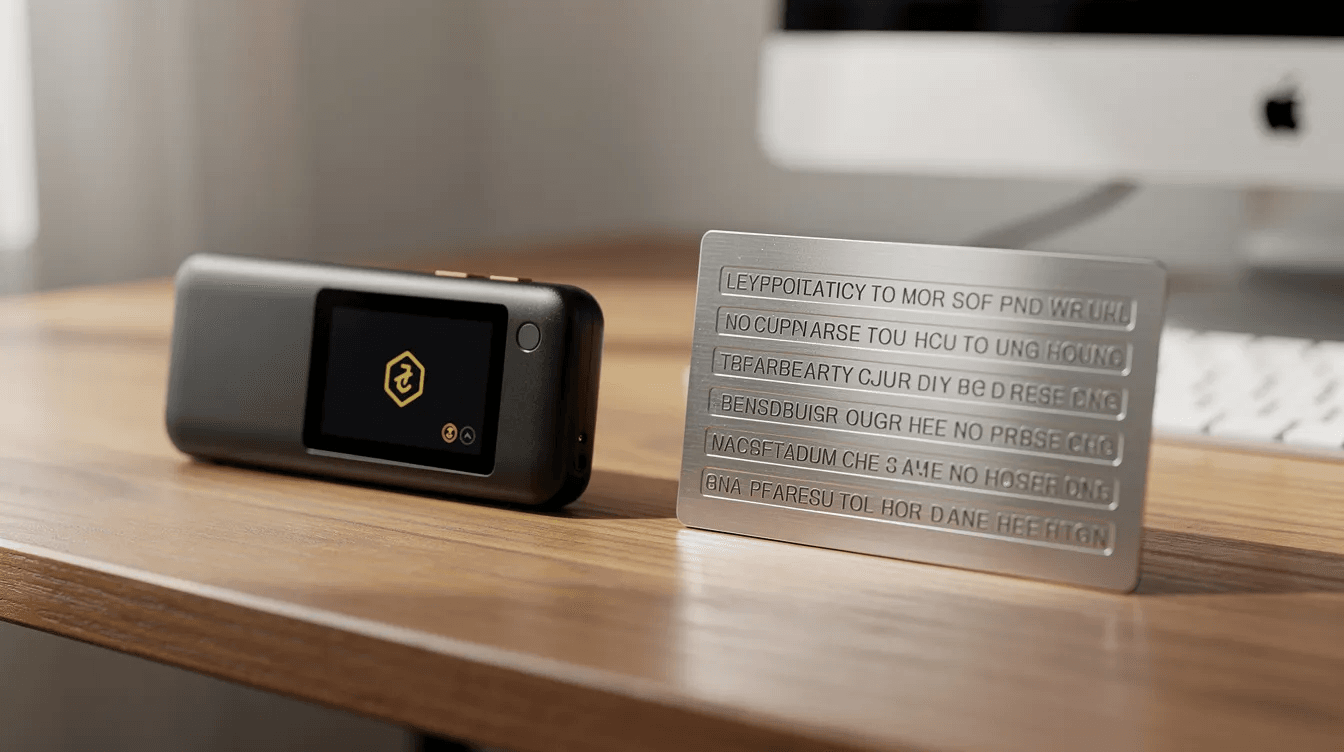
Hardware Wallets for Every Use Case
Whether you are just getting started with cryptocurrency or already an experienced investor, there is a hardware wallet for every need. Our selected models are organized by category, making it easy to compare key features and find the best hardware wallet for your crypto storage strategy.
Beginner Hardware Wallets
Choose affordable entry-level devices for your first step into secure crypto storage. These wallets offer essential security features with a simple and user-friendly setup:
- Entry-level models starting from €59 with USB-C connectivity
- Support for major cryptocurrencies including Bitcoin, Ethereum, and Litecoin, plus leading altcoins
- Compact design for easy everyday use
- Ideal for crypto portfolios up to €5,000
Premium Hardware Wallets for Advanced Users
High-end hardware wallets with touchscreens and advanced security features offer maximum convenience and protection for larger crypto portfolios:
- Premium devices starting from €129 with OLED or secure trusted displays
- Ledger Stax stands out as a premium model with a large high-resolution display, intuitive controls, NFC connectivity, wireless Qi charging, and an elegant design — setting a new standard for secure digital asset management
- Bluetooth connectivity for seamless use with mobile crypto apps
- Support for 5,000+ coins and tokens, including Dogecoin and Uniswap
- Best suited for larger crypto holdings above €10,000
Note: Ledger wallets typically require a separate app installation for each supported cryptocurrency, while Trezor offers a more centralized wallet management experience through its web interface.
Specialized Bitcoin Hardware Wallets
Bitcoin-only wallets are designed for users who prioritize maximum security and a dedicated Bitcoin storage experience:
- Air-gapped transactions using QR codes, with no direct network connection
- Open-source software with community-audited security
- Advanced protection features such as Duress PIN for additional account security
- Recommended for security-focused Bitcoin holders and long-term investors
How to Choose the Right Hardware Wallet
Comparing different hardware wallet models is the best way to find the right fit for your needs. Consider factors such as supported coins, security features, connectivity options, ease of use, and portfolio size to choose the best hardware wallet for protecting your crypto assets.
For Occasional Crypto Buyers
Compact hardware wallets with wireless connectivity offer convenient smartphone access with minimal maintenance, making them ideal for casual crypto investors:
- Bluetooth-enabled devices for easy mobile transactions
- Long battery life for occasional use
- Simple portfolio management without technical knowledge
- Great for users looking for secure and hassle-free crypto storage
For Active Traders and DeFi Users
For frequent transactions and advanced crypto activity, feature-rich hardware wallets provide speed, flexibility, and stronger security controls:
- Seamless integration with desktop and software wallets
- Support for DeFi protocols, staking platforms, and Web3 applications
- Large displays for faster and safer transaction verification
- Multi-signature (Multisig) support for enhanced account security
Ideal for active traders, yield farmers, and users interacting regularly with decentralized finance ecosystems.
For Businesses and Institutional Investors
Professional-grade hardware wallet solutions are built for organizations that require advanced security, multi-user access, and compliance-ready infrastructure:
- Multi-user account management for teams and institutions
- Backup and recovery options designed for business continuity
- Certified security standards such as EAL5+ secure element protection
- Dedicated documentation, enterprise tools, and business support
These solutions are ideal for companies, funds, and institutions managing larger digital asset portfolios.
Cold Wallets vs Hot Wallets: Why a Hardware Wallet Is Safer
A hot wallet is a software wallet on your phone or computer, or an account on an exchange. It is convenient, but the private keys sit on a device that is connected to the internet, so malware, phishing or a hacked exchange can reach them. A cold wallet keeps the keys on a physical device that never exposes them to an internet connection. Every hardware wallet is a cold wallet in this sense: the device signs the transaction internally and only the signed transaction leaves it.
Most cold wallets therefore follow the same rule: what you see on the device screen is what gets signed. Check the receiving address and the amount on the hardware wallet itself, not only on your computer. Many investors combine both: a hot wallet for small everyday amounts and a hardware wallet for long-term storage. Our software wallet comparison covers the hot side.
Air-Gapped Hardware Wallets
Air-gapped hardware wallets offer one of the highest levels of security for cryptocurrency storage. These devices remain completely isolated from the internet and never connect directly to a network.
Transactions are initiated and confirmed offline using QR codes or similar offline verification methods, ensuring the wallet itself never goes online.
This makes air-gapped wallets highly resistant to hacking attempts, malware, and digital threats. They are a preferred choice for long-term holders and security-focused investors who want maximum protection for their crypto assets.
Crypto Apps and Hardware Wallets
Combining a crypto app with a hardware wallet creates the perfect balance between security and convenience. Apps like Trezor Suite and Ledger Live let users easily manage their portfolio, send transactions, and monitor digital assets from desktop or mobile devices.
Meanwhile, the hardware wallet securely stores private keys offline and requires every transaction to be physically confirmed on the device.
This combination delivers the usability of software with the security benefits of cold storage — ideal for investors who want flexible but secure crypto management.
Security Features and Quality Standards
When choosing a hardware wallet, technical security features are essential for protecting your private keys and digital assets.
Key quality factors include:
- Open-source firmware and software, allowing independent security audits by experts and the community
- A built-in display for verifying transaction details directly on the device
- Physical transaction confirmation to prevent malware-based manipulation
- Secure element chips with advanced encryption standards
- Backup recovery options such as seed phrases and advanced recovery methods
A trusted hardware wallet gives you full ownership of your crypto while significantly reducing exposure to online threats.
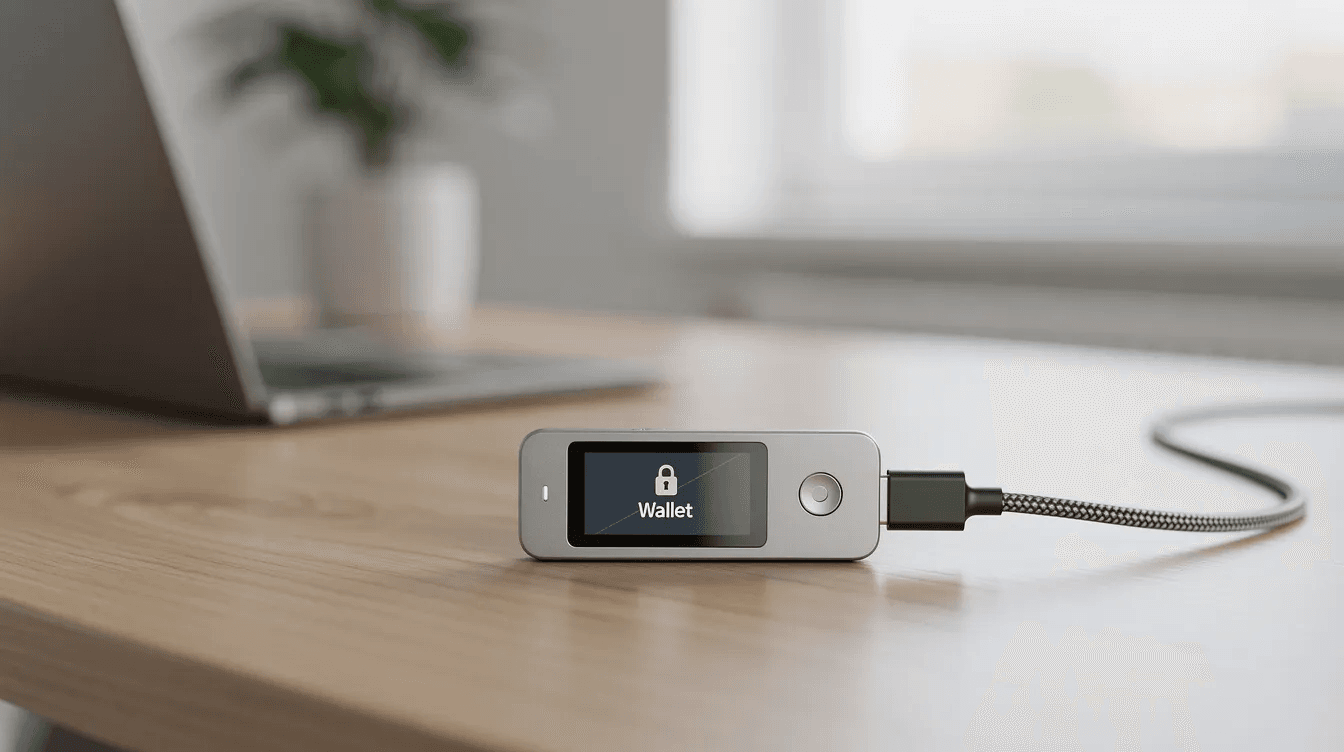
Your recovery seed (also called a seed phrase) consists of 12 to 24 words and is the most important backup for your hardware wallet. It must be written down and stored securely, as it is the only way to recover access to your crypto assets if your device is lost, stolen, or damaged.
Your private keys never leave the hardware wallet, which keeps your cryptocurrency protected at all times — as long as your recovery seed remains secure and offline.
Secure Element Chip
The secure element chip is the core security component of every high-quality hardware wallet. This specialized chip stores your private keys in an isolated environment, preventing hackers, malware, or unauthorized access from compromising your digital assets.
Advanced hardware wallets use CC EAL5+ or EAL6+ certified secure chips, providing strong protection against physical tampering, hardware attacks, and side-channel exploits.
Backup and Recovery Options
A secure recovery process is essential for long-term crypto ownership.
- BIP39 recovery standard generates a 12–24 word seed phrase for wallet restoration
- Shamir Backup (SLIP39) splits your recovery seed into multiple parts for added protection
- Metal backup solutions provide fireproof and waterproof storage for seed phrases
- Multiple secure backups reduce the risk of losing wallet access permanently
Reliable backup methods are just as important as the wallet itself.
Connectivity and Compatibility
Modern hardware wallets offer flexible connectivity options, making crypto management easier across devices:
- USB-C connectivity for desktop and laptop use
- Bluetooth 5.2 support for wireless mobile access
- NFC compatibility for tap-to-connect features on supported devices
- Input methods including touchscreens, integrated keyboards, or physical buttons for transaction verification
- Support for Windows, macOS, Linux, iOS, and Android
- Seamless integration with DeFi platforms, staking apps, and Web3 wallets
This ensures maximum flexibility whether you manage crypto from desktop or mobile.
Where to Buy Hardware Wallets Safely
Choosing a trusted seller is critical for wallet security. Buying from unreliable sources can expose you to tampered devices, compromised firmware, or preconfigured recovery seeds.
For maximum safety:
- Buy only from the official manufacturer or verified authorized resellers
- Choose products shipped from European warehouses for faster delivery and no unexpected customs fees
- Verify that the wallet packaging is sealed and untampered
- Confirm authenticity with anti-tamper stickers or manufacturer verification tools
Secure crypto storage starts with a secure purchase.
Order Directly from the Manufacturer
Buying directly from brands like Ledger and Trezor is usually the safest option:
- Guaranteed original product
- Factory-sealed packaging
- Delivery from official distribution centers
- Anti-tamper verification included
- Payment options often include credit card, PayPal, SEPA transfer, and Bitcoin payments
Authorized Retailers and Electronics Stores
Certified resellers can also be a secure option:
- Verify reseller authorization on the manufacturer’s website
- Faster local shipping and customer support
- Return rights and warranty protection
- Occasional discounts and promotional offers
Always confirm the seller is officially approved before purchasing.
Risks of Buying Used Hardware Wallets
Buying a used hardware wallet is highly risky and strongly discouraged.
Potential dangers include:
- Pre-installed or compromised recovery seeds
- Modified firmware designed to steal funds
- Hidden hardware manipulation that is impossible to detect visually
- Security seals that may have been replaced or forged
Only brand-new, factory-sealed hardware wallets should be trusted for storing cryptocurrency.
Setting Up a Hardware Wallet Securely
Correct setup is essential for long-term crypto security.
Unlike an online wallet, which prioritizes convenience and quick access, a hardware wallet provides significantly stronger protection because private keys are stored offline.
Setup usually involves:
- Connecting the device to your computer or smartphone
- Installing the official wallet software such as Ledger Live or Trezor Suite
- Generating a new recovery seed phrase (12–24 words)
- Creating a secure PIN
- Backing up the seed phrase safely offline
When sending crypto, transactions are initiated in the app but must always be confirmed physically on the hardware wallet — keeping private keys protected.
First Steps After Purchase
- Photograph the sealed package before opening
- Check the full contents: device, cable, recovery sheets, and instructions
- Install the latest firmware using official software only
- Never use a pre-generated recovery seed — always create a new one yourself
Recommended Security Configuration
For stronger protection:
- Set a strong 6–8 digit PIN
- Write your recovery seed by hand — never store it digitally
- Keep backup copies in multiple secure locations
- Enable two-factor authentication (2FA) where available
- Add an optional passphrase wallet for advanced protection
Frequently Asked Questions
How secure is a hardware wallet?
A hardware wallet offers one of the highest levels of crypto security because private keys remain offline. Even if your computer is compromised, your funds stay protected.
How does a hardware wallet work?
It generates and stores your private keys offline. Transactions must be physically approved on the device, so funds cannot be moved without your authorization.
What are the benefits over software wallets?
Unlike software wallets connected to the internet, hardware wallets use cold storage, making them much more resistant to hacking, phishing, and malware attacks.
How can I store cryptocurrency safely?
Use a hardware wallet, secure your recovery seed in multiple safe locations, and activate extra security features such as PIN protection, passphrases, and 2FA.
Which hardware wallet is best?
The best hardware wallet depends on your needs:
- Beginners: simple and affordable wallets
- Active traders: mobile-friendly wallets with Bluetooth and DeFi support
- Long-term holders: air-gapped or highly secure cold wallets
- Businesses: enterprise-grade wallets with multi-user security controls
What is the best hardware wallet in 2026?
There is no single best device for everyone. For most beginners the Trezor Safe 3 or Ledger Nano S Plus (both €59 in the official stores on 11 October 2026) offer the same core protection as more expensive models. If you use your phone a lot, a Bluetooth model such as the Ledger Nano X or Trezor Safe 7 is more convenient. If you hold only Bitcoin, a Bitcoin-only edition such as the BitBox02 Bitcoin is a strong choice.
Is a hardware wallet worth it for small amounts?
As a rule of thumb, once your crypto is worth more than the price of the device, or more than you would be comfortable losing, a hardware wallet is worth it. The cheapest models from Ledger and Trezor cost €59.
Is a cold wallet the same as a hardware wallet?
Almost. A cold wallet is any wallet whose private keys are kept offline. Hardware wallets are the most common form; paper wallets and air-gapped devices that communicate by QR code are other forms.
Do hardware wallets need firmware updates?
Yes. Install firmware updates only through the maker's official app, such as Ledger Wallet or Trezor Suite, and confirm them on the device. Updates fix security issues and add support for new coins. Your seed phrase is not affected, but keep it at hand before any update.
What happens if my hardware wallet breaks or gets lost?
Your crypto is stored on the blockchain, not on the device. With your 12 or 24 word seed phrase you can restore access on a new device of the same or another compatible brand. Without the seed phrase, the funds are lost, so store it offline and never type it into a website or app.
Buy Hardware Wallets Online
Explore the best hardware wallets from leading manufacturers and compare models by price, supported cryptocurrencies, connectivity, and security features.
Most hardware wallets support Bitcoin as standard, along with popular coins like Litecoin, Dogecoin, Ethereum, Solana, and many stablecoins.
Trezor supports over 9,000 coins and tokens, while Ledger continues to expand support for thousands of digital assets through regular updates.
Buy directly from the manufacturer or an authorized retailer for maximum security — and protect your crypto portfolio with the right hardware wallet today.
Your recovery seed (also called a seed phrase) consists of 12 to 24 words and is the most important backup for your hardware wallet. It must be written down and stored securely, as it is the only way to recover access to your crypto assets if your device is lost, stolen, or damaged.