
France Crypto Kidnappings Crisis: Pavel Durov Blasts Data Leaks and New Surveillance Laws
Pavel Durov exposes a surge in crypto-related kidnappings in France, blaming tax data leaks and warning against new social media surveillance laws.




Which topics should we dive deeper into?
Select what genuinely interests you. Your picks feed directly into our editorial planning.
Crypto news that's actually worth your time.
Weekly. 60 seconds. Carefully curated by our editors: no hype, no promo flood, no spam.
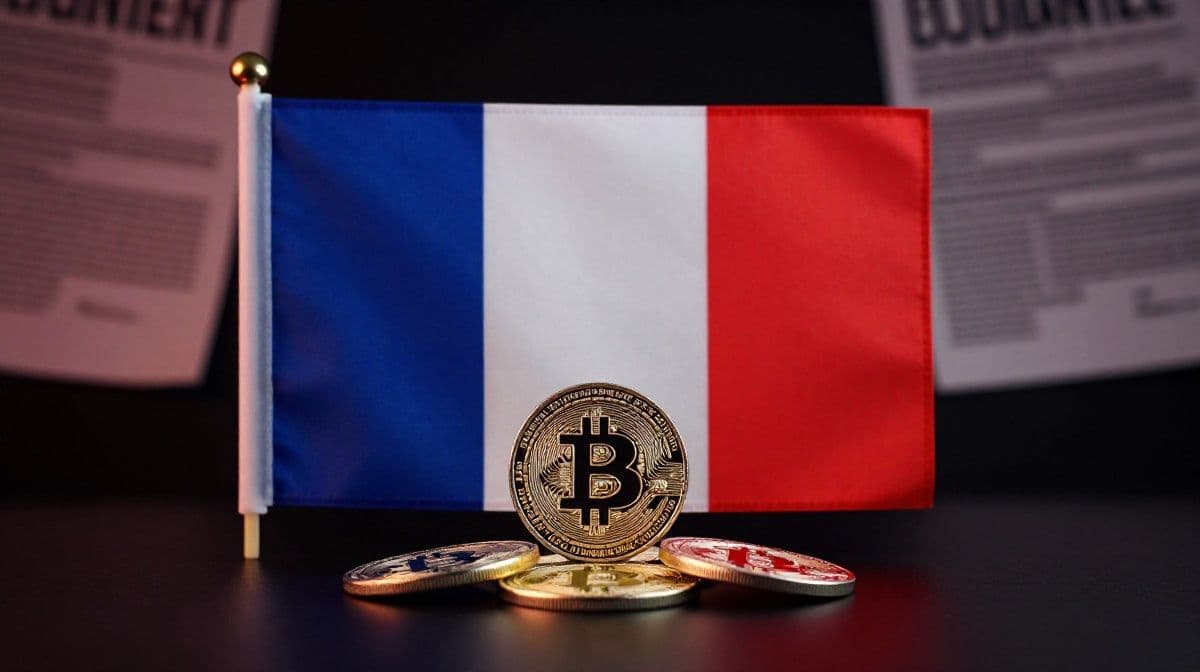
Telegram founder Pavel Durov recently took to his platform to issue a stark warning regarding a surge in violent crimes targeting the crypto community. According to Durov, France has seen 41 kidnappings of crypto holders in the first 3.5 months of 2026 alone.
This alarming statistic comes amidst a backdrop of systemic failures in data protection and a controversial push by the French state for even greater access to private citizen data. As the crypto hub ambitions of France face their toughest test, the intersection of tax transparency and physical safety has become a focal point of industry outrage.
The Rise of "Wrench Attacks" and Kidnappings in 2026
The term "wrench attack"—physical violence used to force a victim to surrender their private keys—has moved from a theoretical threat to a daily reality for many investors. The reported 41 kidnappings represent a significant escalation compared to previous years.
A Pattern of Violence
- Targeted Extortion: Criminals are no longer just hacking hot wallets; they are knocking on doors.
- Brutal Tactics: High-profile cases, such as the 2025 attack on Ledger co-founder David Balland, where victims suffered permanent physical harm to extract ransoms, have set a terrifying precedent.
- Collateral Damage: Recent reports indicate that family members, including children and partners, are increasingly being taken hostage to leverage the release of Bitcoin and other liquid assets.
The "Ghalia C." Scandal: How Tax Data Reached Criminals
Durov’s most explosive claim centers on how criminals are selecting their targets. He pointed directly to a massive breach of trust within the French tax administration (DGFiP).
Investigations have uncovered the activities of Ghalia C., a 32-year-old tax official accused of selling sensitive data from the government's "Mira" software to criminal networks. This software, intended for fiscal oversight, contains the addresses, net worth, and crypto holdings of French citizens.
The breach allegedly allowed organized crime syndicates to build "hit lists" of wealthy investors with surgical precision. This highlights a fundamental flaw in centralized databases: when the state mandates the collection of every crypto transaction, it creates a honey pot that is irresistible to both corrupt insiders and external hackers.
Surveillance vs. Safety: The New Legislative Battle
While the state struggles to secure its existing databases, it is simultaneously pushing for more. Durov noted that the French government is moving toward requiring government IDs and access to private messages for social media users.
The Threat of Decentralized Privacy
France has already taken a hardline stance against privacy-focused platforms. The 2024 arrest of Durov himself at Le Bourget airport was a watershed moment for the industry. Critics argue that by stripping away digital anonymity, the state is inadvertently providing criminals with the roadmap they need for physical attacks.
Under the guise of the Digital Services Act (DSA) and local age-verification mandates, the "de-anonymization" of the internet is accelerating. For a crypto holder, the link between their digital identity and their physical home address is a liability that can lead to life-threatening consequences.
How to Protect Your Assets in a High-Risk Environment
With the crypto market remaining volatile and physical threats rising, investors must rethink their security hygiene. Relying on state protection appears insufficient given the current data leak climate.
- Use Cold Storage: Never keep large amounts on an exchange. See our hardware wallet comparison for the best offline options.
- Multi-Signature (Multi-sig) Wallets: Use setups that require multiple keys stored in different geographic locations. This makes a "wrench attack" on a single person fruitless.
- OPSEC (Operations Security): Avoid discussing your holdings in public or on social media.
- Institutional Security: For high-net-worth individuals, using regulated custodians can add a layer of separation between personal identity and asset access.
As reported by The Guardian, even magistrates have not been immune to these ransom plots, suggesting that the criminal networks involved are becoming increasingly bold.
Related articles
- 90 Crypto Kidnappings and Robberies in 7 Months: Why France Is the Most Dangerous Country for Bitcoin Holders
- SafePal Data Breach: 39,798 Customers Exposed With Names, Addresses and Phone Numbers
- Here’s why you should skip Facebook’s Crypto: Instagram Data Breach
- Trezor Data Breach: First 13,689 Customers, Then Roughly 67,000 More Exposed
- Crypto Wallet Provider Ledger Hacked: Data Leak Results in Phishing Scams
Which topics should we dive deeper into?
Select what genuinely interests you. Your picks feed directly into our editorial planning.
Crypto news that's actually worth your time.
Weekly. 60 seconds. Carefully curated by our editors: no hype, no promo flood, no spam.

November 19, 2018 12:11 PM

Brazilian Crypto Investment Platform Atlas Quantum Hacked, Data Of 264,000 Users Leaked
Atlas Quantum, Brazilian crypto investment platform has been hacked and the data of more than 264,000 of its customers has been leaked.

September 5, 2024 10:00 PM

Toncoin Price Drop Below Its $4.70 Support Level Warns Of A Major Crash On The Horizon
Can Toncoin recover from its shaky position, or is a 45% price drop looming? Analysts weigh in on the crypto’s critical support level amid legal troubles at Telegram...
September 15, 2026 3:53 PM

Waltio Confirms Brevo Breach Touched Its User Emails: Here Is What To Do Now
Waltio has told users its Brevo account was accessed during the September breach that also hit Trezor and BitBox. Here is what was exposed.
August 26, 2024 7:44 PM

DOGS Token Major 120% Surge Within Hours Of Its Listing: BUY NOW?
The DOGS token experienced a dramatic surge of over 120% on Binance following its listing. How did the Telegram Open Network (TON) drive this surge?

August 14, 2026 6:18 PM

Bitcoin From a Foreign Exchange to Austria: Which Tax Data You Need
Transferring Bitcoin from a foreign exchange to an Austrian platform: which tax data can be missing for the withholding tax. And what investors need to watch out for.
September 1, 2026 1:25 PM

Bitcoin Tax Report Wrong: What Austrian Investors Can Do
Errors in a Bitcoin tax report are not unusual. This is the data Austrian investors should check, and how a wrong capital gains tax deduction is put right.
August 21, 2026 1:33 PM

Bitcoin With No Cost Basis: How Austria Taxes the Sale
Bitcoin purchase price no longer provable? How Austria works out the capital gains tax, when a flat-rate cost basis applies and what investors can do.
October 11, 2026 7:26 PM

Stablecoin swaps: France plans the tax Germany has had for years
Swapping bitcoin into a stablecoin in France carries no tax so far. That is set to change from 2027, with the finance committee of the National Assembly having given its approval. In Germany such a swap has long been a taxable event, with one consequence many investors miss: the holding period starts again.
September 16, 2026 7:12 PM

Borrowing Against Bitcoin Instead of Selling: When German Tax Still Applies
Posting Bitcoin as collateral for a loan is not a sale in Germany, because section 39 of the Fiscal Code keeps the coins attributed to you for tax purposes. Tax arises only when the collateral is liquidated, and then the one thing that decides the bill is how long you held the coins beforehand.
September 12, 2026 4:12 PM

Revolut Data Breach: Am I Affected, and What About My Bitcoin History?
After a forged government request, Revolut handed identity documents, account statements and complete Bitcoin transaction histories to an unauthorised party. Here is how to establish whether you are affected, and which protective measure actually achieves anything in this case.
August 18, 2026 7:23 PM

Inheriting Crypto: How Your Heirs Actually Get Access, and Why the Seed Does Not Belong in a Will
The German Federal Court of Justice made clear in 2018 that digital accounts are inherited like everything else. With self-custodied coins succession law still achieves nothing: no key, no access. And anyone who writes the seed into a will has a court send it to every party involved.
May 21, 2023 6:36 PM

Privacy Alert: Those 2 Tech Companies might have access to your Private Keys?
Renowned crypto entrepreneur Balaji Srinivasan has voiced concerns that tech giants can access and retrieve private keys from devices and apps under their control.

April 24, 2023 6:54 AM

3 Types of Scammers in the Crypto World
The recent rise of cryptocurrencies brought about a new threat – scammers. Here are 3 types of scammers in the Wild, Wild West of cryptos.
August 20, 2024 7:00 PM

Top Crypto Tax-Free Countries in 2024: A Guide for Crypto Investors
Here are 2024's top countries where you can trade crypto tax-free! Explore this full guide on the adopted taxation options in the current global landscape of cryptocurrency taxation.
August 20, 2024 3:00 PM

New US Senate Proposal Submitted For Crypto Tax Exemption
The US Senate has recently submitted a new proposal to exempt crypto transactions from federal taxes. Here are more details of this submission, and a list of exempted countries it could be joining...
May 16, 2026 11:57 AM
CoinTracking Review 2026 – Crypto Taxes, Portfolio Tracking & Full-Service Support
Manage your crypto taxes effortlessly with our comprehensive guide to CoinTracking. Learn how to track transactions and simplify your tax reporting today!
October 5, 2026 10:24 AM
$6 million out of a Base vault: what you can do now with your DeFi deposits
A vault on Base was drained of around 1,783 wstETH on October 4, 2026, about $6 million. The route ran through an entry on the permission list, not through a hole in Aave's protocol.
September 4, 2026 10:15 PM
Trezor Data Breach: Am I Affected and What Should I Do Now?
Trezor widened the ShipMonk data breach on September 4, 2026: around 67,000 further people affected, just over 80,000 in total, from orders placed between November 2019 and August 2021. How to check in two minutes whether you are among them, and what an exposed home address means for self-custody.

May 6, 2022 11:08 PM

What is the Internet of Things? Meet the Top 3 IoT Crypto Projects!
This article will take a detailed look into the Internet of Things, what to expect from it, and the top 3 projects in the IoT sector.
October 19, 2018 5:06 PM

Scammers Impersonate as Telegram CEO to Steal BTC and ETH
Pavel Durov is the founder of VK (the Russian social media site that dominates the social media market in Russia, and other Slavonic countries), and also founder and CEO of Telegram Messenger, which is a cloud-based instant messaging system based […]
August 18, 2026 7:13 AM

Bitcoin Tax Reporting in Austria 2026: What Applies
Bitcoin tax reporting in Austria: which data investors can request from crypto exchanges in 2026, and when the report matters for the tax return.
September 9, 2026 4:22 PM
Crypto Tax in Germany: What Applies in 2026 and What Is Set to Change in 2027
Crypto gains are tax-free after twelve months; before that your personal tax rate of up to 45 percent applies. What triggers tax, how the holding period is calculated, what happens with staking and losses, and what the draft bill would change from 2027.
September 9, 2026 1:15 AM

Germany's Crypto Tax: 160 Million Euros for a 555-Billion Budget
The German finance ministry's draft bill puts a figure on the crypto tax for the first time: 160 million euros from 2028. What that number means in the 2027 federal budget, how 11.4 billion became 160 million, and what investors can read from it.
August 16, 2026 9:11 PM
Swapping Bitcoin for Stablecoins: Does Austria Charge Tax?
Anyone swapping bitcoin for USDT or another stablecoin usually pays no tax in Austria yet. When the swap does become taxable after all.
August 10, 2026 5:15 PM
Bitcoin Lending in Austria: When Tax Falls Due
Lending Bitcoin and earning interest: when lending income is taxed at 27.5 percent in Austria and which exchange rate counts.
September 9, 2026 7:18 PM
Calculating Crypto Tax: Formula, Worked Example and Tax Table
Disposal proceeds minus acquisition cost minus fees: the formula is simple, the consumption order is not. With a worked example, a tax table for the usual income brackets and the points at which every calculator loses precision.
October 8, 2026 4:17 AM

Crypto Holding Period: Without a Purchase Record the Tax Withheld Runs Ten Times Too High
The consultation on Germany's crypto tax bill closed on October 6 and the cabinet is to adopt it on October 14, with tax advisers, banks and the Bitcoin Bundesverband having filed their objections. The sharpest concerns everyone whose purchase data the selling platform does not hold: one adviser calculates a withholding ten times the tax owed.
More from CryptoTicker