
Crypto Crash Reason: Why Are Crypto Prices Down Today?
The crypto market faces a sharp correction as geopolitical tensions near the Strait of Hormuz trigger a massive leverage unwind and record Bitcoin ETF outflows.





Which topics should we dive deeper into?
Select what genuinely interests you. Your picks feed directly into our editorial planning.
Crypto news that's actually worth your time.
Weekly. 60 seconds. Carefully curated by our editors: no hype, no promo flood, no spam.
The entire crypto market is going through a rough patch today, leaving many investors wondering about the exact crypto crash reason behind the sudden drop. Over the past 24 hours, the total cryptocurrency market cap fell by 3.313%, bringing the global valuation down to $2.45 trillion.
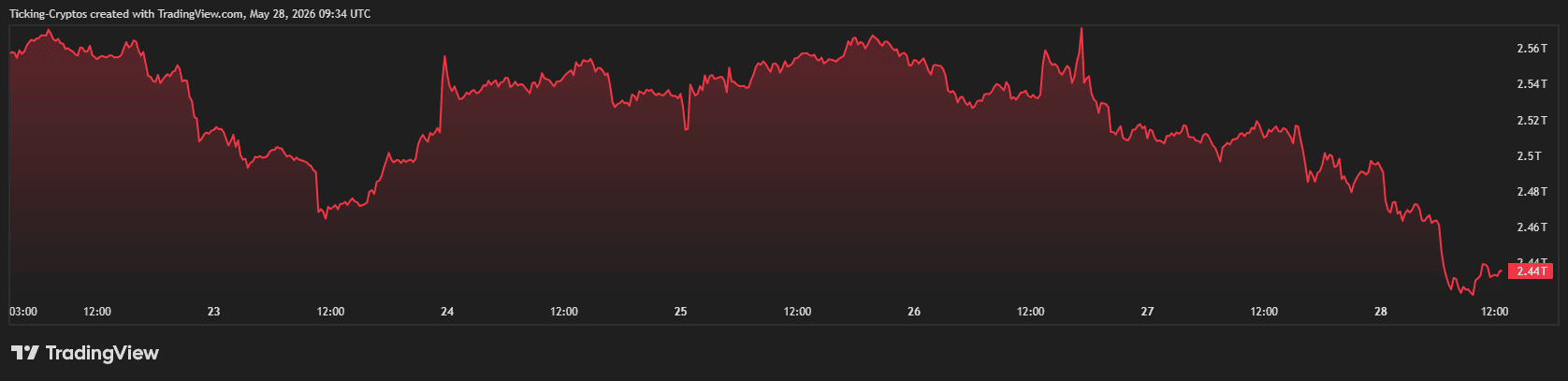
Major digital assets are down across the board. The market leader, Bitcoin ($BTC), slid by 3.2% to find itself trading at $73,250. This downside momentum quickly spilled over into the altcoin market. Ethereum ($ETH) took an especially hard hit, dropping 4.3% in just the past two hours and breaking down below the crucial $2,000 psychological support level to sit at $1,980.
Other major tokens couldn't escape the selling pressure either. Solana ($SOL) dropped 3% to $81, while Ripple ($XRP) fell 2.9% to $1.28. Tron ($TRX) and Dogecoin ($DOGE) also posted noticeable losses, sliding 4.8% (to $0.354) and 3.1% (to $0.09) respectively. Meanwhile, Hyper ($HYPER) experienced a brutal 8.9% decline, crashing down to $57.
To navigate these choppy waters and manage your trading risk effectively, it is always a good idea to stick with liquidity-rich choices found on the best crypto exchanges.
Global Tensions Cause a Chain Reaction
The main reason your portfolio is in the red today doesn't have to do with blockchain tech failing. Instead, it is being driven by global political tension. Fresh news of military strikes near the Strait of Hormuz—a major global shipping lane—and threats of retaliation have caused oil prices to spike. Higher oil prices mean higher inflation, making it much harder for the Federal Reserve to cut interest rates anytime soon.
When inflation fears rise, big institutional investors usually pull their money out of speculative assets. Right now, Bitcoin is moving in close alignment with traditional assets like Gold as global markets adjust to these changes. With liquidity drying up across the financial world, crypto is feeling the squeeze.

Liquidations and ETF Panic Multiply Losses
What started as a normal market pullback quickly snowballed into a much larger drop due to a couple of key market mechanics.
1. Leveraged Traders Get Wiped Out
As the Bitcoin price began to break down, traders who borrowed money to bet on higher prices got caught off guard. This triggered a massive chain reaction, causing automated long liquidations to spike by 161%. Over $296 million worth of bullish positions were forcefully sold into the market within 24 hours, driving prices down even faster.
2. Record Institutional Outflows
At the same time, big money institutions are pulling out. U.S. spot Bitcoin ETFs just suffered a massive $733 million in net outflows in a single day. Because these funds have to sell physical Bitcoin on the open market whenever investors cash out, this sudden institutional exit put immense downward pressure on prices.
What to Watch Next
Where the market goes from here depends heavily on whether buyers step up to defend current technical levels and how upcoming economic data looks.
| Asset / Metric | Current Price / Level | Recent Performance | Key Takeaway |
|---|---|---|---|
| Total Market Cap | $2.45 Trillion | Down 3.313% (24h) | Broad market correction underway. |
| Bitcoin ($BTC) | $73,250 | Down 3.2% | Testing key local support lines. |
| Ethereum ($ETH) | $1,980 | Down 4.3% (2h) | Broke below important $2k floor. |
| Hyper ($HYPER) | $57 | Down 8.9% | Leading the correction among high-volatility assets. |
| Relative Strength Index (RSI) | 21.47 | Highly Oversold | Signals a technical bounce could happen soon. |
Even though an oversold RSI reading of 21.47 means a short-term relief rally could be right around the corner, a real recovery won't happen until ETF outflows stop and global tensions settle down. During periods of extreme volatility, many long-term investors prefer keeping their digital assets off exchange platforms using secure setups highlighted in our hardware wallets comparison.
Related articles
- Crypto Crash Reason: Why Bitcoin Fell Below $81,000 and Altcoins Bled Even Harder
- Why Is Crypto Crashing Today: US Strikes on Iran and a Collapsing Ceasefire
- Ethereum Price Analysis: Why is Ethereum Price Down?
- $1 Trillion Wiped: Risk-Off Storm Engulfs Stocks & Crypto
- Crypto Price Today: Why is the Crypto Market Crashing? BTC, ETH, SOL and XRP Price Update
Which topics should we dive deeper into?
Select what genuinely interests you. Your picks feed directly into our editorial planning.
Crypto news that's actually worth your time.
Weekly. 60 seconds. Carefully curated by our editors: no hype, no promo flood, no spam.

June 4, 2026 1:23 PM

Is the Crypto Crash Manipulated? Bitcoin and ETH Shed Billions
Bitcoin and Ethereum have plunged sharply, wiping out billions in market cap amid massive ETF outflows, sparking concerns over potential market manipulation.

March 26, 2026 1:23 PM

Crypto Ignores Bullish News as War Risk Takes Over — Why Bitcoin and Ethereum Are Falling Anyway
Bitcoin and Ethereum fall despite bullish crypto news as war risks, oil spikes, and macro pressure dominate market sentiment.
June 25, 2024 12:18 PM

After Bitcoin Crash, Will Altcoins Gains Reach 500%?
In the latest Bitcoin News today, and mainly after the Bitcoin Crash, crypto analysts predict a major shift towards altcoins with market corrections near the end and BTC dominance drop. Will the altcoins gain reach 500%?
October 8, 2026 4:38 AM

Crypto Market Slides: Bitcoin Loses 4.2 Percent and $651 Million of Long Bets Are Liquidated
Bitcoin has lost 4.2 percent since Tuesday afternoon, and ether and XRP more still. Three reasons can be documented: outflows from the US ETFs, $651 million of forcibly closed long bets and Fed minutes holding out the prospect of another rate rise. A crash it is not, and what to check before buying more is set out here.
September 29, 2026 10:38 AM

Bitcoin Falls Toward $83,000 as Trump Rejects Iran Ceasefire Deal
Bitcoin slipped toward $83,000 after Trump rejected Iran's Hormuz proposal, sending oil above $100 and wiping out $478 million in crypto liquidations.
January 30, 2026 7:20 PM

Copper Price Slides as Gold and Silver Crash — What It Signals for Crypto and Markets
Copper prices are sliding as gold and silver suffer a historic selloff. What copper’s weakness reveals about growth, rates, and crypto.
June 4, 2026 9:52 AM

Why is Crypto Down Today? Market Liquidation Erases Billions
The cryptocurrency market is facing severe downward pressure today. Bitcoin fell over 5% while altcoins like Solana and Ethereum incurred heavier losses.
April 12, 2026 11:07 AM

Bitcoin Price Drops to $71,500 as US-Iran Peace Talks Collapse in Islamabad
Bitcoin retraces to $71,500 after failed US-Iran peace talks in Pakistan. Geopolitical tensions resurface, impacting the global crypto market sentiment.
June 18, 2026 7:03 PM

Bitcoin Got the Wrong Crash: Oil Fell, But Crypto Took the Hit
Oil crashed after peace headlines, a move that should have helped Bitcoin. Instead, BTC fell below $63K, ETH dropped under $1,700, and crypto longs were wiped out.
February 28, 2025 9:55 AM

Breaking: Crypto Market Continues to Crash as Bitcoin Hits $80K Support
The crypto market is in freefall, losing over $330 billion! Bitcoin crashes to $80,000—can it hold, or will we see even lower prices?
October 17, 2025 4:56 PM

Crypto Crash Alert: Billions Lost, Here Are the Top 5 Losers
The crypto crash wiped billions from the market in hours. From Aster to Aave, here are the top 5 tokens hit hardest — and what their stats reveal.
July 8, 2024 7:51 AM

Crypto Market Crash News As BTC Price Crash Back To 56K
With the crypto market crash, and Bitcoin price drop to below 56k with recent dormant BTC whales activity, what comes next: a correction or further crash soon?
June 5, 2024 5:03 PM

Crypto Market Up: Bitcoin Breaches $71K, Altcoins Follow Suit, Eyes on New Highs
Cryptocurrencies are experiencing a surge, with Bitcoin leading the charge by surpassing $71,000. This bullish trend extends to altcoins, igniting optimism across the market. Will Bitcoin reach new highs?
January 20, 2026 3:46 PM

Crypto Crash of 20 January 2026: Bitcoin Slipped Toward $90K on Greenland Tariff Fears
On 20 January 2026 Bitcoin slid toward $90,000 as Trump threatened tariffs over Greenland. The threat was dropped a day later, yet BTC fell to about $58,600 by July.
January 21, 2026 5:32 PM

EU–US Economic Conflict Sparks Sharp Crypto Market Sell-Off
Crypto markets sold off sharply as EU–US economic tensions escalated, triggering volatility across Bitcoin, Ethereum, and major altcoins.
May 8, 2026 9:32 AM

Crypto Crash Today: Why Is Bitcoin Crashing below 80K?
Bitcoin price has slipped below $80,000 as geopolitical tensions and profit-taking trigger a crypto crash today. Here are the market dynamics behind the BTC drop.
March 3, 2026 5:40 PM

US Stock Market Volatility: Will Crypto Prices Crash Next?
US markets face uncertainty as geopolitical tensions rise. Discover if a stock market correction will trigger the next major crypto price crash.
June 24, 2024 8:16 PM

Bitcoin News Today: Bitcoin CRASH OVER or MORE Down To Go?
Bitcoin Price Crash below 60k, and the crypto market follows. Why this decline and how low can it go?
July 25, 2026 11:27 AM

Crypto Price Today: Market Slides Again as Bitcoin Fails at $67,000
Bitcoin slipped back under $64,000 after tapping $66,990. Oil, ETF outflows and Fed nerves are dragging the whole crypto market lower.
January 8, 2026 6:16 AM

Crypto Crash of 8 January 2026: The Top 5 Altcoin Losers as Bitcoin Slipped to $90,000, and Where They Are Now
On 8 January 2026 Story, Pump.fun, Virtuals, Zcash and Dash led the losers as Bitcoin slipped to $90,000. Nine months later Zcash and Dash are among the winners of the year.
May 16, 2026 10:50 AM

Crypto Crash: Bitcoin Slips to 78k as Market Reverses Friday Pump
Crypto prices face a sharp downturn after a brief Friday pump. Bitcoin hovers at 78k, threatening a deeper crash if macro support breaks.
February 1, 2026 6:02 PM

A Day to Remember: Crypto Repeats a Familiar Chapter
A major liquidation wave hits crypto as markets unwind risk. History doesn’t repeat — but this chapter feels familiar.
February 12, 2026 4:35 PM
Bitcoin Price Crashes Below $66,000 as Liquidations Pass $50M
Bitcoin falls below $66,000 following a massive liquidation cascade and a bearish report from Standard Chartered. Regulatory hurdles further dampen the mood.
April 7, 2025 11:06 AM

Why are Cryptos Crashing Today?
The cryptocurrency market experienced a significant downturn with Bitcoin falling to $76,300 and Ethereum plunging to $1,490. Here's why cryptos are crashing.
January 30, 2026 11:03 AM

Silver Crash Today: What Triggered the Collapse and Why Markets Are on Edge
Silver crash today wipes over $1 trillion in value as forced liquidations hit metals, crypto, and ETFs. Here’s what really triggered the move.


More from CryptoTicker