
SpaceX (SPCX) Crashes 10% as Bond Spree and Lockup Fears Spook Investors — Here's Why
SpaceX shares are sliding hard after a historic Nasdaq debut. We break down what's behind the SPCX pullback, where the stock trades now, and what comes next.




Which topics should we dive deeper into?
Select what genuinely interests you. Your picks feed directly into our editorial planning.
Crypto news that's actually worth your time.
Weekly. 60 seconds. Carefully curated by our editors: no hype, no promo flood, no spam.
Where Does SpaceX Stock Trade Right Now?
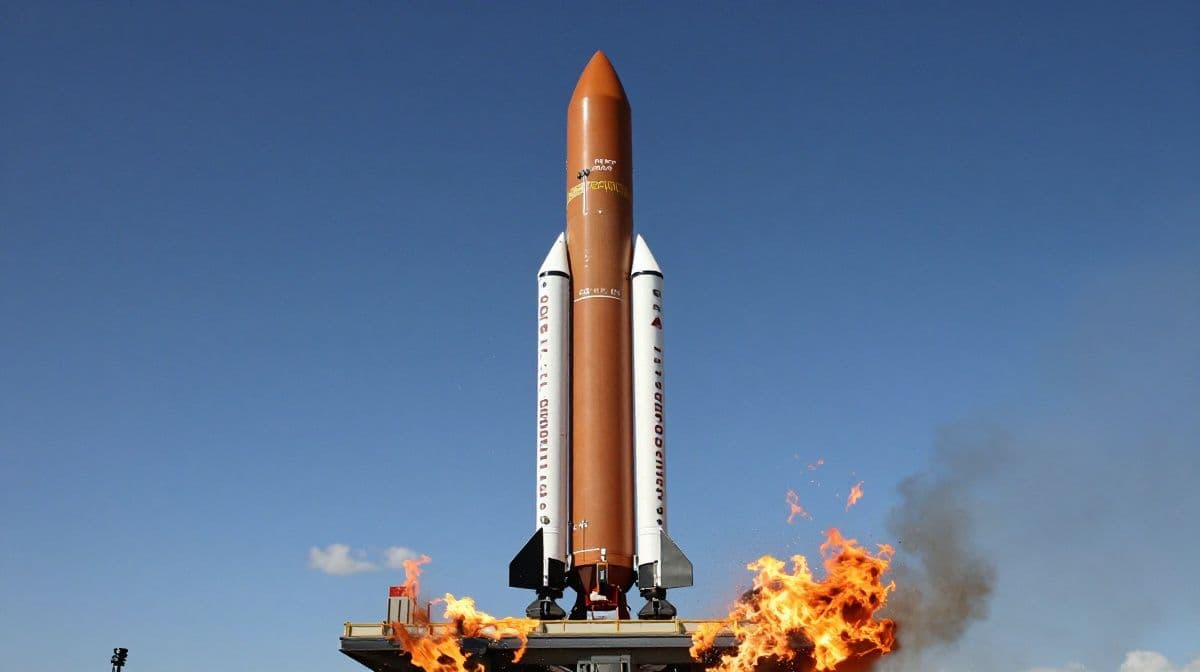
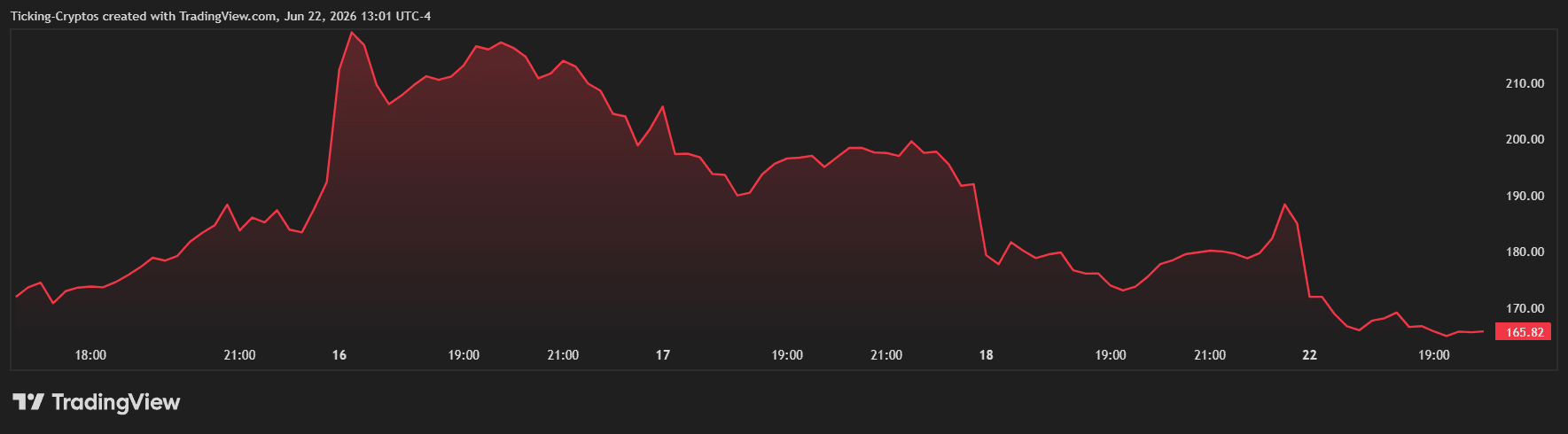
SpaceX (NASDAQ: SPCX) is having a brutal start to the week. On Monday the stock fell as much as 10% intraday, its third straight session of losses, trading back down toward the $165 area after closing the prior week near $185.
That puts SPCX roughly 27% below its all-time high of $225.64, set just days earlier on June 16. The slide follows a retreat of more than 8% across the previous Wednesday and Thursday, before US markets paused for the Juneteenth holiday. In other words, much of the euphoric post-IPO rally has now been unwound — though the stock still trades comfortably above its $135 IPO price.
How Did SpaceX Stock Get Here So Fast?
SpaceX listed on the Nasdaq on June 12 in the largest IPO in history, raising about $75 billion at a $135 offer price and debuting at a valuation near $1.77 trillion. The first week was pure mania: shares popped 19% on day one and ripped to $225.64 by June 16, briefly vaulting SpaceX past Amazon and Microsoft to become the world's fifth-most-valuable company.
Retail investors drove the move, buying more SPCX than any other stock on the market for several consecutive sessions. Then the music stopped — and a thin, sentiment-driven stock started falling as fast as it rose.
Why Is SpaceX Stock Falling?
The decline isn't a single scandal. It's a stack of pressures hitting a richly valued stock at the same time.
- A massive bond sale. The immediate trigger this week was news that SpaceX is preparing its first-ever investment-grade US dollar bond offering, expected to total at least $20 billion. The proceeds would refinance a bridge loan maturing in 2027 and fund the company's AI ambitions. Markets read "massive borrowing spree" against an unprofitable balance sheet and sold.
- A razor-thin float. Only around 4–5% of SpaceX shares are free to trade; the rest are locked up. That tiny supply fueled the explosive melt-up — and now amplifies the drop, since even modest selling moves the price several percent with little liquidity to absorb it.
- A stretched valuation. Even after the pullback, SPCX trades at a price-to-sales multiple north of 90x, versus the S&P 500's ~3.7x, on a company that booked an $18.7 billion revenue year but a sizeable GAAP loss. A former Nasdaq chief publicly warned this week that the stock is trading on hopes rather than fundamentals.
- Lockup expiration fears. The supply cliff is coming into view: the first insider selling windows open around the late-July to August earnings period, the standard 180-day lockup lapses near December 2026, and Elon Musk's stake stays locked until June 2027. More tradable supply over time pressures a stock built on scarcity.
- An ESG black eye. MSCI handed SpaceX a CCC rating — its lowest tier — citing governance and sustainability concerns. Musk dismissed it on X, but the headline added to the negative tape.
Is the SpaceX Crash a Sign of Trouble?
Not in the underlying business, according to most analysts. Starlink remains profitable and growing, with over 10 million subscribers, $11.4 billion in 2025 revenue and a 63% adjusted EBITDA margin, while the launch business set records in 2025. The pullback reflects an expensive stock and a tiny float — not a deterioration in operations.
That said, the caution is real. One widely-shared note this week projected SPCX could fall 50% or more by year-end as the hype fades. Morningstar's fair value estimate sits near $63, while the Wall Street consensus average is around $164 — close to where the stock trades today.

**Investments carry risks. Trade responsibly.
What Comes Next for SPCX?
Two mechanical catalysts dominate the near-term picture. Around early July, expected Nasdaq-100 inclusion could trigger an estimated multi-billion-dollar wave of forced passive buying from index funds — demand driven by rules, not sentiment. Then the first post-IPO earnings report, due in early September, will deliver the market's first hard fundamental checkpoint, alongside the end of the underwriters' quiet period and a flood of fresh analyst coverage.
Until those arrive, expect more of the same: a thinly-floated, sentiment-led stock capable of swinging double digits in a single session — in either direction.
How Does the Crypto Market Compare to SpaceX Today?
While SPCX bleeds, the crypto market is holding up far better — a useful contrast for anyone weighing where to put risk capital. As of Monday, June 22, the picture looks like this:
- Bitcoin ($BTC): trading around $65,000, up modestly on the day after opening near $63,200 — broadly steady despite a more hawkish Fed.
- Ethereum ($ETH): around $1,775, recovering after a soft open near $1,705.
- $BNB: near $593, holding firm.
- $XRP: around $1.14, roughly flat.
- Solana ($SOL): near $72, down about 2% on the day.
- TRON ($TRX): around $0.33, modestly higher.
The total crypto market cap sits near $2.21 trillion, up about 0.4% over 24 hours, with $Bitcoin dominance remaining strong as investors favor the larger caps.
The takeaway for investors is the difference in character. SpaceX is a brand-new, thinly-floated single stock swinging 10% in a session on bond-sale headlines and lockup fears. Crypto majors — far more mature markets with deep liquidity — are absorbing the same hawkish-Fed macro backdrop with relative calm. Both are volatile asset classes, but right now the volatility is concentrated in SPCX, not in BTC or ETH. For those building a diversified risk book, that contrast matters: a falling stock and a steady crypto tape can present very different entry points at the same moment.
Why Could the SpaceX Dip Be a Buying Opportunity?
For long-term investors, a sharp pullback in a high-conviction name is often where opportunity lives. The logic of buying the dip is simple: if your thesis on the underlying business hasn't changed, a lower price means you're buying the same company for less. SpaceX's pullback hasn't been driven by a broken business — Starlink is profitable and scaling, the launch business is setting records, and the AI segment is expanding. What's fallen is the price, not the fundamentals.
Several factors make this dip worth a closer look:
- The fundamentals are intact. The decline reflects an expensive valuation and a thin float, not deteriorating operations. The core businesses are still growing.
- Mechanical demand is coming. Expected Nasdaq-100 inclusion in early July could force index funds to buy SPCX regardless of sentiment — a structural tailwind that doesn't care about short-term mood.
- Dollar-cost averaging smooths volatility. Rather than trying to call the exact bottom, buying in tranches as the stock dips lets you build a position at a better average price while sidestepping the impossible task of perfect timing.
- Volatility cuts both ways. The same thin float that drives 10% down-days also drives explosive rebounds. Sharp recoveries can happen just as fast as the falls.
That said, dip-buying is not risk-free. SPCX remains expensive on any traditional metric, and lockup expirations later in 2026 could add supply. The point isn't to catch a falling knife — it's to accumulate a quality asset at a discount if you believe in the long-term story.
How Can You Buy the SpaceX Dip?
If you want to act on the dip, XTB is one of the most accessible ways to do it — offering real SpaceX (SPCX) shares, not synthetic exposure, so you actually own the equity listed on the Nasdaq.
Here's why XTB stands out for trading SpaceX:
- Real share ownership. You buy the actual SPCX stock, giving you genuine exposure to the company rather than a derivative product.
- Beginner-friendly platform. XTB's award-winning app and web platform make it straightforward to search "SPCX," set your amount, and place an order in minutes.
- Fractional investing. You don't need the full share price to get started — buy a slice of SpaceX with the budget you have, ideal for dollar-cost averaging into a dip.
- Low, transparent costs. Competitive commission structure with no hidden fees, so more of your capital goes into the position.
Getting started is simple:
- Open a free XTB account via this link and complete the quick verification.
- Fund your account using your preferred deposit method.
- Search "SPCX" in the platform to find SpaceX shares.
- Set your amount — a full share or a fraction — and place your buy order.
- Monitor and average in by adding to your position on further dips if your thesis holds.
👉 Buy SpaceX (SPCX) shares on XTB →
**Investments carry risks. Trade responsibly.
Related articles
- Will the SpaceX Stock Price Crash? What Comes Next After the Post-IPO Slide
- SpaceX Stock (SPCX): From $211 Record to $104.83 Low in 5 Phases
- SpaceX IPO Today: SPCX Stock Opens Near $152 and Jumps Toward $172 — What Happens Next?
- SpaceX or Ethereum: Which Delivered the Better Return?
- SpaceX vs Bitcoin: Which Was the Better Investment?
Which topics should we dive deeper into?
Select what genuinely interests you. Your picks feed directly into our editorial planning.
Crypto news that's actually worth your time.
Weekly. 60 seconds. Carefully curated by our editors: no hype, no promo flood, no spam.

June 16, 2026 11:16 AM

How to Buy SpaceX Stock (SPCX): Step-by-Step Trading Guide
SpaceX stock (SPCX) jumped to $192 on its second trading day. Here's the price action — and exactly how to trade SPCX step by step.
June 12, 2026 1:09 PM

How to Buy SpaceX Stock (SPCX): IPO Date, Valuation, and the 3 Best Platforms
SpaceX hits Nasdaq at a ~$1.75T valuation. Here's the IPO date, what to expect on day one, and the 3 best platforms to buy SPCX.
August 13, 2026 8:19 AM
SpaceX Stock Up 40% in 5 Days: SPCX Adds $530 Billion as Musk Bets the Company on AI
SPCX has ripped 40% higher in five sessions, adding roughly $530 billion in market value. Here is what is driving it and what the chart says next.

June 13, 2026 10:33 AM
SpaceX IPO Recap: SPCX Closes +19% in a Record Debut, While Tokenized Stocks Stumble
SPCX jumped 19% to a $2T+ valuation on day one — but the tokenized SpaceX trade split in two, and the difference is the real lesson.
March 24, 2026 4:06 PM
Circle (CRCL) Stock Plummets 17% on Stablecoin Yield Crackdown Fears
Circle Internet Group (CRCL) shares dropped 17% today following reports of a potential legislative crackdown on stablecoin yields. USDC remains pegged to $1 (for now).
March 27, 2026 9:45 PM
Bitcoin Price Crash: Why BTC Fell Below $68,000 Today
Bitcoin price faces a sharp slump below $68,000 as a $14 billion options expiry and Middle East geopolitical tensions trigger a wave of liquidations.
August 28, 2024 6:13 PM
Bitcoin Price CRASH: BTC Falls Below $60K, Eyes Support at $56.7K
BTC fails to breach the $66K level, crashing below $60K to around $58K. Can Bitcoin find support at $56.7K, or is another drop on the horizon?
October 27, 2026 12:31 PM
XRP Price Crashes Below $1.30: What Caused It and What Comes Next
XRP price has dropped below $1.30 after weeks of selling. Here are the factors behind the XRP crash and the next high and low price targets.
October 8, 2026 4:38 AM

Crypto Market Slides: Bitcoin Loses 4.2 Percent and $651 Million of Long Bets Are Liquidated
Bitcoin has lost 4.2 percent since Tuesday afternoon, and ether and XRP more still. Three reasons can be documented: outflows from the US ETFs, $651 million of forcibly closed long bets and Fed minutes holding out the prospect of another rate rise. A crash it is not, and what to check before buying more is set out here.
June 7, 2026 7:30 PM

Market Analysis: Why Bitcoin and Global Markets Just Collapsed
A hotter-than-expected jobs report and an AI sector panic triggered a $2.5 trillion global market liquidation, dragging Bitcoin to the $60,000 brink.

June 6, 2026 1:44 AM

Toncoin Crashes to $1.53 as Key Ecosystem Services Face Major Outages
Toncoin (TON) price has crashed sharply to $1.53 amid widespread infrastructure issues, leaving major mini-apps and network portals completely offline.
April 12, 2026 11:07 AM

Bitcoin Price Drops to $71,500 as US-Iran Peace Talks Collapse in Islamabad
Bitcoin retraces to $71,500 after failed US-Iran peace talks in Pakistan. Geopolitical tensions resurface, impacting the global crypto market sentiment.
October 20, 2026 10:38 AM
Crypto Crash Today: Why Is Bitcoin Stuck Below $82,000?
Bitcoin can't hold $82K, Ethereum is down 20% in 2026 and ETF money keeps leaving. Here is what is really behind the crypto crash today.
August 11, 2026 4:58 PM

XRP Crashes Below $1: 5 Reasons Behind the Drop
XRP printed 0.99057 and lost the $1 level it held for months. ETF demand, long liquidations, on-chain decay, CLARITY and CPI all played a part.
May 13, 2026 6:52 PM

Why Did Bitcoin Price Crash below 80k Today?
The crypto market is in turmoil as Bitcoin and Ethereum lose critical support levels. What triggered the sudden price collapse?
April 10, 2026 10:10 AM

Bittensor Crash: $900 Million Wiped as Covenant AI Exits TAO Ecosystem
Bittensor (TAO) plummeted 27% after major subnet developer Covenant AI exited the network, alleging centralization and "decentralized theater" by the founder.
March 28, 2026 11:30 AM

Why is the Market Dumping? Bitcoin Below $66k as Geopolitical Risks Explode
Bitcoin has plunged below $66,000 and altcoins are bleeding. We analyze the Iran conflict, bond market volatility, and a hawkish Fed driving this crash.
November 3, 2025 10:20 AM
Why did Bitcoin Crash Below $108K? Here are Apparent Reasons...
Bitcoin falls below $108K as a major insider sells 12,500 BTC, sparking market fear and speculation over whether the next stop is $100K.
June 15, 2024 3:00 PM
Bitcoin Price Prediction in June 2024: Why is Bitcoin Price Down?
Bitcoin's recent plunge from its psychological price of $70,000 to $66,250 has triggered widespread concern in the cryptocurrency market. Why is Bitcoin price down?
April 12, 2024 9:44 PM
XRP Tumbles More Than 11%! What's Behind the XRP Decline?
XRP has taken a significant hit, succumbing to the aftershocks of Bitcoin's recent failure to breach the $70,000 mark.
March 3, 2026 5:40 PM

US Stock Market Volatility: Will Crypto Prices Crash Next?
US markets face uncertainty as geopolitical tensions rise. Discover if a stock market correction will trigger the next major crypto price crash.
December 10, 2024 12:30 AM

Bitcoin Price Drops Below $100K – Is a Bigger Crash Coming?
Bitcoin has fallen below $100K, triggering a broader market correction of over 8% in the last 24 hours. With profit-taking and large sell-offs hitting the market, could Bitcoin drop to $90K or lower?
October 25, 2026 10:51 AM
Crypto Crash: Why the Top Cryptos Lost Up to 4% in One Week
Crypto crash week: the largest cryptos lost up to 4% in seven days. We break down why crypto prices are falling and what to watch next.
April 2, 2026 2:44 PM

Bitcoin Price Drops Below $66,000 as $251M in Longs Vanish
Bitcoin slumps below the $66,000 mark, triggering over $251 million in liquidations. Technical analysis reveals a bearish trend line and key support levels.
February 25, 2025 12:18 AM
XRP Price Prediction as Cryptos Crash: Will XRP Price Reach $1?
XRP price prediction: Ripple price is in freefall as the crypto market crashes — how low can it go? Will XRP price reach $1?
More from CryptoTicker