
Why Harvard Just Dumped $87 Million in Ethereum ETF Shares
Harvard Management Company completely liquidated its $87M Ethereum ETF stake and slashed its Bitcoin ETF holdings by 43% in a major Q1 portfolio reallocation.





Which topics should we dive deeper into?
Select what genuinely interests you. Your picks feed directly into our editorial planning.
Crypto news that's actually worth your time.
Weekly. 60 seconds. Carefully curated by our editors: no hype, no promo flood, no spam.
Harvard University's endowment fund has aggressively scaled back its exposure to cryptocurrencies. According to recent regulatory filings, the world's largest academic endowment fund reversed its bullish stance on crypto assets during the first quarter of the year.
The move highlights an emerging divergence among Wall Street's elite regarding the long-term viability of spot crypto products. While some multi-billion-dollar entities continue to accumulate digital assets, others are rapidly taking profits or mitigating risk amid a choppy macroeconomic landscape.
What Did Harvard Sell?
The latest Form 13F filed with the U.S. Securities and Exchange Commission (SEC) reveals that the Harvard Management Company (HMC) completely eliminated its $86.8 million position in BlackRock’s iShares Ethereum Trust (ETHA).
Compounding this full exit, Harvard also downsized its position in BlackRock’s iShares Bitcoin Trust (IBIT) by roughly 43%. The endowment offloaded approximately 2.3 million shares of the spot Bitcoin ETF, leaving it with 3,044,612 shares valued at approximately $117 million at the end of the quarter.
Understanding Institutional Rebalancing and 13F Filings
To contextualize Harvard's recent trades, it is essential to define what these regulatory disclosures mean. A Form 13F is a quarterly report required by the SEC from institutional investment managers holding at least $100 million in equity assets. It offers the public a snapshot of long positions in U.S. listed equities, options, and exchange-traded funds (ETFs).
While these filings provide transparency, they feature an inherent time lag. The data disclosed in mid-May reflects the portfolio architecture exactly as it stood on March 31. Therefore, any tactical adjustments made by Harvard during the second quarter remain unknown to the public until the next reporting cycle.

Why Did Harvard Dump Its Ethereum and Bitcoin?
Harvard's rapid exit from Ethereum after only one quarter of exposure points to several macroeconomic and internal crypto headwinds that occurred early in the year.
Underperformance and Volatility of Crypto Assets
The primary catalyst behind the sudden divestment appears to be the lackluster price action of major cryptocurrencies relative to standard equities. Ethereum experienced notable downward pressure during the first quarter, dropping significantly from its late-2025 local highs. Faced with an asset that underperformed projections, Harvard's risk management protocols likely triggered an automated stop-loss or a tactical rotation to preserve endowment capital.
Ecosystem Uncertainties at the Ethereum Foundation
Beyond price action, internal governance matters within the Ethereum ecosystem have raised eyebrows among institutional investors. A series of high-profile departures at the Ethereum Foundation—including key long-time researchers—created a narrative of organizational turbulence. Critics and analysts have argued that competing Layer-1 blockchains are aggressively capturing market share while the Ethereum Foundation remains heavily focused on ideological parameters rather than refining native tokenomics to appeal to Wall Street.
A Rotational Play Toward Artificial Intelligence (AI)
The capital freed up from selling crypto news-driven assets did not sit in cash. The 13F filing indicates that Harvard actively pivoted its portfolio toward booming tech and hardware manufacturing. HMC significantly increased its equity exposure to top-tier semiconductor and AI infrastructure firms, ramping up allocations in:
- Taiwan Semiconductor Manufacturing Co. (TSMC)
- NVIDIA (NVDA)
- Broadcom (AVGO)
The Broader Institutional Landscape: A Divided Frontier
Harvard's retreat does not necessarily point to a universal institutional rejection of crypto. Instead, the broader 13F data outlines a severe fragmentation in how major funds view the asset class.
For example, sovereign wealth funds took the exact opposite approach during the same period. Abu Dhabi's Mubadala Investment Company expanded its spot Bitcoin ETF allocations by 16%, pushing its net holding close to $566 million. Concurrently, banking giants like JPMorgan Chase and Wells Fargo reported increased stakes in both Bitcoin and Ethereum spot funds.
Conversely, hedge funds like Millennium Management and Capula Management mirrored Harvard's conservative approach by significantly paring down or entirely liquidating their respective spot crypto trust shares.
More on Ethereum: All Ethereum news at a glance
Related articles
- Why Is The Crypto Market Up TODAY?
- Bitcoin ETF Outflows Hit Record Levels: Why Institutions Are Pulling Billions From BTC
- Ethereum Price Analysis: Why is Ethereum Price Down?
- BlackRock Bitcoin ETF Buys $147M as Inflows Hit 3-Week Streak
- Crypto ETF Outflows Pass $1 Billion in October: Is Wall Street Dumping Bitcoin and Ethereum?
Which topics should we dive deeper into?
Select what genuinely interests you. Your picks feed directly into our editorial planning.
Crypto news that's actually worth your time.
Weekly. 60 seconds. Carefully curated by our editors: no hype, no promo flood, no spam.

October 8, 2026 4:38 AM

Crypto Market Slides: Bitcoin Loses 4.2 Percent and $651 Million of Long Bets Are Liquidated
Bitcoin has lost 4.2 percent since Tuesday afternoon, and ether and XRP more still. Three reasons can be documented: outflows from the US ETFs, $651 million of forcibly closed long bets and Fed minutes holding out the prospect of another rate rise. A crash it is not, and what to check before buying more is set out here.
March 1, 2025 2:14 PM
Bitcoin March 2025 Price Prediction: After the WORST February for BTC Price in 11 years - How Will March Unfold?
February 2025 saw Bitcoin's sharpest decline in over a decade. Explore the factors behind this downturn and the potential for a market rebound.
October 8, 2026 5:06 PM

Crypto Crash Reason: Why Bitcoin Fell Below $81,000 and Altcoins Bled Even Harder
Bitcoin slid under $81,000 and Ethereum lost 9% in a week. Here is every crypto crash reason behind the October 2026 selloff explained.

June 4, 2026 1:23 PM

Is the Crypto Crash Manipulated? Bitcoin and ETH Shed Billions
Bitcoin and Ethereum have plunged sharply, wiping out billions in market cap amid massive ETF outflows, sparking concerns over potential market manipulation.
March 13, 2026 10:50 AM

Bitcoin Price Hits $72,500 as Joint SEC-CFTC Regulatory Framework Sparks Bullish Momentum
Bitcoin surges to $72,500 as the SEC and CFTC announce a joint regulatory framework, while BlackRock’s new ETHB ETF records a strong $15.5M debut.
May 29, 2024 5:43 PM

New Largest Bitcoin ETF Fund: Did BlackRock Surpass Grayscale?
Did BlackRock surpass Grayscale to become the largest Bitcoin ETF fund? What happened?
January 30, 2026 10:12 AM

Crypto Crash Reason: Why is Bitcoin Crashing Today and Key Supports
The crypto market is facing a sharp correction. What are the crypto crash reasons today, and what are Bitcoin support levels, and how are macro factors hitting prices?
April 30, 2026 11:29 AM

Bitcoin ETF Inflows Hit $2.44B in April: Is the Bull Market Back?
Bitcoin spot ETFs recorded $2.44 billion in net inflows this April, signaling a massive return of institutional interest and a potential market shift for 2026.
May 7, 2024 7:39 PM

Ethereum (ETH) ETF Updates And Expected Rejections
Uncertainties surrounding Ethereum investment products grow by the day with new SEC decisions. Here is the latest news on the Invesco Galaxy spot Ethereum ETF proposal.
March 26, 2025 4:00 AM

BlackRock NEWS: BUIDL Fund Live on Solana and Bitcoin ETP Launch in Europe
BlackRock's dual crypto push—expanding its BUIDL fund to Solana and launching a Bitcoin ETP in Europe—has ignited market interest. Solana price surged to its best performance this week; so what's next?
May 24, 2024 1:47 PM

SEC Approves Ethereum ETFs: A New Era for Crypto Investments
As SEC approves spot Ethereum ETFs, a signal of a new era for crypto investments is launched. But what are the implications expected on the crypto market and what does this mean for investors?
May 23, 2024 7:29 PM

Grayscale SEC Approval: Launching Two New Crypto Funds
Grayscale is committed to expanding its portfolio of single-asset cryptocurrency trusts and offering more opportunities for investors, as it announced today the latest trusts launch.
December 9, 2025 9:03 AM

BlackRock Loads Up on BTC & ETH as Major Crypto Pump Could Be Coming
BlackRock is quietly accumulating Bitcoin and Ethereum again — a clear sign institutions are preparing early for the next big crypto liquidity cycle.
March 26, 2026 1:23 PM

Crypto Ignores Bullish News as War Risk Takes Over — Why Bitcoin and Ethereum Are Falling Anyway
Bitcoin and Ethereum fall despite bullish crypto news as war risks, oil spikes, and macro pressure dominate market sentiment.
January 26, 2025 1:24 PM
From Skeptic to Advocate: How BlackRock and Larry Fink Are Leading the Crypto Revolution
How are BlackRock News and Larry Fink shifting towards Bitcoin and tokenized assets shaping a crypto revolution?
March 15, 2026 6:00 AM

Bitcoin ETFs See $760M Inflows as Operation Epic Fury Reshapes Global Finance
Amidst Operation Epic Fury, Bitcoin ETFs recorded $760M in net inflows this week. While traditional markets lose $5T, BTC consolidates its role as digital gold.
May 22, 2024 7:27 PM

SEC 'APPROVES' Ethereum Spot ETF: Will It Happen TOMORROW?
May 23rd is the anticipated day for SEC to announce its decision concerning ETH spot ETF. In less than 24 hours, an approval, rejection, or postponement will be among the top headlines, but what do analysts foresee?
May 20, 2024 11:17 PM

Bitcoin Price Reaches 70K,Why Is Bitcoin (BTC) PRICE UP?
With BTC surpassing the $70K a while ago, a downtrend was kicked off. And everyone can't help but wonder, how low will it go? And what will the next adjustment price be for BTC?

June 8, 2026 10:12 AM

Why Bitcoin Lagged the Nasdaq Since the US-Iran Conflict Began
Since the US-Iran war began, Bitcoin is down 3% while the Nasdaq rallied 20%, exposing a massive rift between crypto and equities.

August 22, 2026 1:33 AM

Buying a Leveraged Bitcoin ETF: What Is Behind the 3x Products
Cboe has filed six triple-leverage funds with the SEC, including one on Bitcoin and one on Ether. This piece explains why the leverage holds for a single trading day only, why the funds hold no coins, and which 3x products already trade on an exchange in Europe.
August 9, 2026 11:08 AM

Bitcoin and Ethereum ETFs Attract $1.1B — Why Are Crypto Prices Still Flat?
Bitcoin and Ethereum ETFs attracted $1.1 billion in one week, but BTC and ETH barely moved. Here is why the market reaction remains muted.
August 6, 2026 2:54 PM
Bitcoin ETFs Are Buying Again: $626 Million in Three Days
US spot Bitcoin ETFs pulled in $626 million in three sessions to open August, with BlackRock's IBIT taking $479 million of it. What is driving the bid?
June 2, 2026 6:13 PM

Bitcoin Crash to $67,400 as Google and Berkshire Team Up for Massive $80B AI Fund
Bitcoin fell 5.6% to $67,400 as a massive $80B AI capital raise backed by Berkshire Hathaway triggered an institutional capital rotation out of crypto.
May 23, 2026 5:28 PM

Crypto Market Crash Deepens as Bitcoin Breaks Below $75K
Crypto market crash deepens as Bitcoin falls below $75K, Ethereum nears $2K, and altcoins slide amid liquidations and macro fears.
May 28, 2026 1:02 PM
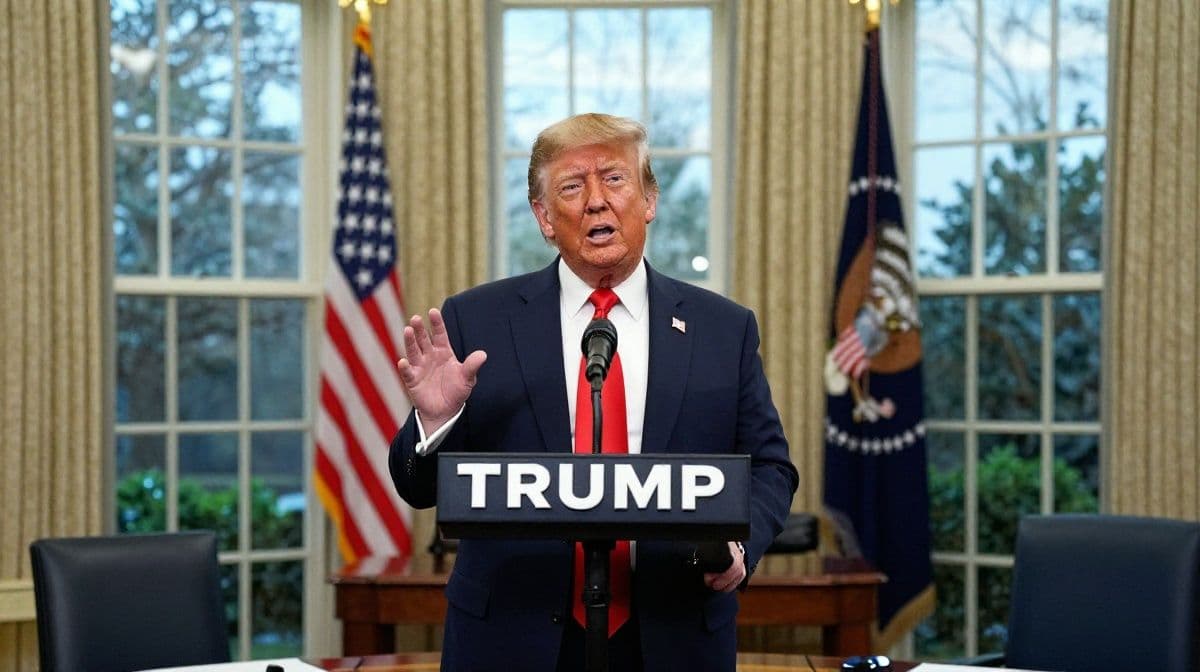
Trump Attempts to Salvage Crypto with Bullish Promises, But Crypto Crashes Hard Anyway
Donald Trump made a major push to salvage crypto market sentiment by promising he will "never let crypto down," but Bitcoin and major altcoins crashed anyway.


More from CryptoTicker