XRP Price Prediction 2026: Current Analysis After the Crash – News, Chart & Outlook
Current XRP Price: Learn all about the price development, forecast, and opportunities of Ripple XRP in the dynamic crypto market of 2026.

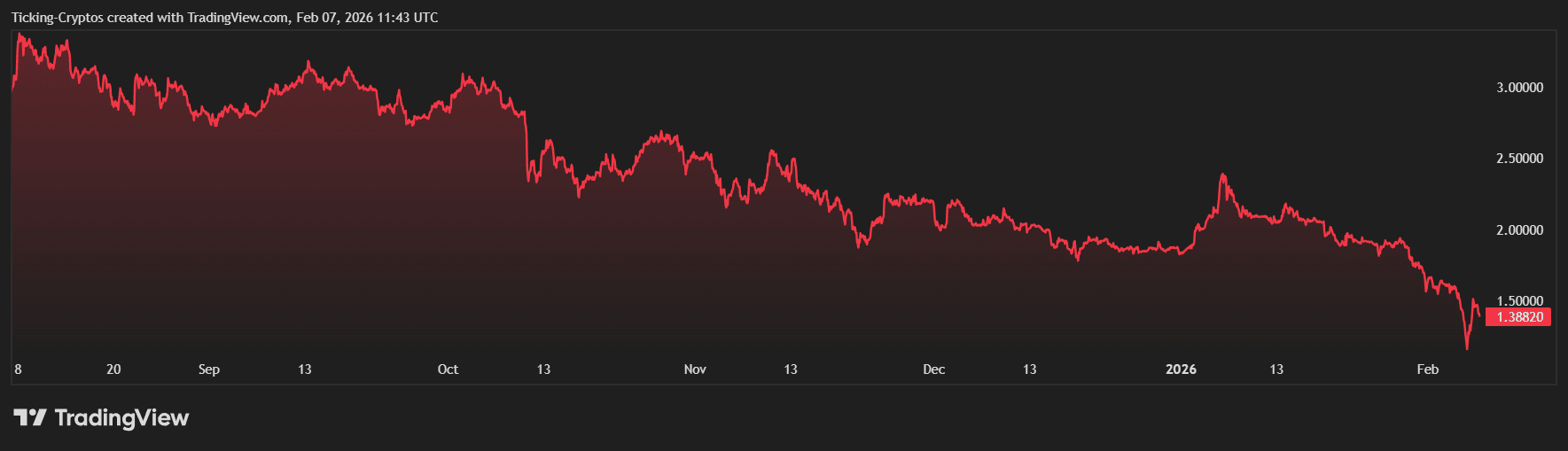
The crypto market has just experienced some turbulent weeks – and right in the spotlight is $XRP. During the recent market correction, the XRP price fell to a low of around $1.15, but then quickly recovered to about $1.40. What is behind these wild fluctuations, and where could the journey go in the short term?
As of January 25, 2026, the current XRP price is about €1.77-1.90 (equivalent to approximately $1.84-2.00). The all-time high of XRP was reached in 2017 during the crypto boom, at around €3.40. After this boom, the XRP price fell below €0.30 and remained relatively stable in the following years. In 2021, the XRP price again surpassed the €1.50 mark, driven by growing interest in cryptocurrencies and increased use of Ripple by financial institutions.
Market Overview: The Position of XRP in the Current Crypto Market
The crypto market remains synonymous with dynamism and strong fluctuations – this is once again evident in 2026. After a strong rise at the beginning of the year, XRP is currently in a consolidation phase. The price is currently fluctuating between €1.77 and €1.90, which represents a noticeable decline of about 14.7% within a week. Despite this short-term correction, XRP continues to assert itself as one of the leading cryptocurrencies worldwide.
With a market capitalization of about €85 billion, XRP plays a central role in the crypto market. Particularly in international payments, the token has established itself as a bridge currency and is closely linked with banks and financial institutions. XRP owes this strong position not only to its technology but also to its continuous integration into existing financial systems. While other coins are often traded purely speculatively, XRP's role in global payments remains a decisive factor for its relevance and stability in the market.
The recent fluctuations show how sensitive the price is to market movements. Nevertheless, the consistently high market capitalization underscores that XRP continues to enjoy great trust among investors and companies – especially in the context of the digitization of international payments and collaboration with banks.
Current XRP Price: What Happened After the Crash?
The recent crypto crash did not spare XRP – but the recovery was remarkably quick. After a drop to about $1.15 (approximately €1.07), the price was able to stabilize again at around $1.40 within a few days. The 24-hour volume recently stood at an impressive $9.18 billion.
Currently, Ripple XRP is showing itself as one of the more resilient large-caps in the market. Nevertheless, the weekly performance is still in the negative – an overview of the price development shows that the token has not yet recovered all losses.
The overall market provides important context:
- Bitcoin fell below key levels and dragged altcoins down with it
- Massive liquidations led to increased movement
- The partial recovery came quickly, but uncertainty remains
The data and price information presented here are based on publicly available price data from major exchanges like Binance, Kraken, and Coinbase. The market data is continuously updated to provide you with the most current status possible.
 Crypto Exchange Check: Who is the Test Winner? Get the Most Out of Your Investment
Market Environment: Why Did the XRP Price Plummet So Sharply?
Without considering the overall market environment, it's difficult to understand the recent drop in the XRP price. The crash was not an isolated event—it affected virtually all cryptocurrencies.
Main Drivers of the Decline
| Factor | Impact on XRP |
|---|---|
| Leveraged Positions | Mass liquidations in the billions |
| Margin Calls | Forced sales intensified downward pressure |
| Risk Aversion | Capital flowed out of high-risk assets |
| Stop-Loss Cascades | Technically triggered selling waves |
XRP fell from a range around $1.70–$1.80 to a low of about $1.15—a decline of approximately 35 percent. However, this correction was less motivated by XRP-specific factors than by general market stress.
Macroeconomic factors played a crucial role: interest and inflation concerns, profit-taking after previous all-time highs in Bitcoin, and a general risk aversion in financial markets. Additionally, altcoins like XRP often fall more sharply than Bitcoin during crash phases—liquidity and order depth are simply lower for other coins.
Technical XRP Analysis: Consolidation Mode Between $1.20 and $1.40
This section highlights key levels on the chart without delving too deeply into technical jargon. Technical analysis provides reference points—not guarantees.
After the recent recovery, the XRP price showed a significant move indicating a short-term rebound phase on the chart, underscoring the current dynamics of price development.
Key Price Levels at a Glance
Support Zone:
- $1.20–$1.25 as a short-term key zone
- This level should be defended after the crash
- A break below would risk deeper tests at $1.15
Resistance Zone:
- $1.40 currently acts as a cap
- Above that, the next important level is at $1.50
- A breakout above these levels could trigger increased volatility
After the V-shaped rebound, the XRP price typically transitions into a sideways phase. Range trading between $1.20 and $1.40 appears likely during this phase.
What do the technical indicators say?
- The Relative Strength Index (RSI) is at 44–45—neutral, neither overbought nor oversold
- The 50-day moving average is trending upward
- The 200-day MA has been in an uptrend since December 2024
This setup allows for movement in either direction. A trend break below $1.20 or a breakout above $1.40–$1.50 could serve as an indicator for the next major direction.
Short-Term XRP Price Prediction: What Is Realistic in the Coming Days?
For short-term oriented traders, the question is: Where will the price move in the coming days?
The most likely prediction for the near future:
- Sideways movement between $1.20 and $1.40—as long as no new macro shocks occur
- Pullbacks towards $1.20 could technically be seen as a retest of the rebound bottom
- Decreasing volume in the range signals waning panic but also uncertainty about the direction
Strong daily candles with closing prices above $1.40 would tilt the short-term picture in favor of the bulls. Until then, the situation remains in the consolidation area.
Bitcoin as a Trendsetter: When Can the XRP Price Rise Dynamically Again?
XRP historically aligns closely with the Bitcoin trend. The token rarely moves against the overall market for long—and this should be considered in any XRP forecast.
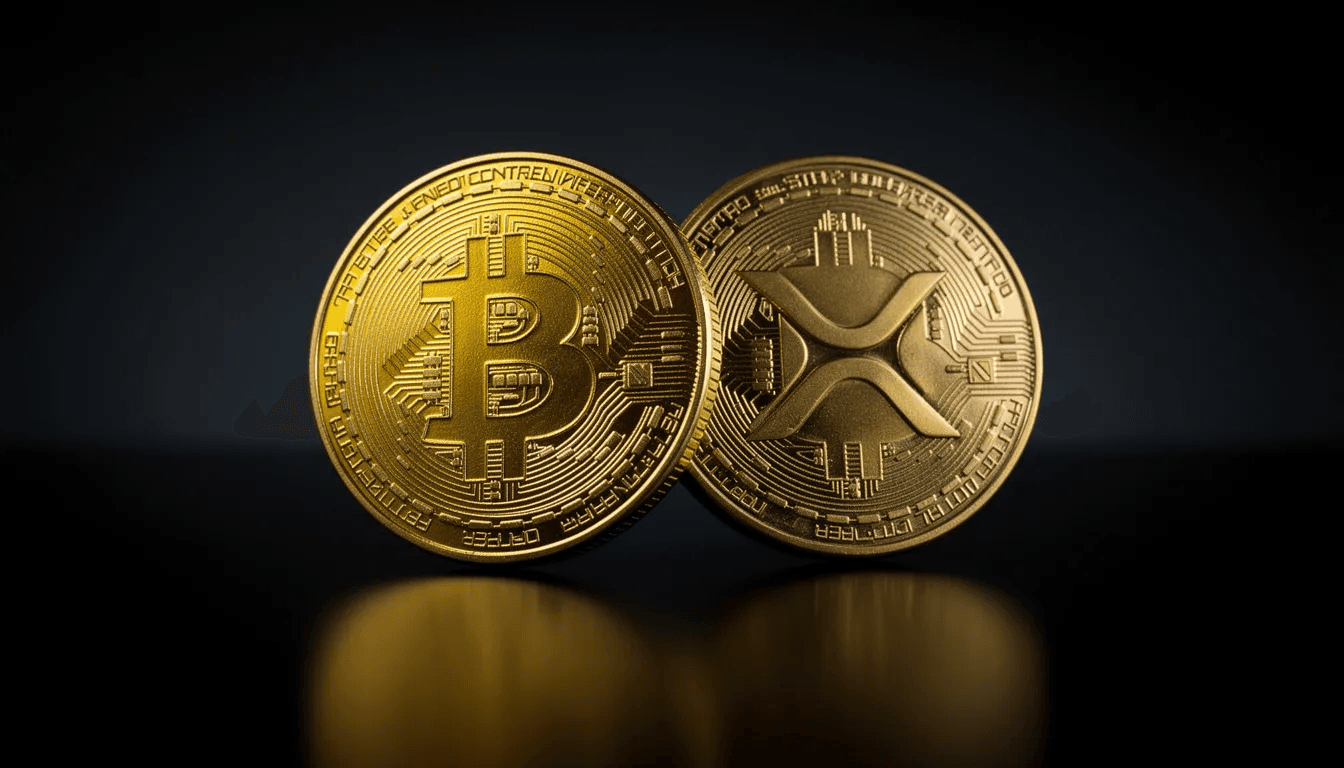
The key level is: $80,000 for $Bitcoin.
As long as BTC does not sustainably return above this threshold, XRP is likely to remain in consolidation mode. A Bitcoin recovery above 80K typically attracts new capital inflows into the entire altcoin sector—and XRP, as an established large-cap, particularly benefits from this.
The correlation between XRP and Bitcoin is currently high. Temporary deviations due to Ripple-specific news are possible, but the overarching trend is dictated by the Bitcoin cycle.
Potential XRP Price Targets in a Bitcoin Rebound
If Bitcoin rises above $80,000, the following target zones for XRP could become relevant:
| Price Target | Justification |
|---|---|
| $1.50 | First major resistance above the current range, psychological level, and potential take-profit area for short-term traders |
| $1.80 | Area where increased volume was traded before the crash; mid-term target in a stable uptrend |
| $2.00 | Round number as a potential high in a more bullish scenario—only achievable if Bitcoin stabilizes significantly above 80K |
These targets are to be understood as possible stages, not guarantees. Fluctuations and false breakouts are always possible, and the price forecast remains fraught with significant risk.
Fundamental Situation: Ripple, XRPL & Current XRP News
After the chart analysis, we take a look at the fundamental drivers behind the XRP price. In the long term, not only technical levels but also real use cases and adoption matter.
What is XRP?
XRP is the native currency of the XRP Ledger—a blockchain developed by Ripple Labs. The focus is on:
- Fast, cross-border payments (3–5 seconds settlement)
- Minimal fees (under $0.0001 per transaction)
- Energy efficiency (only 0.0079 kWh per transaction vs. Bitcoin's 1,173 kWh)
Recent Developments in the Ripple Ecosystem
The latest news surrounding Ripple and XRP is quite positive:
- ETF Inflows: Since November 2025, over $1 billion (some sources say $1.37 billion) has flowed into spot ETFs
- Regulatory Clarity: The SEC lawsuit was largely decided in favor of XRP in 2023—the token was classified as a non-security
- CBDC Projects: Partnerships with central bank projects in Brazil and Hong Kong are testing XRP for interoperability
- Ecosystem Growth: Sidechains, smart contract functions, and DeFi applications on the XRPL were further expanded in 2025/2026
The regulatory status remains an important factor for institutional investments. With the classification as a non-security, XRP has a significant advantage over other altcoins whose legal status in the US is still unclear.
Strong fundamentals do not prevent a crash—but they favor a recovery once the panic subsides. The quick comeback from $1.15 to $1.40 could reflect exactly that.
On-Demand Liquidity & Bank Adoption
For the real utility of XRP, On-Demand Liquidity (ODL) is central. This protocol allows XRP to be used as a bridge currency in international payments.

How ODL Works:
- A company wants to send money from country A to country B
- The outgoing currency is converted into XRP
- XRP is transferred in seconds
- At the destination, XRP is exchanged into the local currency
The advantage: Banks do not need to hold pre-funding in various countries. According to Ripple, costs are reduced by up to 70 percent compared to traditional SWIFT transfers.
Concrete examples of ODL usage:
- Santander and Standard Chartered have tested ODL solutions
- Payment providers and remittance services in Asia and Latin America use the protocol
- ODL volume is continuously growing
Of course, there is competition: SWIFT is working on its own modernizations, stablecoins are gaining importance, and CBDCs could play a role in the long term. An objective analysis must consider these factors.
XRP Compared to Other Cryptocurrencies: Strengths and Weaknesses at a Glance
In direct comparison with other cryptocurrencies like Bitcoin or Ethereum, XRP has some clear advantages. Especially in the area of international payments, XRP impresses with extremely fast transaction times and very low fees—a crucial plus for companies and banks seeking efficient and cost-effective solutions. While Bitcoin is often viewed as digital gold and Ethereum shines with smart contracts, XRP is specifically designed for use in the financial sector and global payments.
Another advantage of XRP is its high scalability: The network can handle significantly more transactions per second than many other coins, making it suitable for mass adoption. These characteristics make XRP an attractive option for use in existing financial systems and for projects that rely on fast, cross-border payments.
However, there are also weaknesses: XRP is more centralized than many other cryptocurrencies, as a large portion of the tokens and development is controlled by the company Ripple. Additionally, the price of XRP is repeatedly influenced by external factors such as regulatory decisions and Ripple's performance. This dependency can lead to uncertainties, especially regarding long-term price forecasts and XRP's role in the crypto market.
Despite these challenges, XRP remains a significant player among cryptocurrencies. The combination of low fees, high speed, and close ties to international payments gives the token a special position—especially compared to other coins that focus more on different application areas. For those looking for a cryptocurrency with a clear focus on payments and integration into the financial sector, XRP remains an interesting option.
 Ledger, Trezor, or BitBox? Don't make mistakes with your backup – find the test winner for your crypto assets now
XRP Price Prediction: Opportunities, Risks & What Investors Should Consider Now
Time for a summary: The XRP price dropped to $1.15 during the crash, recovered to around $1.40, and is now potentially in a sideways phase between $1.20 and $1.40. The strong dependence on Bitcoin remains the key factor for the next major movement.
Opportunities
- Established technology with real utility in payments
- Growing institutional use through ETFs and partnerships
- Regulatory clarity following the SEC ruling
- Potential leverage in a renewed crypto bull market
- Strong market capitalization among the top coins
Risks
- High volatility – the chart regularly shows double-digit percentage movements
- Potential further market crashes due to macro factors
- Strong dependence on the Bitcoin cycle
- Competition from other projects and traditional financial solutions
- Possibly ongoing regulatory uncertainties in other countries
Advice for Different Types of Investors
For short-term interested parties:
- Strict risk management is mandatory
- Stop-loss strategies can protect against significant losses
- The risk of overnight gaps in crypto assets is real
- Mistakes in timing can be costly
For long-term interested parties:
- Build positions in tranches instead of investing all at once
- Think across cycles, not speculating on exact low points
- The investment should only include capital that can withstand a total loss
- Conduct your own research on the respective project and exchange websites