Top 10 Former Crypto Giants That Are Now Effectively "Dead" in 2026
Explore the top 10 crypto projects that lost their former glory. From EOS to Boba Network, we analyze why these once-popular giants are now considered dead.
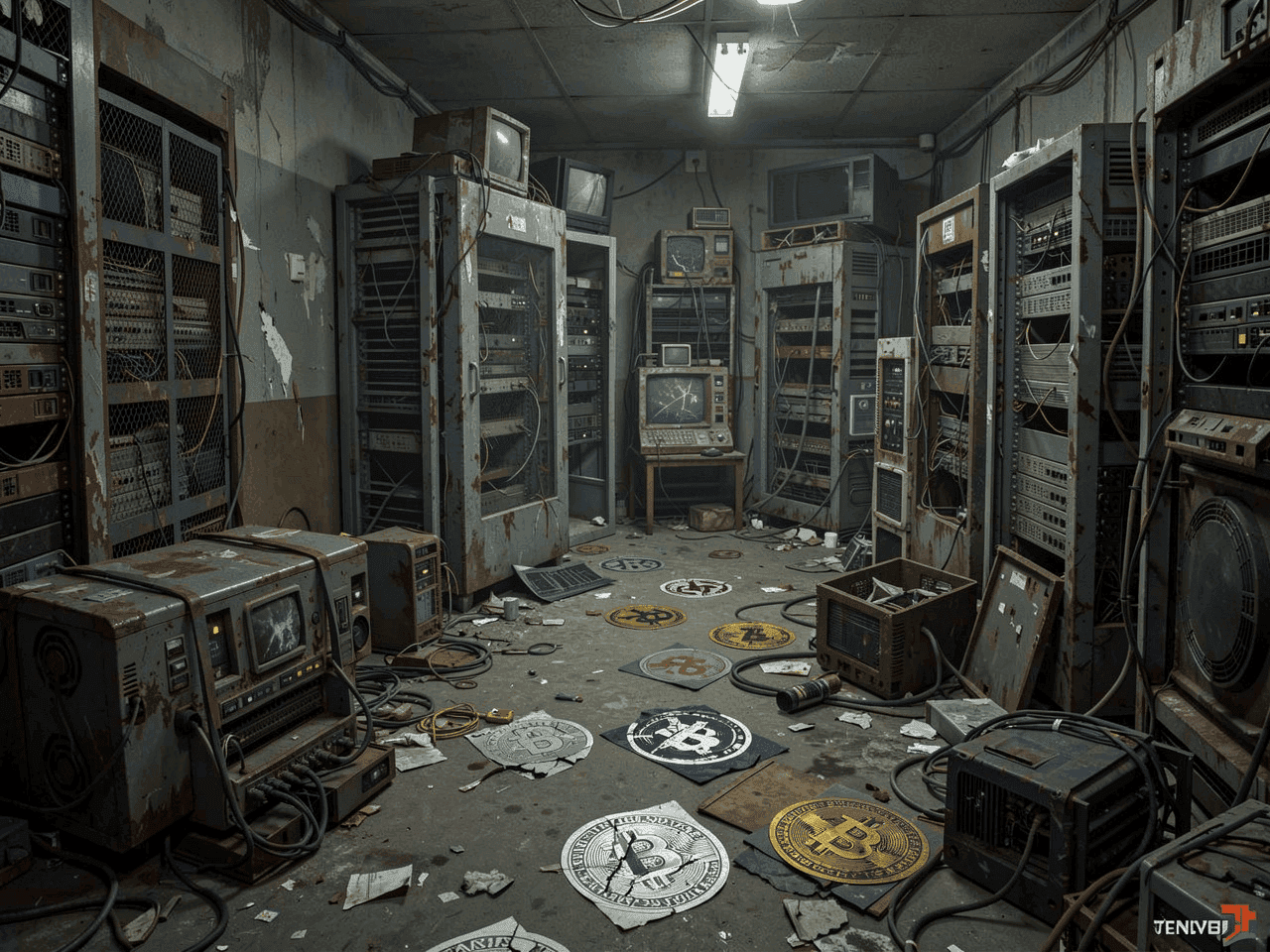

The cryptocurrency market is a brutal arena where today’s "Ethereum killer" can become tomorrow’s cautionary tale. While the $Bitcoin price often dictates the overall market sentiment, individual projects live and die by their adoption, utility, and governance.
In 2026, we look back at several projects that once commanded billion-dollar valuations and massive hype cycles but have since faded into obscurity, characterized by dwindling market caps, ghost-town ecosystems, or failed pivots.
Are Crypto Projects DEAD?
Are these projects truly "dead"? In crypto, "dead" usually refers to a significant loss of market relevance (often a 95%+ drop from All-Time Highs), stagnant development activity, or a market capitalization that has fallen to the bottom of the rankings compared to their peak. Based on current February 2026 data, projects like Boba Network, Lisk, and EOS represent the lowest tier of once-prominent projects from our tracked list.
 Trade cryptos cheaply with the best crypto exchanges, pick the one that suits you from our comparison list
The 10 Crypto Projects That Lost Their Crown
Below are the 10 projects from our analysis that have seen the most significant decline in market standing and investor interest as of early 2026.
1. Boba Network (BOBA)
Once a promising Optimistic Rollup solution, Boba Network has struggled to maintain liquidity and users. As of February 2026, its market cap hovers around $11 million, a staggering decline from its peak. Despite its "Hybrid Compute" technology, the L2 landscape has been dominated by Arbitrum and Base, leaving Boba with negligible TVL (Total Value Locked).
2. Lisk (LSK)
Lisk was one of the original "platform" plays, focusing on JavaScript developers. However, after years of development delays and a recent shift to become an Ethereum Layer 2, the original vision is effectively gone. While it attempts a reboot, its market presence is a shadow of its 2017-2018 glory days.
3. EOS (EOS)
The record-breaking $4 billion ICO of EOS is now a case study in mismanagement. Once ranked in the top 5, EOS has plummeted in relevance. Despite several attempts by the EOS Network Foundation to revitalise the chain, the "Ethereum Killer" narrative died years ago, and it now sits deep in the lower rankings of market cap.
4. Tezos (XTZ)
Tezos was the darling of "Self-Amending" blockchains. While it still has a functional network, its adoption in the DeFi and NFT sectors has been overtaken by faster, more incentivized chains. Its market cap has consistently slipped, failing to keep pace with the 2024-2025 bull run.
5. Rootstock (RBTC)
As a Bitcoin sidechain bringing smart contracts to the BTC ecosystem, Rootstock (RSK) once held significant promise. However, with the rise of Stacks and newer Bitcoin L2s, Rootstock has struggled to attract a vibrant developer ecosystem, leading to stagnant growth and low trading volume.
6. Astar (ASTR)
Astar was a central hub for the Polkadot ecosystem, particularly in the Japanese market. While technically proficient, the general decline in Polkadot’s "parachain" model has dragged Astar down with it. It remains operational, but its market cap reflects a significant loss of investor confidence compared to its launch phase.
7. Kava (KAVA)
Kava attempted to bridge Cosmos and Ethereum, positioning itself as a DeFi powerhouse. While it still processes transactions, the emergence of more specialized AppChains and the dominance of major exchanges launching their own chains has squeezed Kava out of the spotlight.
 Tax season is right around the corner. Did you pick a crypto tax tool yet? Check out our comparison
8. Kaia (Formerly Klaytn/Finschia)
The merger of Klaytn and Finschia into Kaia was intended to create a Web3 giant in Asia. However, the rebranding has yet to translate into significant market momentum. In 2026, the project struggles with low visibility outside of specific institutional circles, leading to a diminished market valuation.
9. Celo (CELO)
Celo’s "mobile-first" blockchain mission was noble, but the market eventually favored Ethereum-compatible L2s. Celo’s transition to an Ethereum L2 was a survival move, but it lost its unique identity in the process, and its valuation has suffered accordingly.
10. Metis (METIS)
Metis once rode the wave of the "L2 summer." However, competition in the scaling space became too fierce. Despite having a decentralized sequencer—a feat many others lacked—it failed to capture the "mindshare" of retail investors, leading to its current status near the bottom of our analyzed list.
Why Do Popular Crypto Projects Die?
The "death" of a crypto project rarely happens overnight. It is usually a slow grind caused by three main factors:
- Lack of Ecosystem Incentives: If developers aren't building, users aren't coming.
- Competitive Overpowering: Newer technologies (like ZK-Rollups) often make older "Optimistic" or "Sidechain" tech obsolete.
- Governance Failure: Projects like EOS suffered from internal disputes and a lack of clear direction.
For those looking to avoid "dead" coins, diversifying into established assets or using hardware wallets for long-term storage of blue-chip assets is often the safer play.
Conclusion
The 2026 landscape shows that even a multi-billion dollar start and a "Top 10" ranking cannot guarantee longevity in crypto. Projects like Boba and EOS serve as reminders that constant innovation and user retention are the only ways to survive.