How to Trade Cryptos in Sideways Markets: A Guide for Choppy Conditions
Crypto markets don’t always trend. Here’s how to trade Bitcoin and altcoins when price moves sideways and momentum disappears.

What Is a Consolidation or Sideways Market?
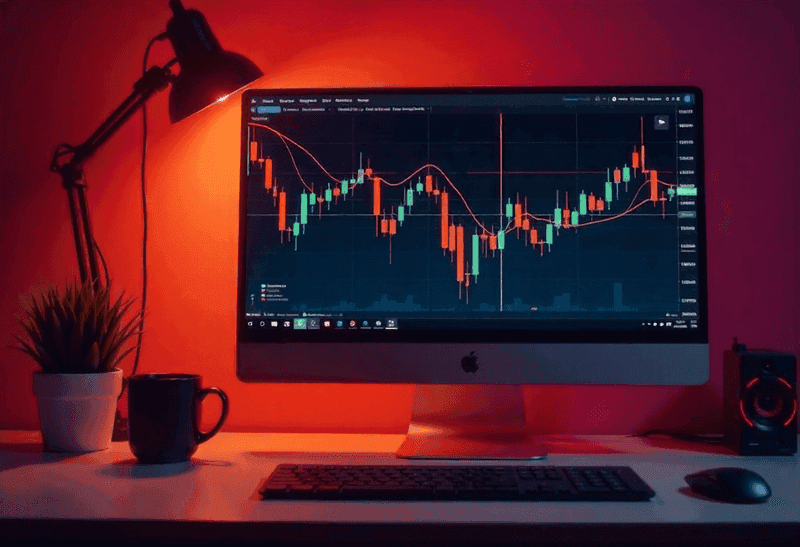
A sideways market, also called consolidation, happens when price stops trending higher or lower and instead moves within a defined range.
In these conditions:
- Higher highs stop forming
- Lower lows stop breaking
- Price oscillates between support and resistance
This usually occurs after a strong move up or down, when the market needs time to digest gains or losses. Momentum fades, volatility drops, and traders become more selective.
Sideways markets are not weak markets — they’re indecisive markets.
What the Crypto Market Is Doing Right Now
Looking at the Total Crypto Market Cap chart, the broader market is a textbook example of consolidation.
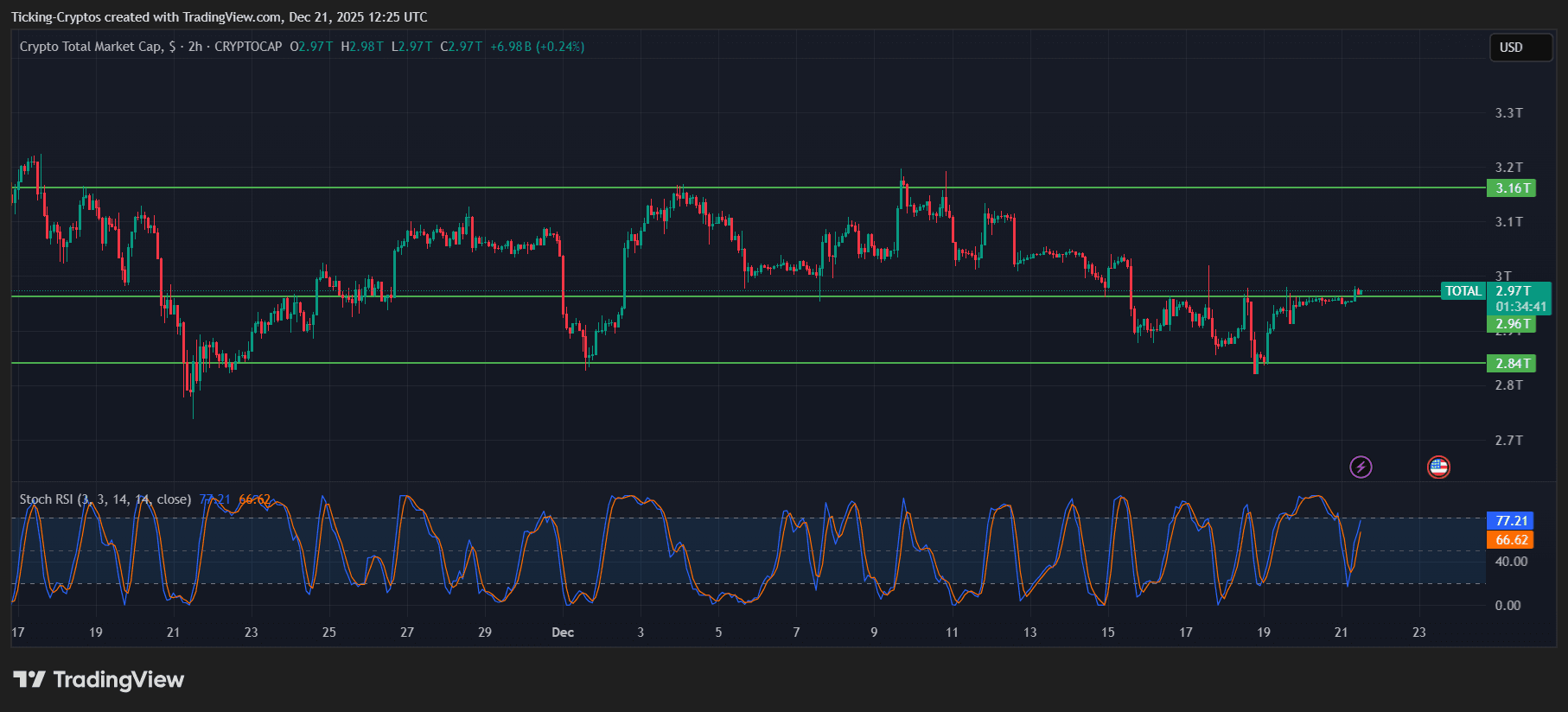
Total crypto market cap in USD 2H - TradingView
Key observations:
- Market cap peaked near $4.14T
- Sharp correction followed
- Price is now moving sideways between $2.84T and $3.16T
This tells us the market is:
- Holding higher-timeframe support
- Failing to break back into expansion
- Trapped in a range with no clear direction
As long as the total market cap stays inside this zone, most altcoins will struggle to trend — and that’s exactly what we’re seeing.
Bitcoin: The Anchor of the Sideways Market
$Bitcoin plays a crucial role in sideways crypto markets — and right now, it’s doing exactly that.
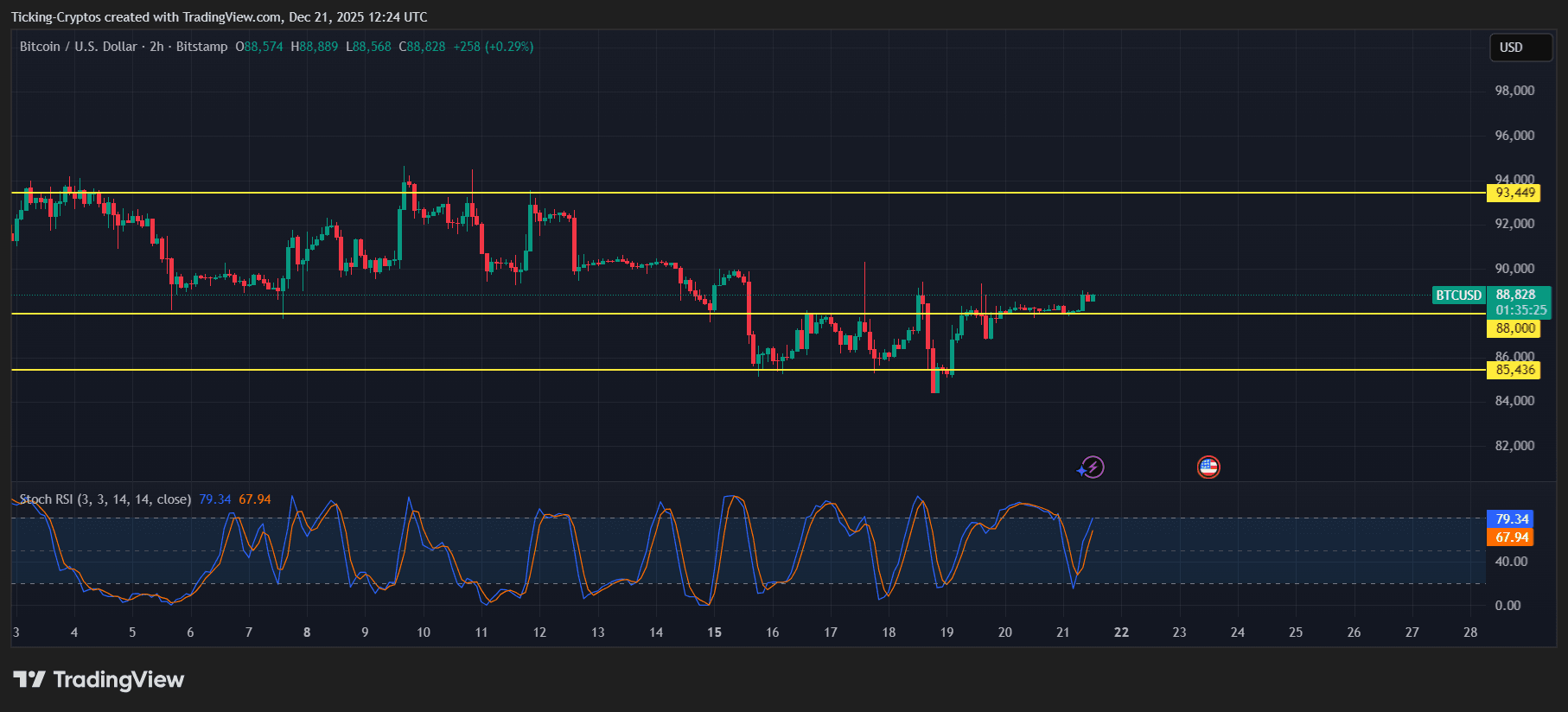
BTC/USD 2H chart - TradingView
From the Bitcoin 2H chart:
- $BTC is trading between $85,400 and $93,500
- Multiple rejections at resistance
- Multiple defenses of support
- No sustained breakout or breakdown
Bitcoin is range-bound, and when BTC moves sideways:
- Altcoins lose directional leadership
- Breakouts fail quickly
- Mean-reversion trades outperform trend trades
This environment rewards patience and precision — not aggression.
Why Most Cryptos Struggle During Sideways Phases
When Bitcoin consolidates:
- Liquidity rotates but doesn’t expand
- Traders fade moves instead of chasing them
- False breakouts increase
That’s why many altcoins:
- Spike briefly, then dump
- Fail to follow through on bullish setups
- Get stuck between local highs and lows
Sideways markets punish FOMO and reward discipline.
5 Practical Ways to Trade Sideways Crypto Markets
1. Trade the Range, Not the Breakout
Instead of chasing moves:
- Buy near support
- Sell near resistance
- Assume price will revert unless proven otherwise
Breakouts need confirmation — otherwise, treat them as traps.
2. Use Smaller Position Sizes
Sideways markets are noisy.
- Reduce position size
- Accept smaller gains
- Focus on consistency, not home runs
Preserving capital is a win in these conditions.
3. Lower Your Timeframe Expectations
Trends don’t last long in consolidation.
- Take profits faster
- Don’t expect multi-day continuation
- Respect intraday levels
Sideways markets favor shorter trades, not swing holds.
4. Focus on Clear Support and Resistance
Forget indicators for a moment.
The most important tools here are:
- Horizontal levels
- Range highs and lows
- Failed breakouts
If you can’t clearly define the range, don’t trade it.
5. Know When NOT to Trade
This is the most underrated skill.
If:
- Price sits in the middle of the range
- Volatility is dead
- Risk-reward looks unclear
Then doing nothing is the correct trade.
Sideways markets don’t reward constant action.